I’m curious whether Apple’s conduct here would be illegal in Australia—I suspect it might be, and believe it should be.
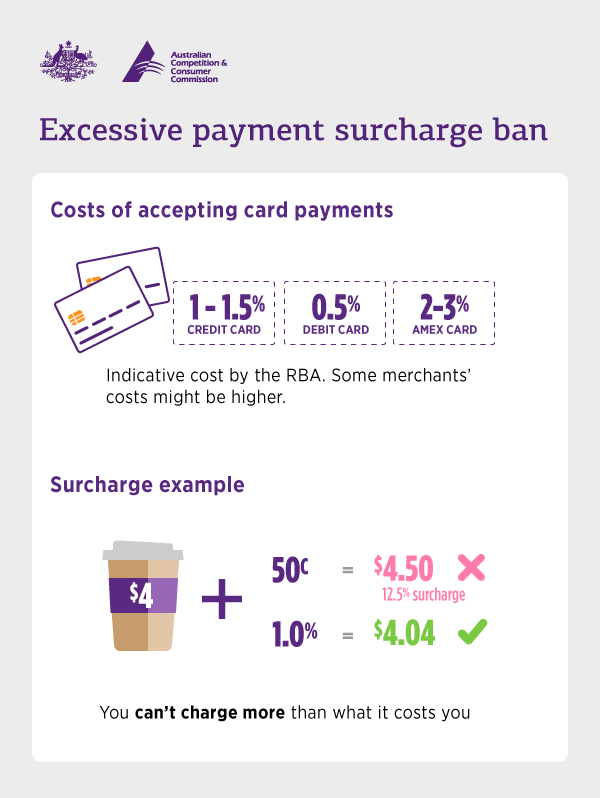
Credit card networks used to tell businesses “you’re not allowed to itemise or pass this fee on to your customers”; at some point (maybe 10–15 years ago? Can’t find a reference quickly) this was confirmed to be illegal in Australia: businesses are allowed to apply a surcharge to cover their transaction costs (and nothing more, though in practice I think many businesses just apply a flat rate like 1–2% which will be higher than their costs for some transactions), per https://www.accc.gov.au/consumers/prices-surcharges-receipts....
The relevant legislation only applies to certain payment methods, so it would probably not be directly applicable to Apple’s 30% tax, though perhaps other legislation might protect your ability to at least itemise it (I don’t know); but given that the payment are probably ultimately coming from such payment networks, I wonder whether Apple could become subject to this rule to at least some extent, so that e.g. they had to let you split out the card transaction fees from the rest of their 30% cut and itemise and charge it. (And the purpose of doing that would be to begin pushing them to reduce their absurd 30% tax. Thinking of that, I wonder how many people have complained to ACCC about the 30% tax—it can’t be zero—and why they haven’t come down on Apple like a ton of bricks yet, because what they’re doing is basically the same as what credit card networks did, only 20–50× as greedy and infinitely more anticompetitive since no alternative is permitted on Apple’s platform, whereas credit cards had cash and cheques as alternatives.)
I’m modestly familiar with the principles at stake since I run a two-sided Australian marketplace.
Essentially it is unlawful to display a price that excludes hidden mandatory extras or is otherwise greater than the actual price a consumer will pay, and also unlawful to surcharge for card transactions above either your blended cost of doing so or actual cost on a per-transaction basis (the controls are scoped particularly to Visa and Mastercard, Amex has a bit more latitude). The ACCC loves prosecuting these cases and has scored many judgments against major brands on that basis.
However, there is no requirement to itemise your price components, including those that are effectively surcharges for a given channel (as opposed to card scheme), nor is it illegal to simply be expensive, or to have market power, so Apple may well within those rules believe it can coerce merchants on its platform.
The wheels are more likely to come off in other areas of the ACL, particularly those related to misuse of market power, unfair contract terms, and unconscionable conduct intended to mislead the consumer or distort a marketplace. These are rather more subjective and harder to prosecute since no absolute test applies; if anything it is Apple’s sheer scale and documented arrogance that might bring them into play.
I am pretty sure it is illegal according to EU law as well.
For example, the 30% fees almost surely breaks this law which was made to break up abusive rent seeking like credit card taxes and now app store taxes:
> Any abuse by one or more undertakings of a dominant position ... directly or indirectly imposing unfair purchase or selling prices or other unfair trading conditions;
It was the same over here in Belgium when electronic payment terminals were introduced in shops. The contracts stipulated that the extreme fees (up to 10% at start) could not be passed onto the customer, so all the shop owners could do was spread them over all sales (or swallow them) making everyone pay for this new platform whether you used it or not.
Of course customers demanded the convenience of paying with cards, and since the bill could not be itemized, shopkeepers had a hard time explaining the ramifications to the customers.
The logic here concerns me. You just go up on your prices. Yes, for everyone. It’s not like they itemize “cost of chips from FritoLay, cost of shelf space for the three days the bag has been here, cost of electricity to keep the bag comfy for three days, cost of employees staffing the store for three days, the owner’s profit margin...”
You can certainly “pass the costs on to the customer,” but what the card companies wanted to avoid was a line item resulting in a higher price for card users.
These rules were legally stricken in my US state years ago. But businesses understand no one has a appetite for seeing that they’re paying more with plastic, so they just go up on prices. The only exception I’m aware of is gas stations who advertise their per gallon price ad cash only and the a smaller, more costly price for credit cards, on the same sign.
None of the costs you mentioned relate directly to a customer's choice at checkout in the way a credit card does. If the supermarket provided a "home delivery" service it would be absurd to expect them to amortize it over everyone who doesn't use home delivery so I could get it for "free".
You say it’s absurd, but that’s exactly what happens. In Australia, the two biggest supermarkets, Woolworths and Coles, do provide free delivery if you buy more than $300 and $200 (respectively), with Woolworths’ delivery fee going down by $3 for every full $50 you spend after $50. So yes, they’ve masked the fact that everyone’s subsidising delivery by only offering it to you when you’ve bought a whole lot of stuff from them, but if you’re buying online at the same prices as you’d get in-store (I confess this is the weak spot in my argument, I don’t actually know for sure that prices are the same, I’ve never bought from a supermarket online), everyone is subsidising the deliveries, even if the threshold has made it a smaller subsidy.
Edit: on reflection, I guess it’s also possible that the fees from the small deliveries are sufficient to fully subsidise the bigger deliveries, and that regular shoppers aren’t subsidising anything. But this wouldn’t hold for any businesses that offer unconditional “free shipping” while also allowing you to pick up or buy in-store.
Edit: it is also possible that it may not need a subsidy at all. You view delivery as the luxury, but remember that stores cost money too. There's a reason some stores have gone online-only or online-primarily.
I don't think everyone is subsidizing the deliveries in this case, they just make enough profit from you to figure that bringing you groceries home is profitable even after the cost (because you're inclined to shop with them more often).
There’s a fundamental difference in these categories: product costs apply equally to every customer: you’re all buying the same thing. But transaction costs are not constant; one customer pays with cash and has a 0% cost; another pays with one type of card with a cost of 0.8% + n cents; still another has a fancy rewards card that costs 3% + n cents.
If you charge them all the same, those paying by cheaper methods are subsidising those that pay with more expensive methods.
The credit card companies want people that pay with cash to subsidise them, so that people will use their cards because of how convenient they are. It’s that simple.
It seems to me fairly obvious that it is a bad idea to allow them to require that, and various jurisdictions have agreed and forbidden them from doing so. Then it’s up to the business to decide whether they will favour convenience at a certain cost to themselves and their cash-paying customers, or if they will keep prices as low as they can for everyone, and charge each customer what they actually cost. Some will decide one way, some the other. In some industries, transaction fees are very substantial, due to things like low volume and low value transactions not giving them scope to get better rates from the banks, or just having very thin margins. If anything, these businesses show that you can successfully pass card fees along to customers.
(People often dislike credit card surcharges saying “I want to know what you’re going to charge me ahead of time”—the same sort of reasoning that leads to “free shipping” which is in fact just the same type of subsidy, where locals that pick up or are cheaper to deliver to subsidise those further away. The US clearly doesn’t care about knowing what you’ll be charged anyway, since prices typically exclude sales tax and sales tax is extremely convoluted, so that the sticker gives you only a hint as to what the price may be. Tipping is another related evil. There is, however, a counterargument to my point here: sometimes subsidy is necessary for equity, as when postal services charge flat rates without taking their actual costs into account, so that people in rural areas are not penalised. This whole argument is about the difference between equality and equity.)
The thing I really hate is rewards card schemes, which seem to be a big thing in the US (Australia has them, but not so much and not with such large rewards). Those things are a textbook tragedy of the commons, and the whole system should be illegal, because it’s a blatant scam, charging high card fees so that you can give some of the extra back to your customer: it’s outright theft of commonly 1–2% of transaction value in the US, and making everyone that’s not using one of subsidise those that are… unless card fees are extra.
But all this has still been talking about amounts under 5%. Apple’s talking about not 0.5–5%, but 30%. Suppose company A has a product that they wish to receive $98 for, and they sell it on two platforms with an equal share of transactions: but while users of platform B pay a 2% transaction fee, users of platform C pay a 30% transaction fee. One pricing model you could adopt would be to have transaction fees extra: one platform’s users pay $100, the other $140. This lets each pay the cost. But if you can’t pass the transaction fee on, you’ll be charging users of both platforms $120, and each user of platform B is now directly subsidising each user of platform C by $20. Platform B users are unlikely to be happy to hear this. Platform C is now effectively collecting large sums of money from people that don’t even use their platform.
(In practice, you may wish to bundle the cost of the cheapest common transaction fee for simplicity, providing a baseline cost; this would be 0% for cash, and 2% over these hypothetical platforms B and C, which would lead to you perhaps charging “$100” (rather than “$98 + $2 transaction fee”) and “$100 + $40 platform C tax”, and pocketing $98 in each case.)
Handling cash isn't 0% cost[0]. What I really mean is that government has no business telling business how to charge customers. If a company wants to mark everything up an addition 5% to "hide" credit card charges and "subsidize" them with others' payments, then they're welcome to do that, just as they're welcome to charge any markup and make any profit the market can bear.
[0] The merchant is paying employees to handle it: take time to count it at the register and make change; take time to re-count a register in the back with a witness; take time to count it again before making the deposit. And actually, the bank has very detailed fees listed on commercial accounts for handling cash and checks in deposits. (The bank takes time to count it to make sure the deposit is correct.) So the "cost of a cash transaction" is greater than zero; it's the sum of all those fees divided by the number of transactions - you could even proportionally apply those fees depending on the transaction amount or possibly even the configuration of the cash (it's easier to verify a single $100 than to count 100 $1 bills, for example.)
All of the gas stations in my neighborhood have a cash/debit price and a higher credit price. Maybe handling cash and debit cards doesn’t cost them $0, but I suspect they’re not offering this discount out of charity. The cash and debit handling costs are already reflected in those numbers.
Gas stations operate in an intensely competitive environment with profit margins in the 1-2% range. Consistently across dozens of stations, both independents and large chains, I see noticeable discounts on the order of 1-2% for using cash. This isn't a question of a few owners making a mistake with numbers. I strongly suspect if you aggregate these discounts, you'll get a very clear picture of the comparative cost of cash/debit handling and credit card costs.
Because of the environment of gas stations (easy to get in and out, open all the time, has cash on hand, not at the top of society) they typically already have really good cash handling procedures in place. They are already paying for cash to get in and out quickly and securely so I think when compared to something with similar margins and volumes like a grocery store, it makes more sense to push for more cash via discount vs a grocery store. As an anecdote, I don't think I've seen a grocery store offer a cash discount whereas I've seen it offered at gas stations frequently.
My understanding is that at least until recently, it was illegal in many states for stores to charge customers a different price for cash and credit, but that gas stations lobbied for an exemption. But I don't know the current state of the laws.
> in practice I think many businesses just apply a flat rate like 1–2% which will be higher than their costs for some transactions
Have you ever seen an itemized transaction cost of 5¢ + 1-2% of total? Living in Sydney I never have. Literally every time it’s a written note on the till or verbally after they ring you up; “$5 minimum on card” or “50¢ charge” is always the pattern.
The rapid and endemic noncompliance, and fleecing of consumers, seems to be what happens when you have “deregulation” and literally no enforcement of behaviors.
I’ve seen fixed amount (e.g. 50¢) and fixed percentage rates (e.g. 0.8% for Visa/Mastercard, 2.5% for Amex). I haven’t ever seen actual cost-based calculations offline, but I suspect I may have online, just once or so.
What I was quoting was the letter of the law, which is, I suspect, regularly violated. As a society we just let it slide, because we understand roughly what’s being done and why, and know that the differences are slight. But if it was presented as a percentage and was over 2% for Visa/Mastercard, I imagine some would start asking questions, because that’s more than one would expect.
You can argue that maybe it's unfair to FB, but you know what's even more unfair? Consumers being caught in the middle of a fight between Apple and FB. Consumers being manipulated so big tech corp A can try and force a behavior change by big tech corp B by pissing off its customers.
At the end of the day it's a phone that you call people on. Let the people who have purchased that phone be.
It's not irrelevant because there might be other platforms where you can buy the same product cheaper. And the 30 percent cut information might be a good hint to look elsewhere. I guess that's why Apple fights this so viciously.
I definitely support Apple's right to charge 30% on their own platform; but I definitely think preventing people from talking about it is unreasonable.
I think this is one of the most interesting libertarian reflections out there - a lot of strong libertarians are happy to let the market decide everything but taxes - the US is a platform which you can leave for one of 200 other platforms, it comes with some benefits and some costs and yet if the base income tax rate was 30% there'd be rioting in the streets.
>the US is a platform which you can leave for one of 200 other platforms
if you are native born, it is not trivial to renounce your citizenry nor to become a citizen in another country. Even before taking travel to that other country into account. you also don't really opt into native citizenry since you have no control of who or where you are born into.
Regardless of my personal thoughts on this article, this is a strange comparison to make.
They aren’t prevented from taking about it though. They are just prevented from talking about it inside the app, for various reasons, such as Apple not wanting its app platform used as a venue for dissing itself, and because that kind of contentious content is not what Apple wants its users to experience when using Apple devices.
“What Apple wants” does not trump consumer protection laws.
In fact, this becomes even less so, because by having acquired enough market power that they can dictate terms to just about everyone through controlling a marketplace, this triggers additional safeguards against misuse of that power, and in particular, safeguards against misleading the consumer about their options.
It is not unlawful to acquire market power, but abusing it is a path to billion dollar fines.
Another function of Apple's rules is to protect the consumer from bad behavior by apps that lead the customer off-app to other payment flows for abusive services not under Apple's review.
If a company wants to do this, and the consumer wants to fall for it, that's between the company and the consumer. But if they promote it and lead the customer to it using wording and other elements situated on Apple's curated app platform, Apple becomes responsible for having allowed it, and it both hurts the consumer, so they are not protected, and taints the experience on the Apple device.
This built in consumer protection is part of why Apple has a reputation as having good user experience. By keeping the rules in place, Apple helps maintain the valuable reputation it has earned for having good user experience which includes, as a vital part, this consumer protection.
In my current operating jurisdiction that would be most likely Schedule 2 of the 2010 Competition & Consumer Act, Part 2-3 (Unfair contracts) with particular reference to s24(1)(a & c); s20 (Unconscionable conduct) with particular reference to s21(4)(c); s18(1) (Prohibition against misleading or deceptive conduct) in general; and possibly (due to the scale of Apple's market power and active limitations on consumer communications) even s47 (Prohibition against exclusive dealing) which covers such an enormous multitude of cases of refusing to trade that it's almost impossible not to be in contravention as a marketplace unless you accept all participants, and with particular reference to s47(10) which makes it clear that substantially lessening competition is the main offence of this section.
Sure! Happy to write that up as a succinct, carefully researched, and coherently argued report for you, along with supporting case history, extracts from current legislation, and recommendations for your commercial options toward avoiding regulatory action and maintaining consumer trust. Where shall I send the consulting invoice?
Apple isn't hiding how much the user needs to pay for a purchase, they can still make the determination that they need to go somewhere else.
This would be like Wal-mart putting up signs telling everyone they have to pay Visa fee's. It's irrelevant to the consumers, what they pay doesn't change.
> This would be like Wal-mart putting up signs telling everyone they have to pay Visa fee's.
This actually happens in Australia. Because AmEx charges an extra 1.75% to businesses, stores display a warning at checkout that using an AmEx card will incur an extra fee of 1.75%.
Edit: Here's an example graphic from the Australian Government website, explaining that it's illegal for a business to charge more than what it costs them:
It's still a significant amount of money that is paid towards Apple on each purchases. A bit of transparency should be done to explicitly know how much of your money goes where, kinda like how airlines must describe how much of your money goes towards different fees (at least that's how it is in my country).
Sure, it doesn't change how much it ends costing me, but I get a better idea of the costs associated.
FB has no right to any specific messaging on Apple's platform. If they really really had a problem with it they would leave the platform.
But we both know they won't, so instead they're trying to put pressure on Apple's customers to force Apple to allow them to do what they want.
And the funny thing is that Apple is actually the one thinking about the customers. The recent privacy changes is what prompted this. It's literally two tech companies fighting.
It boggles my mind that people think FB has some moral or ethical upper hand here.
Is there something which I need to explain better to you to understand what I am saying? I am really puzzled by your thinking TBH.
This is not a binary thing. It's not like you either have the information or not. It's more like you either have little or no information, satisfying level of information or it can even be an overwhelmingly detailed amount of information. Depending on how much and of what kind of quality of info you have, you can have varying level of leverage. So in effect and by definition that info is not irrelevant.
Visa and MasterCard will sue you (and disconnect you Point of Sale device really quickly) if you try and pass those costs transparently onto the customer - they've loosened the rules a bit for minimum purchase quantities (i.e. 5$ minimum for credit card purchase) but if you try charging an extra x% of the listed price when people pay with credit card they will go after you hard.
I'm not - I enjoy calls with family and the like but for anything business related it's a huge distraction and generally an assumption that the caller's time is more valuable than the callees. Send me an email or a IM/DM so that I can consume your point and respond on a schedule that suites me.
In fact, I'd argue the phone aspect argues against what you're trying to say here. That you don't actually need to be able to see and respond to email immediately so having a phone is a moot point there.
So your argument is that because people really really really like their smartphones, FB should be able to tell everyone that Apple is charging them money?
I think the point is that even though it is called a phone, it is actually a portable super computer, and in many cases the only one people have. We can’t pretend it is only a device we use to call other people, it is the gateway to our digital lives. From banking, access to government services, to connecting to our loved ones and leisure.
That's irrelevant to the issue at hand. It wasn't even the main gist of my initial comment, but it was the one that got sniped because this is a technical board and people love their "well akshually"'s.
The main gist is that FB is trying to use their customers to bring force to bear on Apple so they can make more money. They don't give a shit about the customers.
And the customers aren't paying more money. Some of us can disagree with Apple's approach to their walled garden without thinking that means FB should be empathized with here.
They're both shitty company's in their own way, but at least Apple isn't putting its customers in the middle of their fight.
THAT was the main gist of my comment, and what no one wanted to actually address.
I have no particular love for Facebook, but good for them.
It's one thing to charge a 30% app tax to sign up for "Jasper's Cooking Class" on an iOS device, but it's even worse to ban disclosure of that tax. Forbidding that speech is certainly 1984-esque.
Yes, this is why Facebook is making a public issue of this case, and not the other cases where they also keep some of the money. Unclear is how Apple would be able to tell the difference between the ones where Facebook keeps zero and the others.
Easy-peasy.. just like when you go to the super market or a restaurant and the receipt has the analysis of the amount: $15 pizza, $15 salad, $3 soft drink, $10 VAT, $8 Apple's 30% fee (I didn't do the math, but you get the spirit).
They CANNOT force you to remove transparency and visibility of the line items. I understand that they want to hide the 30% cut and not being called out.
They can also split the receipt in three parts:
A) you purchased:
Pizza $15, Salad $15, Soft drink $3
B) Other fees:
Apple's 30% fee $10
C) Taxes:
VAT $3
Edit: it just hit me. Don't write that ONLY in the receipt. Write it up front, BEFORE a user completes the transaction. Total price of ticket $10. Analysis.. X, Y 30% Apple's fee, VAT.
That is one of the most frustrating things about shopping in America: that taxes are always broken out separately, requiring extensive mental math. The purpose is, as you suggest, forcing people to confront the reality of taxes. But confronting that reality is not making us rise up against sales taxes, so... include the tax in the marked price! /petpeeve
There is absolutely nothing 1984-esque about products in a store not being allowed completely free speech about the store without the store owner being allowed to decide to not carry the product. Imagine if Coca Cola started putting “Walmart is a horrible business” on their cans and the law limited Walmart’s ability to say “ok then we won’t sell Coca Cola”.
Well, in this case facebook is the store since the tickets are sold on their platform, it just happens that one of the interfaces to their platform is via iOS.
If I'd take your analogy it'd be more like the government forbidding walmart to say how much VAT is in the purchase price for a can of coke.
I don't think this has anything to do with free speech to be honest. Even though I find it odd and upsetting that free speech is severely limited for the worse in other contexts in the corporate world.
I wonder how this would interact with various consumer laws. In Australia, for example, there are standards that prevent ticket sellers for events from being deceptive about fees - adding costs beyond a reasonable amount required to provide the service, etc.
I'm not making any specific case, rather just feeling curious about how this impacts consumer rights and expectations. As a purchaser, I think it might be fair to know that $3 goes to apple when I buy a $10 cooking class using Facebook.
Edit: chrismorgan below posted a much more informative comment in this vein while I typed.
Misuse of market power and unconscionable conduct that misleads the consumer are hard to prove, even in jurisdictions where they're flat-out unlawful and the consumer regulators have enforcement teeth, but it's almost as though Apple is actively trying to become a textbook example.
I feel that the condition Apple puts on app devs to not indicate to customers in any way that 30% of their purchase is going to Apple is the most problematic. It shows that Apple knows their cut is too high, and customers won't stand for this rate if they knew what they were paying for. If they genuinely believe their service is worth 30%, they should be confident about it, let users understand the break up of their bill. Truly insane levels of monopoly on display here.
Apple must have a better deal than that with Visa, big actors with have a much better deal than what you commonly see, with no fixed fee. I think they must pay less than 1. 5% transaction fee with no lower limit or fixed addition.
Transaction fees are just 0.3% in Europe since levying a 3% tax on every purchase is insane and hurts progress. You should probably go after those companies in USA as well.
Basically in Europe it is illegal to levy an unreasonable tax for generic services like this. The same applies to Apple.
So is Apple not allowed to take a 30% cut in Europe? How about Amazon for Kindle books? Are digital distributers allowed to charge 30%? Where does Europe draw this line?
As a counterpoint, those 30% account for more than just processing fees. Why should the average consumer be tasked with deciding whether a given cut is reasonable without knowing what that cut actually goes to?
Probably mostly "stock buybacks" and "Apple unrelated R&D" at this point.
More seriously though, I'm not sure if anyone outside of Apple could actually tell if the app store as an organization is revenue neutral or not. Certainly their services revenue has been growing over time
That's a bit like saying "the citizenry shouldn't know how we spend the money collected by taxes", isn't it?
The users wouldn't need to decide whether it's reasonable, they could just ignore it. Not allowing information to get to the user is a different thing though.
I don't think so. It's more akin to not posting a sign saying "our landlord charges us $5,000/month in rent" in a brick-and-mortar shop.
At the end of the day there are costs associated with doing business online. If Facebook was able to have their own payment processing pipeline, and still charged no cut, that's them processing payments at a loss, and subsidizing it with other income streams.
The Apple cut doesn't just cover payment processing though, (in Apple's opinion at least) it also covers the costs of maintaining the app store, reviewing apps, developer tooling etc.
There's really two separate questions here, is 30% as a cut for the entire App Store ecosystem reasonable, and is it reasonable to charge a cut paying for the entire ecosystem to someone who really is only "getting" the payment processing parts of it.
In a sense, when Facebook is providing this kind of platform, they're essentially competing with the App Store. Instead of whomever is running "Jasper's Cooking Class" making a cooking class streaming app and posting it to the App Store platform, they're able to use the Facebook platform to provide the same service. Because this becomes sort of a platform-in-a-platform, it starts getting expensive pretty quickly, because you have to pay for both.
Of course, the people behind "Jasper's Cooking Class" (presumably Jasper himself) are probably not in a position to make an app and posting it to the App Store, so Facebook providing a lower barrier to entry is probably a good thing for the market as a whole, but they're not doing it out of the good of their hearts, it's still a very deliberate business decision, aimed at keeping people on Facebook, where the users are monetized in other ways.
> I don't think so. It's more akin to not posting a sign saying "our landlord charges us $5,000/month in rent" in a brick-and-mortar shop.
Do you think the landlord should be allowed to make them remove the sign?
If it's accurate, what's the harm in the public knowing about it? If it's a two square meters stand in a food court, the public might find the landlord to be insane. If it's a five thousand square meter super market, I'm sure the public will find that appropriate.
Keeping the Apple tax secret suggests that Apple believes the public wouldn't find them appropriate, either because "the public doesn't understand" (easy to fix by writing a blog post) or because they aren't appropriate (given Apple's profit margins, I lean towards this).
I don't think that e.g. confidentiality clause in the rental agreement preventing the disclosure of the rent is unreasonable. It's not exactly the same thing, but I think it's fairly similar.
Also, I find the idea that a blog post is an easy fix for the public not understanding what the developers are paying for with Apple's 30% cut to be a huge simplification. At the very least a major ad campaign would probably be necessary, and even that's probably only gonna reach a subset of their users.
But there is no confidentiality clause in the App store agreements, is there? It's public knowledge that Apple applies a 30% tax, it's just not actively known by the general population.
Sure, a single blog post might not reach everybody. But at the same time, lots of people won't care, and everybody that searches for "Apple Tax 30%" on the web will find their blog post. Maybe they can get Bono to write a song about it! ;)
There is, but as far as I know, it doesn't cover this. Apple would probably argue that it's instead covered by the App Store Review Guidelines, but I'm not really inclined to agree. This is the kind of thing that probably should be explicit rather than a read-between-the-lines sort of thing. I wouldn't find such a rule (if it was explicit) to be an egregious overreach though.
Yeah, but that's not so much about not disclosing the terms of service as it is about "don't advertise that your users can get it cheaper elsewhere". Apple takes 30% does sound a bit as if it was possible to pay less by not using the App, but according to the screenshots they'll charge Android users the same, i.e. the user pays $9.99 no matter what, but the person offering the item would get more money if not bought in the iOs App (because seemingly Facebook does not take a cut).
I don't think that Apple is arguing that e.g. Facebook wouldn't be allowed to say on their website how much commission they pay to Apple. Apple also says quite openly that and how much they take [1]: Developers earn 70% of sales from in-app purchases and Apple collects a 30% commission. That page actually looks like the blog post I mentioned: explaining to users why Apple's share is appropriate.
As long as we're making brick and mortar analogies, this is more like a food company printing on their packaging "Your grocery store takes $N from this purchase". Isn't the grocery store within their rights to tell them to stop doing it or GTFO out our store?
> The Apple cut doesn't just cover payment processing though, (in Apple's opinion at least) it also covers the costs of maintaining the app store, reviewing apps, developer tooling etc.
I understand Apple's position in this case. Yearly subscription is just a symbolic payment, and, frankly, I don't think it covers the costs of Apple's employees who spent their time verifying my org's account. So what is left are the fees from app sales themselves.
But what about apps that are free, or pretend to be free like Facebook? Their creators still find ways to make money, but in a way that evade's Apple's fee system. Why should FB and others in a better position that traditional app developers? Both groups use the same infrastructure and both should pay similar fees (although frankly, these fees are way too high, and I think everybody except Apple agrees on that).
3.1.3(b) is probably what they're obliquely referencing, but I was once told by an Apple App Reviewer that "not all of our rules or guidelines are published" which caused me to have an aneurysm and shout "THEN WHAT'S THE POINT OF THE RULES?"
"You must not directly or indirectly target iOS users to use a purchasing method other than in-app purchase, and your general communications about other purchasing methods must not discourage use of in-app purchase."
2.3.10 has a bit about not including "irrelevant information about Apple or the development process." It's under the Metadata section, but still:
"2.3.10 Make sure your app is focused on the iOS, Mac, Apple TV or Apple Watch experience, and don’t include names, icons, or imagery of other mobile platforms in your app or metadata, unless there is specific, approved interactive functionality. Make sure your app metadata is focused on the app itself and its experience. Don’t include irrelevant information, including but not limited to information about Apple or the development process."
Apple can change the guidelines at any time. They make up 'rules' to their own benefit. And selectively enforce existing ones so major players get a free pass.
Developers have no recourse, other than leaving the platform.
Apple is a joke. At this point in time people that buy apple are just the ones that dont know better... software is getting worse, hardware is getting worse, price is getting higher and in tip of it they make their toasters more and more restricted.
I've been using Macs for 7 years (they gave them at job) but would never buy any apple hardware myself. They just dont have any benefits.
Apple allows WeChat include Mini Programs. These are 3rd party web pages the user can install that are tightly integrated with WeChat features. They're basically apps that run within WeChat. In my opinion this violates the app store premise BUT WeChat is so crucial to Chinese users Apple can't pull the app. So they bent and rewrote the rules to allow it.
http://www.globaltimes.cn/content/1137321.shtml
Because that's what they told the US house antitrust committee. Apple CEO Tim Cook testified that “we [Apple] apply the rules to all developers evenly”. But that's clearly not true, looking at the examples listed above. The poster-child is Amazon, which only pays a 15% fee instead of 30%.
Likewise, after Fortnite added an alternative payment option that avoids Apple's 30% tax, Apple banned not only Fortnite, but engine updates for all apps that use the Unreal Engine. That's the opposite of what Tim Cook told congress.
> Epic Games also called out Apple on Tim Cook’s testimonial at the recent Congressional hearing.
> “Just over two weeks ago, Apple’s CEO Tim Cook was asked during a Congressional hearing whether Apple has “ever retaliated against or disadvantaged a developer who went public about their frustrations with the App Store”. Mr. Cook testified, “We do not retaliate or bully people. It’s strongly against our company culture.” But Apple has done just that,” it said in the statement.
I love reading the Apple fanboys comments.
Please do keep defending Apple and it's mafia cut, I am honestly amazed that people cannot see Apple's fault in this, not only do they make you increase your prices by 43% (to get the 30% cut, prices need to increase by 43%) they won't let you even explain to customers the reason why it is more expensive (Hint: they won't let you do it because they know it is a highway robbery).
When I buy something and get a bill, I like to know how much of the price goes to taxes, if anything else at least for the transparency.
It's funny, I looked but I can't find where Facebook discloses the credit card charges that come out of the transaction when you do the transaction on their website. Doesn't that seem like deliberately misleading anti-consumer behaviour. Do you transaction on our competitors' device and we'll harangue you about how your money is going to the evil guys, but do you transaction on our platform and we'll still take transaction fees, we just won't tell you about it.
Edit: Seems like they don't actually surcharge on Apple device. You can ignore this comment, I'll keep it for posterity.
I believe it's because they surcharge on Apple platform because of that fee, thus they want to show why they have to surcharge.
It's like saying that websites shouldn't show shipping if they got a physical store because at the physical store they didn't show the shipping rate they got there....
It's possible though that the 30% Apple fee could include the transaction fee, I guess they could round it up to 28% but then your comment right now would probably be that the number is incorrect as transaction fees are variable between cards.
They have a complete monopoly on distribution for all iOS devices and are willing to remove certificates for OSX programs. For all we know, they will remove SSL certificates for HTTPS websites on Safari if a company oversteps their bounds too much.
Congress will do nothing about this, and the EU and other governments are busy legislating other problems.
Apple have already gone a step further, they've started intercepting website traffic and redirecting it to their own walled garden Apple News app instead, without permission from the websites:
> the EU and other governments are busy legislating other problems.
EU made laws to reduce credit card fees to stop American credit card companies from extracting a tax, also GDPR to stop American companies from bullying Europeans. I totally expect they will do something similar for app store taxes if American companies don't stop bullying European companies soon.
Indeed. I'm generally libertarian, but I see business as a privilege and in service to society. So this would be a great place for some measured and targeted government action. Hoping the EU acts, like some time ago they limited credit card fees, preventing an unproductive race to the bottom ("top"?)
Isnt that breaking consumer protection laws by intentionally misinforming customers? Users have a right to know where their money is going, and this is also presents false information to the user about how much the service costs (much like a receipt or ticket that does not break down the tax)
I m also surprised how people nitpick over apples rules as if they re some kind of laws. They re not , nobody voted for them and if enough ppl complain they may change
Note that for parity you need to boost prices by about 43%: (100% + 43%) × (100% − 30%) ≅ 100%.
(I love sevenths in decimal. One seventh is 0.1̅4̅2̅8̅5̅7̅, two sevenths 0.2̅8̅5̅7̅1̅4̅, three sevenths 0.4̅2̅8̅5̅7̅1̅, &c. Just remember 7 × 2 = 14, 14 × 2 = 28, 28 × 2 = 56 and change the six to a seven for some reason and start again with that, and rotate the whole lot as necessary. It’s just beautiful.)
I can't help but ask followup questions about what you're saying re: the 7's.
Firstly, why are your numbers wearing hats? (I know it represents a repeating number, but how do you type numbers with hats? I assume you're not copy-pasting 5̅7̅1̅ whenever you want to write it out. Is there a shorthand on MacOS?)
Regarding the 7's, I don't understand the pattern from 0.142857 to 0.285714 to 0.428571. Are you saying that 0.428571 is easy to remember, somehow? Or derivable from 0.285714? In fact, did you write out these numbers without using a calculator?
I see what you're saying with 7 x 2 = 14, x 2 = 28, x 2 = 56. And I see that if you change 56 to 57, then yes indeed it does match the ending of 0.1̅4̅2̅8̅5̅7̅, and then you can repeat the pattern of 7 x 2 = 14, which matches the ending of your 0.2̅8̅5̅7̅1̅4̅ number. But what's the connection to 0.4̅2̅8̅5̅7̅1̅? It's unclear how to use your trick to go from 7̅1̅4̅ to 5̅7̅1̅. Or even why that's helpful in general, or what the overall connection is between all of these seemingly unrelated things.
I used U+0305 COMBINING OVERLINE to get the line above the digits. I don’t use it at all often, so I had to look it up (I know its name but not its number) and typed it out with my Compose key (using WinCompose since I’m on Windows): `Compose u 3 0 5 Enter`. Since I do do this just occasionally, I’ve just set up `Compose ^ _` for it, by placing this line in my ~/.XCompose:
The digits in multiples of sevenths are always the same six digits in order, recurring: 1, 4, 2, 8, 5, 7; it’s just a question of which digit you start from. For one seventh, start with the one (0.14285714285714…); for two, the two (0.285714285714…); three, the four (0.428571428…); four, the five; five, the seven; six, the eight.
What I am seeing is the numbers 142857 in that order. Then for the 1/7, you grab the lowest number in that series and rotate the number until it is at front:
1 is the lowest, so it is 142857.
for 2/7, take the second lowest number (2), and rotate it to the front: 285714
for 3/7, third lowest (4): 428571
for 4/7 it then becomes 571428
and so on
This seems to hold up with my calculator. Pretty cool.
The 7x2, 14x2, 28x2 is jus a trick for remembering what these numbers are and their order. (142856, +1).
Do they? According to the screenshots in the article they don't. It seems that whoever is actually selling something via Facebook will simply get less from Apple users.
Yea so as a developer I pay two taxes: The first 30% goes to Apple, the next 30% goes to the government, now for every dollar my app sold for I make 49 cents.
now compare how many services you're getting for that 30%: a legal system, roads, schools, hospitals, an army to defend the nation you live in, in some countries healthcare etc etc...
now back to apple: for that 30% you're quite literally getting the permission to keep working.
Can I ask you something? Could you evaluate the storage/bandwidth price by using something like the S3 price calculator as a reference and stripe for payment processing?
It would be interesting to see how much is apple actually getting on top of publicly-available, practically retail prices.
A hilarious and unlikely scenario would be if Apple just pulled the plug on in-app purchases and forced everyone to charge an upfront fee for their apps.
While the downsides are fairly obvious - there are a few things that this would improve.
there does seem to be mounting pressure for the current model to change. i doubt it will be like the scenario you offered, but i wonder what the options are.
i suppose more transparency on them getting a cut, and/or decreasing the size of the cut are plausible.
What your thought process should be if your an Apple employee trying to maximize his value: If the megacorps are equally sized and competing against each other, your dependence on one employer will go down.
Interesting how every big dog is attacking Apple as they continue to be the lone-wolf in enabling privacy and a secure platform for their users. Apple users are mostly computer illiterate because its Apple’s mission statement to enable computing for everyone. Because of their ease of use, they are now targeted to open up their platform in ways that will jeopardize both their increasing user-privacy and user-security.
You’re extending too much good faith to a corporation. Apple’s privacy statements are a strategic position, as is not allowing apps to mention the 30% cut.
If Apple was seriously concerned about their users, they would not be concerned about apps mentioning the 30% cut - which is a truth!
If these events are anything like the some of the AirBnb experiences I've attended, there's material cost and effort to adding more attendees: more cooking supplies, more equipment, more instructor attention, more work to followup, etc.
Maybe Facebook should go make phones and then try and waive fees that help third parties build momentum that they will eventually capitalise on..
I can understand the 30% tax being tough for indie publishers but when I see companies like hey.com and FB & Epic taking this stance, I feel like they are being treated exactly how they will treat others if they were in position of power in the relationship.
Epic has already demonstrated that they wouldn't treat others this way if the roles were reversed; they have their own Epic Games Store, where they take a 12% cut on any third-party games sold [0]. They explicitly called out Steam, which takes a 30% cut like Apple (for the first $10 million in sales, at least; Steam operates on a tiered model) [1]. Cynically, this is because they wanted to eat Valve's lunch in a space where Valve is the dominant player. But ultimately, that's exactly Epic's point here: on PC, it is possible for someone to introduce a competing platform, while Apple prevents such an ecosystem on iOS.
[0] Side note: I do think that Epic is guilty of anticompetitive practices here, because if your game uses the Unreal Engine, they roll the 5% engine royalty into that 12%, giving a huge advantage to using their product on their store: https://www.polygon.com/2018/12/4/18125498/epic-games-store-...
That's profit from game sales, which doesn't necessarily mean profit on a scale of the entire store when you account for paying developers, running the servers, getting content to users via CDN, etc. Once Epic is on-par with steam[0], i'd at least expect a 20% epic tax.
If they don't turn a profit it's only because they're paying millions of dollars to game developers to use the epic store and remove their game from steam.
> Epic has already demonstrated that they wouldn't treat others this way if the roles were reversed
That's not really the same role. Epic are currently pushing hard to drive adoption of their store, whereas Steam's position is already entrenched, as is Apple's.
As mFixman points out, Epic also lack the monopolistic position that Apple have over iOS devices.
Usually big industry payers would just use their power to negotiate a better position. I don't think FB or Epic are altruistic or even marginally honest actors themselves - but they are shining a light on a policy that hurts indy developers and might end up accidentally helping them.
Why are you lumping Hey in with the rest of these folks? They are orders of magnitude smaller and have some of the most customer friendly businesses around with Hey and Basecamp.
facebook's platform has existed since before ios and it has made thousands of developers millionaires. It was always completely free. Facebook payments exist, but they are optional. If anything, FB is the complete counter-example to apple


Credit card networks used to tell businesses “you’re not allowed to itemise or pass this fee on to your customers”; at some point (maybe 10–15 years ago? Can’t find a reference quickly) this was confirmed to be illegal in Australia: businesses are allowed to apply a surcharge to cover their transaction costs (and nothing more, though in practice I think many businesses just apply a flat rate like 1–2% which will be higher than their costs for some transactions), per https://www.accc.gov.au/consumers/prices-surcharges-receipts....
The relevant legislation only applies to certain payment methods, so it would probably not be directly applicable to Apple’s 30% tax, though perhaps other legislation might protect your ability to at least itemise it (I don’t know); but given that the payment are probably ultimately coming from such payment networks, I wonder whether Apple could become subject to this rule to at least some extent, so that e.g. they had to let you split out the card transaction fees from the rest of their 30% cut and itemise and charge it. (And the purpose of doing that would be to begin pushing them to reduce their absurd 30% tax. Thinking of that, I wonder how many people have complained to ACCC about the 30% tax—it can’t be zero—and why they haven’t come down on Apple like a ton of bricks yet, because what they’re doing is basically the same as what credit card networks did, only 20–50× as greedy and infinitely more anticompetitive since no alternative is permitted on Apple’s platform, whereas credit cards had cash and cheques as alternatives.)