We just started a plant-based cheese business in Germany. We can sell and ship within the EU as if it were one big country. It doesn't really matter if a customer is in Berlin or Barcelona.
Of course, selling to the UK (and Switzerland) is a pain in the ass and therefore we don't ship to those countries.
Just an anecdote of how disunity within Europe affects small businesses and customers.
Curious what the barriers you face exporting to the UK currently?
Given the transition period the UK has been going through with the country still effectively in the EU without being a member state, I’d have thought it would be the same exporting to the UK as any other EU state, at least until the end of the year.
Surely you’d have to wait until 2021 to feel any pain unless I’m missing something?
EDIT: Also, I’m fascinated. Are you allowed to market your product as “cheese” under EU regulations? From what I understand they’re quite strict on what constitutes basic foodstuffs like cheese. The dairy industry has lobbied hard against this sort of thing.
Until Dec 31 we can ship to the UK as if it were part of the EU, that's correct. But we opened for business in November and we knew the deadline was coming, so the UK was out of the game for us from the get go. We'll need to see how shipping to the UK will work after that, but for now we've got other things to worry about :)
Unfortunately, the product can't be called "cheese" (or "plant-based cheese" for that matter). Currently, "cheese alternative" seems to be fine as there's one precedent (in Germany at least) where a plant-based cheese company won the case. My understanding is that it's ok to talk about "cheese" on your website, but when the customer makes the buying decision it needs to be made clear that this is a cheese alternative.
Honestly, there are no clear guidelines here and the law is very fuzzy. It's a big pain in the ass, especially for a small company like ours with little resources to spend for unnecessary, zero value-adding legal actitivies like these.
But presumably this is because the UK government doesn't want to import German cheeses.
It seems likely that post-Brexit UK is in full control of how easy it is for things to be imported in to the UK. They don't need a deal with Europe to influence that. Countries have near-unilateral control over imports (although an exception can be made to that principle for military tech).
So this sort of thing is an example of why the UK voters decided to leave - a bit more control over what is entering the country.
The U.K. imports plenty of cheese from Europe. When you are a small business, you have less access to capital and so you tend to need a larger, faster return on investments. Presumably the expense of working out how to ship cheese to the U.K. (or Switzerland) is not worth the expected near term return. A larger cheese maker could afford this investment (and would be in a better position to sell more cheese to eg supermarkets or wholesalers).
Yes exactly. It's absolutly possible to sell to any country in the world, but my point is just that the higher admin barrier and costs that come with Brexit take away an otherwise easily accessible, economically important market such as the UK.
So I personally didn't know that and it is interesting, but it doesn't change my basic perspective. That means the UK can't single out German cheeses if they have the same quality as other cheeses - but that still only means that any issues importing cheeses are created, on purpose, by the UK regulators. Because they explicitly want to control foreign cheeses on their market.
Thread ancestor was pointing out he likes having a big market to sell in to. I sympathise. And I really like the sound of the no-tariff low regulation UK cheese market, I'd vote for that if I were in the UK. But, and this is the focus for me in context of the article, these restriction are fully in the control of the UK and have very little to do with the success and failure of an EU-UK deal. It is simply a basic and well established observation that regulation makes it harder to run a business.
Increases, obviously. If it made it cheaper and easier to run a business there wouldn't need to be a regulator, they would just do it on their own.
The argument in favour of accounting regulations is that the costs imposed are acceptable for the risks to the public of lax accounting practices, not that it reduces costs. Much like how the argument in favour of silly cheese regulations is that protecting the public from the wrong type of mouldy cheese is worth not having shafyy running a cheese operation in the UK.
> But presumably this is because the UK government doesn't want to import German cheeses.
I'm no expert, but I'll go out on a limb and say definitively that no Brexit proponent listed "no German Cheeses" on their manifesto. This is a retconned explanation.
Now, it's true that in principle that nations want some control over imports somewhere. But the point of the post above is that most of the time you don't, and exiting a free trade agreement means that many of those goods suddenly stop being available locally due to simple regulatory friction.
Countries' control over imports is not absolute; they are bound by international treaties (at least in a game-theoretic sense). More specifically, everyone is a WTO member and the WTO sets rules on how countries are allowed to control imports. You are required to grant all WTO members the same level of market access, absent a comprehensive free-trade agreement. This is known as the "most favored nation" rule.
So, the UK can't say they don't want to import German cheese. Once they allow any foreign cheese into their market, the MFN rule means they have to allow all foreign cheese into the market. Likewise, if they wanted to ban German cheese, they'd also have to ban cheeses from everywhere else. The only situation in which they'd be able to allow one country's cheese and not the other is if they had a comprehensive free-trade agreement or a customs union... you know, the exact sort of thing that they just left.
If UK tries to limit what enters, they invite relatiation from what the EU allows to enter.
Anyway based on polling, that's not why (a slim majority of) UK voters voted leave (except for controlling which people can enter, not which cheese). Lies about NHS funding and the like were a larger reason.
shaffy wants to sell to UK customers, his customers want to buy his product. Why should the government get in the way of that. Making that transaction difficult is going to lower economic activity, reduce consumer choice and increase prices.
>So this sort of thing is an example of why the UK voters decided to leave
UK voters voted because of the high levels of immigration. Without that the leave campaign would have lost by a wide margin.
Having recently been involved with a 90k VAT settlement with the German tax authorities due to contradictory interpretations of EU VAT obligations within the Union, I'm wondering what your expectations of operating like a "one big country" are.
Another personal example: how VAT is treated on EU grants is different in every nation, despite EC directives supposedly mandating consistency.
Oh and legal signatures are also different across the 27 states - eg Poland does not accept them in any form, but organisations representing the EC often require them.
EU Harmonisation for my startup feels mythical. Wish it weren't so.
I don't have personal experience, but the USA has a similar population to the EU, and we hear on HN about different tax rates in different states, different rules etc.
> We can sell and ship within the EU as if it were one big country.
Is that really true though? To my understanding, there are still laws such as the European packaging & packaging waste legislation (PPWD) that require registration in each country you're selling to. The exact law differs from nation to nation as well, so you still require knowledge about each jurisdiction before you can safely sell to other EU members.
Also, while sending products directly to consumers shouldn't be much of an issue, I would imagine that there is some re-packaging / re-labeling needed if you'd actually want to have your German product in the supermarkets of Spain.
I'm only talking about direct ecommerce B2C sales here. As long as you don't go over the threshold values (I think it's around €35k / year / country) you don't need to register with the tax authorities in that country.
Yes, if you sell to supermarket in Spain there would be more admin stuff that you need to get done first.
actually pwd (94/62/EG)) is a no brainer, since you only need to register in your local country and mark your packaging in categories, export and non exporting waste (you either pay only VerpackG or you pay for 94/62/EG). in germany you register on verpackungsregister.org, you get a number and take this number to some weee company, that makes the rest.
No it's a bit more a pain in the ass than that. Different countries have different regulations, and you need to comply with them. It's true that there are companies that take care of it for you, but of course they want to see the dolla dolla bills for that.
I think after Germany it would be the second most important market for us in Europe. So it might worth jumping through the hoops and see what's the best way to import to the UK :-)
I just think it's a shame since it makes sense for regions to move towards integration. It's a shame the EU management in Brussels has been so sycophantic to the power of banks.
I was so shocked visiting London this January. It felt like a modern-day dystopia — a city with a large immigrant "underclass" with pockets of WASP-ish bankers working in huge, ugly, and soulless concrete and glass buildings decked with CCTV cameras. Very little nature to be found anywhere, no one smiling anywhere on the street, an underground "tube" packed full of unhappy faces herded around like factory-farmed chickens...
What a strange comment. First of all, that's not a commonly accepted description of London amongst Brits and, secondly, the Brexit talking points were clear: control over immigration, take back control, money for the NHS etc. At no point did any of the brexiteers complain about London being some sort of dystopia (???).
The comment I replied to spoke explicitly about London's "large immigrant underclass," and your response said one of the main talkin points has been "control over immigration." I don't know how more related they could be.
Paradoxically, the parts of the UK with the highest exposure to immigrants were in favour of Remain. The parts with the least exposure to immigrants were in favour of Leave.
And in UK, when you talk about "immigrants", you really need to distinguish which historic wave of immigration, in which socioeconomic class, from which region. Especially EU versus non-EU.
It seems to make sense that immigrants (or people of any type), once present, would be able to influence those around them in favor of themselves. It also makes sense that cities would be more educated and therefore more liberal, and therefore more in favor of immigration, regardless of its affects on those in the rest of the country.
("Educated" in this context means having been run through the educational system, not more intelligent.)
I'm not saying one way or the other which side is right but they're certainly related.
How ironic that you use cheese as an example. The incredible richness and diversity of cheeses across Europe is directly due to them being mostly made and consumed locally in historic times. We would certainly not have that richness now if there hadn't been various historical barriers to trade. And indeed, that richness is already dying out as people increasingly buy EU-subsidised 'standardised' cheeses from outside their own countries and overlook their locally made cheeses.
> The infinite variety of French cheeses — one of the finest achievements of French culture — is gradually being eroded and dumbed down. Only one in ten of the cheeses now consumed in France is made with raw-milk or “lait cru” in the authentic manner.
> Search where you like in the finest cheese shops in France, you will no longer find a Bleu de Termignon or a Galette des Monts-d’Or. They are among 50 species of French cheese that have vanished, like rare flowers or butterflies, in the last 40 years. Other varieties, like Vacherin d’Abondance and M. Michelin’s hand-made Mont d’Or have been reduced to a single producer.
Your interpretation that I am 'complaining' about the EU. I was making the point that trade barriers help bring greater regional diversity and more locally produced agricultural products. This was in response to the parent comment complaining about trade barriers, which might make it somewhat harder for them to expand into the UK but, on the other hand, might make it easier for a UK based supplier to get started in their own market. Thus you end up with two businesses (one in the UK, one in Germany), rather than one.
But if you do want me to speak about the EU then yes, I would argue that a neoliberal project such as the EU helps bring consolidiation and makes for big winners (both corporations and countries) at the expense of smaller entities (again, corporations and countries). We have seen this with the EU, with Germany and its industrial corporations winning at the expense of Spain, Portugal, Greece, etc and their industrial corporations losing.
I thought, discussing with little local producers, that the problem was tougher and tougher sanitary regulations ? Yes they're coming from EU mostly, but it seems France and the French people agree it's best to reduce the number of food poisoning cases, or they would have put a stop on this (or wouldn't enforce it...).
> The trade agreement – running to 2,000 pages – ... a week before the end of the Brexit transition period.
2020 was supposed to be the transition period. We've been told by the government for the last few months that we need to prepare, but for what future circumstances would we have worked on before today? There is technically one work hour left before Tuesday.
It's not accidental. Less opportunity for scrutiny makes it easier for the UK government to sell it as a win. Same as 14 months ago when we got a similar amount of grandstanding about 'no deal' being a realistic option, followed by an 'oven ready deal' and transition arrangement that saw so little scrutiny the government itself decided it was suboptimal several months and one 'we got a deal' election later. And a quarter of zero economic growth before COVID, because uncertainty is almost as unhelpful to people who don't bullshit the public for a living as it's helpful to certain politicians.
I was assuming they’d announce the deal with a few months of extra time before it’s actually enforced, surely this is not actually coming into force in a week?
Other way round: announcing it in advance allows time to bicker. This is at the last minute so it can be presented to am exhausted parliament who have to sign it before the truck backlog gets worse. There was no other way a deal could be achieved.
(Does anyone know if the deal includes ECJ jurisdiction for anything? That was a sticking point)
There is ECJ jurisdiction for trading standards in Northern Ireland to permit frictionless trading with Ireland. The details I cannot remember, but it is not a well understood point as to how this can indirectly affect affairs in UK through some kind of jurisdictional leakage.
Based on probably third-hand info, but I believe the ECJ is gone but Britian is still under the obligation to adhere to the ECHR, which is a Council Of Europe institution, not an EU one.
Not sure what the thrust is here, but there was some form of insistence early on that certain parts of any deal be conditional on UK being part of ECHR. I believe that was negotiated away, but it remains the case that UK remains a member of ECHR.
The ECJ is part of the ECHR framework, not part of the EU framework. So by remaining part of the ECHR, the UK is still -technically- bound by the rulings of the ECJ.
The rub is, that the ECHR has no enforcement mechanism by itself, so the UK could just choose to ignore any rulings of the ECJ it doesn't like. It was the EU treaties that made adherence to the ECJ rulings mandatory, and therefore formed an enforcement mechanism for the ECJ.
No, the ECJ is the highest court of the EU. You're confusing the European Court of Justice (EU institution) with the European Court of Human Rights (Council of Europe institution).
The border between UK/France was shut due to concerns over the new Covid strain, not to do with Brexit, as stated by the first sentence of that article:
France and its EU neighbours are scrambling to thrash out a coordinated plan in response to a new strain of Covid-19 that has blocked trade and air travel to the UK and left hundreds of freight trucks banked up outside the border with France
The comment might not be a perfect, but I don't think it is "disgustingly misleading". Although the current trade problems are indeed caused by protective measures against the new Covid19 strain, as you wrote. They are still representative of what will probably happen if normal border crossing for wares and goods is prohibited from one day to another. So, I'd say it is relevant, but not the same thing.
"hey are still representative of what will probably happen if normal border crossing for wares and goods is prohibited from one day to another. "
This is patently false, bordering on scare-mongering.
Canada does 80% of their trade with the US, who has much more power than them.
The shelves are never empty in Canada.
Every other nation in fact is largely in the same boat: Australia, New Zealand, Japan, Singapore - they all depend on partners for trade.
It works, and the shelves are never empty.
In addition the US and Canada have a customs union with smooth flow of good without lengthy border checks - AND - at the same time are free to develop their own foreign trade policies and deals.
Canada could theoretically increase their GDP and literally everyone of them would be a several shades richer immediately by 'joining the USA' but it's not exactly a movement.
Respectively, there's no reason that the UK couldn't have something similar with the EU - and for some reason there's all sorts of hyperbole to suggest somehow it couldn't work.
UK citizens voted to join the EEC, and never really did for the EU, if there was a referendum on the Treaty of Lisbon in 2007 that passed in the UK ... I bet Brexit would have never happened - there'd have been too much legitimacy in a recent vote and the leaders could not have justified a referendum.
The 'empty shelves' / 'rationing medicine' memes are ridiculous.
The EU is 80% about trade, it always has been, and very few people had existential qualms with that. There would hardly be such a thing as a 'Eurosceptic' if they focused on that.
American farm policy would be very destructive for Canadian farmers if they were to join the USA. Farm income would get gutted for Canadian farmers and they would end up in the same crappy boat as American farmers.
GDP might increase for Canada overall by joining the USA, but portraying it as having no economic downsides for Canadians is disingenuous.
Every trade deal / national-merger has upsides and downsides.
The challenge is to see them clearly.
There is quite a lot of scary rhetoric about 'trade failure' about Brexit that is frankly politicized, because outside of some temporary disruption, trade will go on. Caveats - yes. Failure - no.
Moroever, nobody seems to look at longstanding deals that work at least in some ways, particularly NAFTA/USMCA.
In particular, I find it really problematic that the notion of sovereignty is portrayed as 'xenophobic' in the case of Brexit, but 'idealized' in the case of Scottish indyref. And of course more theoretically, the notion of 'Canada joining the USA' (which is not as outrageous at it seems, it almost happened a few times only a few generations ago!) - would be find stupendous outrage among Canadians. Not known for their over nationalism, Canadians would give you a serious earful about that ... and nobody would bat an eye or think there's something wrong with it. The UK is not Scotland and is not Canada, of course, but the hyperbole about the issue is unwarranted.
Underneath the outrage again, lays bare the fact that the EU is mostly a 'really good economic deal' whereas the rest of it is fuzzy.
Perhaps the most 'personally impactful issue' - movement - could easily be achieved with a simple work program. NAFTA/USMCA allows anyone with specific accreditation to work across the border for 6 years with a stamp at the border - easy peasy. Something along those lines could have been achievable by the EEC without having to go full EU. I'm not saying it's ideal, or even one way is better than the other, rather, that the issue is overly politicized in the press, and the EU-specific union is too oft presented as 'the only solution' , when really, it's not. There are other ways.
In fact, given a post COVID world, and that we now have true real-time digitization ... it may be possible to even move away from the Euro and go to 'National Euros' - basically to give back the power of monetary policy to individual nations (which is a huge constraint right now, probably the #1 problem that even pro-EU nations have) while at the same time achieving a pan-European financial policy. This would be one example of a truly modern approach to currency, but it can't happen if 1/2 of the political forces are pushing for integrated political union.
You've made the argument, again, it's false to suggest the statement 'Canadians would be richer in a specific trade deal' implies that every Canadian would be 'better off'.
This is 'basic communication'.
In much the same way many people are making the argument 'Brexit will cause UK citizens to be poorer' (however debatable in the first place) - obviously doesn't imply that the case will be the same for all UK citizens.
Finally - to your specific point - Canadian famers would be economically better off financially, because there would be a massive buying spree for all assets that were otherwise protected.
If they tried to 'hold out' of course they'd be put out of business, but from a raw economic value perspective, they'd be 'richer' no doubt.
CIBC/BMO/Desjardins - all the major banks, Bell/Telus/Rogers (Telcos), CTV/Global (networks), Loblaws (Groceries) etc. etc. would immediately be acquired or merged into larger American entities. (Except in the rare possibility that the 'smaller' Canadian entity made a deal with a Hedge Fund for a massive leveraged buyout of their much larger American peer, but that's unlikely)
Of course, one might argue that would be a 'giant disaster' for Canada, even as Canadians had immediately higher incomes and GDP/capita - and the argument is essentially derived from nationalism. Hence, the hypocrisy of people lamenting that the UK doesn't deserve a degree of material sovereignty.
Agree about 80% trade, but that is also important.
I think there are some other areas that are needed they could focus on, a European defense pact for example with joint exercises outside of NATO now that the US is AWOL.
I think the euro was not a great idea, and I’m not sure in the long run if 100% freedom of movement was smart either.
And yet for some reason we’re discussing this in a thread about a free trade deal that’s just been agreed between the UK and EU, which allows free movement of goods without tariffs or quotas.
Not quite. The stockpiles may be huge but the time they will last is still fairly short, something like twice the just-in-time schedule they had before. Not taking into account the extra needs of Christmas. We don’t know how long it’ll take to remake the slower import streams.
No-one's mentioning the NHS, but we're fucked because we didn't really sort out MRPQ.
That means nurses, doctors, any healthcare professional, who wants to work in the UK (and we really really need them) needs to get their professional qualification approved before working here. When we were part of Europe we had a mutual recognition system worked out.
Also, we used to share information about professional regulation and any concerns or sanctions placed upon those HCPs, and we've probably lost that too.
We hire a lot of medical workers from non-EU countries already. AFAIK EU qualified medical personnel are hugely outweighed by non-EU ones.
The process seems fairly simple. My girlfriend is a nurse from a non-EU country, and she did have to take an English exam before moving, and then a competency exam after a month of working here.
However, she described it essentially as a formality, that if you are a competent nurse who can speak English, it should not be an issue. It took a few hours.
It might be more of an issue for HCAs, porters, etc who seem to be much more frequently Eastern European. However given my mother became seriously unwell as a result of a miscommunication between an EU hospital worker who didn't speak adequate English and one of the doctors... well I can't help but feel a little bit of scrutiny on incoming healthcare workers isn't the worst thing ever.
The sanctions data is definitely a concern though.
Good point, presumably the UK could just recognize qualifications unilaterally though. It's actually a situation on the import side has a clear an unequivocal incentive to recognize the standards of the other country, to draw in talent, and not lose it to the other party. It's the one case where each country wants as much of a trade deficit as possible!
And where in the world do they have a surplus of skilled medical staff that can fill the gap of failing to train sufficient people here?
What you have there is a fallacy of composition. We can exchange medical staff with the rest of the world but we cannot take them without replacement without reducing medical capacity in the source nation.
And that’s called a brain drain.
Are you happy doing that to the people of Romania and Pakistan?
If the UK needs more healthcare providers then they should just train more. By hiring a lot of employees from poorer EU countries the NHS left those places with shortages.
The Brexit vote was in 2016. The NHS has had plenty of time to prepare.
> By hiring a lot of employees from poorer EU countries the NHS left those places with shortages.
Not so. My sister-in-law is Filipino by birth, now a U.K. citizen, and trained as a nurse in the Philippines specifically in order to leave her old country. This is apparently a common thing, and a way for Filipino kids to support their families in ways that aren’t possible by remaining in the local economy.
> The Brexit vote was in 2016. The NHS has had plenty of time to prepare.
AFAICT, it’s a 3-4 year degree even just for nursing (and way longer for doctors). Given the U.K. academic year, students starting a degree in 2016 would’ve already chosen a course before the referendum, so the U.K. has really only had one full cycle of nurse training, while doctors are still limited by the decisions Labour made when they were last in office.
How well or badly this goes depends entirely on if the Home Office is willing to turn a blind eye to useful foreigners who may not be technically compliant with the new rules, and how good everyone else in government is at details. I’m not saying you’re doomed, but the current U.K. administration doesn’t have a good record with either of these things.
Note that all the years after the first 5, one is working as a doctor, earning (often a quite nice) salary. So theoretically they could have boosted the student ranks in 2016 and those would be almost ready.
Of course that would require a semblance of a coherent strategy and plan.
It's disingenuous to blame one man. The majority of UK voters preferred to leave. They appear willing to pay the price.
If David Cameron was wrong to give UK voters the option of leaving, are the leaders of Norway and Switzerland also wrong for failing to give their voters the option of joining? Seems like a double standard.
It's completely fair to blame Cameron because he absolutely bungled the process.
If they had come out with a clear outline of what was to be expected, then things would be different. There were all kinds of different narratives such as how it would be the 'easiest [deal] in human history'. Not to mention how poorly everything was formulated.
The referendum should've been a lot clearer in it's goals and limits. It's not a joke, it's not possible to be brash with such things because you can't redo it because then it becomes a matter of just redoing things until the party in power gets what they want. Cameron didn't take it seriously because he was so confident that it wouldn't come to pass.
In some ways, I am genuinely not surprised that Brexit happened when you have a large coalition of people that wanted hard brexit, people that thought it would be over and done with in one night, people that bought into the lies of british politicians about the EU because it's a convenient scapegoat.
If the options outlined were May's plan, no-deal or staying in the EU, things would've been very different.
I also think it’s crazy that the UK would even hold a referendum with a 50% threshold on such a key aspect of the country. Try make a change to the American constitution and you’re looking at 66% support in both houses and 66% of the states backing it. That is the right way to do it IMO for such fundamental changes.
I thought it was less than 40% of those who voted, not the entire population but even less.
Also a call to proportional voting would have lead to dozens of ukip and a few BNP members of parliament in the past, so it's not always a good thing even if it gives more seats to more deserving parties like Green.
Frankly, the deserve a few seats, rather than hovering at the edge of flipping the Tory party. Every time they had an actual MP he flamed out spectacularly.
I certainly agree that a higher threshold is warranted for such monumental changes. Constitutional amendments require ratification by 3/4 of the states.
When you vote to join the EU, you know what the trade deal and various other treaties will be before you vote. You are provided with the options of keeping things as they are or accepting EU laws and treaties.
Voting for Brexit provided none of that information, which is why it was wrong. It was a vote between keeping things as they were, or dunno we'll figure something out. The vote should have been whether they should negotiate a potential Brexit deal and then hold another vote to decide whether they leave.
The UK voted to join the eec, which then morphed into the eu with various treaties. By the time of the Lisbon treaty, the UK was promised a referendum.
That promise was then broken, probably because France, the Netherlands and Ireland all had referendums and all voted against the eu constitution which then became the Lisbon treaty. The prime minister was rightly worried that the UK would vote against it.
Ireland got a referendum on the Lisbon treaty, and so it passed. France and the Netherlands didn't get a referendum on that and I expect there is some resentment in those countries still because of it.
There is a strong moral argument behind your idea. In practice the commitment of the EU to The Union precluded any countenance of a member leaving. The punitive nature of current negotiations shows that much is true and, to be fair, it’s not as if the other parties involved are any less entrenched, ideologically.
It would be like asking a vegetarian to prepare you a roast turkey Christmas dinner while telling them you’ve yet to decide if you’ll be staying for lunch, or not.
A very small majority. It seems crazy to make such a massive change when nearly half the voting population is against it. If the threshold had been 70% or something, that might make more sense.
It makes sense that moving from status quo requires more than simple majority, and it is quite common that democracies use this technique for big, fundamental changes (such as constitutional changes), where it pays to err on the side of caution (and thus, status quo).
Yes, but they chose not to. That's what I'm objecting to. With a 52-48 referendum vote, it seems to me that the situation is so unclear that keeping the status quo is the only sensible option.
It was a decisive victory for Leave, and it was made very clear to everyone voting that it was a once-in-a-generation referendum, the outcome of which would be respected.
Well, the 2016 referendum doesn't seem very decisive, but you're right that the later election amounted to the population saying "yes we really mean it".
MPs would then have been voted out for overruling the will of the people.
There was a referendum. Remain lost. Last year we had another General Election, with the Conservatives campaigning on a platform to get Brexit done, and they won decisively.
Every party voted for it except the SNP. Labour, Liberal Democrats and the Green Party also had it in their manifestos that they would hold a referendum on our membership of the eu.
The implementation of referendums needs serious reform in many democracies. My home state of California is still dealing with the effects of several propositions from generations ago but at least we get to revote on them sometimes by petitions. The UK feels tyrannical in comparison.
Voters are typically quite conservative when being asked whether to change something in a referendum. To win majority support for a substantial change is a very big ask.
I think it's right for them to be naturally conservative and, following on from that, it is then quite sufficient for the threshold to be 50%, as that demonstrates a very significant desire for change across the population.
Systems of democracy require legislators to vote often, frequently on the same issue several times. For instance, in the UK a bill has at least a first, second and third reading.
In a direct democracy, where voters take on the role of legislators, voters are certainly expected to vote on the same subject more than once.
Of course, the UK isn't a direct democracy. And that is exactly the problem. People in the UK generally don't understand how direct democracies work, and forgivably so since there's no constitutional law regulating direct democracy in the UK, only subjective feelings.
How many times should voters be asked to vote on each issue?
Just once, but "Do you want to leave Europe in general, without knowing the deal?" and "Do you want to leave on these specific terms that will have this specific impact on the UK?" are different issues.
That wasn't as available option. The EU was unwilling to negotiate a provisional exit deal prior to the UK referendum. And after the referendum passed and was implemented by Parliament, there's no way the EU would have negotiated a binding deal if it could have been vetoed by a second UK referendum.
Not how many times but how often. And the answer is, as often as is needed to ensure that lawmakers are aligned with the public on particular issue, before they do something costly and possibly irreversible.
It's not black and white. Voters can vote 'yes' once, but you have to vote 'no' a hundred times. No is never no. Its 'not yet'. So there's a tremendous constant pressure to change things.
Thus it seems reasonable to put some brakes on some of the 'yesses'.
Things can change again. In theory the UK could rejoin the EU. I wouldn't be surprised if that happens in a few decades after the demographics shift. Younger UK voters were generally in favor of remaining in the EU.
The ideal answer is, clearly, closer to continuous voting rather than voting a single time. Circumstances change all the time, so voting a single time makes no sense.
Arguably, that's why certain issues should be decided with a supermajority only. That way, you allow for some people to change their mind without affecting what the majority thinks.
52-48 is a poor democracy. 48% of the demos ("half") didn't get a cracy. And the 52 were plainly lied to by the politicians who claimed to have a Leave plan but followed up with 4 years of mass confusion and a last minute rushed agreement 11 months after it was due.
A good democracy finds a compromise that gets a much larger majority vote.
Agreed. The EU is where countries go after empire, and is a solution to that problem (along with all of the lost wars and preventing more lost wars). It also deals with the populism problem far better than America, for example.
The UK is going to become a Russian and American playground when Brexit occurs. It will be a paradise for oligarchs to play the populace even more. Oligarchs thrive from the chaos of these sorts of situations and especially financially.
I understand why Americans want to come to the UK. A lot of them come for the sole purpose of having access to better and guaranteed healthcare (you can have good insurance and still owe tens of thousands to millions if you have either cancer or a rare disease and both are statistically common—-also the third leading cause of death is believed to be medical errors according to Johns Hopkins and others—-you can go to the best institutions and still very easily die unnecessarily in the US as that kind of statistic cannot be evaded), but the lifespan of the UK population is going to lag hardcore compared to other countries on the European continent, especially ones in or aligned with the EU.
Getting UK citizenship can be hard too. They are not immigration friendly at all, unless you were an EU citizen (at least in the past). There are some really esoteric rules, and there are people who have been denied citizenship for having a misdemeanor moving traffic violation, with no arrest or criminal record, who paid the fine on time.
If you really want to have access to the UK, become a citizen of the Republic of Ireland, which is part of the EU. By being an EU citizen, you can live/work/retire in over 30 European countries, including all of the EU countries. It is far easier to become an Irish citizen too. They are also very pro-EU. Not only that, citizens of the Republic of Ireland have rights to live/work/retire in the UK due to a common agreement.
There is very little medical tourism from the US to the UK. In fact patients tend to go the other way. The US has higher 5 year survival rates for most types of cancer.
Americans frequently emigrate to the UK to eventually have guaranteed lifelong access to healthcare.
Tourism is a totally different matter. You go to the “eastern” EU countries in that case.
As for the cancer patient survival, in the US, 42% of patients lose their life savings within 2 years and the amount was typically around $92,000. That alone screws American cancer patients over long term, and it can cause them to die.
You can cherry pick data, but your logic does not add up.
Spend some time on HealthData.org examining the US versus other developed countries.
We may have better cancer survival rates, but when you look at deaths attributed to amenable and non-amenable medical errors (believed to be the US #3 leading cause of death by multiple studies), the average American life expectancy, and anticipated life expectancies in the future (in addition to disability free years of life), it is 100% clear that we fail as a system.
A lot of these patients probably had missed or late cancer diagnoses too, due to the lack of preventative care and also just the lack of public health regulations in the US.
Pretty much every developed country has a better healthcare system than the US.
We do not have a normal system, and many like to think of it as normal, but it is far from that.
You can cherry pick data all day, but you are not seeing the big picture here, and you do not realize how easy it is to become a statistic.
I nearly died from medical errors in the US healthcare system myself, and from sepsis at age 23.
I am a dual US|EU citizen (culturally American) living in the EU, and I never plan on working in the US or living there long term.
> As for the cancer patient survival, in the US, 42% of patients lose their life savings within 2 years and the amount was typically around $92,000. That alone screws American cancer patients over long term, and it can cause them to die.
If you have insurance, and 80-90%+ of Americans do (and probably more among cancer patients, as they are usually older so they often qualify for Medicare), it’s extremely rare to spend $92k in 2 year. Even in the plans with the highest out of pocket maximums, these are almost never more than $10k/year. That might drain people savings anyway, but a lot of people have very little savings.
I really don’t know where your data is from, but it doesn’t match the reality lived by most Americans. The US healthcare system has a lot of problems, so many that you don’t really need to make ones up.
The UK is hard to emigrate to. There are better options than the UK, especially now that they left the EU. But, the Americans who go to the UK and eventually do become UK citizens often do over healthcare.
While being an American expat is not as common due to worldwide liability on taxes, many of those who emigrate to developed countries and eventually become citizens do so for guaranteed access to healthcare and other benefits of a social welfare state that the US does not have.
The problem with Canada/Australia/New Zealand, where many Americans go, as we are more culturally aligned with them compared to other developed countries, is that they have medical inadmissability clauses in their immigration laws. You generally have to be pretty healthy to get a even get an approved work visa there, and stay relatively healthy to become a citizen. So, you really cannot effectively emigrate for healthcare to these countries. This is why you do not hear about Americans emigrating over healthcare as much.
Source for your contention that “Americans frequently emigrate to the UK?”
Do you have any comparison for what cancer does to the finances of people in the UK? Because there is more to it than the cost of medical care. The cost of medical care is a lot less than that in the US: https://healthpayerintelligence.com/news/cancer-patients-pai...
“In a case study, a patient with lymphoma paid out-of-pocket healthcare costs from $6,446 in a large employer-sponsored health plan to $12,931 in a health plan on the individual health insurance market. These were all Affordable Care Act (ACA)-compliant plans.”
Note that your survey covers 2000-2012, mostly before the ACA went into effect.
The resource above says Americans spent $5.6 billion on out of pocket cancer care annually. There’s 2 million cancer cases annually, so you’re talking about $2,500 in out of pocket costs on average.
While it cannot definitively be proven why somebody moves to X country and becomes a citizen, obviously it is for the benefits. In Europe, STEM workers typically get paid less, and often one needs an advanced degree (unless an internal company transfer occurs) due to the Bologna Process, which is a pan-European degree (education requirements) recognition agreement that applies to Americans too. So, one becomes a citizen for the values and the benefits.
It is clear that the article that you linked is talking about cost liability under contract, especially since it is coming from a "health payer organization". This includes the mentions of surprise billing, which are often classified as out-of-network, but under contract. Likewise, out-of-pocket costs in the article are being mentioned with respect to people insured and what was covered under contract.
You can get screwed financially as a cancer patient on Medicare. I personally have 2 rare immune mediated neurological diseases affecting my peripheral nervous system. One of them is very rare and I cannot go on a Medicare Advantage plan, as it would be an HMO with severe network restrictions. Once you go on a Medicare advantage plan, you effectively cannot go back to traditional Medicare (and also cannot get a Part B Medigap plan, because medical underwriting is allowed, even post ACA).
The problem is that traditional Medicare does not have out of pocket limits, and you can be subject to several tens of thousands of dollars in liability for prescription drugs once you hit the Medicare Part D prescription catastrophic coverage level, especially if you require an orphan drug.
For me, I require subcutaneous immunoglobulin and it is the only medication that has ever worked for me or put me in remission and I have tried about 10 different medications, plus combinations of them. It is literally my only option. Even intravenous immunoglobulin in the hospital (Medicare Part B), when optimized, was ineffective and never put me in remission.
I have Medicare due to disability and I am working now (I can keep Medicare for life technically if I pay the premiums every month). But, if I was living in the US, my yearly medical costs would be around $40,000-60,000/year on Medicare.
There are articles about this on the Kaiser Family Foundation website on Medicare Catastrophic Coverage liability. It happens to a lot of cancer patients and also people with rare diseases.
This is one of the reasons why I don’t live in the US, and the primary reason why I don’t live in the US is because of healthcare. Being able to work (with better protections--critical for me) and not having to worry about healthcare is worth living in Europe.
That's not obvious at all and you're just making things up. Most Americans who emigrate to the EU do so for family reasons like marriage, or because they got a better job offer. Very few do so for benefits. Serious medical conditions like yours are rare.
No they are not. Collectively, 7% of the general population has some sort of a rare disease, which can benefit from orphan drugs, which typically costs hundreds of thousands of dollars per year, and in some cases--millions per year. No, I am not making this up.
Sweden joined EU with a 52.3-47.7 vote. Malta's vote was 53.6-46.4. Should those countries have another round of voting as well before they are admitted to EU?
As it turns out, Malta did just that - the referendum result was not accepted by the opposition party, and it was settled by an early general election.
I mean, you are technically correct, in that the alterations to TFEU etc known as lisbon were different from the constitution that was rejected in France and the Netherlands.
However, the text was almost the same, and it was a dodge to remove the need for referendums in many EU countries.
Additionally, the Irish people voted twice on Lisbon, so it's not true that nobody in the EU got a vote.
One of those countries, Scotland, had the opportunity to leave the UK two years prior. They chose not to (a result I personally was disappointed by). But having chosen to stay, that also meant they had chosen to be bound by national decisions, at the level of things like continued membership of the EU.
This is why the American system is superior. The representational nature of it allows minority voices. While sweeping changes, e.g., constitutional amendments, require a 3/5s majority of the states. The grid lock is by design.
It’s not a superior system when Americans’ votes carry an unequal weight or are outright suppressed. That is not a properly functioning democracy, and what you described above can be exploited to the extreme in such a case.
Ultimately, we got lucky this past election, as in “unicorn levels”. What is going on in America is far from over and is going to ultimately be a generational struggle.
No that is the literal design, as we are not a pure democratic system. The whole point is that states are sovereign except in a few specific areas, e.g., foreign relations, interstate commerce. The founders were terrified of a tyranny of the majority. So they designed a system that made it difficult.
When my vote != everyone else's vote that is not a democracy. Just because everyone gets a say but we listen to these people more doesn't mean you have a democratic system. If anything you can for sure say it's not democratic.
People are equal but their representation within the federal government is unequal because the states are sovereign. The federal government is supposed to do very little. Constitution gives it a few enumerated powers. Everything else is left to the states. However, beginning the the 20th century the feds began to vastly encroach on many areas by abusing the "interstate commerce" clause. For example, the court ruled the fed could limit an individual from growing "too much" wheat on his own property for his own consumption. https://en.m.wikipedia.org/wiki/Wickard_v._Filburn. Or perhaps a still existing federal law that prohibits a handgun from being pissed within 1000ft of a school.
No it isn’t. It’s about citizens of the largest metro areas in the country, ridiculously skewed to one party, wanting to rule over the rest of the country with no hope of being opposed. The Founders anticipated this thankfully and set up the electoral college and the sovereignty of the states.
It’s interesting that you would say that constitutional gridlock is by design, and that the US constitution being extremely difficult to amend is a good thing.
No less a conservative jurist than Antonin Scalia repeatedly pointed out that he believed the US constitution was too hard to amend...amendments could be blocked by 2% of the population.
To me, as an outside observer, it seems like the unseemly political shenanigans around appointments to the US Supreme Court are because the will of your Founders is too hard to override politically, and if the system of government was as great as it is made out to be, the philosophy and leanings of individual SCOTUS justices would not be such a huge deal.
> To me, as an outside observer, it seems like the unseemly political shenanigans around appointments to the US Supreme Court are because the will of your Founders is too hard to override politically, and if the system of government was as great as it is made out to be, the philosophy and leanings of individual SCOTUS justices would not be such a huge deal.
You’ve got it precisely backward. Liberals make the “philosophy and leanings of individual SCOTUS justice” a “huge deal” because they rely on the courts to legislate policies they can’t get through Congress.
You talk about the difficulty of amending the constitution, but how does that relate to the controversy around judicial appointments? When France and Germany legalized abortion, same sex marriage, etc., they didn’t amend the constitution. They just passed a law. But liberals didn’t have the votes in Congress to pass those laws. So they got it done through the courts. And then they create a controversy around judicial appointments because conservative jurists foreclose that strategy.
With respect to hot-button judicial issues in the US, the courts in Europe is a lot more like the American conservatives than the American liberals. In 2016, the European Court of Human Rights found that there was no fundamental right to same-sex marriage in the European Convention of Human Rights: https://eclj.org/marriage/the-echr-unanimously-confirms-the-.... That was the year after the United States Supreme Court found exactly the opposite.
> These decisions seem to reflect several possible solutions. At one end of the spectrum is the decision of the U.S. Supreme Court which held that the U.S. Constitution prohibits abortion legislation designed to protect the life of the unborn prior to viability. At the other end of the spectrum is the decision of the West German Constitutional Court which held that the State has an affirmative duty to protect the unborn life at all stages of pregnancy.
To this day Roe remains an aberration in the developed world. Under it, the government can’t ban abortion (even with exceptions for emergencies) prior to viability, at the end of the second trimester. Under Roe the abortion laws of nearly every European country would be unconstitutional. (Only the UK’s would pass muster. Most prohibit elective abortion after the first trimester.)
Difficulty of amending the constitution is irrelevant, because the controversy is caused by things that can’t get enough support nationwide for ordinary legislation.
You’ve got it precisely backward. Liberals make the “philosophy and leanings of individual SCOTUS justice” a “huge deal” because they rely on the courts to legislate policies they can’t get through Congress.
Objection. When we get laws passed the way the founders intended, conservatives use the courts to strike them down; for instance, state and local bans on handguns.
No, but it's an accident of fate and politics that we had a 5/4 decision establishing an individual right to keep and bear arms subject to almost no local regulation, just like many of the 5/4 decisions conservatives revile. There are decisions that have something approaching unanimity on the court, and I'm comfortable with the idea that we can take as decided the constitutionality of those issues. But Heller? No.
You take the good with the bad! Conservatives hated Obergefell.
My point is simply that the court is politically polarized in both directions.
Heller is an odd example to use for "political polarization" considering it cut across traditional political lines. It was built on the scholarship of the usual conservative/libertarian set, but also liberal professors like Sunstein, Tribe, and Amar: https://www.nytimes.com/2007/05/06/us/06firearms.html
> There used to be an almost complete scholarly and judicial consensus that the Second Amendment protects only a collective right of the states to maintain militias. That consensus no longer exists — thanks largely to the work over the last 20 years of several leading liberal law professors, who have come to embrace the view that the Second Amendment protects an individual right to own guns.
Heller also shows that, even if the court is "politically polarized in both directions" that polarization runs strongly in one particular direction. Deciding that the Second Amendment protects the individual right to bear arms, a position amply supported by the text and history (see: https://www2.law.ucla.edu/volokh/common.htm), requires a conservative majority plus buy-in from leading liberal academics.
Yet the decision that the Constitution protects a right to abortion, which concededly has no basis in the text or history of the document, survives despite decades of a conservative Supreme Court majority.
> The only arguments against it that I can see all rely on some sort of fetishization of the Constitution which assume the document to be infallible.
It's not a "fetishization of the Constitution." Its observing the governing ground rules of society--which society is empowered to change pursuant to those same rules if it wishes.
Conservatives have done it with the second amendment and economic regulation, but Janus isn’t the reason Supreme Court appointments are such a circus. In practice, the controversy with respect to judicial appointments is mainly over social and religious issues, and specifically Roe. That’s why Barrett evoked a much more visceral and base attack on her judicial philosophy than Kavanaugh or Gorsuch: https://twitter.com/SenMarkey/status/1320808025393868800?s=2...
Anyone who understands English grammar knows the second amendment protects the individuals right to keep and bear arms and that that right shall not be infringed. Local bans clearly violate this.
Originally yes, the constitutional amendments only applied to the federal government, but that changed with the 14th amendment.
> Originally yes, the constitutional amendments only applied to the federal government, but that changed with the 14th amendment.
No, it didn't. The Court has, since the Fourteenth Amendment, found that rights equivalent to some protections in the Bill of Rights are imposed on the States through the Due Process Clause of the 14th Amendment, but each of these rights was incorporated by separate decisions; blanket incorporation is neither in the text nor in the case law. And the Second Amendment wasn't held to be incorporated against the states until 2 years after Heller, in a case directly leveraging Heller, so arguing incorporation to justify the obviousness of Heller is...bizarre.
There may be particulars of Heller that can be disagreed about. But the central question of whether it protects an individual right should be uncontroversial. That part should have been a 9-0 decision.
It was not, and the notion that the result is so obvious that a reader should privilege opinions in a random comment on a message board over those of Supreme Court Justices is risible.
You can articulate why you think Heller was properly decided and you can of course disagree with any or all of the justices on the court. The specific thing I am calling you on is the idea that the result is so straightforward that anyone who can read the text of 2A would reach your conclusion. That's an unsupportable argument.
Gun control and the Second Amendment and Obamacare seem to be a clear examples where conservatives use the court to override the democratic will of the people overturning legislation. Campaign finance reform as well. There are numerous examples (FDR and the New Deal come to mind) where the court overrode the democratic will to favour more conservative positions. Of course I am just a casual observer, not an expert, so I may have missed some cases.
Regarding Roe v Wade (which I’ve read is widely seen as a bad decision) I agree that it’s unseemly. I also agree that in recent years too much social engineering has been routed through the Supreme Court.
I won’t dispute that most constitutional courts around the world are conservative or ideologically neutral, since they are aware that they can interpret the law as written, and not act as a pressure release valve against the dead hand of their “Founders” as they know that their populations can amend their constitutions if there is a pressing need.
> I won’t dispute that most constitutional courts around the world are conservative or ideologically neutral, since they are aware that they can interpret the law as written, and not act as a pressure release valve against the dead hand of their “Founders” as they know that their populations can amend their constitutions if there is a pressing need.
The difficulty of amending the constitution is a theoretical problem. It takes a 2/3 majority of the Bundestag and the Bundesrat in Germany to amend the Basic Law. And for most of the issues where there is a disconnect between what the people want and the constitution, there wouldn’t be sufficient public support for an amendment even under the lower standard. Take gun control: https://www.slowboring.com/p/national-democrats-misguided-re...
Could you get a 2/3 majority of the House and Senate to repeal the second amendment? No way. Maybe you could get a 2/3 majority of both houses to overturn Citizens United.
But note also that 2/3 of Americans still oppose the Supreme Court decision banning school prayer. So it works both ways.
Obamacare is a bad example. The ACA case wasn’t a liberal versus conservative thing. It was simply a matter of the law as drafted failing to respect federalism. Courts in other countries aggressively enforce the structural protections of their constitutions, more so than the Supreme Court. Legislatures in those countries just deal with it. For example, Canada’s health system is largely administered by the provinces, with the federal government mainly setting standards and paying block grants to even out funding inequalities between the provinces. Has the ACA been modeled on Canada’s system (and in fact Medicaid is pretty similar) it would easily have passed muster in the Supreme Court.
The FDR era is the best example of where the Supreme Court really did strike down the will of the people to adhere to a conservative reading of the constitution. But the Supreme Court folded like a cheap suit when FDR threatened it, and now we have a nationwide minimum wage and executive administrative agencies that act like legislatures in issuing rules that have the force of law and like the judiciary in adjudicating regulatory violations before administrative judges. I don’t think say the German constitutional court would have allowed an entire new branch of government to be created without a constitutional amendment. While some conservatives might say the entire administrative state is unconstitutional, the public got its way ultimately. And you’re right I think it was the Supreme Court acting as a pressure release valve.
But overall I think it’s rare for conservatives on the Supreme Court to be out of step with the public on a legal issue where there is enough public consensus that an amendment would be possible under a lower 2/3 standard. Generally, conservatives are in the position of resisting change in areas where liberals might have a narrow majority or not even a majority.
Yes the administrative state is clearly unconstitutional. The legislature is the only body that has the power to pass law. Using executive agencies run by unelected bureaucrats to write regulation (laws) clearly violates the separation of powers.
> Labour would have probably stopped Brexit and people could have voted for them, but they did not.
Except that Labour did not campaign on stopping Brexit; quite the opposite. Corbyn (who, depending on who you ask, is possibly a bigger Euroskeptic than David Cameron ever was) pointedly did not position Labour's election stance as being anti-Brexit. That was up to the LibDems who, in a FPTP system, were not going to win anyway largely because everyone still hates them over the college fees reversal.
Corbyn's Labour party always insisted that it would negotiate the "best possible Brexit," one that was more or less a "soft Brexit" but, just like the Tories, still a Brexit with all that entails. People were pleading with Corbyn to do exactly as you described and make the GE a mini-referendum on Brexit by Labour campaigning to reject Brexit...but Corbyn didn't.
I don't think you're entirely correct. Labour promised to hold a second referendum after making a deal, where rejecting the brexit altogether would be an option. The Shadow foreign secretary even promised to campaign against the very deal she'll herself make, and 100 labour MPs pledged to reject referendum result outright, not even through a 2nd referendum.
Given how much support brexit had in traditionally labour seats in the north, I think, with the benefit of hindsight, labour could have avoided that embarrassing election result if they firmly committed to a soft brexit.
It is interesting to me that despite considering myself well informed on politics, and having voted in both of the elections you’re talking about, I can’t remember which of you is more correct! Such was the strength of the Tory media coverage, and the weakness of the Labour messaging on Brexit.
I feel like techsupporter lands closer to my memory of Corbyn’s position in the recent election, but also remember the flexibility in positions for individual Labour candidates you describe.
Probably that disunity and lack of leadership contributed somewhat to their loss. I strongly remember my impression going in to the election being that Labour supported Brexit because it was too afraid to lose the North (then lost it anyway because in the North they thought Labour was opposed to
Brexit because they didn’t want to lose in the South)
The British electoral system is fundamentally broken in its first past the post system. It disenfranchises millions of voters in safe seats throughout the country. My seat is super safe, hasn’t changed hands since 1974, possibly longer. Still, the 25% of voters who didn’t support the winner won’t have their voices heard, and in other marginal electorates it’s just under half of the voters underrepresented.
The solution for the UK (and US) would be to adopt a proportional representation voting system. Not the single transferable vote of Australia like what was proposed years ago.
I’m talking about Mixed Member Proportional representation (MMP), used in NZ and other countries. You have two votes, one for your local MP and one for a party. They don’t need to be for the same political group. Parliament is then made up of a combination of electorate MPs and party vote MPs (roughly two thirds electorate one third party).
So even if you are in a safe seat, at least one of your two votes still counts. It makes coalitions more likely, which means more viewpoints are considered. In NZ this has led to parties like the Greens having a bit of influence in govt, whereas under FPTP those green voters were completely disenfranchised.
The voters were asked three times: one referendum and two general elections, the last of which was won overwhelmingly by the party which had a single message - to 'get brexit done' - and lost by the party which denied the democratic wishes of every single region in England except London.
The general elections aren’t a fair representation of voting in Brexit again. Labour’s policy and leadership was always unclear on their Brexit position, and the party itself and especially its leadership was perceived (or unfairly portrayed, you pick) by many as too extremist left for many centrists to stomach voting for. The only fair vote on Brexit is a referendum, and we botched the parameters of that (52% yes means in a room of people the person opposite you disagreed with your decision, not a great place to start!)
Not in a referendum, but both a European election and at least one general election provided evidence to suggest that the voters hadn't changed their minds.
Misleading garbage narrative from 2016. The last elections were a landslide for a reason: the voters wanted Brexit. You can disagree all you like, but they want it.
In a first-past-the-post representative democracy enthralled with partisan party politics, one party having a majority of 80 votes over all others combined is a landslide.
I don’t have any strong opinions about this since I’m not from the UK (if anything I’d probably be mildly pro-remain), but the Conservatives scored a fairly convincing victory in the 2019 General Election.
I’d say that is strong evidence (Labour weakness aside) that the British public didn’t change their minds about Brexit.
Since when do we redo elections to see if people changed their minds? Seems like its only when a progressive type of person doesn't get their way under democracy.
with all due respect, the masses used democratic process to come to a decision. im not a uk citizen and far from an expert on brexit but is it not disingenuous to call that decision "stupid" when there is not yet any proof as to whether or not it is lacking intelligence?
if one is so quick to cast judgment on something which is not yet provably good/bad, will one also be just as quick to retract that judgment in the future if it ends up being of a different result?
Fair enough. I will modify the above to say that its stupid in my opinion. And i sincerly hope that i am really proven wrong. It would be tragically costly if i am proven right
You're correct, Cameron did miscalculate but to blame him entirely forgets the mood of the country and the political parties in 2010. There was a lot of talk about leaving the EU in the run up to the 2010 election from of course the usual suspects like Farage but also from Cable and Clegg (leaders of the lib dems).
According to the source below:
> To the best of our knowledge, the Liberal Democrats were the first of the three major UK parties, including Labour and the Conservatives, to campaign for a referendum on EU membership.
Only party which didn't push for an EU referendum in the 2010 run-up was Labour.
Don't forget, before we had a say (even a veto sometimes) over EU rules. Now we actually do have to just accept whatever Brussels decides for the bendiness of our bananas...
And how did that work out for the UK? The UK opened up their procurement to anywhere in the EU, but the EU found ways to avoid offering service contracts to UK companies. National operators from the EU run most of the UK's trains, while the UK's government gets blocked from even running its own, yet alone anyone else's. Countries with manufacturing economies and a... relaxed attitude to actually following the rules benefited; countries with service economies and a strong sense of fair play lost out.
How was the UK gov blocked from running trains? From what I read some lines actually did get nationalized again after how poorly Virgin & co run some of the lines.
For sure privatizing them in the first place was a pure UK decision with - IMHO - predictable outcome.
The UK applied the state aid rules in a rigorous way, while other countries, uh, didn't.
> From what I read some lines actually did get nationalized again after how poorly Virgin & co run some of the lines.
That did happen (though I don't think it was Virgin, who were one of the better operators IME - they had sharp elbows in their dealings with the government, but they needed them), but the rules allowed that strictly on a temporary emergency basis (even though they ended up running a significantly better service than most operators).
UK gov runs plenty of trains. Even before covid, TFL took over chunks of the overground and no one batted an eye lid. Where do people get this nonsense from?
And even if it were true, why not just apply the rules less strictly to ourselves like you say everyone else is!?
For decades British politicians have blamed Brussels for their own mistakes and dumb brits have swallowed it without question. That's our fault, no one else's. Brexit at least may price that when we aren't suddenly vastly more free and successful and socialist and capitalist and powerful on 01/01/21...
> UK gov runs plenty of trains. Even before covid, TFL took over chunks of the overground and no one batted an eye lid. Where do people get this nonsense from?
Overground is run by Arriva i.e. Deutsche Bahn who are fully owned by the German government. "TfL" Rail is run by MTR who are majority owned by the government of Hong Kong.
> And even if it were true, why not just apply the rules less strictly to ourselves like you say everyone else is!?
Because respect for the rule of law is one of the greatest strengths of the UK, both for our international reputation and for its own sake. If joining the EU means following rules that are written for Italian-style legal systems, staying out is a lesser evil than turning into Italy.
That great except you haven't explained how TFL exists at all. Are all the lines privately owned and operated?
Also, as I've said before, the UK government does not care about the law. That's why we were so enthusiastic to get involved in Iraq 2. That's why we're still ignoring the ruling on prisoners voting (15 years later). The truth is, laws are just an excuse for governments about why they "can't" do things people want. Don't want to nationalise trains? Blame some obscure foreign law. Do want to play cowboy in the Middle East? Go for it!
And that's without getting into why we never bother to try and enforce all these laws ourself? If DB are an illegal state company, why not say so in court? Instead we give them contracts, because we're a law abiding country that ignores laws when awarding contracts to foreign entities but not domestic ones which is illegal!?
> That great except you haven't explained how TFL exists at all. Are all the lines privately owned and operated?
All national rail lines (including Overground and TfL Rail) are privately operated in general; they're only ever nationalised on a short term basis when something goes wrong with the privatised operations. London Underground falls under a different regulatory regime (as does Tyne & Wear Metro and, without checking, presumably the Glasgow Subway) and I believe they have a derogation to permit that.
> That's why we were so enthusiastic to get involved in Iraq 2.
I won't defend that war but I haven't seen any convincing argument that it was against English law. Royal prerogative is pretty broad, and Blair lying to parliament is not a crime as far as I know.
> The truth is, laws are just an excuse for governments about why they "can't" do things people want. Don't want to nationalise trains? Blame some obscure foreign law.
Even if that's the only effect of EU law, it's corrosive to democracy. Whether it's because of real EU laws or because they can lie about them and get away with it, EU membership has destroyed the accountability of British politicians. E.g. in the aftermath of the leave vote, there was a lot of reporting saying that the UK could have put restrictions on immigration from Romania and Bulgaria without leaving the EU. Which is true, but misses the fact that - despite it being what the majority of voters wanted - that was completely outside the Overton window of UK politics, because the UK political class wanted unrestricted immigration. So practically speaking, voting to leave the EU was actually the only way to achieve that.
> And that's without getting into why we never bother to try and enforce all these laws ourself? If DB are an illegal state company, why not say so in court? Instead we give them contracts, because we're a law abiding country that ignores laws when awarding contracts to foreign entities but not domestic ones which is illegal!?
The European Commission did pursue cases against Deutsche Bahn and others. Under the English law implementation of the same EU directive a structure like Deutsche Bahn's is illegal (because the Duck Test applies); the ECJ ruled it legal (while acknowledging that it was a loophole that was clearly against the intent of the law, and recommended that the next version of the directive should explicitly make it illegal, which was done). But in many ways all that is moot, because even where the ECJ ruled that there was illegal state aid to railway operators (e.g. Spain), there was no practical punishment.
The ruling was in 2005. 15 years ago. Since then, not one prisoner has voted and its made literally zero difference to anyone. So what, actually, is anyone complaining about?
Seriously?
Imagine that tomorrow parliament gives prisoners the vote, but not to implimented it for 15 years. Does this upset you so much that you will you emigrate? No?
Then why do I have to leave the EU over the exact same thing?
The most amazing thing about this to me, is that people hate the EU, really hate it, for literally no reason at all. Then they make up reasons to justify it. And they don't even seem to see what they're doing. So many people acting completely irrationally. It's actually scary. It makes me worry about the future of democracy.
This whole thing is about saving industries like British banana exports at the cost of trifling nonsense like banking. So if bananas or fishing or car manufacturers aren't literally the greatest of all our achievements it would have been a colossal mistake...
I think parent means for goods sold in the EU - and they correctly point out that we have lost direct influence over the regulations in a collosal trading block. (The effort was to ensure that we didn't have to follow the eu regs in the UK market too).
A country might want to trade with its direct (and near) neighbors as frictionless as possible. That's where usually the majority of the trade is going to and coming from... for example factories in the UK have been a part of the production networks in the EU with extensive just-in-time production logistics.
Sure, but the point is that we had some sort of say in the regulations whilst being bound to them, now we don't. That doesn't sound like "control" to me.
Oh, also, now that your state has 'left', you've got to get a visa to go over to the rest of the US now. And you'll need to pay tariffs to get good in or out. And you'll need to abide by our laws on those import and exports, things like emissions for cars, pesticides, safety regulations, that stuff.
This seems quite reasonable to me. I would predict many young people moving to a United Ireland and an independent Scotland so they can regain the freedom the older generations just stole from them.
Well, the full name of the country is "the United Kingdom of Great Britain and Northern Ireland". I imagine in that case it would become "the United Kingdom of Great Britain" and then "the United Kingdom of England and Wales", and would continue to be abbreviated as "UK".
A bit like what the "Federal Republic of Yugoslavia" was in 1993-2003, after which they decided to face reality and renamed themselves "Serbia and Montenegro" (and eventually just Serbia after Montenegro left).
Wales was annexed to the Kingdom of England in the middle ages, but the Kingdom of England ceased to exist in 1707, when the United Kingdom was formed.
Today, Wales is thought of as a constituent country of the United Kingdom, on par with England, Scotland, and Northern Ireland. From a standpoint of the monarchy, it's all one unified realm of The Crown.
Is this supposed to be some kind of joke? Undercutting by other European nations? The GDP per capita of the EU (37k€) is barely below the GDP per capita of the UK ($44k). Even the typical "boogeyman" countries like Poland have a GDP per capita of $33k. The UK also has a massive "geographic advantage" when it comes to avoiding refugees. The vast majority of refugees do not arrive in the UK first which means the UK can often send them back to Italy or Greece. Seriously, this is just a textbook example of places with little immigration having more xenophobia simply because of lack of experience. People are scared of the unknown and that's all there is.
If I was worried about economic undercutting I would be worried about China and other Asian countries because they not only have the advantage in numbers, China is nowadays the go to place for manufacturing even for high quality products. The key aspect is that the quality control is managed by first world economies. For some reason the Chinese are really terrible at creating medium/premium quality brands.
You’re using PPP-adjusted figures which distort the picture. The latest wave of migration to the UK has been from Romania, not Poland.
I’m not talking about refugees, I’m talking about economic migrants, both skilled and unskilled.
In any event, please could you explain to me how adding approx. 3.5m EU nationals to the UK benefits young people?
Consider the challenges faced by young people in the UK today, including widespread unemployment and underemployment, and a chronic housing shortage where the supply of housing is virtually fixed.
There are plenty of brownfields in England. The housing supply can be grown at will. If it isn't, it's because large (English) landowners and other (English) landlords are effectively controlling the English Parliament - like it's always been since its formation, really, bar a short interlude after WWII.
Of course, how could I forget the brownfield sites.
I’ll let all the young people know there isn’t a housing crisis after all, and seeing as the millions of EU nationals residing in the UK don’t need housing, young people needn’t worry.
It’s good to know EU nationals don’t need housing, so the millions residing in the UK aren’t adding any pressure whatsoever to our existing housing crisis.
And yes, the fact that a lot of voters don't really know what's going on (or suffer from cognitive dissonance, fostered by the terrible English tabloid press) is a large part of what's going on.
But I'm sure things will improve dramatically from 1 January... /s
The UK has council taxes (poll taxes) instead of property taxes paid by landowners. Landowners benefit from the increase in values; renters don't.
Your council tax system basically seems batshit crazy to people from anywhere else. I am guessing that there's some serious history behind how the UK arrived at this point.
I recognize this, but I suppose there are many young people in the UK who viewed the entire EU as where their prospects and lives would lie. That is no longer true, unfortunately.
If young people in the UK genuinely didn’t want to do “menial” jobs, employers would either increase the pay until they filled the roles, or invest in the more highly skilled labour necessary to render those roles redundant.
I should point out I’m talking about both skilled and unskilled labour here.
British university graduates don’t stand a chance when they’re undercut by French, Spanish or Italian professionals with a decade of professional experience willing to work for peanuts.
I'm a bit curious about how you're being undercut in the labor market and simultaneously being priced out of the housing market. You seem to be implying that uncontrolled immigrants are earning less money, but buying more expensive homes.
EU nationals come to the UK, and they participate in both the labour and housing markets.
A small number act to stimulate supply in those markets (e.g. entrepreneurs setting up businesses, or construction workers building the pitiful number of new homes that get built each year), but the vast majority simply add to the demand-side, driving down wages and increasing rents and property prices.
This applies to both skilled and unskilled migrants. The former often come with savings and significant professional experience. Great for businesses, rubbish for our young people.
If Scotland leaves the UK, the NI Unionists will explode. Northern Ireland is closer to Scotland than England both in culture and proximity. Right now, NI citizens have a better deal in the UK than non-NI citizens, so they might not see the need to join the Republic, but watch this space, right?
It gets interesting if Scotland joins the EU. That would leave NI rather isolated. I'm a complete outsider, but it's hard for me to imagine a United Ireland. I can imagine an independent NI, with special relationships with the Republic of Ireland, Scotland, and what's left of the UK. And independent NI isn't a tiny country, by European standards.
> independent NI isn't a tiny country, by European standards.
At 1.8M people, it would be larger than Cyprus, Malta and Luxemburg, so yeah.
It is an interesting possibility, but would it make any sense?
People who want a united Ireland wouldn't like it, and people who want it part of the UK wouldn't either. Both may like it more than the opposite alternative though.
It won't happen any time soon but I think the Unionist population in NI is seeing that the Union isn't what it once was. A United Ireland is a very real possibility, but I doubt Ireland could afford it.
Unfortunately for sectarists in Northern Ireland, catholics have more children there. A quick glance at the declared religion by age will tell you all you need to know. Catholics will soon outnumber protestants in Northern Irland. From there unification seems unavoidable.
Outside of the population changes the republicans also seem to be gaining popular support for their progressive agenda. Their positions on issues like marriage equality and women's rights make them more aligned with younger voters than the unionists.
For those who are not familiar, in the Irish context republicans are republican in the sense that they want to reunify the Republic of Ireland, unlike the US GOP they are largely democratic socialist.
The Ireland issue isn't about trade. There are far more significant cross-border relationships on the Irish border. Many people on both sides of the border think of it as one nation, which currently happens to be divided between two countries.
It boils down to the euro stability and how the ECB related to local banks, you need all the participating countries to have tightly managed economies within a narrow set of parameters to maintain the currency, which is why the EU is much more vulnerable to a single state crisis than the USA
This is due to the rise of China. The UKs main export market is the EU so it makes sense for it to stay in the organisation that governs regulations in that market.
The EU comprises roughly half of the UK's total trade activity [0], making this attitude of "plenty of other places to export stuff outside the EU" seem rather overconfident. Why would the UK consider compliance with the entity that generates half their trade "optional"?
It is not "the UK" that manufactures and exports things, it's people living there. Some of these people will want to target the EU as a market, some won't. For those that won't, following the EU regulations is now optional.
is it really surprising that most exports/imports ended up being from/to the EU when the trading environment (customs union, tarriffs, regulation) is all but designed to prioritise to internal EU trade at the expense of the rest of the world?
post-brexit: the rest of the world will be on a more even footing, so this will likely change
If that were true then where are all the non EU trade deals? The UK gave a clear sign that it is going to leave the EU so it was in a clear position to negotiate trade deals outside the EU ahead of Brexit. Yet it failed to do so.
Remember though that an average trade deal takes longer to negotiate than the time we have legally had to negotiate them so far. It is likely that in the next 5 or so years we will get an agreement with the USA, CPTPP and India.
It is. Membership of the Customs Union makes it so. Agricultural tariffs especially. As we are not in the Customs Union any more, it will be interesting to see what the Customs Schedule for things that UK does not grow but likes to import looks like compared with the Union tariff.
There are winners and losers of any trade deal as mentioned in this thread. Some UK sectors will probably carry on with the EU business as usual, others will abandon the EU and search for better arrangements with other parties.
The question you posed assumes that the EU will continue to be involved with half of the UK's trading activity, which I don't buy.
> The question you posed assumes that the EU will continue to be involved with half of the UK's trading activity, which I don't buy.
The difficult bit to buy, hard as Brexiters have been selling it, is that the reduction in the proportion of trading activity with the EU will be compensated for by an increase in trading activity with countries which are further away, more protectionist and/or poorer, as opposed to just a reduction in trade overall.
Regulations, imports from the EU, taxes paid to the EU, and tourists to and from the EU are also part of the equation. So the UK might be better off outside the EU when you ignore trade.
Having said that, offsetting some of the drop in EU exports with and increase in non EU exports seems likely and could allow for a net benefit even assuming a net drop in total exports.
"When you ignore trade" is a pretty spectacular caveat for assessing the claimed economic benefits from not participating in a trade agreement.
We've had several years to hear a concrete argument for what regulations need removing and what the benefits would be, and the best we got was Patrick Minford's ambitious "it's likely we would eliminate manufacturing" growth projections based on the assumption the UK removed all barriers to importing anything. Ironically the EU has made more progress in securing FTAs with our list of putative alternative trade partners...
I wasn’t ignoring trading, I am simply saying that looking at trade in isolation isn’t the full story. People suggesting that an increase in non EU trade must be equivalent to the decrease in EU trade may be ignoring what the other side is saying.
It’s possible for the increase to exist, it to be less than the loss, and for the UK to be better off. As such some people talking about the likely increase may not be implying it’s a 1:1 replacement for the drop.
Sure, but the burden of the extraordinary claim that a particular set of reforms impossible under the EU could be more valuable than trade with the EU falls on those making it.
> Some UK sectors will probably carry on with the EU business as usual, others will abandon the EU and search for better arrangements with other parties
Those sectors could always have chosen to abandon trading with the EU to find better arrangements.
While this is true, the UK export to the UE was around 45% of the total shares (2018)[1].
So the Brits might look at new markets but cutting that share because they don't want to comply with regulations would disrupt their exports.
Compliance is on a product by product bases. Inside the EU when compliance is mandatory it consisted of 45% of exports.
To use an extreme example, if the UK suddenly decides to legalize pot they could then export that while continuing to export every other product under EU regulation. Net result an increase in exports.
I'm curious about the cost increase for container ship transport to US/CAN vs lorry transport to EU. Containers are cheap when there isn't a pandemic, right?
That argument would be fine if the UK already had some negotiated trade deals lined up. The truth is that for the UK the Brexit happened way too quickly despite all the cries that the EU will try to keep them as long as possible. Yet it took them four years to figure out what they even wanted from the EU. If it took them so long how come they were so confident about Brexit in the first place?
> As an EU member, the UK was automatically part of about 40 trade deals which the EU had with more than 70 countries. In 2018, these deals represented about 11% of total UK trade.
> So far, 29 of these existing deals, covering 58 countries or territories, have been rolled over and will start on 1 January 2021. The latest deal to be struck was with Mexico on 15 December.
The Brexit referendum was the answer to a long running battle within the Conservative party between Eurosceptics and the rest dating back to the early 1990s. As such Brexit may be seen to be a success. It has united the party behind a common policy (those who objected have been kicked out) and healed the division.
Even better (for the party) they have created a 'foe' which can be blamed for Britain's ills with political impunity. If Scotland leaves the UK - which looks likely - they will be close to guaranteed a majority in parliament. Their recent election majority has given them the opportunity to ignore, weaken or ignore controls on the executive's behaviour.
For all his buffoonish behaviour and administrative incompetence Alex Johnson is a ruthless political operator.
I make no comment on the benefits or otherwise for the UK and its people which should be obvious by now.
"We have a European bureaucracy totally unaccountable to anybody, powers have gone from national parliaments - they haven't gone to the European Parliament, they've gone to the Commission and to some extent the Council of Ministers. These are quite serious matters."
— Jeremy Corbyn (who was a Eurosceptic for most of his life)
Please don't politicize too much the modern notion of 'Brexit' as actually being an easy left/right issue, it's much more complicated than that.
This deal will only bring a short term truce in the Conservative party. As the economic reality of Covid starts to bite, certain fractions in the party wil urge for a more generous deal with the EU, especially as a quick trade deal with the USA no longer seems to be on the table. Boris is not likely going to last until the next GE, either by choice or because he will be forced out.
When the Tories will finally be relegated to the opposition benches, it is very likely the party will tear itself apart about this too. There is a pro business section in the Tories that do not like where the party is headed, but are so far powerless to anything about it.
The historian David Edgerton has an interesting take on the last part - he says that there is no longer a British national capitalism - that is that most big business in the UK is internationally owned or has an outlook that doesn't see itself as particularly British. Good examples would be motor manufacturing and chemicals (so no ICI but instead we have Ineos). There are exceptions of course but the trend is clear.
If you look at the backers of the tories now it's not big business any more (in the sense of the CBI say) but often niche financial services firms - who often loathe the EU. If you follow the money then I can't see the Tories worrying too much about traditional business in the UK.
I didn't say it was. The referendum was as a result though of Cameron's wish to have his party 'stop banging on about Europe' and his desire to make the party secure against UKIP.
You could have just called him "Johnson". To use his birth forename seems especially inappropriate when you are explicitly commenting on the behaviour of his political persona, not on his personal life.
I was making a point that "Boris" is part of an act to make a deeply cynical and ruthless politician seem fun and approachable. I don't think anyone reasonable would think that using someone's birth forename that he personally uses and prefers when not in his 'act' as inappropriate in any way at all.
Au contraire, I believe it would be inappropriate to refer to Harry Houdini as "Erik Weisz" except when discussing his personal life, for the same reason.
Alex Johnson uses his "Boris" persona as part of an act. It's a calculating and deliberate effort, not to separate his personal life from politics - which would be reasonable - but to create a more attractive persona to present to the electorate. It's one which is quite different from his real persona. I don't think it's at all unreasonable to resist that effort.
No idea what Harry Houdini has to do with this. I don't recall him standing for election as Harry Houdini.
As we both already know, Harry Houdini never stood for election as Prime Minister. He constructed a stage persona in exactly the way you ascribe to Johnson; the only difference is that you personally decline to accept Johnson's. Setting aside the question of whether people should have the right to choose how others refer to them in a professional vs a private context, there's already a very simple, common, and well-known way to refuse to call him "Boris", and it's one which already carries the same connotations.
As a matter of simple courtesy, don't force people to ask you what you mean (which is what you do when you refer to him as "Alex", exactly as you would if you referred to Houdini as "Erik"); presumably you find it as infuriating as everyone else when people deliberately speak in such a way as to force you to ask them to clarify. It's bad manners just as using needlessly pretentious and obscure vocabulary is.
> He constructed a stage persona in exactly the way you ascribe to Johnson; the only difference is that you personally decline to accept Johnson's.
I mean, yes. If you're an entertainment personality you can have a stage persona and I accept that.
If you're a politician, then I reject your desire to have a stage persona. Politicians pretending to be something they aren't is a massive problem, and treating politics exactly like another form of entertainment is a massive problem with our society and our politics.
So I am doing exactly what your criticize, but I do it proudly, and I actually return the opposite criticism to you.
Completely agree. The Harry Houdini example is actually illuminating I think: what if he had stood as Harry Houdini - would it be reasonable to stand on that persona rather than his real one? I think not.
Another point on Johnson is that he deliberately conflates his personal life with politics when it suits him (pictures of his new born son on the front pages of papers) whilst using the courts to obscure others (his possible fatherhood of another child).
On use of his name it's the man himself who makes the ruthless political decisions and not the stage persona which is is much more 'warm and cuddly'.
To me, "calling a trans person consistently by the wrong pronouns" and "referring to someone at work using a name you know is their spouse's pet name for them" would fall into the same category. I find it hard to view any of these as anything other than Dick Moves. I do have an unusually strong loathing of globally-inconsistent rules, though, which probably makes me more prone than most to generalise the rules along this axis (whereas you believe that they should not generalise past a particular point).
Re Harry Houdini specifically: I think it would have been reasonable, yes. Lord Buckethead does it. In fact, I think it would be reasonable to stand as Borat, and people voting for Borat would be voting specifically for Borat, not for Sacha Baron Cohen. If elected, I would expect Sacha Baron Cohen to rule to the best of his ability as if he were Borat.
> calling a trans person consistently by the wrong pronouns
That's not a stage persona, though. I don't reject that someone can transition genders, and hold political office as their preferred gender.
In the same way, I absolutely don't begrudge a politician using a preferred name if it is their actual preferred name. What I personally won't tolerate is a stage persona. They don't get to "play a character" when they run for office.
> Lord Buckethead does it.
I think this is the best example of a blurred line. I don't mind Lord Buckethead's persona, because I view his activities as political satire despite the fact that he's using the actual election mechanisms. If, however, he stood a 1% chance of winning and actually wanted to govern I would absolutely not accept "Lord Buckethead" as a reasonable candidate. So, as political satire, Lord Buckethead is fine as a stage persona. As a bona fide political candidate, I think it's absolutely wrong.
In both the subtlety of meaning and in totality of context, reference to ones birth name in this case, helps illuminate the original point of his ruthlessness as a political operator who constructed a persona grata. Highly appropriate I say.
What's cynical about it? People got to vote on him and enough approved.
If you hold something against people named 'alex' then let's hear it.
Prime ministers are a part of a larger story. The practice of aligning with the larger story won't change, people will just work harder to make it happen. I don't want to play the game of guessing who legally changed their birth name to match what the people wanted instead of just running on a pen name and accepting the world as it is.
Re Scotland, I suspect that the EU made some concessions to make them leaving less likely. On the whole the EU doesn't like countries becoming independent (Catalonia, for example) of their parent country. Coherence is key for the EU
I completely disagree. The EU remained silent during the Scottish independence referendum in 2014 because they didn't want to be seen to be publicly undermining the UK government, but since relations have soured they've been pretty open to say that Scotland would be welcomed back into the EU and that it already meets the requirements.
Not to say that Scotland rejoining the EU would be a massive moral victory for the EU over England.
The last thing the EU wants is disruption - ever. They want clear, stable operations backed by huge bureaucracy.
They'll be glad Brexit is over so they can just get on with BAU. The ordeal of an independent Scotland forming and applying to join would be a huge disruption.
I wonder whether that is actually true, isn't the state budget coming in significant part from the UK? I wonder how would that be stacked against Maastricht treaty parameters
So? The EU had other land borders with non EU countries. There are 25 road crossings between England and Scotland compared to 300 between NI and ROI and no GFA to sustain.
It would create no work for the EU whatsoever. Like every sovereign country in the union Scotland would be in charge of policing its own border with the UK and ensuring that regulations are properly applied as it would be if Scotland left the UK without being a member of the EU.
It doesn't create any new admin work, unless Scotland tries to get some special deal. In which case they might well reuse the Irish framework.
It would be a walk in the park and a total propaganda victory for the EU. The only real obstacle was the "meddling in internal state affairs" argument, but that's just gone out of the window now that the UK is a third country. Now Scotland is more like Kosovo or Boznia was - a territory that would be a useful addition to the EU market once it's dislodged from the controlling entity.
Scotland would need a special deal though, at least for a reasonable transition period.
I actually think Scotland should have its own independence, so I'd be happy to see it. Would be a massive arse ache for everyone involved, though - probably worse than brexit based on how deeply integrated the England and Scotland are.
Your comment is the exact definition of a false premise: the use of an incorrect proposition (Catalonia is or was a country) that forms the basis of an argument (the EU doesn't like countries becoming independent).
Being replaced with a new scheme (The "Turing Scheme") which will be very similar to ERASMUS but will be worldwide instead of limited to Europe. [1] Sounds like British students will have a little more mobility, not sure if it'll benefit the British universities themselves though
I am pretty sure such a scheme cannot be introduced unilaterally. It also requires other countries and universities to receive your students. Where Erasmus is an established student exchange programme, the UK or the UK universities will have to build relationships with foreign unis. And I doubt somehow that this programme will short/mid-term provide any more mobility due to lack of a university network.
UK universities are well connected. They will be fine.
If the EU unilaterally offers UK students ERASMUS opportunities, and Guy Verhofstadt and I can see solid reasons why they might, that seems like a net win for students.
Continued membership of ERASMUS was negotiated but the UK was unwilling to continue to pay the same rate it did before, which makes me think the replacement UK scheme will either fund fewer places or only fund them in cheaper countries.
It will also be interesting to see what the university fee structure will eventually be like.
EU students who have started a degree with a reduced fee are especially worried about next years. And in Scotland there are already four tiers of fees: Scotland, rest of UK, EU, and international (other).
So in what state does this leave the Northern Irish border? If EU freedom of movement no longer applies, does this mean there will be a hard border between Ireland and Nothern Ireland after all?
The border checks will happen between Northern Ireland and Great Britain instead of between Ireland and Northern Ireland. In return for this concession, Northern Ireland will continue following some EU rules.
The country is officially known as The United Kingdom of Great Britain and Northern Ireland. Great Britain consists of 3 countries; England, Scotland and Wales. So the border Checks are between NI and GB not NI and UK.
Great Britain is the big island where England, Wales, and Scotland mostly are. There will be "border checks" down the Irish Sea, on goods which are travelling within the United Kingdom (specifically between Northern Ireland and Great Britain).
The UK and Ireland impose passport controls on the EU (Common Travel Area) which won't change, with regards to customs checks we're engaging in a bit of legal theatre to claim that NI is remaining inside the UK customs area but de facto it will be in a customs union with the EU/the Republic of Ireland and the customs border will be between Great Britain and the island of Ireland as a whole.
The Americans would never tolerate a hard border between the Republic of Ireland and Northern Ireland. Too much time, effort and blood went into getting the Good Friday Agreement. The border with Northern Ireland still exists, only it got moved to the Irish Sea.
I don't think anyone in the US cares that much. And have you seen our foreign policy over the last 20 years? You really don't want us getting involved.
The US didn't randomly, or even out of generic nosiness/imperialism, become a guarantor of the GFA; the Troubles were a focus of intensive and intensely divisive interest in the US.
The underlying forces in the US that made that true haven't gone away.
A more accurate statement: Some career politicians care a little bit. I can guarantee 99% of Americans have no idea what Northern Ireland would be or what border arrangements they do or don’t have with the EU and UK
The US is generally believed to have been the primary source of IRA funding before the GFA. It seems reasonable to assume that Americans care about this issue. You should feel free to ignore the fact that the President-elect and House members representing a majority of the US population have strong feelings about this, since you’ve obviously chosen to ignore this.
Irish americans make up more than 10% of the population. Irish americans are why ireland is free. Irish american money, political power and irish american volunteers were instrumental in winning the war for independence. There are nearly 35 million irish americans. There are less than 5 million irish.
Also, many US Catholics, more generally, have historically, and I suspect that the way the politics of religious identity have evolved recently, that might be even more true than when the Troubles were last active if they became so again.
> He was a primary architect of the 1996 Mitchell Principles and the 1998 Good Friday Agreement in Northern Ireland, and was the main investigator in two "Mitchell Reports", one on the Arab–Israeli conflict (2001) and one on the use of performance-enhancing drugs in baseball (2007).
For the benefit of non-UK readers, the source in question (The Guardian) is a left-wing newspaper that is highly critical of the current UK government, and has been opposed to Brexit throughout the process.
The Guardian has gone from being a left wing newspaper critical of Conservative governments in general to something rather shriller that I will no longer subscribe to.
And the alternative "heavies" are as bad or worse. Something rather horrible has happened to British newspapers.
The whole idea of the EU was to make sure we all find a benefit, and end zero sum thinking. If you've read any of the leaked scoring cards out of London you see how they're fundamentally a bad fit. I pity the British citizens really.
Why? Joining up with a bloc that has so vastly different values between its members, with multiple points of internal chaos - Greece, Ireland, Germany, Portugal, Poland, Sweden - raised against it. An army an an anthem that nobody asked for, when they just wanted a single market. A single nation able to admit anyone they like, who become citizens and therefore able to immigrate to any other nation - it's very clear there are many downsides of EU membership. Not just for the UK but for everyone else.
Keep in mind I was a Remain campaigner - you can find the submissions to HN back in 2016 if you check my post history.
If you see the EU just as a trade relationship then of course there are some things that look out of place. But there are several other incentives for being part of a supranational arrangement such as the EU: safety in numbers (hi Russia), trade negotiation weight (Canada, China, Mercosur, ..
), standardisation power (DIN has become global status in some ways (think paper) and ISO is often led by EU)), rulesetting power (think GDPR, what other non-US legislation has such global impact on the internet?). Germany and France still have a small say on the global scale without the EU, but Slovakia or even Poland or Spain do not - as a single block they are less flexible but can bring their weight to bear.
Not to mention that still today a key narrative of EU membership is the EU as a peace project. After 2000+ years of unending war western Europe has not had a single border conflict since WW2. That's in large part due to the EU and it's predecessors.
I would suggest that aggressive expansionism eastwards from the EU (and NATO) has done more to create an issue with Russia and more to gift power to Putin than any other factor.
It's been far from a peacemaker on the macro scale.
I would agree with the standards body part. Although I would question why you need a parliament, senate, executive, judiciary, foreign policy etc to act as a standards body and to implement a free trade area and free movement area.
The EU did not exist in 1982. Its predecessor, the EEC, was more like a trade-bloc and lacked any sort of foreign-policy cooperation. The creation of the EU in 1993 was supposed to improve this state of things, and it did - in a lot of situations, the EU now speaks with one (bigger) voice. It might not be as loud as some would like (partially because the UK pushed hard to water down anything defence-related, for fear it would supercede the NATO setup they prefer), but it's there.
Similar considerations apply for the Balkan wars, that started before the EU existed.
On Ukraine: it's not like the US did anything either. Ukraine is not an EU member. The responsibility for guaranteeing Crimea's security, under the Budapest memorandum, sat squarely with the US and... the UK.
The benefit to the deal is that without the deal, there would be no free trade with the countries the UK does the majority of its free trade with.
In comparison to remaining, the overall decision to leave whilst putting the deal in place ensure that UK [i] decoupled from a political project it had already negotiated an arms-length relationship with [ii] satisfied the sort of person enraged by seeing Polish shops that we could start denying Polish people visas should we wish to do so, whilst net migration is actually expected to continue at similar levels to before and we now face similar mostly theoretical restrictions on our own ability to live in EU countries
and [iii] negotiated a slightly larger share of a fish quota, a political priority which has seen significantly more lucrative industries take the hit instead.
We also have more ability to not follow EU law or product/service guidelines, but whether that's a benefit or not depends on which person you ask who's affected by which regulation
The four freedoms of the EU are asserting the primacy of free markets and the importance of trade.
Much of the rest of the EU is structures to try and tame and regulate the negative effects of these freedoms, and then endlessly work around closing loopholes in the previous regulations.
I think much of the EU laws were breakable / bendable / vetoable especially as one of the large members, so I don't think that was really a concern.
The issue was that the EU was held up as an example onto which to project (in the case of the UK at least) some rather right wing economics. The primacy of markets, the need for competition, the unease of public or cooperative ownership, the importance of trade no matter what was being traded, fiscal responsibility i.e. 'balancing the books' which was the theoretical underpinning for austerity.
It will still function in this role, but maybe with less of a role.
In addition . The Common Agricultural Policy. This is a horrific way of subsidising some environmental destructive practices, and in the case of the UK at least a way of reinforcing regressive historical land ownership and inequality issues. This now ends in the UK.
The main thing I see though is that it will force UK to focus on structural issues in their economy and society and environment that were previously at best just ignored (and contributed themselves to the result of the Brexit vote), at worst assumed that they were being handled by an assumed enlightened and benevolent superstrate.
When all that existed was just another artificial power structure that was subject to just the same issues of all power structures; politics, vested interests, lobbying, control by capital, corruption. Only it was of a distance from everyday life and normal political scrutiny and engagement that people could just outsource some idealised values onto it and ignore it or at least offer it none of the scepticism and scrutiny that structures closer to them were subjected to.
I know you're getting downvoted because this sounds political but it is true... Russia is related to this and it is much more than any kind of shenanigans with the Brexit referendum. The geopolitical reality is simple... The EU is expanding East and Russia is expanding West, and so the UK does not want to be pulled into a situation like that where the EU is making all of the decisions. Not to say this is the only reason for Brexit. It is just one of a million.
Services don't have tariffs anyway, and the EU single market was pretty poor when it comes to services. It has improved a bit over the last decade - and it was a focus for the future - but the situation as it stands is there isn't much of a single services market to do a deal with anyway.
Financial services don't have tarrifs because they're totally banned in many cases. You can't offer banking services or insurance in the EU unless your regulated by an EU member or covered under a trade agreement. But a bank etc in one member country can offer them in all other member countries, that's called passporting.
Right now, if you want to IPO a Germany company, your friendly Goldman Sachs banker in London can do the whole thing over email.
But from 00:01CET 01/01/21, that banker will need to move to the EU, establish residency, get approval to open GoldmansEU, open it (including getting the correct training and certification and moving a tonne of money there), setup to pay taxes and abide by local and EU regs, and then call the client back.
He'll sack his UK staff or try and take them. He'll stop paying UK taxes. He'll stop funding the UKs Museums and Operas and Lamboghini dealerships.
Financial services for the world's largest, most developed market has been a massive boon for the UK. Its funded everything else we've done.
Passporting was the core economic thing we wanted in a trade deal. Fishing and farming and manufacturing are all worth less than just banking. And we didn't get it.
But we can continue to sell some cod as long as we abide by Brussels decisions so I guess I need to retrain...
Financial services profit centres have continued hiring in London. The mass exodus to the EU seems to have failed to materialise. Few people in this industry seem particularly worried about brexit other than the impact it has on the wider market. Obviously everyone wishes it hadn't happened, but the consensus seems to be that it will be fine.
The services that are potentially being forced to open up EU offices are mostly the cost centres, which are very commoditised anyway and have been increasingly automated over the last decade.
Although the EU have said something about not being able to just have a registered office in the EU for the sake of regulation, so far they haven't really explained how they're going to enforce that. Especially as they've been moving in the direction of allowing greater third country participation in their financial system in the first place. It would be difficult allowing the US to participate while trying to block the UK.
Besides, when a computer is making the decision, what does it even mean to have the "decision maker" based in Europe?
Surely Goldman Sachs already have an office in Frankfurt.
It's interesting to me what would fall foul of the new limitations. If the call is taken from someone in Frankfurt and they forward it on to someone in London, does that count? How about if they work in a team together? Or if the Frankfurt banker asks advice from someone in London. It seems difficult to draw a line there. I'm not really clear whether it's just about having a local subsidiary for compliance purposes, or whether it literally means no assistance at all, or what.
They might have an office but they don't have a bank. Why not? Because operating a bank requires a huge amount of capital and a shit tonne of regulatory compliance. Literally 10s of millions in lawyers fees alone. Per year.
So no one bothers having more than 1 EU entity. Offices maybe, but not entities.
Starting in a week, the London entities that all those big banks set up are useless for offering services to the rest of the EU.
This is a big issue because its NOT enough to just get a PO box and register a company. You need to capitalise and regulators want to meet traders. You need to pass the local exams and comply with the local regulations.
Otherwise 101 foreign banks would not would have such a big London presence, they'd just run it from their home locations (Hong Kong, New York, Singapore).
For a long time, the UK has had a big advantage because the FCA were rapid and easy to satisfy. You could get a bank up and running here in just 2 years for less than 100m. Now you have to justify keeping that office when 80% of its business now needs to be done in Frankfurt, Paris, Dublin, Zurich or wherever.
This all seems like a lot of fuss and a bit anti business right?
The reason we all (America, Japan, EU, HK, Singapore, etc) do this is because its the only way to avoid major crises with huge knock-on effects. Capital requirements came in to avoid another sub prime bailout. The tests and training and licensing of individuals has grown up after 101 scandals, most recently the rate fixing on fx. Europe especially has learned that under regulation in finance is much more expensive than prudence. And prudence for complex, large, interconnected, opaque, big banks is pricey...
Not that easy, last client was underwriting and they cannot write any business in the EU and their attempt to get licences was rejected last time, so they’re having to run business through another company and somehow finagle paperwork to reinsure it themselves, or something. It’s not easy at all, regulations have ensured that it’s not easy.
The most frustrating thing about this will be leavers acting like they won. They achieved exactly what everyone said would happen: a mix of no trade for vital sectors (FS) and trade for pointless ones (fishing!?) only under EU rules that we now have zero say in.
So frustrating.
Indont think anyone would vote for this over just remaining if they actually understood it.
I read that for some sectors (Finance in particular) this is also (apparently, IANAL) a golden opportunity to move the books rather than the operations to europe.
For every 1 employee on a British-registered fishing boat, there are roughly 91 in the financial sector. If it isn't obvious, we need to get the Royal Navy involved (We've paid for the F-35s, we might as well use them!)
As strong believer in EU, at this point I am quite unsure what the EU it is all about. It is just being able to freely move between countries without officially need a VISA?
As if the problem of moving in a new nation is the strictly bureaucratic one and not the cultural one.
In my understanding from this article UK got everything from they wanted AND they control the supply of their currency. What is the advantage for Italy or Spain to stay in the union?
It’s really incredible the lack of technical detail there is in reporting of the EU and Brexit. As you say, it’s very difficult to pick out exactly what this means.
Some limitations which I do know of:
* British nationals can’t live and work freely on Europe, so an architect based in London can’t jump on a Eurostar and take a business meeting in Paris by default, they would have to get a visa specific to the country and activity. And their professional qualifications may not be recognised, so would have to operate through local professionals (not sure how that would work in practice).
* Products sold into the EU will have to be recertified for that market, no assumption of regulatory compliance or compatibility. So a lot more red tape and checks in moving products across borders, in particular that will impact food and products built as part of just in time supply chains.
* No ability for British firms to operate in other European countries with equivalent rights as a local company, will have to form subsidiaries instead in many cases.
> No ability for British firms to operate in other European countries with equivalent rights as a local company, will have to form subsidiaries instead in many cases.
This has never been the case.
To enjoy full rights, you have to have a local office. Tax forms e.g. Hungarian employment tax forms doesn't even accept the UK postcodes as administrative address, let alone grant application forms.
That first limitation you mentioned is not true - you do not need a visa to go for a business meeting, just as you don’t need a visa to go for a meeting in any other country.
The second also isn’t true - no recertification appears to be required but could be required in the future should legislation diverge.
As well as the actions all travellers need to take, there are extra actions if you’re travelling to the EU for business.
Business travel includes activities such as travelling for meetings and conferences, providing services (even with a charity), and touring art or music.
Entry requirements
The country you’re travelling to might have its own entry requirements, or ask you to have certain documents.
Check the entry requirements for the country you’re visiting.
The deal doesn’t include any mutual recognition of conformity assessment [...] meaning firms will have to pay the regulatory cost of certification twice if they wish to sell their products in both the U.K. and the bloc
You need a visa to go to any other country, by default.
If you're from Western or Northern Europe, or North America, you will often be exempt for tourism, conferences and meetings for similar countries.
But I, and probably you, need a business visa for a simple meeting in Moscow.
It's up to each EU country what requirements they put on British visitors, but it looks like at least some will require visas for at least some types of business.
>What is the advantage for Italy or Spain to stay in the union?
The single market and and access to trade deals EU negotiated with the rest of the world. You may say that maybe Italy and Spain should get their own trade deals instead of EU's but EU's trade agreements are theirs already.
EU is not a shop in Brussels where some foreigners produce regulations or agreements. Each country elects and appoints people who do these things.
No, moving without visa and passports is not related to EU. That's a Schengen Agreement establishing Schengen Area [0]. UK was never part of Schengen Area in the first place.
In practice, free moment of people means that I can go to any EU country and register there as a resident. I just need a birth certificate. Then I can get employment on the same rules as native citizens. It's really easy to do.
Overall EU provides 4 fundamental freedoms:
- Free movement of goods
- Free movement of capital
- Freedom to establish and provide services
- Free movement of persons
My understanding is Schengen is about physical infrastructure and managing visas for third parties, and the EU about the actual rights for member state citizens. The UK was never in Schengen, and that meant that a French person coming to the UK could be stopped at the border, but they would be let through on the basis of rights enshrined in the EU.
For me in practice going to UK meant that I had to show my passport on the border, while nobody cares when I travel across Schengen. I don't know what would happen if they tried to hold me.
The biggest reason why Schengen Area is not equivalent with EU is that there are countries that are not part of EU, but are part of Schengen - Switzerland and Norway as well as there are countries that are part of EU but not yet part of Schengen like Bulgaria and Romania. I never was in Bulgaria and Romania, so I can't speak of practicalities.
And yes, Schengen countries have common visa policy.
Those articles are 4, 9 and 30 years old, respectively. They also don't represent government interference in free movement of goods, more like direct action style protests. French farmers aren't known for being subtle in political matters.
> As if the problem of moving in a new nation is the strictly bureaucratic one and not the cultural one.
Could it be that you are underestimating the importance of (not dealing with) bureaucracy? It determines if you need to collect lots of documents like criminal-records certificates in each country you've lived in, to verify your degree abroad, to do a bunch of medical tests in approved institutions.
It determines what legal restrictions you need to deal with if you change jobs while your work-permit card has the name of your employer on it.
Many opportunities simply won't happen for a person separated from them with a bureaucratic boundary.
Not to mention the huge pain in the ass if you want to bring along family or SO.
When it comes to working visas, most of the time you will need to have formal relationship(like marriage) and he/she would't be allowed to work or the options would be extremely limited.
EU is basically a system to keep a bunch of closely located countries to not wage a global war with each other every 25 years by making them co-operate and co-depend on each other.
The Yugoslav wars in the 90s lasted a decade and had more than 100,000 casualties. War crimes like genoside and ethnic cleansing were committed.
The news stories about civilians - including children - being shot from afar when trying to cross "Sniper Alley" in Sarajevo made a particularly big impression on me.
In my book this was not a small conflict but a bloody and grim civil war.
The point is the EEC worked very well, there was no need for further integration, such as the Lisbon treaty, which mainly benefits Germany when it comes to power.
What people don't get here ironically is that every bureaucracy's purpose is to get bigger and gain more power at the expense of the people they rule over. Nobody learned anything from the USSR fiasco. These kind of supra national governments never work on the long run. Europeans are too different.
In France, already governed by a fairly conservative and authoritarian government, the far right is at the doorstep of power and banking on the relatively successful brexit.
The EEC was a legal mess. It was the result of too many subsequent small changes that were adding up in a non coherent way.
The Lisbon treaty was long overdue and it did manage to improve how the EU works.
Now that the UK is gone, we should further perfect it. The UK has always been a detractor of any real initiative to improve peaceful coexistence of continental EU states. Acknowledging that without them we can better work together would be a huge step forward.
You are factually wrong. The treaty of Rome of 1957, which is currently still at the foundations of Europe, though with a different name, did in fact state from its very first version that the aim is to prevent war between Member States.
Europe is the first and main reason, if not THE reason, we have had the longest period of peace in Europe since the fall of the Roman empire.
I don’t see how one can come to that conclusion based on the article.
As noted, the agreement is 2k pages long. The only real thing the article digs into, and that’s a very generous use of dig, is fisheries, which though a political sticking point isn’t all that interesting or relevant in the grand scheme of things.
The UK already did and always has controlled the supply of their own currency as do many EU member states.
EU provides trade, geopolitical weight, smooth proceeded across borders (no passport or customs checks from Poland to Portugal..), reduces friction and competition between the neighbours (first big policy ~60 years ago was the Common Agricultural Policy CAP, which provides common subsidy levels and avoids conflicting subsidies/races to the bottom), enables standards, builds trust in institutions across borders (from passports to taxes to the legal system), provides great trade agreement terms with third countries and visa-free travel to 50+ countries, and most of all it always was and remains a peace project.
The big non-EU headquartered institutions have had offices and branches in multiple non-UK EU jurisdictions dating back decades and have served eg local major corporates out of those offices this way for a long time.
The question was whether and how much they would move significant chunks of wholesale activity including staff out of London. The answer seems to be not very much at all so far. Noone I know has been moved out of London and the sector has continued to expand over the past four years.
> The big non-EU headquartered institutions have had offices and branches in multiple non-UK EU jurisdictions dating back decades and have served eg local major corporates out of those offices this way for a long time.
How does this work out of interest? Could this office be very small, just with a presence and perhaps the capital to meet compliance, and then just refer onwards to staff outside the EU, or is there some expectation the work is done inside the territory?
It varies quite a bit so I can only speak to my own experience. I've worked in both banks and asset managers/investors (which is my current role). For banking, some offices are almost purely administrative offices (maybe even just IT/HR effectively outsourced to a lower cost jurisdiction). Most will include at least some senior front office functions (client relationship people effectively), some are almost full setups including junior staff working on the corporate side of the house (eg a couple of banks have almost full setups in Madrid and Paris).
Very few markets front office people (ie traders) will be outside London though, which is where there has been perhaps most debate about who might move (though one issue is very few of those people are willing to move - some banks tried early on to move teams and found whole teams simply quitting to move to a competitor who didn't ask for that instead). This is where most people in the industry feel there is still some risk of further moves but the risk seems to be receding rapidly now.
In asset management, the fund itself may well be in one jurisdiction (usually Ireland or Luxembourg for reasons relating to tax transparency for ultimate investors and the flexibility of legal form offered, though sometimes Cayman Islands/Jersey/etc are used and very occasionally UK, Germany France etc). There will often need to be some form of local presence to ensure the right tax treatment there, but usually this is administrative/token and often outsourced. There might also be feeder entities in other jurisdictions again due to individual investor tax/legal requirements (fund which invests in the main fund or similar). Management for the funds can be across more than one office though this might often mirror the banking set up - bulk of junior find management staff will be in a single location (typically London) and there might then be a few senior staff in one or two other offices.
Early on the EU tried to put pressure on asset management industry to move full management of funds "onshore" but this is fraught with difficulty because it's very hard to write a rule which "penalises" London like this but doesn't have massive negative consequences for institutions who invest with funds managed outside both the EU and UK. I think this has probably gone away now.
Elsewhere, I believe some rating agency staff have been moved from London to the EU and there is an ongoing debate about clearing house location for some trades (at the moment that's staying in London because there isn't the capacity to do it anywhere else in the EU and I suspect the pressure to move will subside even more now).
For starters brexit has already costed UK more than all of their EU membership payments they have ever made combined.
Now they have agreement that will give them the same access to EU market what they used to have while UK was part of EU, but if they want to use that access they have to follow all the EU rules and regulations like other EU member states.
Only thing that changed is that UK no more has any decision making power within EU.
The EU has no more decision making power in Britain either. Power output of vacuums. Power output of tea kettles. Rules around washing machines, the shape of cucumbers..
Some of those rules have been reformed, however that they existed in the first place was a ridiculous overreach of EU power.
Why, for example, is vacuum cleaner power regulated by the EU? Why can’t people sell and buy vacuums that meet their needs? If I have a need for a 3000 watt vacuum, he EU won’t let me have it, even though I pay not only for the product, but any power it consumes.
Remember trade is a two way street. If the EU wants access to the UK market, they’ll have to play by UK rules.
I know that this is often used as an example of how ridiculous the EU is, but if you think about it, actually isn't. You need rules and standardization to be able to trade effectively.
If everyone is happy and close by, trade is simple. But as soon as there's conflict, it becomes messy, especially if the trade is international, and spread over time.
Let's say I order a few containers of cucumbers from you. A couple of months later they arrive, I open the containers and inspect the cucumbers, but find out that they're wrong. The colour is wrong, or the shape is wrong, or it's the wrong cucumber species. I complain and say that I can't sell these in my country, consumers wouldn't want to buy them, but you just say that in your country you call these things cucumbers, and customers would happily buy them.
I paid for cucumbers, you shipped cucumbers, but our respective definition of cucumbers are not the same, so now we have an international trade conflict.
And that's exactly what the "ridiculous" EU trade rules solve. They set up common shared definitions of stuff that gets traded so that everyone agrees what a cucumber is, and so that the above scenario doesn't happen. So you have to write down the accepted curvature and greenish hue a cucumbers has to have to be called a cucumber, even if you think it's ridiculous.
I think the crux on the vacuums was that people thought: more powerful is better, but they don’t actually vacuum better. (Physics: the max pressure difference from room to vacuum is about 1 bar. Given a certain gap between the vacuum and the floor, the marginal benefit of a 3kW vacuum over a 1kW one is small)
But buying psychology just promotes inefficient vacuums at that point, so it could make sense for the regulator to try and fix that. (From an environmental perspective I agree with this one)
Note: I’m not even sure if the EU even legislated this at all. Turns out, a lot of so called EU regulations bashed by the UK tabloids were represented overly simplified to fit a desired narrative.
E.g. here is Wikipedia on how both sides used the regulation on food to ridicule and defense the EU:
> This regulation requires that bananas as a minimum standard must not have "abnormal curvature",[5] although no definition or guidance was given about the degree of curvature that would be regarded as "abnormal". This led to various stories about an EU ban on curved bananas.[6] This has been frequently repeated by pro-Europeans and Euro-sceptics alike; the former tending to regard it as an apocryphal or misleading Euromyth[6] and the latter regarding it as an example of needless European bureaucracy.
> Why can’t people sell and buy vacuums that meet their needs? If I have a need for a 3000 watt vacuum, he EU won’t let me have it, even though I pay not only for the product, but any power it consumes.
But you probably always could - seeing as industrial vacuum cleaners are outside the scope of the regulation. Maybe you really want a 3KW ‘domestic’ vacuum but they probably never existed, in the same way that a Smart Car with a truck engine doesn’t. I found this document from the EU itself with a brief search that clarifies this
https://ec.europa.eu/info/sites/info/files/commission_guidel...
I admit it’s probably more dry than any sensationalist newspaper that wants to sell clicks and yes, the EU could’ve done a lot more to publicise the actual truth around this.
Why? It's an environmental regulation, as you're presumably aware? Seems odd to not acknowledge it, in that case.
It encourages advances in lower power vacuums, just like energy labeling does (and did) for other appliances. We don't want manufacturers to compete by having ever higher wattage numbers, which they are wont to do. This is not going to appeal to libertarians, obviously, and the UK is now free to finally become a Thatcherite libertarian experiment.
It would be nice to tax CO2, making electricity ten to twenty times more expensive. Then making rules like these might be superfluous.
What's the situation with GDPR and data transfers? Can companies still claim GDPR compliance by providing a point of contact in the UK? Are there new restrictions on EU->UK data transfers (e.g. a EU company hiring a UK data processor)?
It doesn't seem like its completely over yet? Both the EU and the UK seems to need review interally before it passes. I think Brexit is still technically on the table?
Brexit happened at the end of January past. The UK has left the European Union. From February through to the end of this year is a transition period to facilitate further discussions to sort out the state of the future relationship with the EU on Trade and other matters. For the transition period the UK remains aligned with the EU, and a part of the EU Customs Union.
There was a real fear of a cliff edge end of this transition period - this was the "Hard Brexit" scenario which I think you were referring to. This deal - if ratified by both parties - precludes this from occurring.
My issue with the procedure with which the UK has followed here is that there is very limited time to get this deal scrutinised by both Parliament and the Lords (and the EU Parliament on the other side). This is an enormous 2,000 page agreement which will form the basis of the future relationship the UK and all it's industries have with it's closest neighbour. It is precisely the sort of legislation that requires serious scrutiny.
Worse than that, all the businesses affected have a week to prepare for the changes required - This week has two bank holidays in it (these are functionally public holidays, for non UK people). This is going to be a challenge for everyone involved.
On the EU side every member state has to ratify it as well as the European Parliament. I'd say there is a slim chance, that this will happen in one week.
I know many people are sceptical about EU these days but you have to give it more time.
And jailing the people who created it would be not fair, those were simply different times!
During this whole process it's been interesting to hear the takes from my pals from the UK that left and became Canadians. Obviously this is a self selecting group, but the Brexit referendum and subsequent political fallout essentially "proved them right" on their reasons for leaving in the first place.
For them it's a sad feeling of being correct but wishing you weren't.
Count me among those people. The U.K. is home to some absolutely wonderful people but those in power (and those who wish to be close to that power) are depressingly small thinkers, to me. Their vision is locked on a semi-fictional past where Great Britain was an exceptional country without fault or failure. They want to recapture something that never existed and are willing (if not eager) to throw away a position that was enviable for those in and out of the EU.
Ironically the widely proposed alternative to EU freedom of movement is freedom of movement within the CANZUK group of countries. It's got 70-80% popularity in all the proposed constituent countries.
So you are upset that UK is leaving the EU and you move to a non-EU country on the other side of the world? Doesn't make much sense. Wouldn't it make more sense to move to an EU country?
More that the political system is completely dysfunctional I think. The fact that Brexit was even conceived as a solution to anything. Many, many more problems beside Brexit, with Brexit only being a symptom of other deeper issues.
We're basically in the position we were in before Brexit only now it's more expensive and difficult to trade with Europe, it's more expensive and difficult to travel to or work in Europe, and it's stretched the Northern Ireland peace agreement to the edge. But it's ok because that group of posh muppets in the ERG stand to make a wad of cash from their crony mates and we're now a "Sovereign" nation. Which is excellent apart from the fact it's made up faux history bullshit from another era of "great" Britain that never actually existed and certainly doesn't exist in a globally transient world.
The whole thing has been a very, very expensive, entirely farcical (laughable if it wasn't going to royally bugger large swathes of the country) exercise in nihilism.
It essentially makes compliance to EU law optional for companies operating in the UK. That's a huge advantage. Choose to trade on EU terms with the single market, or choose to trade on other terms with different international targets.
That may not be precisely what you want, but it's not a bad deal for the UK, it's just a different set of terms.
Plus, the EU will do better without us. We've always just complained and delayed their desire for further deep integration between countries.
To paraphrase Boris' quote of 'Having a successful, independent UK over the channel isn't a bad thing for the EU', well neither is it bad for the UK to have an independent EU to trade with, where they can crack on with what they want to do without us disrupting it.
Edit: people seem to be taking this as me 'selling' brexit. Just wanted to discuss the situation, at least it kicked off a chat!
> It essentially makes compliance to EU law optional for companies operating in the UK. That's a huge advantage. Choose to trade on EU terms with the single market, or choose to trade on other terms with international targets.
When the UK was in the EU, it was never a requirement for goods sold to non-EU countries to meet EU regulations. On that front, nothing has changed: selling to EU, you need to meet EU laws; selling elsewhere you need to meet theirs.
Is that true? When the UK was part of the EU, goods manufactured in the UK would have to comply with UK laws, which would have to be equivalent to or stronger than the EU laws.
Only if they were being sold in the UK, because the UK had trading standards which complied with EU trading standards.
So if you’re lowering the bar, you’re doing it for the UK primarily. But our trading standards were higher then the EU base ones. So, not sure what we gain.
But yes, if you produce goods not destined for the UK market, it was completely fine for you not to meet EU standards.
Yes. And the EU negotiated with other countries on our behalf - with unbelievable bargaining power as the world’s premier trading block.
Now we’re a country of 70 million in a world of 7 billion trying to negotiate within a world dominated by bigger and more powerful nations and trading blocks.
We went from a big player in the biggest block to a medium player all alone.
That's an entirely different point, not any point missed by the comment you're replying to.
What connects the two points is that they hold similar appeal in theory, and are entirely meaningless in practice. The UK has signed a number of trade agreements already, and none of them contain meaningful differences to the EU agreements the UK was previously part of.
Sure, you get more freedom to negotiate your own terms, at the cost of being a significantly smaller player. So you lose some leverage and gain some elsewhere.
It's really to early to tell how this will shake out, but it's obviously as silly to assume either that in general UK will be able negotiate better deals on its own than as part of the EU, or that it won't be able to negotiate any good deals.
One thing I think that is telling is that I heard the UK government has characterized this as a "Canada like" agreement (e.g. NAFTA).
I think there is some deeper truth in this. UK is setting itself up to be in a very similar role, i.e. Canada::USA -> UK::EU.
When you are the junior partner in a tightly coupled trade partnership, you have a lot of nominal freedom in practice you are going to steered by the larger player, both intentionally and not.
Who was it that said, "When America sneezes, Canada gets a cold"? I think that was originally a european saying, so we've come full circle.
I'm not sure people in the UK have really come to terms with this, yet. There is no plausible return path to, say, pre-war UK on the world stage. There might be room for another Canada though.
Usually means labels, safety, privacy, worker rights, quotas, etc. The EU has a vast amount of regulations that protect consummers but make business harder/more expensive. The UK should retain most of those independently, will probably fudge some of them.
The EU rule is minimum 15%, the UK choses 20% of its own accord.
But that's not the interesting bit, the interesting bit is the follow-up question: "what stops the UK changing this from within the EU?"
The answer for this one is nothing - in fact, EU states have already agreed that all states will have full VAT setting powers from 2022.
>> biofuels directive
You'd need to give more context here - Boris Johnson has committed £12 billion partly in support of going beyond the requirements of this directive as part of the so called "new green revolution".
What exactly is the conflict with the biofuels directive? If anything it's weaker than the current UK Gov's expressed desires in this space?
Thank you for the information on the VAT directive changing in 2022. Is that the definitive VAT system? I've not really been following EU legislation for the last few years.
The thing that concerns me with the biofuels directive is it's requirement for 5% of petrol to be made up of biofuel. As the cheapest source of this is palm oil, we then end up contributing to the destruction of habitats in Indonesia in order to grow palm oil to burn in our cars. The EU does recognise this and I'm sure I read that come 2030, that will be disallowed, but then they will likely need to use Soy or some other oil that will cause even more destruction.
I don't have any sources for this to hand and I may well have some of this information incorrect. It's been about five years since I researched much of this.
The only reason to do that is price, which importing (from the USA, presumably) would surely negate. When chlorinated chicken has been brought up as a debate point it's as an example of a standard that might slip, that cheaper UK chicken might be chlorinated for a UK market.
Yes - but now we can trade with those countries on our terms, not an aggregated decision on how we can trade set by EU legislation. Before we wouldn't need to meet single market standard to trade with those countries, but the overall terms would depend on EU trade deals or standard rules.
This is why leaving the customs union is key to any reasonable Brexit deal.
I'm not even trying to argue that Brexit is good necessarily, but more rationalizing why the deal always had to be what it is. Anything else other than staying in the EU isn't a beneficial option for the UK - unless joining EFTA, or similar.
> Yes - but now we can trade with those countries on our terms…
Er no, we get to trade with them on their terms, having just lost the benefits of any preferential terms negotiated by the EU. Those “overall terms depending on EU trade deals” were overwhelmingly favourable terms negotiated thanks to the immense negotiating power of the whole EU trade bloc. We’ve now lost almost all of that.
And bear in mind a lot of these EU trade deals weren’t forced on us, we played a leading role in negotiating those deals ourselves. Now we’ve lost the benefit of a lot of that hard work.
Fortunately we have negotiated maintaining trade access with some countries, including Canada and Japan under our former EU arrangements. On many other cases though I believe including India, no such luck so far.
There was never an ambition to diverge on day one. But as the COVID vaccine authorisation and rollout has shown, the UK is (somewhat) free to choose to do things which will influence the EU (in this example via the German press) to the mutual benefit of everyone. Sometimes 'solidarity' can prevent anyone from setting a good example.
There is a right to ask permission for emergency authorisation in the EU. It was not given, and still probably wouldn't have been given if the UK hadn't rolled out the vaccine.
This is simply untrue, and spreading such misinformation has been the hallmark of lying right-wing politicians in the UK - Farage, Rees-Mogg, François etc.
A direct quote from The Financial Times [1]:
"Was the UK able to do this [provide emergency authorisation for the Pfizer vaccine] because of Brexit?
Agree that's the situation in the short term, but there's no avoiding that. We can go on to negotiate and agree our own deals with those countries ourselves in the long term.
They will be different agreements, obviously - while they may be lesser overall they can at least be more targeted to our specific interests rather than a whole bloc, which may yield some advantages for the UK.
Again, not trying to say this is necessarily better than staying in, but it does have its own advantages as well as compromises.
Which countries? What major untapped markets are in need of what the UK exports but don't already have it? About 60% of our exports are services, particularly financial and insurance and we just lost passporting rights to the EU on those.
The EU is not perfect but we've fucked off out of it without planning or preparing what to do next. I mean the deal that we'll be trading under in 7 days time has only just been agreed and isn't even ratified.
Again, it's not that we don't have access to those other markets in the EU, it's that the terms are set by the EU as a bloc.
Now, it'll be up to the UK to negotiate the specific terms with those markets, while being able to access free trade with the single market.
Absolutely agree it's absurd that the deal comes so late with basically 0 time to really prepare, but negotiations between blocs, countries and even small domestic businesses always go right down to the wire, just a human thing.
None of which answers the question - which significant new markets exist for UK goods and services?
Unless you count tax evasion and money laundering - something the UK was doing okay at already - there simply aren't any.
There is no promised land here, no sunlit uplands, no glorious future as an independent trading nation. In reality the UK has just pulled the rug out from under its most productive service sector and cut out the heart of its tax base.
And it doesn't have the skills or the culture to develop new service markets, because it's thinking like a 19th century imperial power running a 19th century economy, not like an interconnected smaller power with significant unique skills and talents in a mixed 21st century economy.
When you sell a plane or a computer or a tractor to a foreign country you don't just sell an item that needs to be shipped. You also sell training, spares, continuing support, consultancy. and business development.
These were relatively friction-free when freedom of movement was a thing. Now they're much harder, because they rely on employees visiting customers and possibly staying with them for long periods - which can't be done with paperwork and restrictions.
This "deal" makes all of this much harder for EU trade, and does nothing at all to make it easier in Rest of World.
And all of this held up for weeks by arguments about fish, which are barely a rounding error in GDP terms.
Why would the US sign a free trade deal with the UK, when it wouldn't sign one with the much larger EU? I fully expect my government to insist on conditions favorable towards the much larger and much richer party in UK-US trade relations.
Because before the EU can sign off on a trade agreement, it needs to be unanimously accepted by every member state, which takes an absolute ton of time. The CETA deal with Canada was held up solely by a region of Belgium at one point.
It's a lot easier to get a trade deal with the UK, where you're only dealing with one government with a much more specific set of interests.
> Australia’s a perfect trading partner in a lot of ways but it’s just too far away in a world that cares about reducing carbon footprints.
On one hand, yeah. But on the other hand, an article floating around in the last few weeks pointed out that modern container shipping is really cost effective these days.
Apparently container ships have also been looking at modern/environment friendly approaches for a while now too (including big wind kites(?) I think). So, that's somewhat likely to further improve over time as well.
Not trying to, just rationalizing why the deals been set. I think it's actually a pretty fair compromise from both sides - doesn't necessarily mean it's better than being in though!
Except now we're a small economy and one that's shown itself willing to break international laws we'd only just signed up to. Not something most trading partners are looking for.
> Yes - but now we can trade with those countries on our terms, not an aggregated decision on how we can trade set by EU legislation.
No, we trade with those countries on the terms of our trade agreements with those countries, which will more or less be the higher of each partners' standards on each involved aspect (unless there is no trade agreement at all, then it's WTO terms which are the same the EU would get).
The only realistic difference to trade policy being out of the EU is that we can lower our standards with respect to the EU when negotiating deals with third countries. The EU already had some of the highest standards in the world for workers rights, food safety and animal welfare and safety, and I don't think we'll be selflessly rising above those any time soon.
> and I don't think we'll be selflessly rising above those any time soon.
The UK has expressed continued interest in raising animal standards beyond those enforced by the EU - the PM even mentioned it in his speech as an example where the UK will go further in regulation.
I get that you can save some pages in a trade agreement that would otherwise be dedicated to protecting Spanish oranges (insert any other good produced in EU but not in Britain here) but those pages were never of consequence to Britain anyway.
That certainly was so in many areas, less so as they synchronised more over time (many EU standards born out of originating UK ones). But definitely an opportunity to raise standards.
Now - how that works if say the UK raises a standard and the impact upon EU imports. For example the EU regulations for `carper dust sucker` was questioned by Dyson for being flawed. Now if the UK does it's own standards that have to be followed for `carpet dust sucker` to be sold in the UK that exceeds EU standards then that could be interesting.
So the prospect of a trade war via standards used to limit external competition and sudo subsidise companies in that cunning way - could be something we could well see down the line. That equally could work both ways.
Which all makes how this trade agreement is worded in need of scrutiny as rules to protect one way, will also word both ways in such agreements to lock-in standards. Now if they refer to just EU standards as a base and no reference to equally protection to UK standards or whatever is the higher. Small details like that could have some interesting ramifications later on.
One thing is for sure - we are still a long way off from a standard global shoe size that is used by all. Which say's little and lots about trade and standards country to country.
Nope customs Union would have been fine, as it would have compromised between those that want the best for the economy and those that are more concerned about immigration.
Those talking about “sovereignty” as if there is such a thing as sovereign vs non-sovereign nations are a minority of Brexit voters and did not need to be pandered to. Unfortunately they made up a good proportion of the ruling class.
When you sell to any country you sell on their terms. When they sell to your country, they sell on your terms. You always have to meet their regulations unless you are so more powerful that you can twist their arm and do as you wish.
“It essentially makes compliance to EU law optional for companies operating in the UK.”
As long as they do not export to the EU or do not sell half-products to firms that export to the EU.
Most exports from UK companies go to the EU, and will have to comply with EU regulations.
For those firms also exporting to non-EU countries, chances are it won’t be worth the hassle to make both EU-compliant and non-compliant products (as an example, look how the RoHS (https://en.wikipedia.org/wiki/Restriction_of_Hazardous_Subst...) drove the world to ban lead in soldering)
Playing devils advocate it's very easy for a company to set up two shells or 'partner' organizations where the products are targeted to different markets.
Easy (you don’t even need multiple companies), but it would double your overhead and means you’ll have to keep more supplies (if you run out of EU-regulation foobars, you can’t grab a few non-EU-regulation ones) or order them in smaller quantities (⇒ quite possibly at higher prices), have larger stores of stuff to be sold, etc.
That wasn’t even worth it for global electronics companies to keep producing non-RoHS-compliant electronics, and quite a few of them produce at scales that few others do.
It's about production lines, the cost to manufacture the same thing to different standards is more costly (generally) than just producing one thing to the highest standard and selling it to both markets.
Get that, but means companies can operate different 'arms' for different operations. Products can be totally different, they don't have to be 'variants' of the same item.
Putting the self-sacrificial, better without us bullshit aside (the sheer arrogance of which in itself is nonsense because the UK had a huge influence in making the EU what is today), the view is europe centric because we are geologically and historically European, and the UK has just given away the incredible influence it had in the world's largest trading bloc, the one that has brought about the longest period of peace within the continent.
Whatever you and others might believe, don't try and spin Brexit as an act of nobility designed to protect the EU from the all-powerful, magnanimous British empire of yore. This agreement, and the past four years, has been an incredible loss and have set the UK back by a good 40 years. We have been in the throes of populism for half a decade and are only digging deeper into it.
The aim of the deal was to get something better than what was previously had, at any cost. Any.
While I can appreciate an attempt at objective analysis of the deal, that's not what has been discussed so far. And, in all honesty, the occasion itself is momentous enough that it's a dis-service to discount any emotions around the affair.
This isn't a cause for celebration for a calculable majority of the UK, after all.
All over this thread you seem to mention potential trade benefits for the UK based on being separate from the EU. Can you name some benefits (perhaps let's say 3) that you expect will be negotiated more favourably for the UK within a year that the UK was unable to get as part of the EU.
Also ... being part of a a trade bloc always has benefits and positives, but the two key negatives touted as 'deal-breakers' in the Brexit negotiations have been related to (1) sovereignty and (2) concessions. A few weeks ago Peter Verovšek wrote a short but pretty good article on effectively the illusion of sovereignty (https://www.socialeurope.eu/brexit-and-the-misunderstanding-...) for the UK, and in terms of concessions it seems that a small nation with limited resources hardly makes a net loss by being part of a larger trade bloc: access to a huge market while exposing a small market of your own.
> We've always just complained and delayed their desire for further deep integration between countries.
Exactly that - we have as a country, never really embraced the whole EU direction and dare say that short stretch of water between Mainland Europe and the UK - has historically set a different cultural mindset. Equally the whole WW1+2 experiences would of also had some rippling legacy impact I dare say.
However you look at it, if you have a disruptive employee and they want to leave, wish them the best and both will be better of.
But certainly be interesting what reforms the EU will do in the comming years, certainly that whole area of reform was conceded by many including Donald Tusk right after the 2016 vote and as last stood, was being driven by Macron - though only once the UK has left. So be interesting how that progresses and how that manifests.
I think the "not a bad deal, just a different set of terms" is key. This isn't or shouldn't be about trying to get one over on the other side, the UK and the EU are not in a zero sum game, clearly levels of trade integration require harmonization of regulation, some countries are going to be happy with that in particular areas, some aren't, and to decline to integrate has economic consequences within that local context. And similarly just because the UK doesn't want to be part of the EU political union, that's not some calculated insult, it's just something we aren't happy to do. Not every partner of the EU needs to be part of the EU.
Same here. I moved to the UK years ago (UK ancestry) specifically for access to the EU. eg Danish gf (now ex), working in EU both in person and remotely, UK/EU start up was in progress
To have my EU hmmm... "citizenship" be removed (when I damn well wanted to keep it), by the other half of the UK population just because they don't care for the EU.
There are no words that can adequately convey the sense of betrayal I feel over this.
It has destroyed many years of my life effort thus far, and has taken considerable time to start recovering from (moved back to Australia, now rebuilding, etc).
So you moved to the UK, which has a long history of euroscepticism going right back to when it joined in the 70s, and now feel 'betrayed' when the population majority voted to leave the EU, after receiving a referendum that had been campaigned for for decades.
Certainly comes across to me as a very strong sense of personal entitlement, and also disrespect towards the democratic decisions of your adopted country.
Fine for you to feel disappointed. But 'betrayed' is really too much.
Sure. Long history of "euroscepticism" if maybe you're in very certain crowds I'd guess. Or maybe if you're a native to the UK.
Personally, I wasn't even aware it was a thing. As for "democratic decisions"... just wow. I'd be on board with that if the info that had been given to the public for the referendum was above board.
However, it was just pure marketing bullshit. Also, the idiot government literally told people it was only an advisory thing. Which was (frankly) sensible. So, I didn't really pay much attention to it. You know, with actually getting a start up off the ground taking up most of my time.
Only to find out that somewhere along the line the gov backflipped and told people it would honour the result. Like... WTF? With with no guidelines about it needing to be a clear majority. eg 2/3 or 3/4 of population voting for it. Instead, they've just pulled the completely incompetent crap we've seen over the last several years. _sigh_
Personally, I'd even volunteered a lot of my time years prior, helping the UK gov (behind the scenes) with policy decisions re: OSS. That's probably why I feel "betrayed". eg you help out a group, and get shafted later on. :/
The critical problem I think is that this trade deal only covers products, not e.g. financial services. And a very significant fraction of UK exports to EU were services.
40% of UK to EU exports were services. Although how deep the actual single market in services was in reality, and what the cost is of losing that, is difficult for me to grasp.
"a bunch of young black girls" would typically have no political power in the UK, given that young people, black people, and women, are each individually underrepresented in political decision-making.
How about Priti Patel and Rishi Sunak, current holders of two of the great offices of state. And the previous chancellor Sajid Javid? Or the previous PM Theresa May, or the previous Home Secretary Amber Rudd? Or arch-Brexiteer Andrea Leadsom. The ERG does fit that caricature to a certain extent but the mainstream Conservative party and its leadership doesn't.
And whether they do or don't it doesn't mean their politics is any more or less enlightened. If we're going to pick an axis to complain about it should be quite clearly be class, not gender or race.
Or just judge people on their individual actions or position of privilege.
I don't suddenly feel all warm and fuzzy about Rishi Sunak, who made millions off subprime and is now richer than the Queen, or Sajid Javid who was at the heart of disastrous decision-making from Deutsche Bank before the 2008 crisis and now fabulously wealthy as a result, because they're from ethnic minorities.
Priti Patel absolutely was. Rishi Sunak was a Leave supporter but not prominent because he was elected only a year or two before. Sajid Javid was Business Secretary in the Cameron government, supporter of a referendum, and a fairly reluctant Remain supporter. Nevertheless these are all prominent figures in the highest positions of power in governments enacting Brexit, and pursuing hard-Brexit options.
> I live in the UK. Brexit will only make my life worse. I don't see any upside to it.
Brexit has clearly had a significant detrimental effect on your life, given it happened eleven months ago and you’re still writing about it in the future tense.
We are still in the transition period. But it is already having an effect. Brexit is sucking all of the oxygen out of the room. Lots of other things are being ignored because of Brexit. And the country is more divided than I ever remember it being in the past.
GBP has gone from ~0.7 Euros to ~0.9 Euros since 2016. So if you sell your house and move abroad, you probably will find it's value has fallen significantly.
yes technically we left 11 months ago but all the rules etc stayed the same for the transition period, its only next year and in the following years that we'll start to notice the effects (like having to get ETIAS to go to Europe in 2022, or having to get health insurance because EHIC isn't a thing for us anymore, and here's hoping the mobile operators are nice and don't reintroduce roaming charges)
At this moment, maybe. But the EU is sliding toward becoming one country. It’s inevitable now that there is an agreement to take on shared debt. The UK has dodged the bullet of further EU integration. From the other side of the pond, trust me you don’t want any part of it.
... and that's just one policy area. The truth is that the UK has many policy differences with mainland Europe - foreign policy, energy policy, immigration, etc...
Unity is always a good thing, but hwhen views diverge then inaction results. An EU without the UK will let both take more decisive action in their policy areas.
Well, that's not going to happen unless the EU adopts a single official single language not just in terms of bureaucracy but when it comes to everyday business (hint: that language is neither going to be French nor German)
The language differential is by far the most eminent obstacle standing in the way of a closer integration or even nationhood.
Ironically, the UK leaving might've opened up an opportunity here since that hypothetical official language now indeed could be English, with no dominant country having that language as its own official language anymore.
I don’t think the lack of a single language will be an impediment to integration on policy issues that will cause strain. Once the EU starts taking on debt people in Paris and Berlin are going to feel a lot more entitled to tell Athens and Warsaw what to do and how to live. The language differences will only make the problems worse than they are in the US.
Politicians in Paris or Berlin feeling entitled to tell their counterparts in Warsaw and Athens what to do is one thing, which probably is happening today already anyway.
Sliding towards becoming a single country is a wholly different matter, though, because that involves the people. Even citizens in most staunchly pro-European countries such as Germany, France, or the Netherlands culturally still see themselves as citizens of the respective country rather than Europe or the EU.
The most relevant factor in that respect is language. Most Germans don't speak French. Most of the French don't speak German. Hence, cultural and economic exchange might happen at the upper echelons of society but as for everyday life citizens of EU member states still pretty much keep to themselves, for the simple reason that they don't understand each other.
When I say “becoming a single country” I mean politically and economically. In the US we used to identify as citizens of individual states first, until the civil war.
In the US, this means people in New York weighing in on what should be taught in schools in Alabama. And it’s a state of affairs nobody finds particularly satisfactory. But once you unify the finances there is a tremendous push toward that kind of political integration.
For example, consider refugee policy. I suspect folks in Spain and folks in Hungary don’t see eye to eye. Now, they get to have their own immigration policy. Further integration could change that.
Missing the point yet again. Sorry to sound bitter back at you, but the remainers still fail to recognise why a lot of people voted Brexit. The current state of the EU/UK relationship is fine mostly, it's the direction that the EU is going in that is their problem. An army, an anthem, a single "state". That is the end goal of Brussels.
I voted remain, and I blame the remainers for messing it all up.
Leaving the EU in case it became this or that makes no sense. As a member of the EU we have never once, ever been “forced” into anything. It’s always been about negotiation, and if we ever wanted to opt out of anything we did.
We opted out of the working time directive, the Schengen agreement, the Euro, the charter of fundamental rights, the social chapter. We even had an explicit opt out from the treaty goal of an “ever closer union”. This narrative that were were being coerced into things against our will is simply not true. Yes we sometimes gave up painful concessions, but we also gained valuable benefits. It was always a negotiated outcome.
Every international treaty and trade agreement includes an adjudication process in case of disputes. The adjudication panel has oversight of interpretation of the treaty, not individual National course, for very obvious reasons. The ECJ is the transnational adjudication panel for the EU.
There’s nothing particularly special about the concept. It’s no different in principle than the WTO dispute resolution process, the International Court of Justice at the UN, or any number of other international arbitration, dispute resolution or treaty enforcement mechanisms past or present. All of those have the agreed power yo adjudicate on whether domestic UK laws are in violation of our treaty agreements.
I’ve not checked all of them, just about a dozen, but as far as I can tell they’re just regulations and European Council decisions. In other words they’re administrative interpretations of the application of laws. And entirely trivial ones at that. I’m not a lawyer maybe they meet the legal definitions of laws, but whether or not Apertame in particular is an ingredient that needs to be included on contents labels hardly seems like the stuff of international treaties.
We had a veto, rarely used, if we didn't like anything. We were very poor in effectively making use of the powers we had within the EU. Of course, now we have none of them, so the EU can do what it likes without worrying about us or our pesky veto now.
By definition, the laws the EU have forced on the UK were opposed by the UK government, and would not have made their way into UK law had they not been forced by the EU.
What I’ve actually been doing is resisting attempts to conflate two separate claims:
1) The claim that the EU has never forced the UK to do anything. Sheer nonsense. This is the claim I disputed all those levels above;
2) The claim that laws the EU has historically forced upon on the UK have been harmful.
There are plenty of examples of the latter (take the Tampon Tax as one [0]), but that’s not the claim I was making.
I haven’t advanced the latter claim because it is irrelevant.
Providing evidence of historic harm is not a prerequisite for principled opposition to the EU having the power to impose laws and overrule national courts.
Brexit had many reasons. Many different motivations. I don't think Clown Boris even understood this. For him Brexit was a (successful) train ride to Prime Minister.
The average guy who voted for Brexit because of 300MM per week more for the NHS was just an idiot that is getting used.
The UK was the sick man of Europe. Then three things happened.
1. Thatcher made reforms. This is given as a the main/only reason.
2. The UK joined the EC, the precursor of the EU. This is rarely mentioned.
3. The UK found shitloads of oil in the northern see, oil that has mostly run out by now.
So the rise of the sick man of Europe had many reasons. I doubt that the Brexit will bring many benefits. If you are imaginary enslaved, your freedom can also only be imaginary.
There have been a bunch of fines and sanctions imposed on the various leave campaigns but as far as I can tell they are mostly due to technical violations such as spending over the limits rather than the content of the messages.
That number in particular is grossly misleading but not an outright lie. £350 is a gross figure and doesn't account for the rebates or the money the EU was spending in the UK, not to mention the indirect benefits to the UK's economy.
In other words the UK was supposed to be paying £350 million per week but IIRC the net amount was closer to £150 and even that doesn't account for a variety of other considerations.
BJ is 56 so six years older than me. He's old enough to remember pre EU UK. The UK joined the EC in 1973 and then we all moved towards the EU. I remember some of the teething troubles: Maggie getting a rebate coz "reasons". We got Concorde (with an e) off the ground with la belle France, etc etc.
There were endless discussions and hand wrangling over wine and grain lakes, butter mountains and other rather rubbish efforts to make inefficient forms of farming work by throwing money at it and storing a huge surplus until it was thrown away. The CAP was not exactly the EU's most glorious achievement. The UK as a manufacturer had already failed to adjust and improve in that area but services found its feet here instead. The old, failing ruler of a massive empire eventually found some peace with her neighbours with some forms of integration. We tried to join the ERM as a prelude to a single currency and that was a bit of a buggeration - it was Black Tuesday (can't remember the day) and we sank millions or billions into that experiment.
The UK is legendary when it comes to creating a massive bureaucracy, add a dash of our EU allies and between us we can create an edifice of truly grand proportions with the worst of all worlds. To cater to the usual prejudices: Instead of getting Germanic efficiency with UK innovation, and French magic and Italian flair and Spanish/Portuguese passion etc etc, we ended up with infighting, intrigue and bitching.
I voted "remain" but now I think that I was wrong. We - the UK can be a far better friend than a SO.
You are not from these parts: a clown is not a proper noun (hence the initial letter is not upper cased), you don't know what a colon is and a see is a form of government and not the big blue wobbly thing that I call a sea. I can't be arsed to comment on your last sentence.
What an enormous waste of time and money for everyone involved Brexit has been. To think this entire farce followed from a non-binding referendum with a 2% majority in favour.
Put it this way, people will lose their jobs because of increased friction with our closest trading partner - the whole sovereignty-argument is complete drivel: If we were able to leave unilaterally then we were - by definition - never not sovereign.
This may be lost on those not from the UK, but a huge amount of the cultural angle of the leave-vote was based on a "We don't want to be ruled by Germans, we beat them in WW2" - it was never about anything concrete, it's just about a vague fuck-you (in the wrong direction) in response to the Status Quo.
The whole modus operandi of Brexit - for decades - is to just make up anything that sticks and blame it on the EU, and because the EU doesn't have a public face in British life there's no feedback.
In Summary: We've either done something bad or pointless, all to please people who will be long dead before we get to have our cake and eat it in the future.
Well, they are somewhat delusional. I don't mind them being happy, so don't tell them the following:
Most of what they think of as "law", such as criminal law or the rules of the road, always were written in the UK.
The "law" that was being written in Brussels (with plenty of UK input) was to a large extend rather specific and trade-related. Yes, it was evil EU legislation that mandated orange juice to contain actual juice from real oranges. Terrible!
You gotta label what's in the bottle! Common quality standards for oranges! Minimum labor standards for those picking the fruit! Common labeling of origin and type of agriculture to ensure labels like 'organic' have meaning! Frictionless trade! Mechanisms to resolve contract disputes across borders! visa-free travel to orange-growing Spain!
Such audacity! Such impervious intervention in our sovereign right to be f'''d over by corporations!
I'm happy for them (truly—this isn't snark), but unfortunately I have far more faith in EU legislators to support my rights, my community, and my general wellbeing than a Conservative Party government.
The European Commission are all right wing pro business people, except with even less oversight than national governments.
Why would you trust Ursula von der Leyen over Boris Johnson? They are cut from the same piece of cloth.
I think you might read the wrong media. It was the UK (with little brother Denmark) that kept the EU firmly on an economically liberal course.
First thing the Commission did after the Brexit notice was to publish a 'European Pillar of Social Rights' and to launch processes for common minimum social standards. Yes they do trade but look at the lineup and commissioners and half of those have social portfolios.
It's probably more a matter of faith in an expertocracy with political checks and balances and ultimate political decision but apolitical implementation.
Considering that UK businesses will now have to follow rules that the UK has no say in making, doesn't really feel like a great improvement. Especially since UK law was always legally supreme and new EU laws had to be ratified by parliament anyway.
Can you elaborate on your guess? Why would the "upper owner class" benefit more from BREXIT?
Not saying you are wrong. I just want to understand your thought process.
That's the French referendum on establishing a European Constitution (ratifying the TCE), held _decades_ after they were already a member of the EU. It's nothing to do with entering the EU, and _can't _ speak for most EU citizens (as it's only France). Further, the TCE was not ratified.
True, I did neglect to comment on Lisbon, but I'm not sure which part is misleading - Lisbon incorporated _many_ of the changes from the proposed constitution, but it's not identical but by another name.
The Netherlands referendum isn't particularly relevant here, as OP only cited the French result when referring to "Most eu citizens".
A little late, but can you share with me the differences between the two?
Almost every part of the constitution except the form was made part of the Lisbon treaty.
Again, I paid attention to this (and read both the constitution and the treaty) because in Ireland, we actually did get to vote on it (as required by our constitution).
> When transport leader Alstom decided to acquire Canadian transport bombardier , EU refused and forced Alstom to permanently shut down one it’s factory and terminate all workers to accept[1]
Your own source says they're forced to sell one of their factories to a competitor to even out the playing field, not shut it down. Considering the future merged Alstom-Bombardier has a near monopoly in most EU markets, it makes sense to force divestment.
France's poor handling of the pandemic has way more to do with late measures and poor decisions earlier this year than the number of nurses and MD. More nurses will not make the virus less infectious.
This comment is so terribly bad, end-to-end, from the linked "sources" that say nothing even close to the statement they are supposed to support, to punctuation, to cherry-picking and misrepresenting some specific half-truths, I'm not entirely sure if it isn't intended to disparage opposition to the EU by making that opposition look stupid.
I loved that gentle yet classy slap in the face that France (most likely directed by Germany) gave to the UK when they closed the border in Calais for a while.
Macron has been taking a harder stance than Merkel for a while so it seems more likely that this is a response to the UK threatening to guard it's waters with Naval ships.
Obviously they have a right to do so but reminding your friends that you have guns isn't the most polite way to negotiate.
It was certainly an interestingly timed move in any case and a sharp reminder that "taking back control" of the borders goes both ways.
Is this the final shoe to drop? The gamble payed off. Brexit does not seem like a terrible idea if they get tariff free trade. I can’t believe the EU would agree to this.
"Businesses will face extra paperwork and costs when trading with the UK’s biggest export market. Freedom of movement for most UK nationals will end, with restrictions imposed on stays in EU member states. As a “third country” to the EU, coronavirus travel restrictions could be imposed on UK nationals as of 1 January."
It's not black and white. In all cases there is consensus that Brexit will be bad economically. UK went with the middle bad scenario according to their own leaked analysis [0].
The "no deal" scenario, which would see the UK revert to World Trade Organization (WTO) rules, would reduce growth by 8% over that period. The softest Brexit option of continued single-market access through membership of the European Economic Area would, in the longer term, still lower growth by 2%.
No deal would have been a disaster. This is a deal, but doesn't address "non tariff barriers" like technical requirements. The trucks can roll again (once quarantine rules allow!)
A few individual industries get whacked; one example I've seen is seed potatoes.
It sounds bad, but it actually means that Britain gets to export everything they exported before to the EU (so the EU is no worse off), but now the UK have no say on the rules for what they are allowed to export or not.
As a silly example, if the EU decided to ban any candy painted in british racing green, the UK would have to abide by that decision; while, if it were in the EU, it could have likely blocked it.
We need to look at the actual deal but tariff-free trade in itself is still much worse than the previous situation.
Being in the EU/single market meant that UK businesses and individuals could do business, including in services, throughout the single market (EU, Switzerland, Norway) like if it was all in the UK: completely free and unrestricted for everything. Going from that to just being able to export goods with no tariffs would be a massive step down that would have a profound impact, especially on services (the bulk of the UK's economy).
Well, it's not perfect but there are tens of thousands of jobs in places like London that rely on being able to freely offer professional services throughout the single market and to freely travel.
As always with any trade agreement there will be winners and losers on both sides.
Sure on the macro level you can run some numbers and conclude that one is the overall winner, but this is of little meaning to the people. What is more meaningful is for each individual to figure out if they stand to gain or lose.
If the EU agreed to "sell out" an industry, that is only because they got something in return for some other industry. This is one of the criticisms of trade agreements in general. The government basically picks winners and losers... their say can make or break whole industries.
Normally we don’t think of trade in terms of “winners” and “losers”, at least in absolute terms. Any restriction on trade reduces the overall level of possible economic activity, so a situation that reduces trade relative to the alternative is an overall loss.
We can talk about “winners” and “losers” in relative terms, if we accept that “winning” just means “losing less than the other side”.
Of course, this isn’t a purely economic question: people who voted for Brexit did so in part because they valued other things (e.g. restrictions on immigration, national sovereignty, national democratic self-determination) more than the economic cost that comes from having them.
As I said who is winning and losing on a macro level is of little importance, so sure if you want me to take the liberal view, all are winners.
But what is more important is winning and losing on the micro level and now I will disagree with you if you tell me there are no losers. There most certainly are losers. Some industries from both sides will be sacrificed as part of the deal and people involved in those industries will certainly lose a whole lot of money.
Maybe? Until the fishing right are denounced by France and the deal vetoed?
Honestly, i think they will be a war between Brittany and britain's fishermen if the deal is not done correctly. I've heard fishermen cooperative planned their motor issues front of port entries for the next two month, issues that will prevent them to move out the way and prevent England to sell fresh fish (at least around St-Malo, and Malouins are the less obtuse bretons imho, i will probably be worse west of there).
I fear this small issue of fishing will be a pain for the next decade
Nobody cares about fishing. It's a rounding error in any economic statistic. Its only use was as a nationalistic red herring, something that people actually understand and that could ultimately be sold as a win while giving the EU everything it wants on the matters that matter.
With fishing, I wonder how long will it take that it will return to some sort of status quo. That is EU companies will keep fishing and maybe the move the flag and subsidiary to UK, but there won't be any real new jobs in UK...
Four years ago the various members of the UK parliament voted on wether or not to stick their genitalia into an electric switch.
After 4 years of debate between the half that wanted it and the half that did not they have come to the conclusion that they should just pretend to do so in order to make the various people they represent believe that their best course of action is to once again bear the blunt of the pain for a stupid decision some politicians made.
Soon many UK citizans will be quite shocked to find out that this might not have been the best idea for them and it won't really effect those who ask them to go through with it to begin with.


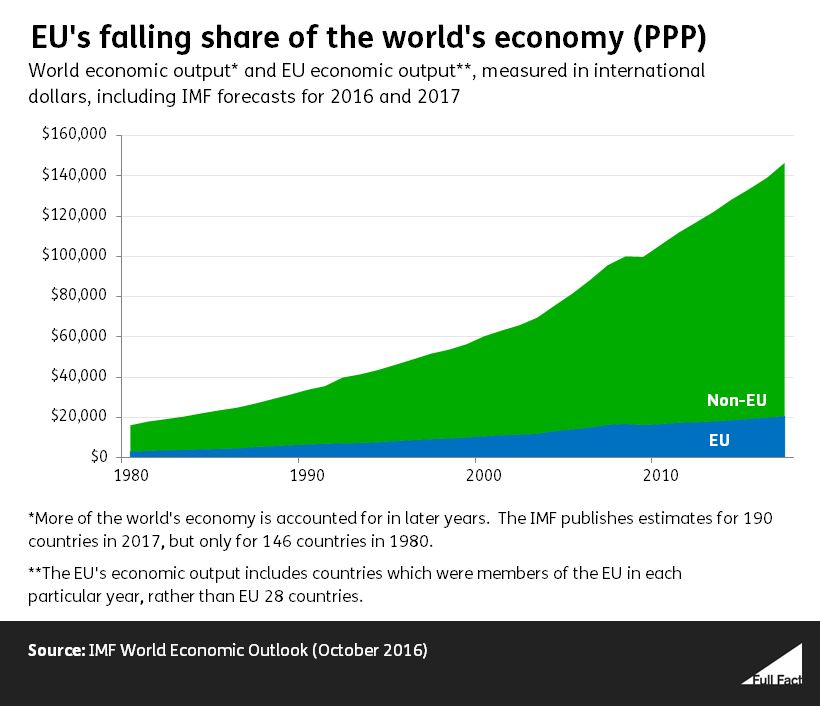
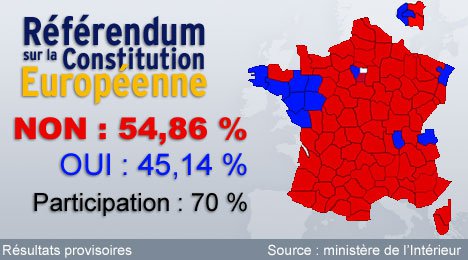
Of course, selling to the UK (and Switzerland) is a pain in the ass and therefore we don't ship to those countries.
Just an anecdote of how disunity within Europe affects small businesses and customers.