All: This thread is terrible and violates the spirit of this site in too many ways to list. HN is not a place for nationalistic flamewar or accusing each other. Please don't do that damage here. The container is fragile.
If this epidemic continues, we're going to do less "please don't" and more "we've banned". I don't mean the coronavirus— I mean the epidemic of violating HN's guidelines. Please review https://news.ycombinator.com/newsguidelines.html and stick to the rules when posting here.
The vast majority of the community come here for curious conversation, not to hear people bashing each other and their countries in the same few ways over and over again. That's not only nasty, it's tedious. Please take it elsewhere.
I truly don't understand why "expel Chinese journalists" was even considered as a reasonable course of action by the US.
It may not explicitly violate the letter of the 1st Amendment, but it certainly violates its spirit, not to mention invites reciprocal action like this that only deepens the fog of war over our most dangerous adversary power.
There are many, many legitimate ways to punish foreign governments, but the expulsion of reporters should never be among them, unless we are at war with that government.
"But China did it first!" Well, then we should highlight how outrageous and unacceptable that behavior is, and sanction them some other way. Not reciprocate.
It's kind of ridiculous all the way around. On the one hand, the U.S. should probably be more pragmatic in cases like this. On the flip side, I'm frankly surprised that they're simply being banned/removed from the country.
I'm all for calling out a lot of the issues on both sides of the ocean on this one, even if I do feel that the actions of one country are far worse than the other. Two wrongs do not make a right.
The U.S. should never have allowed more than half of any given industry (especially medicine and other essential infrastructure) to be produced overseas to begin with. The trade war was bound to happen, still, civility should always remain at the table.
> "But China did it first!" Well, then we should highlight how outrageous and unacceptable that behavior is, and sanction them some other way. Not reciprocate.
You're falling squarely into the trap that I believe China plays so frequently: the belief that every other group of people shares a compatible value system and culture and any disagreement can be resolved with diplomacy, but never force.
To be frank, the Chinese view us as dumb by setting restrictions on ourselves, in an effort to inspire them to do similar self-restraint measures.
This methodology is flawed and outdated, the Chinese are not the Russians.
We've had decades of letting China walk all over us. I'm not sure why this is unwarranted.
They ban our companies, we let their companies in with open arms. They tariff our goods, we buy theirs up. They steal our IP, we respect theirs. They manipulate their currency, we let ours float.
Open societies and open markets must remain open to each other. But that doesn't mean you roll over and allow a closed society to take advantage of you. Reciprocity is important.
Congress removed RT’s press credentials and gallery access in 2017. Major US journalism outlets were supportive of the move. Unfortunately even our own media increasingly favors deplatforming.
I agree with you on tariffs, IP, currency. But I disagree on journalism: provoking China to expel American journalists is the last thing one wants when trying to serve American interests.
Agreed, for the most part, more spread of knowledge is the best option. Arresting and deporting actual journalists (not talking heads) is a horrible move.
> They manipulate their currency, we let ours float.
Are you calling for us to manipulate our currency? We know they manipulate their currency, but that is not "letting them walk all over us". Economically, we let them get away with things as long as US corporations get very rich.
You present it as if the poor country that allows foreign companies to exploit its cheap labor is somehow the one taking advantage of the rich countries. Just ask yourself: is that a likely way for the world to work? Do you think the rich countries just let themselves get walked over in that way by much weaker, poorer countries?
Point-by-point:
> We've had decades of letting China walk all over us.
It's hard to square your view with the fact that American companies have made massive sums of money by exploiting cheap Chinese labor, or with the fact that when you walk around any Chinese city, you see American brands everywhere (Apple, Starbucks, KfC, GM, Tesla, all the fashion brands whose names I don't know).
> They tariff our goods, we buy theirs up.
China has massively reduced tariffs since the early 1990s. Average Chinese tariffs are now around 3.4%, which is similar to tariff rates the US imposed in the mid-1990s.[1]
> They steal our IP, we respect theirs.
Your view of IP enforcement in China is behind the times. Back when China was a largely peasant society shut off from the outside world, it had virtually no IP law. That has changed quite dramatically in the last decades. China is the world's most active venue for IP litigation now. Specialist IP courts have been set up in major cities over the past several years, and the statistics show that foreign companies are quite successful in enforcing their IP.[2]
American companies also take in billions of dollars in revenue by licensing patents to Chinese companies.
> They manipulate their currency, we let ours float.
Many countries intervene in the foreign exchange markets. China does so too, and limits capital flows in and out of the country. I'm not enough of an expert to know whether or not this is a wise economic policy, but I suspect they have good reasons (e.g., financial stability) for doing so.
However, there's no doubt that the RMB floats to a far greater extent than it used to. You can see this pretty easily if you look at a CNY/USD chart showing the past 20 years. The RMB moved very smoothly until about 2012, and since then has fluctuated much more like a normal currency. Of course, like most central banks, the PBOC will pull the breaks when it feels that it's important.
> You present it as if the poor country that allows foreign companies to exploit its cheap labor is somehow the one taking advantage of the rich countries. Just ask yourself: is that a likely way for the world to work? Do you think the rich countries just let themselves get walked over in that way by much weaker, poorer countries?
Your questions don't make a lot of sense, because the situation is much complicated than than a model with two monolithic actors ("poor country" and "rich country") can handle. For instance: "rich country" has powerful actors that work to benefit their own private interests against the national common good.
At a national level, industrial capabilities are more valuable than currency and finished product, but for many private actors, the opposite is often true. National time horizons are longer (or should be longer, as in multiple lifetimes), but private time horizons are usually much shorter (fractions of a lifetime).
> It's hard to square your view with the fact that American companies have made massive sums of money by exploiting cheap Chinese labor, or with the fact that when you walk around any Chinese city, you see American brands everywhere (Apple, Starbucks, KfC, GM, Tesla, all the fashion brands whose names I don't know).
What the US has had with China is private interests trading industrial capabilities for short term increased profit. The US government hasn't kept those private interests in check (because they're powerful), and China has been happy to take advantage of the situation.
You're talking about the United States vs. China, not China vs. individual American companies.
Over the past several decades, China has undergone massive internal structural changes, many of them at the behest of the United States. China has made massive changes to its economic and legal systems in order to allow foreign companies wide-ranging access to Chinese markets. Those changes allowed unprecedented profits for American companies.
But the way you're painting it, allowing American companies to exploit cheap Chinese labor, allowing them wide-ranging access to the Chinese market, where they sell enormous amounts of goods and dominate many market sectors, and constructing an IP enforcement system out of nothing constitute China taking advantage of American companies.
> You're talking about the United States vs. China, not China vs. individual American companies.
Actually, I was talking about something more like individual American companies & China vs. the United States.
> But the way you're painting it, allowing American companies to exploit cheap Chinese labor, allowing them wide-ranging access to the Chinese market, where they sell enormous amounts of goods and dominate many market sectors, and constructing an IP enforcement system out of nothing constitute China taking advantage of American companies.
What's so hard to understand? The idea is that American companies making profit selling Chinese-made goods to Chinese and Americans may not actually a very good deal for the United States. It's like a son selling his family's farm for the price of 10 years of produce and the paper title "king of the village," so he could focus on improving his underwater basket-weaving skills. Maybe that was a good deal for the son, but that doesn't mean it was a good deal for the family.
But the key point was to say the answer to this question, which you asked and seem to think is false, could conceivably be true:
>>> Do you think the rich countries just let themselves get walked over in that way by much weaker, poorer countries?
That question is a lot like this one: do you think king with a castle with impenetrable walls and overflowing storehouses will just let his enemy inside?
The answer is no, if the king is the only agent in the castle.
The answer is yes, if the guard manning the gate is an independent agent, and the enemy bribes him.
The answer to the question is very different once the model is expanded to include more agents with different motivations. The two-agent model implicit in your question is too simple for this topic.
> Actually, I was talking about something more like individual American companies & China vs. the United States.
> [...]
> The idea is that American companies making profit selling Chinese-made goods to Chinese and Americans may not actually a very good deal for the United States.
What it sounds like you're upset about is actually the growth of international trade and deindustrialization in the US. You're putting it in crude and xenophobic terms: China taking advantage of the US.
American workers who have lost their jobs or who saw their wages decrease certainly were taken advantage of. It wasn't by the Chinese, or the Japanese, who were the bogeyman in the 1980s. It was by an impersonal and ubiquitous economic system. It's much easier to direct your hatred towards a specific, tangible enemy, however, which is why the xenophobic answer is so popular. Just point the finger at the foreign workers earning their pennies an hour, rather than understanding the broader economic forces at work.
> What it sounds like you're upset about is actually the growth of international trade and deindustrialization in the US. You're putting it in crude and xenophobic terms: China taking advantage of the US.
Actually, what it sounds like is that I was correcting you on on oversimple model you were using to make the point to another poster that everything is peachy. Throwing around terms like "upset" and "xenophobic" is not a good way to have a productive conversation.
> It was by an impersonal and ubiquitous economic system.
"Impersonal an ubiquitous economic systems" have no agency, btw. The system didn't do anything.
Just point the finger at the foreign workers earning their pennies an hour
Yet another actor that's missing from your model is CCP policy makers.
>(Apple, Starbucks, KfC, GM, Tesla, all the fashion brands whose names I don't know).
Apart from Apple and Tesla, all the others are Co Partnership before they could enter. Tesla wasn't even allowed in for a long time, Apple also have their restrictions especially with sourcing parts.
>China has massively reduced tariffs since the early 1990s.
I wonder how that was calculated. Try importing anything into China and see if it is anywhere near a single digit. There is a reason why huge amount of products are still smuggle through grey channel into China via a few places.
>Many countries intervene in the foreign exchange markets.
Try doing business inside China with US / Foreign government support. I doubt you can move much money out of china without getting lots of trouble.
> all the others are Co Partnership before they could enter
Foreign companies got to exploit cheap Chinese labor and got access to a large consumer market, but they had to work with a local partner. American firms still benefited hugely from access to Chinese labor and consumers.
By the way, these local partnership restrictions are now gone from most economic sectors in China. They're a reasonable tool for a developing country that doesn't want the relationship with foreign capital to be purely exploitative.
It's hard to get the impression that China is the one exploiting the US when you walk around a Chinese city and see the extraordinary amount of business US firms are doing in China. Chinese companies don't have anything approaching that level of presence in the US.
> I wonder how that was calculated. Try importing anything into China and see if it is anywhere near a single digit.
By total value imported, I think. China taxes 3.4% of the total value of imported into the country.
> I doubt you can move much money out of china without getting lots of trouble.
There are capital flow restrictions. Are those unreasonable or unwise?
Congress did the same with RT, revoking their ability to access and report on Congress in late 2017. I don’t see how this is particular to the president.
I think it's telling that the piece that started this whole episode was a WSJ opinion piece - I agree with you that the opinion sections of all three of these papers are pretty bad and that the WaPo opinion section in particular is a US military propaganda outlet by any reasonable definition. It's unfortunate that this is affecting their legitimate news gathering arms.
The opinion articles are on the same webpage, about the same topics as the “non-opinion” articles. The single indicator of the “opinion” status of these articles (which in the case of all papers mentioned here is just the word “opinion” above thw articles) is easy to miss on a skim.
If you ask me, the same journalism standards should apply to every word on the website of any news outlet that wants to claim to be “unbiased.” Whether a paper without opinion sections would stay in business is a good question of course.
Yeah, to me the main problem isn't bias it's just that:
1. It's not possible for any human to produce insightful opinion pieces on anything close the schedule that oped writers are expected to
2. So opinion pages end up being full of mediocre filler
3. The writing thus ends up just being a regurgitation of the biases of the writers / editors
If freedom of speech is something we truly care about, it is absolutely not the Government's business to crack down on individuals it chooses to view as "propagandists"
Do we care about free speech or intelligence against our “adversary”? The original comment talks about both and muddies the waters by trying to appeal to both cynics and idealists.
Cynics invited into the discussion absolutely prefer cracking down on propagandists in the US, and keeping “good” journalists in China.
I remember a very different consensus on that when it was Russians and fake news, with a lot of fear that the disinformation would destroy our democracy.
Why is China somehow different? They even have paid online trolls at a level that other countries can only dream of.
In one case you're talking about the rules on if people can gather information. In the second you're talking about the rules on what it's reasonable to publish.
Few are going to argue the merits of China publishing lies which is the same as when Russia does it. What they will argue is that banning journalists from gathering information be it russian or chinese is wrong.
Not within their own nation, for sure. But there is definitely a line somewhere between journalism and information warfare. The information age has brought with it a golden era of information warfare, and while the lines are blurring, they are still there. The dissemination of falsehood or misrepresentation directed by a government for the purposes of geopolitical influence is not journalism.
We're talking about foreign agents working for a communist government's state-controlled media. So yes, the federal government should "be in the business of" managing this.
Kind of depends doesn't it? If those propagandists are, say, promoting the disuse of vaccines or that drinking garlic water is a cure for COVID-19 to intentionally harm Americans or the government? What if "journalists" convince a country to do something that's objectively bad for the country? Maybe, idk, Putin shills helping to convince people to vote for Brexit? I guess that's ok?
"“There is enough for everybody,” German Agriculture Minister Julia Kloeckner said, castigating people for spreading panic by posting fake reports that supermarkets would be closing. “
When free speech causes panic (like shouting fire in a theater) or results in people actually dying, that's a problem for government to help solve. Writing some sort of op-ed is one thing. Actually working to undermine a country through the veil of journalism is another, especially if those people work for a disgusting dictatorship, like China.
Or do we let people have "personal responsibility" and vote for more Brexit?
That’s not what I’m saying. It’s the propaganda and lies from the campaign fueled by Russia to dismantle E.U. integration that I’m talking about. Its too easy for a country to just pay someone to be a journalist and spread propaganda, while also banning it in their own country. Tools of liberal democracy can and are being used against us, so we need to ensure that we limit their damage while respecting liberty.
I do believe that the influence of Russian propaganda is vastly overestimated by you and others. I believe that they are paying and trying to influence and/or harm Western societies, but it's working because those are obvious break-lines that have been created over the past few decades.
I see it more like a glacier that is going to calve any minute, and Russia is a guy with a 2x4, using it as a lever to help widen a crack: in the grand scheme of things, it's insignificant.
RE "banning it in their own countries": of course, that's what authoritarian states do. It's always been my belief that if you want to uphold your standards as a country with a free and independent press, you need to accept that this can make things difficult. And your press must always, even if they think it hurts, be critical and vigilant.
The US media all falling in line for the Iraq wars multiple times in a row and essentially becoming propaganda outlets did immense damage. That they admitted as much afterwards and promised to do better is noble (and is a major difference, that wouldn't happen in the state-controlled media of Russia, China or Turkey), but ultimately useless.
I understand that they feel they have a responsibility to not harm their governments, but imho they are harming their societies much more by abandoning their role as an independent fourth power in democracy. If media companies discredit themselves, they're doing the enemy's work. If you know I'm out to get you and you keep lying for whatever reason, you're really making my job too easy, because all I need to do is point it out.
Russia didn't fuel Brexit. There's a long history of skepticism towards the EU in Britain. The idea that Russia could move the needle on British public sentiment towards Europe to any measurable degree is crazy.
We need less panic about what terrible political opinions people might voice and more trust in freedom of speech.
And there's no evidence that Russia tipped Britain over that edge.
Britain's relation to the continent is something that people in Britain have a long history of having strong opinions about. It's utterly implausible that Russia could effect a 1% shift in public opinion on such a vital subject.
There was an intense, years-long debate inside Britain about EU membership. Trying to blame Russia for that is just ridiculous. It's a demonization tactic used by people who are upset about their countrymen's opinions.
> When free speech causes panic (like shouting fire in a theater)
You’re paraphrasing Schenck v. United States, part of a series of Supreme Court precedents that upheld such practices as imprisoning people for advocating draft resistance and organizing communist parties.
Ok, when there is extreme bias for untruthful, factually incorrect, obtuse and imbalance in HN opinions, I resign. I want to be part of a community that is not overrun by falsehood and hypocrisy.
I shall resign from HN. It was fun.
Btw, I have a lot of respect for you and generally doing a great job at moderating this forum. I’ve just had it enough with the people that exist here.
In fact the most infamous pro-Russian propagandists ever employed by the NYTs won a Pulitzer Prize for his propaganda. It took the NYTs a few decades to really admit it, but at least they came clean in the end.
There may be Pulitzer winner journalists working for these newspapers, but that does not prove the quality reporting is homogeneous. Actually the worst type of lies are the ones mixed with truth to hide the lie.
You should be talking about the credibility of the CCP state media then? I'd rather have WSJ with decades of history of reputation vs. CCP State Media which is by definition owned by the CCP.
After listening to Radio Free Europe for some years i think it is safe to say that there is no difference between communist and capitalist propaganda. They both serve the "good" against the "evil".
It's the rampant moral relativism and whataboutism.
It's why comments are frequently getting killed for pointing out China's early actions caused this global disaster, while simultaneously hundreds of comments are allowed to praise China (while they refuse to take any responsibility as a nation, even denying that it originated in China, and aggressively campaign with propaganda to blame the US for invading Wuhan with the US army to apparently launch a war against China and to attack China with a bioweapon and blah blah fucking blah).
For starters could you please point out where exactly this "reputable journalists" vs "CCP propagandist" topic has been defined?
On a subject "CCP Propagandists" were still officially a journalists. You might not like them and they might as well be a propagandists but there are agreements and written and unwritten rules in international politics and diplomacy. When said rules are broken you get tit for tat reaction.
> On a subject "CCP Propagandists" were still officially a journalists.
Is journalist a title that's "officially" bestowed or gained from honestly trying to report the truth, as the journalist best understands it?
I would argue that someone who's job is to knowingly push [1] a false government narrative in newspaper articles is not a journalist at all.
[1] I need to really highlight this phrase here, even honest journalists can be mislead or honestly report the statements of others who intended to mislead.
"I would argue that someone who's job is to knowingly push [1] a false government narrative in newspaper articles is not a journalist at all."
The term journalist has definition that depends from country to country. Generally all foreign journalists are given an accreditation by government and recognized as such, giving them certain privileges and responsibilities. Your personal opinion about this matter means zilch to any government.
There are thousands and thousands of journalists working for foreign governments, friendly and hostile, in the United States. Some hostile foreign governments even operate domestic broadcasting operations in America. (China, Russia, etc...)
The worst thing that's ever been done in recent memory is requiring those operations to register as foreign agents. And I think at one time there was a move to limit the Kremlin's cadre to something like 1,000 people. But I might be remembering that part wrong.
“Our goal is reciprocity. As we have done in other areas of the U.S.-China relationship, we seek to establish a long-overdue level playing field,” Pompeo said in a statement to CNBC about the cap. “It is our hope that this action will spur Beijing to adopt a more fair and reciprocal approach to U.S. and other foreign press in China.”
Reciprocity = you limit our journalist we'll limit yours.
I expect a ban on those 100 remaining Chinese state media journalists.
What a ridiculously stupid goal. If we had a goal of reciprocity with every authoritarian dictatorship we'd end up enacting their policies until our government looks no different from our adversaries'.
You can't force other countries to behave how you'd like. Some countries don't have freedom of the press. The United States should not be in the business of restricting freedom of the press in order to pressure other countries to respect it.
The goal is for the United States to follow the principles laid down in the Bill of Rights. Throwing those out in order to pressure other countries is a terrible idea.
The way it was done in the past is by being ridiculously stronger than the other participant. So you let your Pakistani or Iraqi counterpart make a big show to appear strong to their people and you do nothing because you still have them under your thumb. Unfortunately, China is now one of America’s peers so it’s necessary to establish the level playing field.
Calling a country a sick man has no relation to the sickness of their people but the trouble of their government. The Ottoman Empire was the sick man of Europe/Middle East referring to their collapsing empire. China might be the sick man of Asia if rumours of their massively slowing economy is true.
> Sick Man of Asia though was mainly referring to the opioid addicted Chinese population at that time.
Was it? I thought that it mainly referred to the weakness and dysfunction of the Imperial Chinese government, which was a major contributing factor to that.
Well is there an official source to decide on this matter? However, culturally I'm pretty sure my answer is what the majority of Chinese think. If you happen to have Chinese friends you can ask them as an informal poll.
> Well is there an official source to decide on this matter? However, culturally I'm pretty sure my answer is what the majority of Chinese think. If you happen to have Chinese friends you can ask them as an informal poll.
The Wikipedia article for the term several examples of the term being used to refer to other Asian countries without opium addiction problems, which wouldn't make any sense if the term was generally thought to refer to the "opioid addicted Chinese population at that time."
> But like the "sick man of Europe" term, it has also been used to refer to other Asian countries in the 21st century.
> For example, in an article entitled "The Sick Man of Asia" Michael Auslin refers to Japan, not China (writing in "Foreign Affairs", 3 April 2009).
> And in a 9 March 2018 article in "Consult-Myanmar" entitled "Myanmar No Longer the "sick man" of ASEAN - the Honour Goes To..." both Myanmar and Thailand are called the "sick man of ASEAN".
> In another example, in 2014 at the Euromoney Philippines Investment Forum 2014, President Benigno Aquino III of the Philippines publicly defended his country from being labelled as the new "sick man of Asia", citing a Japan External Trade Organization survey that showed "the Philippines as the second most profitable among ASEAN-5 countries, next to Thailand."[3] Reasons for the perceptions Aquino was refuting include its unequal prosperity and serious poverty, since from 2000 to 2006 its nominal income grew by 37% while its Gini coefficient only fell by 5%.[4] Another cause for the "Sick Man" label includes Filipino political corruption scandals such as the Priority Development Assistance Fund scam.
I'm pretty sure you're right when you refer to how Chinese people understand the term, but part of the problem is that I think that understanding is very specific to the Chinese cultural context.
The same wiki source in Chinese language though gives a completely different picture and with much more information and sources on how the terms is used in the last hundred year in Chinese language.
In the end it doesn't matter which entity did the speaker of this term intend to refer to. The recipients have their own judgement due to the culture they raised from.
> In the end it doesn't matter which entity did the speaker of this term intend to refer to. The recipients have their own judgement due to the culture they raised from.
But it does matter. Does an utterance mean what the speaker intended it to mean, or what the listener understood it to mean? The answer is both.
Say I speak a foreign language with very important message to an audience that doesn't understand this language at all. Nobody in the audience understood the message after I spoke. Does what I said matter? I would consider the communication has failed completely.
edit: But I guess WSJ wasn't speaking to Chinese. Anyway I can only see the misunderstanding deepens and deepens between U.S. and China. Language is one of the contributing factor. Western media is not incentivized to report truth but stories with most clicks. And it's hard for regular westerners to verify those stories without understanding Mandarin or talk to Chinese.
> For context, "sick man of Asia" is up there with the n-word and drawing pictures of Mohammad in terms of its ability to offend a group of people.
And it's one of those things that requires a lot of culture-specific sensitivity. The phrase really pushes Chinese buttons, but most of the world is not similarly sensitive to it.
Similarly, blackface is highly offensive in the US, but a skit in on one of China's state-run TV networks featured it a few years ago in it's very prominent New Year's gala program:
> For context, "sick man of Asia" is up there with the n-word and drawing pictures of Mohammad in terms of its ability to offend a group of people.
Yikes I'm sorry, no that's simply not true at all. When you can't even type the other word out you are referring to it's not in the same realm of conversation. What is this fascination of trying to control people's speech?
And I'm sorry, people should be able to draw Mohammad as they please. Someone's religion should have no bearing on someone's freedom of expression. Religion has become a cancer to our society.
Aw, WSJ videos covering China were some of my favourite content. China is really lashing out.
Nothing is surprising since they banned Zedd from China simply for liking a South Park tweet, he's a very popular (and harmlessly generic) pop musician:
"Shooting the messenger" refers to envoys, emissaries, ambassadors, and other official agents and representatives. Harming them has led to some devastating consequences for the people doing the harm.
Supposedly, but we'd never actually know about the times where the message died with the messenger, would we? For all we know it's incredibly effective.
I don't believe this is true, I'm just pointing out we'd have no way of knowing.
You are referring to the examples where we found out about the message. But it's impossible to know about the times we did not find out about the message, because we never found out! This could be because it never happened, or because the message was contained.
It's theoretically impossible to know. This is just a fun thought exercise though, not trying to have a real argument.
There are plenty of cases where the message was contained in the short term, but became public later on to no great consequence.
For example the president maneuvering the US into WW2 would have been a scandal at the time, but after the war WW2 was seen as inevitable so the now pubic records didn’t cause an uproar.
Or the MKUltra declassified documents. If it has come out at the time, it would have been scandalous, but 30 years later it’s seen as not worth pursuing criminal charges, or even stopping similar things from being done in the future.
Given their threat this week to withhold ingredients for pharmaceuticals, we should be seriously reconsidering the amount and kind of trade we do with China. We'll see whether they continue in this, but it has a whiff of Faustian bargain at the moment.
Well then cut the trade and declare them official enemy. For now big corporations from either country laugh all their way to their banks while we conduct holy battles on HN.
Probably a mathematical model of human societies accurate enough to predict how they react to carefully tailored messages inserted into popular media and how to use this to control their behaviors. The world's most advanced militaries are useless when their societies refuse to use them or turn them on themselves in civil wars. As individuals, the effects of such a weapon would be almost invisible as it targets the behavior of humans when they interact as a group. Even if you consciously knew this is going on, society as a whole would still unconsciously follow the playbook planted for it.
This is a big hit for journalism about China. A lot of very good quality reporting on (among others) Xinjiang came from these people. We will all be much less informed about China in the future.
The subtle shift in confidence that this action implies is that China is confident in itself after "beating" the virus while the west is struggling.
A "media war" between China and the US might be worse than a trade war. While a trade war is just about numbers, this will be about ideology and there will be no middle ground.
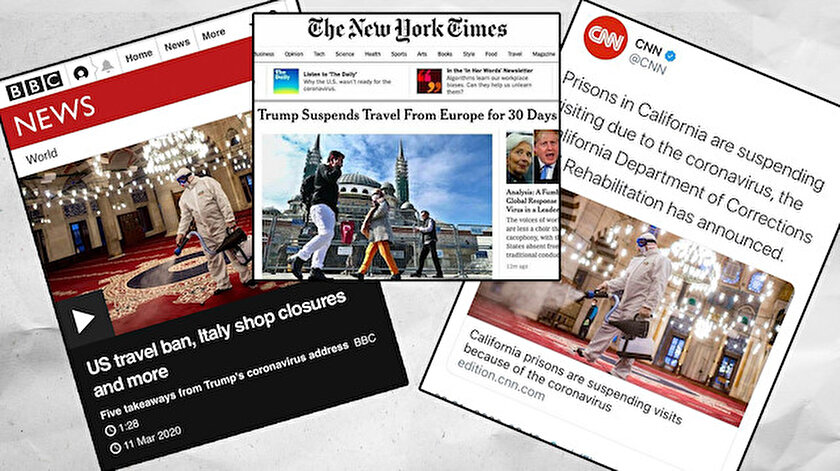
There's growing resentment against Western media for the way the news reported. Take a look at following links. I saw one of them personally on NYTimes couple of days ago. The one from CNN below the banner reads "California prisons" but the picture is from a mosque in Istanbul. One incident is a mistake, but multiple times same "mistake" only show malevolence.
Seems like a weird mistake that somehow got propagated to multiple platforms at once. What would be the ulterior motive of portraying Californian prisons as ornate places of worship? I don't see any political angle here, so it seems reasonable to assume it was a mistake.
(I didn't downvote you. As far as I'm concerned, CNN is frequently sloppy and deserves criticism for that.)
When people coming back from Iran were getting COVID-19, all the articles reporting on it were pictures of the New York Chinatown. It wasn't even to showcase people wearing masks either, in one instance it was literally just a picture of the exterior of some local Chinese Restaurant.
I don't think so at all. A prison in CA from inside or outside looks completely different than a mosque in Istanbul. Here's what you get from Google for "coronavirus prison".
In reality, it's just that these outlets are the only ones with large bureau operations. There are plenty of other independent reporters and smaller sources with much better coverage.
EDIT: FYI, couldn't read the article due to a paywall, did a search, found out some about the history. Thought this added information to the conversation. Yes, this is clearly propaganda, but I still thought it was interesting. You're all of age, you can read this sort of propaganda without being harmed.
I was in Cuba for a couple weeks at the beginning of January. Our tour included a visit to the Bay of Pigs Invasion Museum which was pretty interesting. They didn't really have a reason to spin who won, but the ideology behind the conflict was vastly different than what I had learned in a US school.
I've been convinced for a few years (and I'm older than most here), that we really need to do a lot more to understand both sides of any situation. We probably still won't agree but it will cut down on the unconditional dismissal of alternate opinions. At a minimum we might learn something.
Many people have been conditioned by politics to look at the other side of the story as "propaganda", as if a lot of what we read in major newspapers isn't also full of propaganda...
This is an information war. The US is also banning Chinese journalists. In the end, everybody is losing and I don't see anyone here doing the right thing.
I definitely suspect that might be the case. In order to push back against local public anger, the Chinese government have invested a lot of credibility in the idea that their handling of Covid-19 is a shining model for the rest of the world, but it just doesn't feel like it should work. Exponential growth being what it is, if it failed it'd be possible to remain in denial for a while and cover it up for a while longer but sooner or later...
> Your first paragraph makes clear why freedom of the press is necessary.
Like I said in my other post: the claim that they "covered it up for months" is nonsense.
I get that freedom of speech is an important value to you, but this is a strawman argument to try to support the ideal of freedom of speech, while completely ignoring the reality. The US has had 2 months to prepare for COVID-19, and what happened in the US even though you had freedom of speech? Cover-ups, or -- a more charitable interpretation -- incompetence in information sharing.
Free speech is an important value. But don't pretend like it's some kind of panacea. You will do the ideal of freedom of speech much more justice by recognizing its limitations, because only then can you truly leverage its benefits while mitigating its weaknesses. Anything else is like driving with your eyes closed and thinking "I'll be fine".
"Like I said in my other post: the claim that they "covered it up for months" is nonsense."
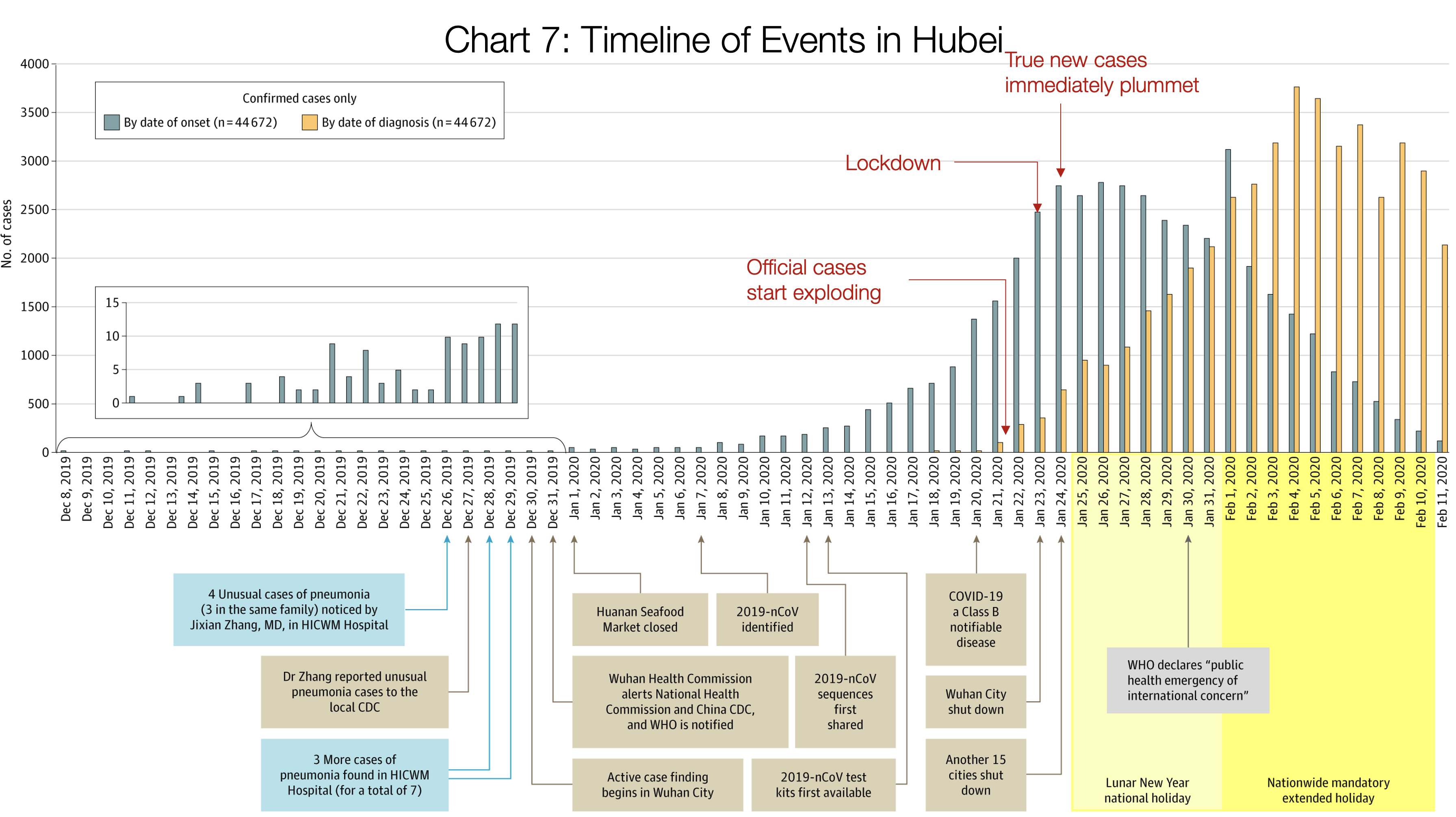
There was an outbreak, but it was covered up for many weeks. Doctors that came out were silenced by the government. Anyone talking about it on Chat platforms like Wechat were also censored.
"The US has had 2 months to prepare for COVID-19, and what happened in the US even though you had freedom of speech? Cover-ups, or -- a more charitable interpretation -- incompetence in information sharing."
Well. through January we were going through the shampeachment, which I think many people seem to forget about. This was keeping the government busy, when they should have been thinking about ways to combat the virus.
Trump banned flights to China early on. The mainstream press called him a racist after doing this. This is probably the single best thing that prevented large amounts of people from getting infected.
"Free speech is an important value. But don't pretend like it's some kind of panacea. You will do the ideal of freedom of speech much more justice by recognizing its limitations, because only then can you truly leverage its benefits while mitigating its weaknesses. Anything else is like driving with your eyes closed and thinking "I'll be fine"."
If Chinese citizens had the freedom of speech, we would have known about the virus much earlier and we might have actually been able to prevent the spread to countries like Italy.
I'm not sure why you are defending an authoritarian government that clearly prevented the world from knowing about a pandemic that has already killed thousands of people.
My guess is that you are one of the many people paid by the Chinese government to shill for them and spread propaganda.
We've banned this account for flamewar and personal attacks. If you don't want to be banned, you're welcome to email hn@ycombinator.com and give us reason to believe that you'll follow the rules in the future. That includes not creating multiple accounts to break the site guidelines with.
> There was an outbreak, but it was covered up for many weeks. Doctors that came out were silenced by the government.
Interpreting this as "silencing" implies that they had full knowledge of what it was and what its danger was.
In the early days, they literally didn't know that there is a new virus, they just saw a bunch of unknown illnesses. That could be caused by many things: problems in medical equipment, misdiagnosis, incompetent doctors, non-biological agents (e.g. toxins). There were also few cases. No, they didn't know what it was until late December. They also didn't know how dangerous it was until early January, when human-to-human transmission was confirmed.
> Doctors that came out were silenced by the government.
Now, I'm not calling "hypocrite" -- that's not my point. But I will ask you this: might there be valid reasons for silencing?
One reason is to prevent panic, which can make things worse. If we accept the premise that sometimes it's acceptable to censor, then we arrive at the following question: under what conditions is it acceptable?
I can imagine that the following conditions would give some reasonable basis (and feel free to disagree with me): 1) the claims can cause widespread panic that makes things worse, and 2) there is no evidence that the claims are true.
Before late December in China, both conditions 1 and 2 are true. People still remember SARS and the panic that came with it. And mid-December there was absolutely no solid evidence that there's a new virus -- like I said, it could be a lot of other things, maybe even innocent things misdiagnosis.
You are free to disagree with when censorship is acceptable. Maybe you think it's never acceptable. That's fine. My point is: the situation is a lot more nuanced than just "OMG China is silencing doctors so China is evil". And it's always easy in hindsight.
And another thing to get things straight: that "whistleblower doctor" was not put in jail, nor killed. He was warned by the police not to spread rumors, and had to sign an NDA. That's it. Nothing really bad happened to him. It's sad that he later contracted the virus but that's a coincident.
The Chinese supreme court even ruled in his favor, saying that the police shouldn't have reprimanded him. https://edition.cnn.com/2020/02/08/opinions/coronavirus-boci...
I quote from CNN: [Weeks later, China's Supreme Court vindicated him and other "rumormongers" by saying, "It might have been a fortunate thing ... if the public had listened to this 'rumor' at the time..."]
Even CGTN, a state-owned media company, publicly admitted that the police's treatment of the doctor was wrong.
> Well. through January we were going through the shampeachment, which I think many people seem to forget about. This was keeping the government busy, when they should have been thinking about ways to combat the virus.
I'm sure all of that is true. But if anything, that just proves my point: freedom is speech should not be treated as a panacea. One cannot just say "oh if China only had freedom of speech then X would never have happened" -- no, your situation literally proved that freedom of speech doesn't prevent X from happening. It may help a little, but evidently it doesn't help much.
"But we were busy with other things" is not a valid excuse. There's always something else that keeps anyone busy.
> and we might have actually been able to prevent the spread to countries like Italy.
I'm surprised people can still claim this. This is a contradictory statement.
1. You say freedom of speech prevents the virus from spreading inside China, where there are no internal borders. So why did it not prevent spreading to Italy, a foreign country with a border, who even saw it coming 2 months in advance?
2. If Italy (or the US) evidently could not prevent it despite freedom of speech and being a much higher barrier for spreading than internal China, then why do you still claim that freedom of speech could have prevented the spread in China?
> I'm not sure why you are defending an authoritarian government that clearly prevented the world from knowing about a pandemic that has already killed thousands of people.
It's because that "authoritarian government" isn't what you think it is. You have a wrong image of what China is. It's not entirely wrong: there are cores of truth. But it's no more than that: a core. The full picture has been wildly exaggerated beyond any reason. Your image of China is a caricature, not reality.
> My guess is that you are one of the many people paid by the Chinese government to shill for them and spread propaganda.
Dude, check my profile history and my Github account. I'm a real person and I live in the Netherlands. I'm a normal person, who's had a western education, who genuinely disagrees with you because I know about the real China, not the fictive China painted by US media.
Not to mention that Europeans don't held the US in such a high regard as they used to. So it shouldn't be weird for you to see a European trying to kick American comments off their high horse.
" So why did it not prevent spreading to Italy, a foreign country with a border, who even saw it coming 2 months in advance?"
Italy didn't ban travel early enough and their medical system couldn't keep up with the amount of people that ended up sick. The result is way more deaths and infections.
"If Italy (or the US) evidently could not prevent it despite freedom of speech and being a much higher barrier for spreading than internal China, then why do you still claim that freedom of speech could have prevented the spread in China?"
You need to actually do something when you are warned.
Italy didn't, the US did. Keeping things closed/no freedom of speech will only hurt everyone in the long run.
"Your image of China is a caricature, not reality."
Have you lived in China for long periods of time? Do you know anyone born in China? It's both for me. Most people don't truly know how evil the Chinese government is.
5 days to report the case to national authorities and to the WHO.
Okay, there are sources out there that state that the first case may be from as early as mid-November. But come on: it's a new virus. They had no idea what this is until late December. It's literally recognizing a needle in a haystack while not knowing that there's a needle. What can you reasonably expect from them?
> The press has also recently tried to float the conspiracy theory that the US government planted the virus in Wuhan back in October.
That's not what China claims.
China says this is a possibility that the virus naturally originated from the US. Huge difference from "planting". This claim is based on DNA research of the virus, as well as timing:
1. The US seems to have older generations of the virus than China. How I have no idea how they identify virus generations but supposedly it is possible to see this in the DNA. Maybe someone who is more knowledgeable can fill in.
2. The start of the virus coincided with some military games event where the US army visited Wuhan.
China is not saying the US engineered and planted the virus. It is saying the virus might naturally have started in the US, where it went undetected and brushed away as an abnormally bad flu season.
Now, this is still very much speculation and there's no hard evidence, I will give you that. But the US CDC isn't exactly doing a good job with investigating the general situation in the US population. This claim by China is easily refuted so why isn't the US doing it?
Again: I get that you dislike China, but that's no reason for throwing exaggerated or wrong accusations around.
> China says this is a possibility that the virus naturally originated from the US. Huge difference from "planting". This claim is based on DNA research of the virus
Their theory doesn't hold : if the virus first started in the US there should have been loads of cases of "flu", hospitals flooded with patients etc like we saw in China and see in Europe now.
In absolute this virus is not that deadly (what's a few thousand more deaths for a country ?), what makes it so problematic is the massive number of people needing intensive care for up to a month.
I think the Chinese are trying to counter the bad propaganda they're receiving from the West so that they're not held accountable for it in the eyes of the rest of the world.
I hear this line a lot "Countering bad propaganda", but I don't see the bad propaganda anywhere.
For example, it is extremely seldom mentioned in the U.S. media that the virus emerged at a location very close to a lab that was researching hybridized SARS viruses, and the true origin of the virus is still unknown. It is known that the origin was not the seafood market.
Yet, on the other side, you have high level Chinese government officials spreading completely unfounded theories that the virus originated in the U.S., and threatening to withhold pharmaceuticals unless the U.S. apologizes to and thanks China.
Honestly I think that this strategy will backfire for China. If the Chinese government continues to act this aggressively, it will stir up absolute rage in the minds of the American public against China, where now there is virtually none.
I also think the "virus originated from US" is far-fetched given the available evidence (though I still think "virus didn't originate in China" is at least still plausible -- and even important to research for the sake of public health).
However, you're saying that the US media "seldomly" mentions that the virus originated close to the Wuhan virus lab? I see the "virus escaped from Wuhan lab" speculation being thrown on the US social media all over the place. There's even a senator that spared no effort to spread this "news".
I'm absolutely not saying that the Chinese speculation of the virus originating from the US is any better. But let's not pretend that the US is the "better man" here.
> Yet, on the other side, you have high level Chinese government officials spreading completely unfounded theories that the virus originated in the U.S.
I see very prominent American political figures giving interviews on national Cable news channels spreading the theory about the virus escaping from a Chinese lab.
> If the Chinese government continues to act this aggressively, it will stir up absolute rage in the minds of the American public against China, where now there is virtually none.
Most of the messaging the Chinese government puts out, especially in English, could not in any way be characterized as "aggressive." They've been putting out some interesting documentaries about the fight against the epidemic in Wuhan, as well as feel-good reports about the aid they're sending to foreign countries. I do see a lot of "aggressive" American rhetoric going in the other direction, however. Case in point: the way that high-ranking members of the Trump administration insist on referring to CoVID-19 as a "Chinese virus."
Beyond that, there's been a crazy amount of anti-Chinese sentiment stirred up in the US, ever since the beginning of the trade war.
The statement is prepended by a big “if” though, and is not a declaration of something that will definitely happen. “If we refuse to give medication to the US then they will drown in a sea of coronavirus”.
The statement is also preceded by complaints about how the US has been unfairly attacking China during the virus crisis.
I understand that you are not happy about this “threat”, or even this “potential of retaliation”. My opinion though is that the US is not altogether innocent in this. It would be best for everyone if this trade war and this “maximum pressure on China” policy ends.
I don't agree with the Trump administration's tone, but factually, the virus is from China, specifically Wuhan. Many viruses, bacteria, and other diseases are named for their place of origin.
Even if you don't believe that the virus came from the Wuhan lab, the other reasonable explanation is that it came from the human consumption of either a bat or a pangolin. The consumption of these animals was implicated in the outbreak of SARS, and China did not put a stop to the practice. Either way, the Chinese government bears significant responsibility for the situation we're in.
So the Chinese response to referring to the virus by its place of origin is to threaten to withhold pharmaceuticals that potentially millions of lives depend on in the U.S.
If "The Chinese people's feelings are hurt", we can no longer rely on them to do anything. In fact, if their feelings are hurt, they are prepared to kill millions of Americans as revenge.
Obviously this is not a trading partner that can be relied on to provide anything more important than cheap plastic crap we buy at Wal-Mart.
I am not disputing whether Wuhan is the first major outbreak area. It is. But that is not the interesting part.
> Many viruses, bacteria, and other diseases are named for their place of origin.
This hasn’t been a thing for a long time. H1N1 is not called mexican flu. Ebola is not called congo disease. WHO officially designated Covid19 as the name. There is no reason for US officials to keep calling it china virus other than to stir up hate.
What bothers me more is that you are so focused on blaming China rather than on more productive things, like actually fighting the virus. The 2 months advance warning has been wasted on playing the blame game instead of ramping up production of medical equipment, or other preventative measures. Sigh.
> The consumption of these animals was implicated in the outbreak of SARS, and China did not put a stop to the practice.
Wildlife food is banned now.
> the Chinese government bears significant responsibility for the situation we're in.
What responsibility do you have in mind? Should China dissolve as a country? Should they pay reparations to everyone?
Is there legal precedence to this? How did Mexico and Congo take responsibility for swine flu and ebola? I am not aware of any precedence wrt reparations for a disease outbreak. Maybe you are?
But there is precedence for heavy reparations from a country as a general concept. Germany after WW1. The allied forces blamed everything on the Germans and exploited them. That generated resentment, leading to the rise of Hitler. We know the rest. The lesson here is that playing the blame game too heavily is a dangerous thing.
There is also an anti-reparations case study. Britain and other European powers exploited China in the 19th century. Literally forced the Chinese at gunpoint to become drug addicts. China never asked for reparations for those practices. They don’t blame foreigners, they blame themselves for being weak.
And can you guarantee that at no point in the future will there ever be a disease outbreak that originates from the US? How will you implement this guarantee?
In any case, China is sending aid to Iran, Italy, Spain, Japan and more.
> In fact, if their feelings are hurt, they are prepared to kill millions of Americans as revenge
Withholding help is not the same as killing. Not even in the same ballpark. Nobody is entitled to help from others.
Ok... I'm not expecting China to actually take responsibility, I just think that they are responsible. What they will actually do is make excuses and threats as you just did. Given we know this, it makes sense to not rely on them for anything important.
Keep in mind this is China clapping back at senior US administrations forwarding the Wuhan bioweapon theory and Pompeo insisting on referring to the virus as the "Wuhan / Chinese" virus in public statements. This is a dangerous (though not random) escalation. New generations of Chinese diplomats is embracing Trumpian style of propaganda, it's is a large deviation from their traditional messaging. People keep conveniently ignoring that the current US administration set the tenor for the Chinese confrontation and other diplomatic relationships. They'll condemn the lies, tone and disrespect when current admin deals with allies, but embrace it when it comes to China - and are surprised that like US allies, China will eventually assert themselves. At the end of the day, US sentiments is determined by US propaganda, China was never going to win Americans over. This display is for domestic Chinese audiences and seed doubt in other countries.
E: I don't agree with the new direction, but it's something different and not entirely unexpected after 4 years of aggressive US propaganda, things will only get worse unless Pompeo and Trump deescalates. Politiburo has ran out of patience like many US allies, except China is large enough that they can afford to speak their mind and retaliate rhetoric in kind. Keep in mind TPP and Pivot to Asia under Obama was explicitly designed to target China, but anti-Chinese sentiments and nationalism (on both sides) never got out of hand until Trump decided to weaponize it.
Also those newspapers were publishing propaganda pieces accusing the Chinese Government of acting in bad faith during the epidemic. That doesn't go over well at all.
Don't forget that the US Government has sought to pursue charges against journalists under the espionage act for reporting on government misconduct, and that America's great firewall (Facebook) started suppressing RT after the 2016 election. Also, Al Jazeera is not carried by most US cable providers.
People on HN engaging in whatboutism - can you please find a single article from the CCP state media that criticizes the CCP? I could literally go on WSJ/NYT/WaPo right now and find many articles criticizing US government.
That's what free press means. China has no tolerance for truth if it collides with the CCP image.
Please keep canned arguments like "whataboutism" off this site. It's a catchy name that masks a logical fallacy, pretending that comparables aren't relevant. Of course they're relevant. If something is comparable, it's legitimate to bring up. If it's not comparable, refute it by explaining why, not with a generic label.


If this epidemic continues, we're going to do less "please don't" and more "we've banned". I don't mean the coronavirus— I mean the epidemic of violating HN's guidelines. Please review https://news.ycombinator.com/newsguidelines.html and stick to the rules when posting here.
The vast majority of the community come here for curious conversation, not to hear people bashing each other and their countries in the same few ways over and over again. That's not only nasty, it's tedious. Please take it elsewhere.
More explanation in this thread: https://news.ycombinator.com/item?id=22605365