There's another force at work here: in the name of efficiency and standardization, companies worked to make human interactions less useful.
There's a reason McDonald's is seen as a bottom-of-the-barrel job. There's nothing about it that fundamentally requires judgement, empathy, or decision-making. Sure, the pleasantries are nice, but think about the last time you had something go wrong with a fast food transaction. Did the worker just fix it? Half the time, they have to drag a manager over, or reboot a machine, or some other fix that's above their pay grade.
I love interacting with people who own their car repair shops, because they can help me work things out beyond a simple transaction. But larger companies? There's nothing to the interaction besides just talking with another human who's worried that if anything goes wrong, I'll take it out on them and there's nothing they can do to fix it.
I can't remember the last time I talked with a fast food employee that I thought was incompetent. Most of the time, I'm shocked at how capable they are given how little they are probably making.
I don't think the parent poster was talking about incompetence; rather, they're referring to staff who have no organizational power to do their job—people who are not empowered to help you, but rather are required to go get someone else every time anything you'd assume would be "their job" (i.e. the reason they are being paid, as human, to work there) happens.
In most chain fast-food restaurants, if the shift manager does a rotation taking orders, those orders go much more smoothly, and the line moves 10x quicker. Because, under that setup, the person with the responsibility for the order is also the person with the power to ensure the order happens correctly.
I visit the same Taco Bell where the Hindu man sued them for providing him with a beef burrito instead of a bean burrito. He was understandably upset, and eventually got money to bathe in the Ganges, etc. as compensation.
A year later, we got the telescreens right below the drive-thru speaker. "Is your order correct on the screen?" Technology improves, and everyone's experience gets better. So it goes. And sometimes it's better to remove some of the human element so that mistakes/incompetence is limited.
Honest question, do you ever think about not eating there if you know the staff are getting screwed over financially?
My logic is if they have such little regard for their staff, they probably don't have much regard for my health. That and I just think it's cruel to work people like robots.
Honest answer: No. Not in any serious sense. How would you do that practically? I suspect that there are very few places around me where I could purchase any form of food, where the staff isn't "getting screwed over financially".
Yes, using food purchased from a store that employed underpaid people, and containing ingredients picked by underpaid workers, bread baked by underpaid workers, meat likely processed at dangerous facilities, and so on. How is that more acceptable?
Yes, but time is money and I wish to exchange some of my money for some of your time so that I can have more time to myself doing things other than making sandwiches.
Yeah, I bet you save heaps of time by not having food with you and having to go buy it.
Besides, give me one piece of scientific evidence that can prove time actually = money, do you think that staying at work till 5pm every day provides value just because you're in the office? I doubt it.
> I bet you save heaps of time by not having food with you and having to go buy it.
Making a sandwich involves sourcing the ingredients - time. Then making and packing the sandwich - time.
It makes more sense to pay someone to do that for you if you value the time it takes to do all of the above more than you value the cost of a sandwich.
> Besides, give me one piece of scientific evidence that can prove time actually = money
It's a folk saying, not a mathematical equivalence or a physical law. It describes opportunity cost in an intuitive, but non-rigorous, way. Assuming that there are a set of actions available to me which provide different forms and degrees of benefit to me, my time is most profitably spent on the actions that provide me the greatest benefit.
> Yeah, I bet you save heaps of time by not having food with you and having to go buy it.
Yes? I could go to the office canteen if I didn't want to walk around the corner. Most of the time I do though. (And making sandwiches at home means you still have to buy and store the ingredients).
> Besides, give me one piece of scientific evidence that can prove time actually = money, do you think that staying at work till 5pm every day provides value just because you're in the office? I doubt it.
It gets me paid. It gets me paid more than I'd be paid to make a sandwich. If I could switch to a 28-hour work week and get paid the same hourly rate then I would, and maybe then I'd have enough free time to make my own sandwiches (though probably not, tbh, making sandwiches is less fun than programming). But that's not easy.
This seems to me to be the same argument people use for boycotting companies that use foreign sweatshop labor paid cents on the hour to make clothing and it doesn't make sense to me. If working like a robot is cruel, why are people doing it? Because it's better than their alternatives? Ok then, how exactly does taking that option away from them help?
I'm all for a strong welfare state, universal income, state funded scholarships, and other "lift people up" sort of activities but I just don't see how punishing companies for utilising low value labour does that.
As sibling comment says, sweatshop labour (or underplayed employees in food chains) reduce the cost of the product/service, undercutting the businesses that don't have predatory practices, who then cannot compete and go out of business leaving the ones that underpay their staff as the only option and "better than the alternative" only because the alternative has been driven out of business by these practices. Besides, why support something that perpetuates human misery? (I mean that as a philosophical question, not trying to judge anyone. I buy stuff from companies that I probably shouldn't buy from too all too often...)
" If working like a robot is cruel, why are people doing it? Because it's better than their alternatives? Ok then, how exactly does taking that option away from them help?"
The idea behind boycotting sweatshop labor is that it creates a market for non-sweatshop clothing, which creates a better-paid alternative for the people working like a robot.
Additionally consumer boycotts tend to be directed at specific companies and serve a specific purpose, eg. trying to institute cross-industry agreements or get compensation paid to workers or their families after factory fires or collapses or whatever.
Does it work? What kind of changes (if any) do these boycotts effect - e.g. do they lead to better working conditions abroad, or just eliminate foreign jobs in favour of onshore ones?
"If working like a robot is cruel, why are people doing it? Because it's better than their alternatives? Ok then, how exactly does taking that option away from them help?"
Surely, you're not that naive? How do you live with yourself?
Your logic is similar to what led me to vegetarianism, and what makes me feel guilty for not being full-on vegan. My mind immediately jumps to excuses and rationalizations, "I'm not rich enough to be picky", "We're all just cogs", "It's too much effort to care", etc.
I'm going to take some time to consider your comment more. It has unearthed some deeply-buried cognitive dissonance...
My go-to rationalization these days is "there's no such thing as ethical consumption under capitalism". Combined with "individual lifestyle choices can't produce the systemic change we need to solve the problem those lifestyle choices are aimed at fixing".
>There's nothing to the interaction besides just talking with another human who's worried that if anything goes wrong, I'll take it out on them and there's nothing they can do to fix it.
This is a basic IQ/humanity test. It's very informative, and shocking how many people abuse helpless customer service agents.
I sure notice my tone getting agitated at times and take a breath and apologize. It is a horrible situation; people in my private life know me as an unmovable rock and yet support scripts can really get under my skin. If I have a serious complaint I ask if they have a way to escalate before saying what I think--never been ill recieved.
Really! I have had no success escalating lately (with offshore call centers). The standard tactic is a 2-5 minute hold then an apology that they couldn't secure anyone.
A good tactic is to be able to voice your displeasure and frustration without making it personal. It's normal for a person in an agitating situation to be agitated. Just don't take it out on the helpless.
...and you get a little taste of this when you use the supermarket self checkout. Accidentally scan an item twice and need to cancel one? Approval needed. Scan unknown barcode? Approval needed. Press the wrong button when trying to use a gift card? Approval needed.
This bugs me. He laments that using Amazon removes a human interaction. Then he says:
"Note: I don’t consider chat rooms and product reviews as “human interaction”; they’re mediated and filtered by a screen."
Well, I don't consider a sales person swooping in to sell me something I didn't come looking for human interaction. I don't consider someone ringing up my order to be meaningful human interaction. I guess it's in the eye of the beholder, but as soon as online shopping became feasible I switched to it for as many transactions as possible because of the low quality of human interactions I was getting at physical stores. The amount of wasted time and energy spent dealing with people who were instructed to up-sell me on the stupidest things was just such a turn-off. No interest in going back to that.
I do not disagree with your decision to move to online shopping, however I do think that worthwhile human interaction is a two way street. If you want your interaction with the chasheer to be higher value you could try to inject some value yourself. It will improve their day as well as yours. Maybe then they will transfer some of that value to the next person they serve.
Interact with people in the way you would like to be interacted with and you will be surprised by how they respond.
That also stuck out to me, and the reference to "screens" felt too mechanistic. But it made me think about improvised vs planned interactions... lots of people dislike that moment when you don't know what someone is going to say or do when you'll have to react. Salespeople often manipulate us in that moment. Screens don't matter, people aren't crying out for more video interactions. It's the structure and predictability of automated firms that is appealing.
Chat rooms/forums/social media etc are human interaction but very removed from the face-to-face kind:
- The timing is completely different (you have seconds, minutes or even days to formulate your answer instead of the fractions-of-a second in direct interaction);
- Modality (it's over text only, you're not even invoking the visual sense, not even talking about the other senses and associated cues. You don't have access to body language and nonverbal communication and you don't have to keep your own under control either)
- Social context (e.g. how many people are, right now, involved in the conversation about this post? Can you even tell? What do you know about the people you're talking with?)
All that is fundamentally different enough from face-to-face that you can leave them out to get the point across.
...not to mention that online interaction can be filtered and shaped in a number of ways that are impossible in real life, e.g. through mods or ranking algorithms.
I feel he makes a mistake in introducing the issue of engineering introversion and (dread the word) the spectrum.
This desire to reduce human interaction is driven by the desires of the average consumer. In many of the projects I've worked on this is explicit. People want control, transparency and automation. There are services whose entire selling point is reducing the unpredictability of human interactions for consumers. For example, many people would not use taxis historically because they felt the pricing was not transparent and at the whim of a person they would have to negotiate with. People find this stressful.
Sometimes the automation makes the rules of interaction much more explicit too. A lot of people are nervous of picking up the phone to, say, something as simple as a restaurant and being told, NO you can't have a table for Saturday. If they book online they can see the availability and not have what they find the social embarrassment of even such a mild rejection.
Personally, I am all for human interaction. I positively seek it out. But I do not think this is the trend. A lot of people are almost afraid to pick up the phone, or ask for something that isn't on a menu, or ask for a discount, or negotiate a price. And the number of those people is, in my personal experience, growing.
I have definitely observed a similar phenomena of people looking to minimize social interactions, especially amongst kids growing up today. I can't tell whether this social anxiety is merely a phase in growing up or becoming wider spread, but I feel like the convenience of growing up in an environment where social interaction can be actively avoided (goto a restaurant with online ordering) may actually be a cycle that reinforces the preference not to interact with others.
I've noticed that some folks are abhorrent to the idea that rules and policy can be bended or broken for various circumstances and it isn't until they get older that that they realize that bending the rules is an actual option that can be invoked by asking in-person outside of the standard system (usually an automated site). For example, an individual was having a small melt down as they needed an accommodation to show up to a minimum-wage job 30 minutes later than usual for medical appointments. What was actually a simple explanation of what is going on and shifting the hours appropriately took quite a bit of encouragement and anxiety to get over prior to making the request.
I have another friend who will wait months to find the absolute best deal on a gadget, yet will pay more for day-to-day goods on Amazon, than the grocery store to simply minimizes interacting with folks at the grocery store and cites interacting with people the primary reason to avoid the store.
Just 30-40+ years ago, by design, everyone had to interact with each other and became practiced at it, but now a days, it's possible to say nothing but "hi" "thanks" "bye" and get just about everything necessary done for you.
While I think that productivity and expectations have come so far, I feel like we have lost a little bit of that human-to-human connection while engaging in the day-to-day mundane activities through an interface.
I don't like the idea that rules can be bent because it causes unfair advantages. And it's not sustainable or beneficial for the greater good if everyone does it.
Dozens of cars stop at a red light, yet someone thinks they can cross because everybody else is stopping. Hundreds of companies take great pains to follow mandated regulation, but one CEO thinks those rules are nonsense and fucks up the marketplace for everyone in the industry, including themselves, only for a shot at personal wealth. Six roommates each agree to split chores, but one lazy bastard evades any sense of responsibility. Software project contributors all follow the same coding style and review process, except the one who really needs to get a patch in RIGHT NOW because it's so important for whatever reason.
The thing is that if there are rules, they were made for a reason. In many cases, the underlying pattern has something to do with us being able to get along with each other instead of ending up at each others' throats, or having our economy implode, or losing innocent people to accidents or poverty. Common standards allow us to work together efficiently. When we can rely on each other, we can do more with less effort. That's just as important in traffic management as it is in hiring or relationships.
When groups are small, it's easier to agree on rules and values. With larger groups, communities, states and whatnot, you'll have someone who doesn't mind wrecking it for everyone else just so they can get ahead. The solution is not to nod and say yeah, that's okay. It's not okay to cross red lights. It's not okay to kill people and take their money. It's not okay to steal someone else's confidential property and use it to destroy your competitor in the marketplace. We shouldn't accept any of these just because they're "the human condition". We should police our standards and improve on those failings so we can maintain a workable system.
Some rules are not great. That's a fact, and that need to be improved. But the sustainable solution is not to bend the rule. It's to change the rules so they work well in more cases, for more people, with better overall outcomes. And then everyone follows the new rules. Fuck everyone who thinks they're above the rest of us and use others' "weakness" of caring about the common benefit to reap rewards just for themselves, without making the system sustainably better for all parties involved.
I'd rather have a highway like the ones in Germany than the chaos that you see on a wide street in India. Both systems work, but one works better than the other because people agree that by not bending the rules to your own personal advantage, I can get a better outcome for everyone including myself.
And to get back to your actual, much tamer example of bending the rules - in many cases the outcome is alright, but the principle still stands. I shouldn't have to call my bank to get a better interest rate. I shouldn't have to be personable and accommodating just so I can ask for something obvious like getting half an hour off for a doctor's appointment. Things like that should be available to everyone, regardless of their social aptitude. So let's make sure we have rules in place to make that the "rule", not the exception.
I think a large percentage of the world's population have the opposite stance: rules are fictions that exist as guides but social interaction is the fundamental way in which we coexist. Traffic patterns in India are a great example of this in action, driving itself is almost a social act of continuous signalling.
I personally cannot stand obsolete rules and use social interactions whenever I can to bend or break them. Amusingly they call this being a "change agent" in busines schools...
The context of rules I was referring to was in light of social interactions. Obviously, rules are a generally good construct, however occasional exceptions are usually reasonable.
The examples provided were in light of the interactions. I have tons of these things. Usually it is that there is some sort of policy in place.
Crackerbarrel would not bring out biscuits/bread prior to the meal unless requested by the customer. Customer had to "ask" for the bread prior to the meal.
Asking to shift a work shift 15-30 minutes to take care of another appointment.
Crossing a red-light at 1am because there is a bug in the scheduler and one has been sitting at an intersection for 10 minutes without another car in sight for miles.
Olive Garden has a salad/breakstick rule where the customer needs to request additional salad & breadsticks for it being "unlimited"
There's plenty of examples where it is perfectly reasonable to bend the rules.
I can think of a few reasons this might be growing, at least in the US.
The types of restaurants that typically require reservations seem increasingly hectic, perhaps because real estate costs mean they need more seatings worth of diners per night to break even. Whatever the case, I try to keep my interactions with hosts and hosts servers, pleasant and brief, because they're so obviously harried. (I actually think this is a problem for big city fine dining restaurants, where servers are expected to do things like refill your water glass every time it drops below full--you feel like you're creating a burden by eating your meal, and it's just stressful to spend a lot of money to eat in someone else's hectic workplace). The same seems true at medical practices and some other kinds of businesses--I just feel bad spending a lot of time on the phone with an obviously extremely busy receptionist trying to find a convenient appointment time.
I don't feel like this argument holds up as soon as he goes into examples.
AirBnB: this might be a Euro vs US thing, but my Airbnb experiences have involved a lot more human interaction than I'd expect at a hotel, as my hosts show me around.
Fiverr, Upwork, et al: if you're expecting to use these with no human interaction you're going to have a very bad time. Detailed and frequent communication is a must if you want to get good work out.
Self-driving cars: for me and a lot of other people, the primary interaction they replace is between my hands and the steering wheel. Yes, they will, if they work, also eliminate the taxi, but that's very much a side-product.
Video games: OK, this one just feels like him being a Luddite. As a frequent DOTA2 player, I can assure him that the interactions I have, whilst not always pleasant, are most definitely human in nature - and often even involve human voices! Single-player video games obviously don't involve interaction, but they compete for time with other non-interactive leisure activities like TV or reading.
It's an interesting thesis - and his points on recommender systems and music are probably the most interesting part of the article - but I don't think he proves his case very well.
Exactly, I think it deserves a whole article on its own but Airbnb is TOTALLY different in Europe, Asia and US (though I have little experience in the latter).
In Europe it's super friendly and human interaction is awesome and it feels like what Airbnb claims to be. In Japan they all do this lock key thing which is super weird and impersonal for me but I can see how it fits with their privacy-focuses culture. In the rest of Asia where I've been it's basically just a business and they leave the key with the building staff so it's almost like a hotel check-in.
The single time I was in a US Airbnb it was like in Europe just a bit more "giving us space" so to speak.
Although to be fair human interactions in DOTA2 in the 2K tier is definitely something I would aim to eliminate. Impossible to have a game without at least one player being rude. It's not as bad as LOL, but still the community is in a sad state. It's shame given that the game requires you to communicate by design.
I think this is a common misbelief. It has been proven again and again that this is not related to MMR - you will have pricks in every "tier". I can only vouch for the 3.5k range, but friends of mine in 4k-5k say the same thing. There are also a lot of threads on reddit which show that it's not exclusive to "the trenches".
My girlfriend is around 1k and her games are mostly friendly, which is interesting to say the least.
I think there is a point (after a certain amount of matches/playtime) where people start to believe they know everything about the game and start telling people how to behave and how to play, because they just "know it better". This is where it gets ugly.
I don't know. When I watch games of 4k on youtube, people seems more civil honestly. But maybe there is just a filter effect.
What's annoying is that I don't think you can pinpoint a factor that triggers rudeness. Yes, you have the typical insult following a failure to play up to the standard of some of the players. But you also have people just being uneducated: playing music with auto mic on, gaming like they are alone, feeding because they didn't get mid, trashing the enemy team... It's like being in high school all over again.
The article distinguishes human interaction per se from the mediated, channeled experience provided by Facebook, and by trivial extension other social media. This is far from the only article to posit that such a distinction exists, and has significance to the question of whether we're building a more connected world, or instead a world that only seems so.
> Is music as a kind of social glue and lubricant also being eliminated?
I definitely grew up in a different decade than David Byrne but for me music has always been a digital experience. I know very, very few people in real life who have the same tastes as I do and where tastes do overlap it's often very surface-level (who doesn't like Radiohead?). However I've consistently found little communities online which have had a huge influence on the music I listen to -- from BBSs to Soulseek to 4chan -- which has allowed me to craft my tastes in a way that wouldn't scale to a local social network. It's not bad, just different.
Haha, fair. But the point is digitally you can explore the long tail in a way that's very hard in real life. Most of my immediate peers would have some opinion on Radiohead but it's relatively unlikely we could deliver meaningful recommendations based on eachother's specific tastes.
I think there is less need to tolerate the mainstream than ever (which equally you could frame the other way around). These days if a given internet radio station is playing too much black metal and not enough death metal it's trivial to switch to one that only plays blackened death metal.
The friends I grew up with have very compatible music tastes as me. My wife and I have a lot of genre incompatibility, but there is a trove of music that we enjoy together. I've managed to find common ground with coworkers across many different jobs and countries.
All of these relationships have resulted in a growth of interest in some genre or sub-genre for me.
The purpose of reducing human interaction when providing services is to reduce the cost of those services. Looks like nearly all of the examples cited involve one human providing paid services to another. In the name of productivity, the human providing the service is put in play because they are expensive.
It would be more telling to look at social behaviors that don't involve transactions. Family reunions, nights out with the gals, little league games, religious ceremonies, ... Is there a technological force reducing human interactions there? Distracted by the smartphone, perhaps?
And one could argue that technology enables in-person human interraction as well: Flashmobs, Meetups, etc.
It also eliminates variability. Most services strive to offer predictable services, and, as consumers, most of us also want predictable services. Starbucks is notorious for their mediocrity, but it's predictable. There's little worse in commercial experiences than going to my favorite coffee shop and one day getting a great drink and the next day having a flat drink. Getting fleeced of course is worse.
I have found that good local shops start with higher variance but quickly hone in on excellence. It just takes time for the baristas to learn their regulars. However, that presumes the customer has developed their own tastes... when someone's definition of "good coffee" is "sugar, fat, caffeine", the barista doesn't have a lot of information to hone in the taste.
I admit. I am an introvert and I have by and large welcomed with open arms every advance in technology that has allowed me to deal less with other people.
Maybe subconsciously I have reflected this to some of the work and innovation I've been involved with over the years. With so many other introverts in the field, I am sure others have as well. But I want to thank the author for I've never consciously thought this aspect of technology with such a clarity.
>I admit. I am an introvert and I have by and large welcomed with open arms every advance in technology that has allowed me to deal less with other people.<
I used to feel the same way, until I realized that as an introvert, I am especially reliant upon the regular stream of casual, serendipitous encounters that punctuate everyday life for social and emotional well-being. Because I do not seek out contact, these small bursts of socialization are important to balance my mood and keep me grounded. I first noticed this during long periods in a non-native-language environment, where I realized that landing a good joke with a cashier was better for my equilibrium than any social media success metric.
That's my experience too. Introversion doesn't mean I don't need interactions with people. I've met unhappy introverts who didn't seem to have ever realised this.
I agree and I especially hate talking to people on the phone, but just yesterday I was reminded how much I hate those automated audio interfaces. After ten minutes of talking to the robot, it took all of my restraint not to yell into the phone (not that the robot would have cared) and it eventually put me through to a human who was immediately able to help me (and made everything I said to the robot pointless as they quickly asked for the same information again and understood it right away, unlike the automated interface where I had to repeat and confirm multiple times). I was never happier to talk to a human!
The article conflates eliminating human interaction that is a side effect of something else, with eliminating all human interaction. But there's no reason why that must be the case. Eliminating human interactions as side effects ought to leave more room for human interactions that aren't constrained by being side effects and so can go wherever the humans in question want them to. It's a lot easier to have an interesting conversation with someone if you don't have to finish your transaction quickly to make way for the next person in line.
> is it just an available option that you don't usually bother to exercise?
Even if I don't exercise it at a particular time, so what? Why should I be forced to interact when I don't want to? That just keeps me from exercising some other option that would have more value to me at that particular time.
You're going to get practice where you search out for it, when you're open to and ready for interacting with other people.
I can go to baseball practice, work on my game, and go home when it's over. Or I can ask if someone wants to stay and go for drinks after. Everyone's got the choice of what they want to do. If I love the game but not the people then I'll maybe hang out with a different group instead, or with my partner.
The point behind eliminating these side-effect interactions is that now you can decide when and with whom to interact, rather than being forced into it when you just wanted to get something else done.
There is an idea that the dominant form of production in our age is done in a manner that causes alienation on a number of fronts for those who do the producing.
Part of this is commodity fetishism, where people can see commodities, but not the social relations surrounding the production of commodities.
This sounds like the taking of this to the next level - where the social aspect of exchanging currencies for commodities becomes more and more hidden. You press some buttons on a website, and two days later a box shows up in an Amazon locker or on your front porch. Not only is the social aspect of the production of the commodity hidden, the social aspect of the exchange of currency for that commodity is now hidden as well.
  There are lots of reasons one might want to avoid human interaction:
  1. Human interaction is perceived as complicated, inefficient, noisy and slow.
I can't recall the source of where I heard it, an article or podcast perhaps, but there's the idea the current situation of increasing populism (anti-globalism, anti-immigration, xenophobia) is partly a result of ever mounting complexity in our societies. I wouldn't be surprised if the anti-human interaction thing (as well as hikikomori in Japan f.e.) was another effect. Of course, I'm sure this being HN, people will think it's the obviously just technology marching on -- but I'm not so sure. Businesses go where the money is.
Personally, I tried to get away from it as much as possible and it still feels like too much and I have every plan of simplifying down the road.
I feel like lessons from software often have parallels in society. There are a lot of parallels between a project developed from scratch by a team that deeply understands their business domain, and a product+team combination that's missing any of those aspects.
When the system is worked on by people that don't comprehend the problem or how the system solves it, the project slowly accrues hacks that eventually become an operational death march towards deprecation.
It's worth considering the longevity of religions. Those systems were born to explain the supernatural, but the ideas that created social stability were the ones that survived. Religions outlive nations because they have built-in error-correction that prevents process degradation, even when spread by adherents that do not comprehend the context of the rules they preach.
> Gig Jobs- TaskRabbit and other services—there are people who perform these tasks in the gig economy, but as a client one does not necessarily have to interact with them in a meaningful way.
The alternative for these gig jobs is often to them yourself. House cleaning, furniture assembly, truck loading, tidying, repainting... Hiring help for these services clearly increases human interaction.
Exactly. I used Task Rabbit to help me move and it was a great experience. I bought the guy BBQ too and we ate food together on my patio. He was a nice guy who had a full-time job but did moving on the weekends for extra money. Contrast that with hiring a moving company - bad experience, poor interaction, less accountability, full-time employees trying to rush to get to the next job, etc.
Getting a person at a till to scan stuff you buy != meaningful interaction.
We could redefine "meaningful interaction" in a way that reinforces the "technology is destroying meaningful interpersonal interaction" narrative, if you'd like?
> Is music as a kind of social glue and lubricant also being eliminated?
That's also up to those who compose who compose the music and write the lyrics, isn't it? For me, listening to some music has always been a deeply social experience, and I'd rank the depth of it as such:
1. with good friends
2. alone with headphones on
3. with random strangers or people I know but don't click with or can't open up to
On the other hand, there's (a whole lot of) what to me is soulless, brainless trash, and listening to that alone just feels like staring in the abyss of humanity, while in a social situation (or when doing chores) and small doses it might be some jolly good fun.
Yes, everything points to automation of higher cognitive functions, rendering everyone but a very few geniuses and owners unemployable. The question is if the underlying economic model changes for everyone to benefit from it, or we go through a complete slumization of the whole world with a vast majority fighting for the scraps. It's also questionable if amending economic model would be beneficial to humanity, removing all challenges, as it might lead to complete hedonism and destruction of civilization in a few generations.
No everything does not point to that. What I see is an endless sea of opportunities that we can't even dream of today. There will always be work for humans. Just on a higher level of abstraction than we are today.
Was my experience reading that article a human interaction? Is my comment one? Byrne shared something personal and I respond in turn. I mean, it is certainly less of a human interaction than being at a party with Byrne. But isn't this more of a human interaction than going to a bank and asking a cashier to give me money?
A filtered one, perhaps. But you sure as hell did not achieve a dialouge, just a statement, and a statement to other people about his statement. At no point did you actually interact.
To be honest, most of the human interaction I see being eliminated aren't what I'd call "quality time" to begin with. For the most part, the brick-and-mortar commercial world is full of rote interactions with people who are under the gun meet metrics for middle managers and capitalists, in hopes that some of the excess will trickle down. Slightly better are maybe the brokers, who are now obviated by search and decision engines.
And if we rewind a bit further to a time when human capital was literally disposable, well, maybe the trend isn't so bad.
There's much less haggling and forced pleasantry in the world of online commerce. It's up to us to replace that with more meaningful interactions. Make art, play sports, learn to dance, volunteer.
"...we were not the popular kids that drank, had sex, and partied." - From the current discussion on UploadVR scandal [0]
These are literally the most enjoyable things people do together, which has held for all history, for all people from all cultures. It has been criminalized in modern life in an attempt to sterilize all human interaction.
I have no problem with an app saving me from the frustration of trying to place a food order over a noisy telephone. But what are we going to do to replace the joy and the messiness and heartache of love? Is VR the only place left where a human can be a human?
You are reinforcing David's point about the creation of echo chambers and its magnifying effect on social divisions. You want to cut out seemingly superficial (but sometimes serendipitous) communication with people that you don't know or who are not like you in order to go deeper with "your" people.
It's ironic how superficial your comment comes off, when you seem to have intended to convey your desire for quality human time. I'm slightly offended that you would consider any interaction with another human "low value". It's literally dehumanizing.
> Reducing otherwise involuntary interactions can be a good thing.
You feel the need to breathe not because your body senses it lacks oxygen, but because it senses an excess of CO2, so it'll happily let you suffocate with no warning in an atmosphere with too much nitrogen gas. I think humanity has many more systems like that, which break down in unhealthy ways when removed from some natural constraint or conflict. I think, for many people, one of those is the conflict between the need for social interaction and the desire fulfill basic wants as easily as possible. An easy way to get the latter is by "cutting out the human," (e.g. working and shopping online) but that can leave the former need neglected if someone lacks the urge to seek out social connection on their own.
I admit there are people who can be happy with a completely solitary life, but I believe they're very rare. Also, modern industrial society has succeeded in depersonalizing many human business interactions so they're already pretty barren of value (e.g. you can't form a friendship with a store clerk* if it's it's too often a different one), but I think my point still stands.
Giving people more choice in how they satisfy their social needs is good. If they're unaware of how to fulfill them then I wouldn't argue for forcing them to do so through chores.
David can still use old-fashioned services, dial the landline phone and even order a horse carriage for that organic and natural feel. Perhaps he should even hire a driver. Maybe a cook, a personal assistant and some live musicians to perform in his house. Maybe even a personal library with real books and librarian to help sort them out.
Such sustainable, organic human-centric lifestyle should be available to everyone at minimal cost and save on resource wasted on that newfangled "digital technology" or whatever its called.
> Engineers and coders as people are often less than comfortable with human interaction, so naturally they are making a world that is more accommodating to themselves.
Man, you know things are bad for the fedoralords when even David Byrne turns on you.
In my opinion this kind of thought is what happens when you refuse to consider things structurally. The reason for the elimination of humans in these models is to drive down labor costs. Humans are expensive to pay, they get sick, they steal things sometimes, they don't always come to work, they need silly things like buildings to work in, close to where they live. Perhaps a mundane point to Mr. Byrne, but with all due respect it's much more salient than "coders are nerds who hate social interaction".
For jobs in which we are very inefficient (compared to machines) we are being replaced, it's not a question of should or shouldn't.
Maybe we should reconsider some regulations so we can keep the jobs for which we are still competitive. I mean that, while some requirements are unavoidable, others are a product of regulation, specifically of regulation that was created in an age with very different circumstances.


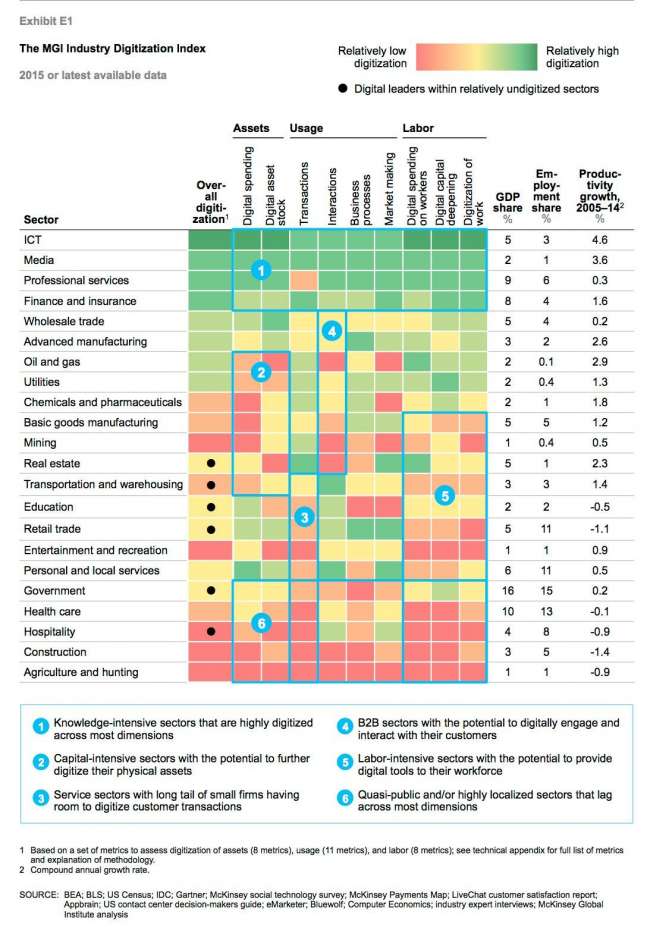
There's a reason McDonald's is seen as a bottom-of-the-barrel job. There's nothing about it that fundamentally requires judgement, empathy, or decision-making. Sure, the pleasantries are nice, but think about the last time you had something go wrong with a fast food transaction. Did the worker just fix it? Half the time, they have to drag a manager over, or reboot a machine, or some other fix that's above their pay grade.
I love interacting with people who own their car repair shops, because they can help me work things out beyond a simple transaction. But larger companies? There's nothing to the interaction besides just talking with another human who's worried that if anything goes wrong, I'll take it out on them and there's nothing they can do to fix it.