The bigger issue is that city planners building public transit systems don't have the same interests as commuters. Inevitably they want to use public transit as an instrument for various social policies.
Commuters just want to get to work reliably and they'd like a seat. And they'd like to have a minimum of screening so that they don't have to deal with people with severe mental issues on the way to work.
In Toronto they've gone as far as launching a crowdfunded bus route, which the city had an icy response too. It had to shut down because of legal uncertainties.
So I think the big problem with transit is that people in city gov refuse to recognise that commuters desires are perfectly reasonable. If the city won't provide them options then they should at least make sure there aren't legal issues with private providers.
> Inevitably they want to use public transit as an instrument for various social policies.
Yes, "social policies" like transit that's accessible to the disabled, elderly, and poor. Would you prefer planning that tells those people to stay at home where we can pretend they don't exist?
> "minimum of screening so that they don't have to deal with people with severe mental issues"
What kind of "screening process" do you want? What's your test?
> people in city gov refuse to recognize that commuters desires are perfectly reasonable
Sure, maybe you can twist your desire for fewer people with "mental issues" to be 'reasonable', but your disgust for them doesn't make good policy. It's not impossible to build transit for everyone; for both commuters, and for the poor, disabled or elderly. As long as people like you can stand to be on the bus with people who are different than you.
Please go stand at the base of an escalator into Civic Center Station on a warm summer day when it hasn't rained for a while, and take some deep breaths.
I refuse to be ashamed of my desire to avoid inhaling other people's piss and shit on a daily basis.
This country isn't ready for public space. We have too much work to do, to care for the people who will reliably show up to public space they have access to and turn them into urine-soaked, beggar-laden wasteland, before we can reasonably be indignant at the desire to avoid spending time in public space.
Like public bathrooms, for one thing. What must SF spend on its (futile) attempts to keep stations clean? Surely that could fund one public bathroom somewhere in the city to redirect some of the mess.
San Francisco is almost unique in this. Of the entire set of cities in the world I have seen, none have a problem like this on a comparable scale. Perhaps it's more useful to ask what led to this situation in this one city, and look for constructive things to do to remedy it. It's certainly possible to have open, public transit that is clean and functional.
Walk around Berlin right now and count how many "screening" checkpoints their are in the train stations. Spoiler: there aren't even doors on all the entrances. Somehow, as if by magic, trains are clean and run on time. The strongest smell is from the food vendors in the attached mall.
Civil services are possible.
And they certainly don't require any draconian "screening" processes.
Transit policy can't create the Berlin transit system.
Germany got it by building the constellation of welfare, social services, healthcare, eduction, labor laws, and tenant protection that keeps people's lives on track (or puts them back) long before they've fallen to the point of shitting into subway escalators.
The American electorate is quite far from even wanting these things. It's going to be a long climb to get them implemented and working. We will not be preventing destitution anytime soon, and the shit on the streets of temperate, tolerant cities like SF is going to get far, far worse before it gets better.
I don't pretend to have a solution to your problems, i merely point a problem in your solution.
Also the fact that your society grows a divide such that basic health concerns can't be solved démocratically sounds like a root cause to your piss problem.
So when are you flying to Austin? I'd like to, among other things take you on a trip to 7th and Red River, and provide you with an oral history of (also among other things) CapMetro, Metrorail and the numerous mass transit solutions shot down by the voters who THEMSELVES called for a referendum vote on options for mass transit.
TWICE.
Or we can go to a little town called Spartanburg South Carolina. Or I could tell you the tale of Indianapolis' almost hilariously doomed transit improvement efforts in the 90's (hilariously in the way it happened, not that it happened so much all).
My point: SF isn't unique in this regard. Not by a long shot. Their problems may be exacerbated by many other compounding factors comparatively with other cities...but I agree with the comment you've replied to: here are built in logic ladders constructed over years of subtle social conditioning and assumptions made about the cross section of mass transit and public service that make for some interesting outcomes at the municipal level.
I concede then. It's not unique (and indeed, Austin is absent from my experiences).
I like the way you phrase this though: "logic ladders" of "years of social conditioning and assumptions". There are a lot of odd assumptions about mass transit and public service floating around.
> Walk around Berlin right now and count how many "screening" checkpoints their are in the train stations. Spoiler: there aren't even doors on all the entrances. Somehow, as if by magic, trains are clean and run on time. The strongest smell is from the food vendors in the attached mall.
"Cinematography is bleak and dreary, depicting a dilapidated, working-class Berlin with rundown structures and dirty, blighted backdrops. Modern Berlin is very different and most of the landmarks from the movie (the station, the Bülow street stalls, the Sound discothèque) have either been demolished or completely remodeled."
"Most of the extras at the railway station and at the Sound club were actual junkies, prostitutes and low-lifes rounded up by producers just for the crowd scenes. In the scene where Christiane runs through the alleys of the station to find Babsi, the camera lingers on several terminal junkies leaning against the walls of the underpass. In a 2011 interview, Thomas Haustein, who plays Detlev and was still in school at the time, recalls how terrified he felt being surrounded by all those real-life addicts, but that he was able to successfully copy their behaviour for his character."
I was at the Zoologischer Garten station last night.
Not much to say except frankly it's far cleaner than the SF trains the GP is talking about. (I was also in SF civic center station less than two months ago, and thus feel qualified to make this statement as a first person observer.)
Berlin certainly has its own aesthetic. Berliners seem to take graffiti incredibly seriously, for example (lettering three stories high on the top floors of a 15 story building? "Sure, why not" is apparently the thinking). But hordes of junkies? Do I feel in danger? Absolutely not.
Sure. Most places of earth, you can say that about. But let's make sure we're anchoring things well and not moving the goalposts: the comment I was responding to claims that "most" of the people in the area are "actual junkies". To that, I say "no" and "bullocks".
Yea, Berlin was different in 1981 during the cold war where it was, for all intents and purposes, completely landlocked within East Germany and was economically stagnant.
The DB, while not my favorite train system in the world, runs extremely well.
You (quite reasonably) don't want homeless people to piss in public, and you recognize that they don't have anywhere else to piss. I'm not clear why "therefore, give them a better place to piss" isn't your first demand, instead a distant second after "therefore, illegalize homeless people." (Which you know very well is the only possible result of banning people from public spaces who don't have any access to private spaces.)
I am not suggesting that we exclude the homeless from public space, but that we allow everyone else to continue using modes that provide more separation from our broken society while society gets its house in order.
Apartheid is specifically a policy of racial segregation, which has nothing to do with this.
I do advocate a system of segregation from other people's urine, not exactly a protected class (who opposes the use of toilets?), and from each other more generally... what are apartments for, after all, if not to keep us apart? I'm proud to say that I voted in this election for as much apart-ness (i.e. as many apartments) as possible. In fact, since I consider this to be a step towards ending homelessness (by building enough housing for everyone) you could say I am even an agent of the eradication of an entire social group!
EDIT: Yeah, that's a bit flippant. But I do believe people are entitled to choose the company they keep. That applies at rest: everyone should be able to have their own apartment, a space where they decide who gets to come in and who doesn't. It also applies in transit: personal vehicles are best (though bicycles, motorcycles, and scooters are probably better than cars, at least in the Bay Area, because the climate is hospitable and space is at a premium). On public transit, we have an obligation to minimize unwanted interaction: uninvited conversation, physical contact, eye contact, and phone speaker music are all (rightly) taboo. Public transit systems should strive to provide everyone with a forward facing seat so that they are not touching or staring at anyone else.
When people do not follow these rules, and instead insert their presence loudly (i.e. by smell), I do think it's better to go around the problem by taking other forms of transportation, than to muddle through and develop resentment, or grow supportive of police violence to shove the problem away (I've been catching myself sympathizing with this). Abandoning public transit seems like the least shitty approach to the people who make it intolerable.
Apartheid is a top-down system, where segregation is mandated. What he is suggesting is the bottom-up approach, where people can segregate themselves if they want to.
Although in practice this still produces segregation on a large scale, as in e.g. "white flight" in US. But then again, attempts to counter such things by forcing people together - like forced busing - didn't exactly work well.
SF has public bathrooms[0]. SF public places still often stink (and yes, in vicinity of those too). And by stink I mean eye-watering. And apparently the public ones share the problem[1].
In EU, you have to pay to enter a public bathroom. But as return, the bathroom is kept clean (or at least that is the idea).
I read a story the other day how restaurants allowed free bathroom usage to tourists in Germany. This was paid by city council, and allows for a more pleasant stay of tourists. So they like to come and/or return. Word of mouth works.
The links say there are 25 of these restrooms in a city of over 850,000 people. That's about 1 per 34,000 people. They are described in the second link as being unreliable and gross, and people are suggested to avoid them in favor of private restrooms. This is not functionally different from not having public restrooms.
I believe that in California, businesses are required by law to allow people to use restrooms, but they try to avoid compliance and do whatever they can to keep homeless people away.
I don't think it's a fair calculation. SF is not uniform, neither is population, neither are locations of people that need public bathrooms. So just dividing number of citizens in the whole city to number of public bathrooms makes little sense. Center where population traffic is stronger and where there are usually more people needing those services should have more, while remote purely residential neighborhoods may not need them at all.
> I believe that in California, businesses are required by law to allow people to use restrooms,
They do, and I myself used them many times, but for a person who is looking, as said in parallel thread, "sketchy" and may have some trouble expressing themselves, it may be a different story. The reluctance of the establishments is also understandable - if the person makes a mess there, somebody will have to clean up, and odds are nobody but the person behind the counter getting minimum wage is there to do it. So, their reluctance to allow somebody who, in their opinion, is likely to make a mess to use their facilities is not hard to understand, IMHO.
> like transit that's accessible to the disabled, elderly, and poor.
Very much this!
I don't like public transport, I don't like having to deal with other people when I travel, but I like Uber and private transport even less.
If you leave people alone to decide of their own "best", they will certainly destroy community as a whole.
What's my solution?
I walk when I can, I use car sharing/pooling when I can't walk, I use public transport when the first two solutions are unavailable.
I also dislike private car pooling companies, I think they should be public because the goal has to be to give people choices, without harming the community, not making some startup take over our transport infrastructure.
We have here a bunch of people complaining who have been pushed down the social strata. Instead of not being able to afford their own car or request a luxury class taxi, they now have to exist in the lowest tier. They don't like that, and, they now want, effectively, to elevate themselves above the people who have to piss in a subway station by banning them.
At a Christmas party that I went to with several people who have way more money than almost any of you, a wife of a Boeing executive referred to you complainers as "transit trash". She looks at you as you are looking at these problem people.
When assigning blame, if you aren't looking upwards to those exerting vast amounts of power, then you are probably the problem.
I made sure to call out this woman's trash talk and embarrass her. If you have power you are supposed to be kind to those below you. Without that graciousness you expose yourself as being afraid that you'll be assigned to a lower social strata. (And I take the wholesale disappearance of that graciousness in American politics as a harbinger of American decline.)
I haven't been to SF so don't know if the subway has toilets in it. It's said that you can judge the civilisation of a city by how available toilets are.
In Taipei the metro stations all have toilets in them. In London very few stations rarely have toilets. Of course, this is comparing an new to an old system. If the SF system has no toilets then maybe this would explain things ?
> Yes, "social policies" like transit that's accessible to the disabled, elderly, and poor. Would you prefer planning that tells those people to stay at home where we can pretend they don't exist?
This is one of the reasons why there's 1st and 2nd class train wagons. If you don't want to sit with "the plebs", get a more expensive ticket and go 1st class together with the other travellers in suit.
This does not exist for busses AFAIK. Although one could walk, rent a bus, rent a car, carpool, or grab a taxi (renting a train(wagon) is actually also possible in some countries/regions).
I don't want to ride public transport with crazy people or people that want to beg me for money or even just people that have bad hygiene or talk loudly or listen to music without headphones. Why is that unreasonable? Oh and I'd also not be waiting in the hot sun or the freezing cold for a bus that may or may not arrive on time. Then, I get to take a tour of the city while the bus stops every two minutes rather than going directly to where I need to go.
Ever been from Newark Airport to midtown Manhattan? You have to take a shuttle "train" to the PATH or NY Transit, then ride that into the City, then walk a dozen blocks or wait on a crosstown bus and then another bus.
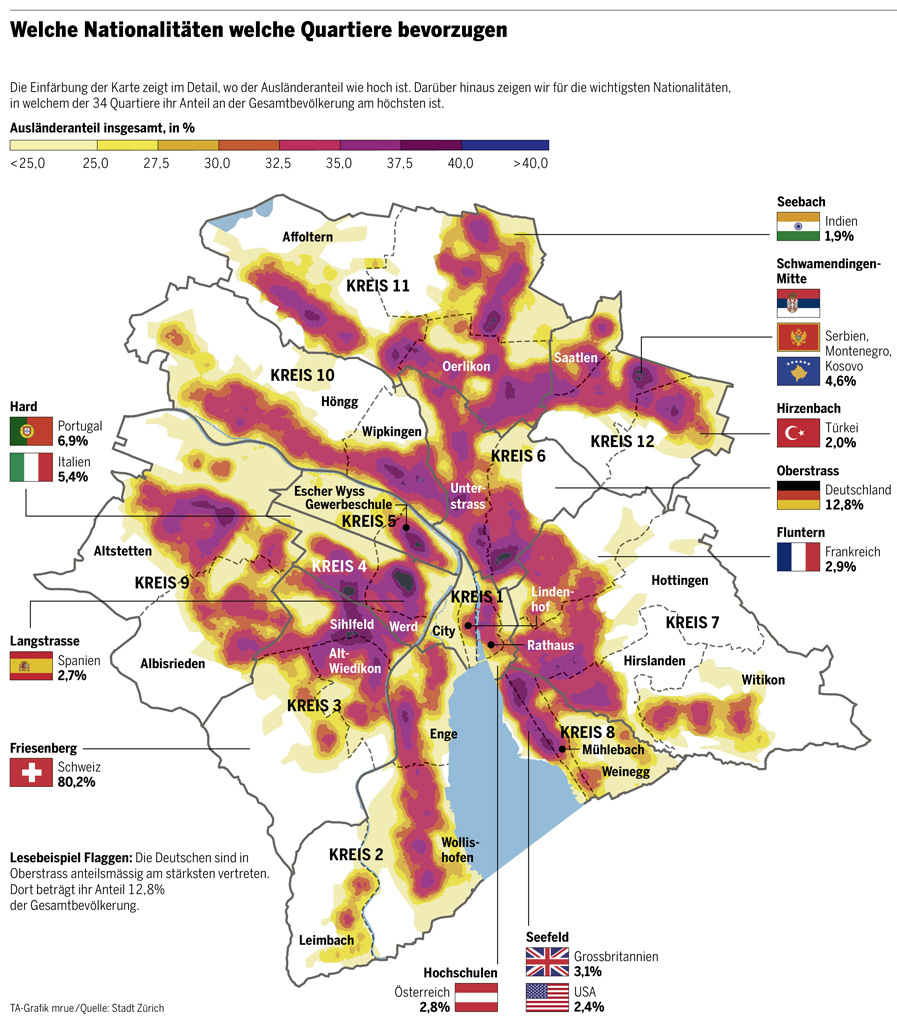
Public transit has its use, but I generally hate it except in rare situations like Zurich or Berlin.
As far as the disabled and elderly, interesting you mention that! How many subway stations in NYC are wheelchair accessible -- how many of those actually have functioning elevators? Of those, how many of those elevators don't smell like a homeless urinal? Very, very few stations in NYC are accessible and all of them are dirty.
Public transport would be great if I didn't have to share it with the public.
Have you spent much time in Tokyo, Seoul, Hong Kong, Singapore, Shanghai, or Taipei? In all of these cities, public transit doesn't just "have its uses," its the primary way of getting around the city for the vast majority of residents. This isn't about social policy. These cities span the entire range of social policies.
All it takes is a government dedicated to building a comprehensive, functional, and intelligently designed transit system. There are still crazy people on the subway in Shanghai. But because its the best way to get around the city, everyone takes the subway. So maybe you see a beggar or a homeless person every couple of days, much like you would when you're out walking around.
The problem we get in most American cities is that the transit systems are terrible, so anyone who can afford to drive takes their car, and transit systems end up existing only for people who don't have any other options.
So you decide to take the bus one day, and everyone else on the bus is either homeless or crazy, and the bus has to take some ridiculous route to pick up enough people to justify its continued existence. So you never take the bus again, because it was unpleasant and wasted your time. Now we've gotten into a vicious cycle where the awfulness of the system ensures that it will continue to get ever worse.
This was a long rant, but what I'm trying to say is that public transit isn't inevitably broken, as many of the world's most successful cities demonstrate. It just can't be half-assed, and it feels like we've half-assed it in most of the US.
Why? He's being honest about what he wants. He's not demanding it, just expressing a preference. He's also expressing that the public transit system is a complete mess. I'm in Japan at the moment, and I can't help but agree - it's clean, fast, the trains come exactly when they say they will, and everything connects to everything else. It's wonderful, and I wish we had a system like this for ourselves in the US.
"Public transit has its use, but I generally hate it except in rare situations like Zurich or Berlin."
From the parent:
"I'm in Japan at the moment, and I can't help but agree - it's clean, fast, the trains come exactly when they say they will"
This: (how nice (insert public service here) is in CH/nordic/germany/japan) compared to the United States is always submitted as some kind of perplexing accident - like only some weird burst of cosmic rays could possibly explain why, for instance, polite behaviors on buses are so much better in Tokyo than they are in Cleveland.
But it's not confusing or strange at all: a homogenous society is easy to make work.
Oh, you have a whole city full of Lars Larsons and Handt Hansons ? Why, however do you make such a place work ? How amazing that everything comes together just so and there is no animosity between net tax payers and net tax receivers.
Well, of course there isn't. It's easy to work and live together with people and provide funding for their social benefit when their name is John Johnsson just like yours is.
The US is not easy. It's not an easy place. We have interesting problems that are going to be harder to figure out than pedantically pointing at the nordic countries.
On the other hand, we invented jazz and stuck a flag on the moon, so we've got that going for us - which is nice.
> But it's not confusing or strange at all: a homogenous society is easy to make work.
What has being a homogeneous society to do with building a proper public transport system? Maybe you could argue that having only "John Johnssons" makes being nice to each other easier, but it's not a necessary condition for making a decent schedule or building trains.
Besides, Berlin has probably the least homogeneous population of all of Germany.
> On the other hand, we invented jazz and stuck a flag on the moon, so we've got that going for us - which is nice.
Resting on one's past laurels won't help solving today's problems. How well did that work out for the Roman Empire? Case in point: The US actually lost its ability to send a person to space, and hasn't been able to send people to the Moon for 44 years now.
"What has being a homogeneous society to do with building a proper public transport system?"
A public transport system is a very expensive public good that needs to be paid for by everyone for the good of everyone.
Like fully socialized medicine, that is easy to pay for when you self-identify with the recipients. That's what I mean by the Handt Hansons working together with the John Johnssons. Or the Hiro Nakamuras.
The United States' diversity predates our development of these things - unlike trains and welfare in Zurich[1] and Berlin - all of which predate their diversity. Yes, I have been to Berlin and had a doner kebob. How many doner kebobs were for sale in 1902, when the U-Bahn opened ?
"Resting on one's past laurels won't help solving today's problems."
Agreed. I just wanted to make a caddyshack joke.
[1] And honestly, while Zurich is very diverse on paper, almost all of those foreign born residents of Zurich have one very important thing in common - they have very high incomes and are quite wealthy.
The median income is $4000 in Switzerland. What matters is that they have less income inequality and a good welfare safety net. When you let people with mental illness become homeless because everyone should fend for themselves, of course they're gonna occupy and piss where they can. When you help them become productive members of society, they don't. That's quite simple and has nothing to do with ethnicity like you're trying to imply.
Switzerland has some "fend for yourself" dimension where stuff like health insurance or childcare is largely private (and expensive), but they have a super strong safety net too. You are never being let down to the point that you have no choice but to be homeless.
When the bulk of the Berlin transit system was built, the city had the diversity of New Hampshire, and was being run by autocratic governments that were big on central planning and large public works projects.
This is silly, there are plenty of counterexamples. See Santiago, Chile and Kuala Lumpur, Malaysia for examples of large multi-ethnic cities with efficient, safe, and clean public transportation systems.
This is specious reasoning at best unless you've done an exhaustive study of all public transportation.
To give you a counter-example, Stockholm/Sweden is more multi-cultural and multi-ethnic than some US cities/states. And they have great public transit.
Unfortunately this kind of ableism/privilege isn't uncommon in silicon valley:
> 'In only the latest cultural altercation between San Francisco’s tech workers and the city’s impoverished population, one tech worker has declared the homeless are “riff raff” whose “pain, struggle and despair” shouldn’t have to be endured by “wealthy” people commuting to work.' (https://www.theguardian.com/technology/2016/feb/17/san-franc...)
It's the same reason it's often illegal for homeless people to sleep on benches. The elite would rather have the problem swept under the rug.
> "In its majestic equality, the law forbids rich and poor alike to sleep under bridges, beg in the streets and steal loaves of bread." - Anatole France
This line of thinking of "efficiency trumps social issues" and that "regulation is always bad" is very harmful for both the workers and customers these kinds of systems are supposed to protect. The parent might find this map (http://projects.newyorker.com/story/subway/) showing inequality along NYC's subway interesting. The subway connects people from widely different economic backgrounds; the social darwinist might not like this but it's essential for giving those less well off opportunities and decreases the insularness of wealthy areas. Sometimes social focus is only ever a bad thing for those who benefit from the lack of it.
I realize and appreciate the very unfortunate situation that many poor and mentally ill [0] people are in. I want them to have access to health care, public transit, job opportunities, etc. I don't like when people cavalierly express the desire to be spared the sight of these people.
But the thing is, (living and working in downtown San Francisco) I see a lot of what I can only describe as harassment or assault committed by apparently mentally disturbed/ill [0] people. I genuinely don't know how to solve this problem, but I do think that people have a reasonable expectation to not encounter these situations in well-traveled public places.
[0] "mentally disturbed" and "mentally ill" are probably not the most precise or appropriate terms to use here. I do not know the correct terms but I appreciate any corrections.
As a European living in a country where people of all walks of life regularly use public transportation systems the attitudes present in this thread are a bit shocking.
The problem is some of those people won't want to stay in the hospital, and sometimes their habits are such that for regular hospital it'd be very bad match. And involuntary commitment is a very problematic proposition, it's a very dangerous tool esp. when used against people who can't explain themselves well, have no other people who can help them, and no knowledge or ability to help themselves.
To be more specific, US used to be more lax about involuntary commitment. And then it was discovered that all too often, people were committed for no good reason - sometimes due to negligence or pseudoscientific BS, sometimes deliberately.
Furthermore, once people were in the system, they were often abused themselves, and it was very difficult to get out, even if you were actually perfectly sane.
So committing someone involuntarily became much more difficult as a result.
In this case efficiency really does Trump social issues. If you cannot say that your bus/rail/subway will arrive so regularly as to not get a worker fired it is a no go for adoption.
This. After researching some of the big moves that SF transit has made over the past 10-20 years, I had to take it upon myself to join a San Francisco Transit Advocacy group (message me if you want to join or learn more about it) out of pure shock/awe of all the mind-bogglingly stupid decisions they made.
It's amazing how city planners in every dept focus on politics as opposed to building legitimately good infrastructure that makes people say 'wow, they really planned this well!' (e.g. the London underground).
The fact that SF is attacking uber/lyft as the source of SF's traffic problems is ridiculous[0]. It's pretty much the only way to get across town at this point unless you want your commute time doubled/tripled or have potentially unsafe run ins with the mentally ill.
In my experience the situation is the exact opposite. The "city planners" tend to produce perfectly reasonable transit plans, moving the most people for the least money, which then occasionally get derailed and set on fire by city or state politicians who have different interests in mind.
What is the social agenda that Toronto city planners are pushing in your example? It sounds like they addressing the same problem the private transit route is addressing, more slowly but more durably and more accessibly by bringing new streetcars into service, albeit with delays:
http://www.torontosun.com/2016/12/15/more-delays-in-streetca...
Which speaks to the strengths and weaknesses of government versus private approaches to problem-solving. Many cities have and many more cities have had privately-operated transit services— they often have strengths (responsiveness to customer demand for popular routes, technological innovations) and weaknesses (competition for ridership leading to traffic problems or wasted effort, disincentives to run services as a network, higher prices).
Jarrett Walker, the writer of that blog post, makes actually the same point in another post. In public transit there is a trade-off between maximizing ridership by focusing on great service on a limited number of lines, or maximizing social service by multiplying lines that go everywhere but do not offer convenient service for commuters.
Walker has long been an advocate of making that trade-off apparent so taxpayers know what they're getting, and of re-balancing networks in favor of maximizing ridership. It means fewer lines, serving dense parts of cities, and running frequently.
If a city wants public transit that fits the kinds of trips people actually take, they should figure out where people are taking Uber to and from, and they should build routes that serve those areas.
It reminds me of the (possibly apocryphal) story of the college campus that was designed without sidewalks. After a while, the college built sidewalks over the parts of the lawn that were most transformed by foot traffic, because those were the paths people preferred to take.
I think in my area (Boston) if you looked at high-Uber ride zones you would find areas where it has been difficult for geographical or other reasons to build mass transit. The proposed Green Line extension is partly because of traffic value, and partly because acquiring the right-of-way is still possible. On the Red Line I ride to work, there may be some Uber spike because its near capacity at rush hour. Uber is a bad solution to this because it would only put more cars on Mass Ave, which is already at capacity. They're actually addressing this by buying redesigned train cars than can hold more people and make it through the stops slightly faster.
This is related to my other comment. In Somerville/Cambridge there is already a visible change in the neighborhoods like Union Square along the proposed Green Line extension. It was this way in the streetcar days of the early 20th century too, where neighborhoods sprung up when new lines were built. In Portland OR, where I used to live, the new MAX lines are having similar effects. I feel like Ubers place to shine is low-density high-income low-traffic suburbs. That's OK too, because that's a big chunk of the United States.
In some cities like Bangalore and Chennai in India, there are different classes of services. You pay extra for air-conditioning or lesser stops...etc. I believe the intention was to make some extra revenue from users who are willing to pay more. I'd support such a differential pricing mechanism in US cities. I don't care about the same things you care about and I'd happily take a cheaper option but for those who do this might serve them. May be it would make the transit agencies somewhat profitable as well.
An express bus has far fewer stops and may use an expressway for part of its route. One ride costs about 2.5x the usual bus fare.
Singapore has similar buses but they are not run by the same operators as the local ones.
London has express trains. In particular the airport ones are more expensive than standard trains. 20-30 GBP in some cases!
Chicago has a recent Jump bus programme which has long jumps between certain areas. But there is no extra charge for this, because it is designed to serve poor people living far from downtown.
I hadn't actually connected the socioeconomic dots of routes such as the Jeffrey Jump, but I'm glad you did: I'd say such convenient routes are mandatory for any city that has priced its service workers out of living near their jobs. For all its failings of its residents on the south and west sides, I'm glad Chicago has at least done this.
> Singapore has similar buses but they are not run by the same operators as the local ones.
They are operated by the same operators [1], unless you were referring to some other bus services? They're about 1.5x more expensive than a normal bus/metro journey though.
You're right, some of them are operated by the usual local bus operators. But some in that list are not. And some not in that list include weird ones like all the condo shuttles, the airport-CBD buses, and of course we can't ignore the one from Lau Pa Sat to the zoo or whatever it is!
In truth I forgot completely about the 188 service because it goes to a casino. I now remember cursing how often it came to my old stop on those few occasions when I was hoping to catch a bus to somewhere other than a casino.
I have visited a few countries and the airport trains have always been complete rip offs. Nagoya in Japan is an exception - the airport express costs a whole ¥360 ($3) more than taking a local train.
Things like cargo capacity, amount of passengers and directness of route make sense.
I cannot see how things like AC or heat would make sense as labor laws insure they need to be there for the driver and not enough would use such services to support them (and they would be priced out of existence, because AC is almost free and heat is).
Sure, and it's the same with residential real estate in some areas. Houses are expensive because they're expensive; wealthy people don't want to live next to poor people.
I was actually trying to compare this to things like on Uber how you can get a normal ride or an XL with cargo room. Or how can pay a premium for a taxi ride that has fewer stops and is more direct than a bus ride which has more passengers and stops. Going to another city, you can fly fast or bus there for cheap.
We already have this system, just not on stuff we consider basic quality of life.
I don't know the specific circumstances in the US - but at least one thing is definitely desired everywhere - pay more for "rapid" transit - stops at fewer stops?
That is pretty disgusting, if I read it right. It sounds like you are advocating for buses and taxes without basic climate control for the sake of market segmentation?
Meaning that we would take some of our poorest workers and take one of the view comforts they have left and potentially force them to risk their lives. A taxi driver without a heater, could literally die today where I am at at a balmy 6 degree F.
> The bigger issue is that city planners building public transit systems don't have the same interests as commuters. Inevitably they want to use public transit as an instrument for various social policies.
Here's the thing: public transit does not function in a vacuum. You can't build public transit solely based on current traffic patterns, because the presence of good transport (say, a new rail line) will irrevocably alter traffic patterns.
This means that, if you build a new rail line, you pretty much have to (eg.) change zoning near stations. Is rezoning to allow denser housing "an instrument for various social policies"? Most likely yes, but it's also the sensible thing to do!
Nailed it. I'm so fucking tired of having social politics shoved down my throat by progressives and conservatives alike. I dont care and never have. I just want to get from A to B for as little cost and time as possible.
> And they'd like to have a minimum of screening so that they don't have to deal with people with severe mental issues on the way to work.
For me this is a big social issue, and it is only slightly related with public transportation. If you city has enough mental ill people in the streets everything is going to suck, including public transportation. That's why you have health care for mental patients, that with the correct treatment can be a normal part of society.
In much of the Middle East they have specific carriages or areas (often optional tho, depending on the country) for women and children. Public transport should be available to all, at all times. But the mentally disabled could be provided a specific carriage. If the mentally ill are a burden in their current form, they should be provided MORE, not less, as a solution.
> Commuters just want to get to work reliably and they'd like a seat.
You forgot to mention afford it. Uber is jacking up the prices for those who depend entirely on public transit--the people who most likely feed you, clean your office, drive your Uber. The people who make the city function. Your convenience actively fucks over your neighbors.
I know a lot of low income people in SF who take Uber as it is much faster and way more reliable than Muni. These people don't have the privilege to be late at their jobs.
> Commuters just want to get to work reliably and they'd like a seat.
You forgot to mention afford it. Uber is jacking up the prices for those who depend entirely on public transit--the people who most likely feed you, clean your office, drive your Uber. The people who make the city function. Your convenience actively fucks over your neighbors.
> Uber is jacking up the prices for those who depend entirely on public transit
Uber is not raising prices of public transport. They are not part of government public transit boards or administrations. Holding them accountable for the income public transport would have if they didnt exist is simply unreasonable.


Commuters just want to get to work reliably and they'd like a seat. And they'd like to have a minimum of screening so that they don't have to deal with people with severe mental issues on the way to work.
In Toronto they've gone as far as launching a crowdfunded bus route, which the city had an icy response too. It had to shut down because of legal uncertainties.
http://www.cbc.ca/news/canada/toronto/crowd-funded-bus-takes... http://toronto.ctvnews.ca/sorry-toronto-commuters-liberty-vi...
So I think the big problem with transit is that people in city gov refuse to recognise that commuters desires are perfectly reasonable. If the city won't provide them options then they should at least make sure there aren't legal issues with private providers.