It is possible to view this as an isolated event or a trend. Coming on the heels of BREXIT this is a trend.
The attempts at building an interconnected globalised world are beginning to fail. A bunch of elites decided to create their own trans-national utopia unchecked by borders and dismissed all criticism as racist or bigoted. The globalisation project has been rejected by a majority of the population. Whether it is for economic reasons or just plain bigotry is something for the sociologists to study and not something I can pontificate on.
Also people seem to care a LOT about immigration and preserving their culture. Instead of patronising these people it's time we tried to understand their concerns and try to assuage them.
There is no genuine leftist alternative. It's a choice between center-right "left" that's sold out to the establishment and the far right.Economists need to stop acting like priests in the medieval ages who justified the existing order . The rural voter who lost his job doesn't care about the theory of comparitive advantage.
If this trend holds this will soon take hold in France and other European nations. This is a return to the world of the 1920s. Not gloom and doom but a much more unstable global order with every country for itself. Not what we need when we face planet scale threats like global warming.
Get out of your bubble.
Hang out more on subreddits you don't agree with.
The divide is bridged one person at a time.
PS - Reposted my comment from another thread as it got flagged. Hope its OK with the mods.
EDIT:
His concession speech seems to indicate that he's beginning to appreciate what he's been entrusted with.
We're seeing this pattern where the coasts of many countries are cosmopolitan and well-integrated into the world economy, but the interiors are very conservative and nationalistic. Scotland & London vs. Wales & the rest of Britain. The U.S. West Coast & Northeast vs. the Farm Belt, Rust Belt, and Mountain states. Croatia & Slovenia vs. the rest of Yugoslavia. The Baltic Republics vs. the rest of the USSR. Even in a Red State like Texas, Houston (on the coast) has gone democratic.
What happens if economic ties between coastal regions of major trading partners become greater than cultural ties within nations?
Here in California, some of the proposals about sending all the immigrants back to where they came from seem absurd. The economy would cease to function. On one of my teams of 10 people at Google, we had immigrants from Iceland, England, Vietnam, China, Taiwan, and India, and I was the only native-born American citizen. California would sooner secede than deport all of its immigrants.
What if it actually came to that? If push came to shove and the interior decided to push a nativist, nationalist agenda, what if the coastal regions that benefit significantly from trade were to say "Okay, you guys can play with yourself, we're going to play with the rest of the world." Scotland has threatened to do exactly that, and is planning on holding another referendum on independence if Britain actually follows through on Brexit.
What sort of organizing principle would the world have then? I haven't seen anything historically like that - the closest would be the Roman Empire that rimmed the Mediterranean. For most of recorded history, the primary means of production has been land and so fights have been over land, but over the last 150 years or so (contemporaneous with the nation-state as a social organizing principle, BTW), the primary means of production shifted to capital, and now it's shifting to information. What kind of social organizing principle does that imply?
> On one of my teams of 10 people at Google, we had immigrants from Iceland, England, Vietnam, China, Taiwan, and India, and I was the only native-born American citizen. California would sooner secede than deport all of its immigrants.
If you think the immigration debate is about Google employees, I think you don't understand the immigration debate.
> If push came to shove and the interior decided to push a nativist, nationalist agenda, what if the coastal regions that benefit significantly from trade were to say "Okay, you guys can play with yourself, we're going to play with the rest of the world."
The interior (culturally and geographically) is massively over-represented in the security forces and military. So good luck with that.
He didn't say that the debate was about Google employees. He said that Google is affected by the debate. This is a big difference and is increasingly relevant.
And what defen is saying is that the actual debate is about "illegal" immigrants. Not all immigrants. I have absolutely no idea where the idea that Trump doesn't want legal immigrants in the country came from; as that's certainly not true.
It's more than just immigration, it's trade too, as mentioned in the OP.
I work for a multinational contract manufacturing company; we currently have plants and employees in (among many other nations) Mexico (full of the Mexicans Donald Trump threatened to build a wall around) and Malaysia (which is majority Islam, of whom Donald Trump threatened to ban from the USA). So, yes, this result is quite... interesting... to me. Hopefully Trump is more bluster than action here.
I'll be honest, the problem with the current wave of anti-globalization (eg Brexit and Trump, also count France's Le Pen among others) is that I can't see the solutions being advocated doing any good economically for those who are advocating it. If anything, it may make things worse. Of course, a lot of what is driving these movements is more cultural anxiety and has less to do with pure economic factors, which in my opinion makes this a lot more challenging to resolve.
> I work for a multinational contract manufacturing company; we currently have plants and employees in (among many other nations) Mexico (full of the Mexicans Donald Trump threatened to build a wall around) and Malaysia (which is majority Islam, of whom Donald Trump threatened to ban from the USA). So, yes, this result is quite... interesting... to me. Hopefully Trump is more bluster than action here.
Those are certainly valid concerns, but can you explain to me how legal work visas don't address that? (Serious question.)
Legal work visas don't address the trade angle. It's unclear to me how Trump as president will affect both our global suppliers and our global customers, particularly the trade across borders.
It may end up being nothing, but to me it is an uncertainy. Businesses generally don't like uncertainty.
Plus, if we took Trump's primary bluster 100% literally (that "ban all the Muslims" talk), no one from our Malaysia plant who is Islam could visit corporate headquarters for any reason, work visa or not.
Such of course could end up being complete bluster, it probably is to be honest. Again, though, there's the uncertainty.
> I have absolutely no idea where the idea that Trump doesn't want legal immigrants in the country came from; as that's certainly not true.
He probably got it from Trump himself on one of the many occasions when Trump has talked about it. It seems plausible that he wants a c. 30% drop in net legal immigration.[1]
This is also a cornerstone of the Brexit "movement" (if you can really call a loose coalition of people without degrees in low income areas a movement). They want to cap or limit immigration, despite not being exposed to it in any meaningful way. (40% of inner-London's population is "foreign born", which suggests that a disproportionately high number of the UK's migrants live here -- a city which almost unanimously voted to stay in the EU.)
As a highly educated physician who voted for Brexit, I find your interpretation of the "Brexit movement" woefully incorrect. There are plenty of well informed, well read and intelligent people who feel that the concept of the European Union no longer provides a net benefit to Britain. No doubt there are plenty of well educated Americans who voted for Trump too.
> As a highly educated physician who voted for Brexit, I find your interpretation of the "Brexit movement" woefully incorrect.
It's interesting that a "highly educated physician" can't draw a distinction between one potentially anomalous datapoint -- their own characteristics -- and the data drawn from the characteristics of 15 million people. I had thought the makeup of the two respective movements were well-known.
Remain voters are more likely to be degree educated, and to live in a large metropolitan area which experiences significant immigration. Leave voters are more likely to be older, have tertiary college or a GCSE as their highest form of education, and live in a smaller cities, towns, and villages.
> There are plenty of well informed, well read and intelligent people who feel that the concept of the European Union no longer provides a net benefit to Britain.
By and large they're shuffling about with their tails between their legs at the moment as every single fiscal institution's observations about what a disaster a "leave" vote would be comes true, but you're right and I don't dispute this. The point I made is that the aggregate view of the leave movement -- and you can find this as galling as you like -- is of an uneducated, parochial, and ageing demographic.
> No doubt there are plenty of well educated Americans who voted for Trump too.
This is true, and is entirely unrelated to my original post. Amongst the college-educated, Trump won men and women by the bucketload (I think the only category he didn't win was college-educated white women but it was still a close-run thing).
Actually there's quite a body of evidence to suggest that when GDP is growing and income disparity is not significant, culture/sovereignty/immigration are not used as political footballs. When income disparity grows and GDP growth slows (or there's a recession), extremist politics -- usually centred around some sort of binary opposition -- rise. I.e. economics is everything, and people only kick up a fuss about other things when times are bad.
> Sovereignty
In purely semantic terms we are a sovereign nation irrespective of our EU membership. So it would be useful for you to unpack exactly what you mean by sovereignty. (IIRC the only way to violate one's sovereignty are: harbouring terrorists, invading a neighbouring country, violating the genocide convention, breaking nuclear non-proliferation.)
> Population density
Population density is fascinating to me because when you look at the 6m or so foreign-born workers in the UK, only 1.9m of them come from the EU. Bans on India, China, and Pakistan would be better ways to reduce population density. And, of course, if you removed all of the foreign born workers in the UK, you would see a massive reduction of… 24 people per km2.
I always thought people really cared about immigration's perceived drain on welfare. Which is why it's so funny that EEA migrants either a) overwhelmingly pay for themselves (pro-Remain numbers) or b) almost pay for themselves and certainly do a better job of it than the average UK national (pro-Leave numbers). Of the 7% of non-UK nationals who take up the welfare budget, Pakistanis are more likely to receive benefits than any other nation, and in the top 10 there's only three or four EEA nations.
> Culture
Left this one until last. The culture of Britain hasn't changed for the worse since Enoch Powell in the 1960s, Paki bashing in the 1970s, monkey chants from the football terraces in the 1980s, has it?
The "uneducated" argument is beyond played out now. One does not become "enlightened" and align some common set of views by simply getting a degree. If this is true then it's not called education, it's called brainwashing.
> The "uneducated" argument is beyond played out now.
You cannot equivocate on this point. When considered in the aggregate, leave voters are less educated than remainers. You can read whatever you want into that, but to say it's "played out" sounds like you're disputing it.
> One does not become "enlightened" and align some common set of views by simply getting a degree.
Nobody said anything about enlightenment or aligning around a common set of views simply by getting a degree.
> If this is true then it's not called education, it's called brainwashing.
Actually, no, it's probably called education. It's impossible to quantify, but it's axiomatic that traversing through to most classical forms of higher education has the effect of opening one's eyes to a broader range of viewpoints and beliefs than one might have previously been exposed to.
Education isn't about specific points of view or pieces of information, but about philosophy, critical thinking, and communication. For the many thousands of Brexit voters who feel duped by the economic aftermath and winding-back on promises made by the leave side, a little education on critical thinking and the outright, literal lies of the media they consume would probably have led to them voting differently, and feeling happier about it.
Regardless, nostrademons' point still stands. Over 50% of US farm workers are undocumented immigrants[1], and 1 in 10 farm workers in California are undocumented migrant workers[2]. That's a very sizable chunk of the labor pool.
Ann Coulter is the defacto Trump advisor on immigration and she can't hide her preference for either only or predominantly white immigration and if that untenable for some reason, just limit it to absolute minimum.
So, it is not just about illegal immigration, this is just a red herring for what it really is at stake here.
> What if it actually came to that? If push came to shove and the interior decided to push a nativist, nationalist agenda, what if the coastal regions that benefit significantly from trade were to say "Okay, you guys can play with yourself, we're going to play with the rest of the world."
I think if it actually came to that, it would eventually mean war. The interior economy falls apart, coastal regions secede, the poor countries would inevitably be driven to war against the coastal regions out of desperation. Extreme nationalism would just make this more likely. No one should think this is a good idea.
Also, saying coasts are "well-integrated into the world economy", implying the rest of the country is not, is just a horribly myopic view of the world. They are only "well-integrated" because the government chose and planned that explicitly - globalization and free trade as an economic policy, removal of protectionism (e.g. NAFTA, etc) and heavy subsidies of the industries involved (especially tech, via military spending).
It didn't have to be that way - it isn't because tech, finance, whatever is more meritocratic or anything. With more sensible protectionism you could have international trade while still preserving your country's manufacturing base, allowing the rest of the country's economy to also be "well-integrated". But labor is expensive in developed countries, corporations want more profit, and our government doesn't particularly prioritize the working class.
I'm explicitly avoiding the question of whether this is a good idea and considering only whether it's a plausible idea. In other words, predictions, not plans. I actually think a major war in the next decade is very likely, and no, I'm certainly not looking forward to it, but I'm very curious as to what it would look like if it did.
So leaving morality and emotions out of it - why does globalization seem to disproportionately benefit the coasts? I don't buy the "because the government chose and planned that explicitly" - the laws and treaties they write affect all citizens equally. Obviously there are going to be some winners and some losers, but how did it come to be that the winners are disproportionately concentrated in certain geographic locations? There's plenty of military spending and military bases that go into Montana and Wyoming, and much of it is quite high-tech (that's where the nuclear arsenal, is after all), but you haven't seen Silicon Mountain spring up. What's different?
And if we answer that, how can we replicate that in many places so that we don't see so much political blowback because a large segment of America is left out of the prosperity that globalization has brought elsewhere?
I question even the assumption that Silicon Valley is a success. I don't think many bay area locals would agree. Economic output isn't really success, in my mind. Providing everyone with a middle class quality of life would be a success.
S.F. has one of the largest homeless populations of any city in the U.S.. By any sensible definition, most cities in the U.S. are doing pretty terrible at providing quality of life, or "success", to their occupants.
I think the only way to improve things is the government would have to make policies that actually benefit the majority of the population. That would mean taking a look at all industries in the country, figure out what kind of economic policies would benefit most people (not military spending), curb the excesses of capitalism (prevent monopolies, ensure competition), and fund basic social policies like health care. The U.S. has gone so entirely bonkers, giving in to the natural progression of capitalism, it's hard to see if there is any possible hope left.
Another path forward that seems reasonable is to let capitalism mostly flourish as it may (after all by many accounts, the US is doing pretty well, creating lots of jobs, output is up but in automated factories, wages finally starting to rise a bit, etc), but tax the upper and upper middle class a little heavier and create a new New Deal for the "post blue collar" age.
Expand the Americorps program for instance. Investments in commuter transit seem like a particularly good idea because would be construction jobs building it, and then it could make commuting from rural areas to cities faster and easier which means that more people could participate in the growth of the cities.
I'm sure it wouldn't be perfect, and maybe I'm just biased as one of the liberal elites or whatever. But this seems like a much better world to live in then one where we just start curbing technological advances further and further to preserve the 19th century ideal of working class jobs when they are less and less needed.
Rebuilding failing infrastructure seems like an obvious path, but it means people must leave places like WV and MI. That is a tough thing for many.
Even though I lean libertarian, I think we are quickly approaching a time where a basic income will be needed. The pace of technology moves so fast, that jobs literally disappear overnight.
Coasts have historically been good for trade, which is good for city development. Your question isn't about coasts, specifically, it's about urbanites.
Cities have much more freedom of labour, and fewer single industry employers. They're more agile, more resilient, to changes in the world economy. They're less dependent on industry that can reasonably expected to be aided by a nationalist industrial policy. They have more people who weren't born there; people who are used to moving to where work is, finding a community where they go, rather than identifying with an area and a community they inherited and will bequeath. They are literally less tied to the land that makes up a nation.
So leaving morality and emotions out of it - why does globalization seem to disproportionately benefit the coasts?
Coasts are where most of the cities are. As for where globalization benefits? This question is somewhat oversimplified. There are two factors: the culture/demographic side and the economic side. That is, globalization has economic winners and losers AND cultural consequences.
Obviously there are going to be some winners and some losers, but how did it come to be that the winners are disproportionately concentrated in certain geographic locations?
You might better ask, why did certain geographic locations win? The people have changed. One of the key requirements of globalization is the free movement of labor. Jobs move to where the labor is and labor goes to where the jobs are. A small town has no future when it loses its only factory to Mexico while all its brightest youths go to Silicon Valley and New York City to work in IT, Media, and big Finance and spend lots of time getting drunk and having sex. Once that happens, the small towns left behind either manage to pivot into tourism or an exburban haven for telecommuters, or they just die a long, slow death; kept on life support by Wal Mart while Meth labs and Mexican heroin ravage their communities.
One other important thing to look at, as far as people's attitudes go, is the pace of change and the nature of the change. If a local factory failed because they failed to compete with foreign competition, that would inspire people to figure out a better way to compete. Everyone fails together or succeeds together. But when a local factory is shut down because the owners have decided to cash in on globalization, people are more likely to be upset and feel betrayed and look to government for help.
> I think if it actually came to that, it would eventually mean war. The interior economy falls apart, coastal regions secede, the poor countries would inevitably be driven to war against the coastal regions out of desperation. Extreme nationalism would just make this more likely. No one should think this is a good idea.
There is also a matter of food supply. There is a sentiment among rural people in my area (not US) that it's them who are doing actually important work for little pay while the cities waste time and money on bureaucracy and pursuit of fads.
Don't we give them massive subsidies? I ask since I know my family back east in Iowa does get a ton of federal money for farming, which was what inevitably ended up destroying farming in Mexico, where it isn't heavily subsidized and thus can't hit anywhere near the same price point per bushel.
> my family back east in Iowa does get a ton of federal money for farming, which was what inevitably ended up destroying farming in Mexico
And this is why liberal- and capitalistic-minded farmers despise EU subsidies. You have to take them to be competitive, but in order to get them you have to do what Brussels wants you to do. They set quotas on how much of particular goods particular countries are allowed to produce, subsidize regions they think are "important" or "disprivileged" or whatever. And if they feel like funding something else instead of you today, you are uncompetitive and screwed.
Don't get me wrong, some funding is neccesary like paying farmers to let their land lay fallow for a year so it may regain nitrogen & nutrients, and quotas have helped us avoid food insecurity, but the current system needs broad reform, to make a run of it as a farmer in the US today you need at least 500+ acres, which wasn't the case 50 years ago.
I remember back in the day when Mexican president Carlos Salinas promoted the NAFTA deal as a solution to our problems. I started to disagree when reason came to me (I was too young when it happened), few reasons:
- I believed in a more protectionist system that encouraged internal growth. I still do to a point.
- Trading is good as long as you don't compromise internal production and employment. NAFTA is way too aggressive in this sense.
- It will triggered this bad "us-american?" behavior of consumerism and materialism.
Well, here we are 22 years after and it's evident the system got exhausted, even for US-Americans who were supposed to be the strong link in this chain.
Is killing NAFTA a good idea? maybe. I don't know. We are so deep into these waters that it has to be a small "chunk by chunk" change, and even so, it'll be chaos.
What I am sure we need, is to find a new balance, going all protectionist will be a huge mistake, just like this crazy aggressive neoliberalism that allowed companies behave irresponsible. Believe me, the consequences of this 20+ years trade system in Mexico are massive.
Wait, I'm not a pro-Trump crazy Mexican, keep reading.
As I said, we need a new balance. To my eyes, Trump is an extremist and a dangerous man, he doesn't sound or act like a guy that could bring this balance. I think USA voters made a huge mistake on electing him. But, at the same time, they had 2 very poor choices. They just chose the worst one.
The years to come will be interesting ones... that is given.
London isn't on the coast. What you're looking at here is not coasts vs non-coasts even if American maps might make it look that way. It's cities vs everywhere else. It just so happens that in America most of the biggest/best known cities are on the coasts.
In Britain, at least, I'm not even sure it's cities vs everywhere else. The large cities of the Midlands and North (Birmingham, Manchester, Leeds, Newcastle) went for Brexit much more than anyone expected. It's more a case of new economy vs old economy. That's not really a surprise is it? People in places that benefit from globalization vote in favour of globalization; people in places that have seen manufacturing or rural jobs vanish in the face of globalization are reacting against these changes. In this light, both Brexit and Trump, which both promise quick fixes, are not really a surprise. Unfortunately there are no quick fixes - as technology increases, so must specialization. There's no going back - that ship has sailed.
I suspect what we're seeing here isn't actually even cities vs everywhere else. I suspect this correlation is obfuscating the real connecting variable which is age.
Young people live in cities. As they get married, buy houses and have children they move out into the suburbs.
Young people tend to vote left wing and be more supportive of the 'elite'. Older people tend to be more conservative and, apparently, more willing to give the 'elite' a good kicking.
I'm fairly left wing and I couldn't care less about the 'elite' (as long as they pay taxes at a rate that is fair given their net worth like everyone else).
This "if you are left you support the elite" thing at least in the UK was a way of conjoining the left and the elite into a single entity so that you could say to Joe Bloggs "these people don't care about you" and it needs addressing by the left.
The lefts biggest problem (here) is they simply aren't addressing the concerns of their traditional voting block at all, they seem to be more concerned about in-fighting and political correctness, I'm all for political correctness but you can only focus on so many issues and some issues are simply more important (particularly if you want to win elections and if you aren't focused on that you are a debate society not a political party).
A simple reading of what the left has traditionally stood for should make it obvious that the left and the 'elites' are opposed purely on simple economic grounds, We want them to pay more taxes, they don't want to pay more taxes (which is to be expected, who does?).
Frankly the biggest issue in regards to politics in the UK is the media (and I don't just mean the majority of the print media that is hilariously and obviously biased towards whatever Murdoch wants) but the media as a whole, the drop in revenue from the move to internet news has meant that they have to sell click bait and "agendas" to get traffic so we end up with these horrible echo chambers of bias-confirmation.
Frankly I think we are heading into a really dark period of politics here and I don't see any way to stop it.
I completely agree with your assessment that the media selling "agendas" is the problem. Not just traditional media, but social media too. Dialogue and democracy aren't attractive anymore, we've been basically coerced into fear and put into boxes.
From my point of view, the lefts biggest problem is that the "left" of today is pretty much the center. I find it extremely hard to take any left-of-center (think Bernie Sanders) position today. Anyone not in the center or in the right and you'll have both the liberal (as in economically liberal) and the conservative media against you. I don't live in the US/UK, but I live in an increasingly anti-leftist country. I can't even complain that Uber eroding worker's rights without being called a commie here. I honestly feared for my life one time when I was wearing a red t-shirt and accidentally bumped into a right-wing rally when I was visiting another town.
But the thing is, it doesn't take a lot of empathy to see that a lot of conservatives are feeling the same way: they complain that the media has a liberal-bias, they complain about not having the right to speak (because of political correctness), they complain about persecution because of their religion, they had their jobs taken away and the establishment (which they perceive as being completely on the left) failed them... they have liberal media against them. I can completely sympathize with all that.
Funny thing is that from reading comments of Trump voters, I feel as if the more radical left and Trump voters have a lot of fears in common: automation taking jobs, globalism taking jobs, elites raking it, the center-left liberals being too worried about what they call "political correctness" but saying fuck-off to workers, religious and rural people... Not to mention I can totally sympathize with how they crave for more radicalism in politics, just like I, as a leftist, do.
As I wrote that last paragraph, I wondered if what we're actually witnessing is the end of that brand of centrist/moderate liberalism. I'm biased but I think that the demise of liberalism will be that cause "dark times ahead", unless we find a viable left to strike a balance with the current right.
I think your observation that the "harder left" and "harder right" have a lot in common is a valid one, I suspect a lot of people who would have voted for Sanders voted for Trump.
In a way I think the values of "left" and "right" don't really apply like they did (if they ever did) anymore.
On some issues I hold views that the left would call me a right for and the right would call me a left for (e.g. Some things the the state runs should be private, some things that are private the state should run, not all defense spending is bad, fairer taxes can mean higher taxes on the rich, regressive taxes hit the poorer harder, religion has zero place in the bedroom or in reproductive rights, equal rights does not mean positive discrimination, the right to free speech doesn't mean the right to no consequences, single payer healthcare is not the devil (I'm British, the NHS is one of the better things we did), a social safety net is part of the social contract, immigration is broadly a good thing and rarely a very bad thing etc etc), corporations should pay their taxes and those found to be avoiding them should be punished in a way that actually makes it easier for them to just pay, we need to spend a lot on infrastructure (our national audit office found that there is between a 3 to 1 and 7 to 1 RoI on infrastructure spending).
I'm all over the spectrum when it comes to left/right, what I don't like (near universally) is the crop of politicians on either side of the old left/right.
What I'd really like is a party that addresses the tough issues with evidence led policy and the honesty to say "That's a tough problem, We don't have a total solution but we are going to try <foo> because we think it'll work better than <bar> because <fizz>".
There isn't enough nuance in politics anymore, everything is absolutist "This good, you bad", I want smart, articulate thinking politicians who are thinking about the big problems (where the problems aren't how do I benefit myself).
The actual city centres buck the trend, as you point out, by attracting young, mobile, educated, affluent people who are more likely to be open minded and engage easily with people from other backgrounds.
But get out of the cities in the north of England and you find a place not dissimilar to America's Rust Belt: forcibly de-industrialised, full of lingering resentment. When I go back to my hometown in the north it sometimes feels as though time has stood still since the 1980s, and the steelworkers and miners who Thatcher put out of work now have children and grandchildren who have been brought up feeling hard done by, apathetic and with few aspirations, despite having access to free education, welfare and healthcare that other countries would kill for.
This is the white working class problem incarnate.
> despite having access to free education, welfare and healthcare
That's the rub. I think they'd prefer to work. There are few places left in the modern world to find meaning. Supporting one's self through productive work used to be a great one. Living off the largesse of the state is demoralizing.
The jobs their looking for are not coming back, and its not just trade and immigration, but technology as well. While poverty can be mitigated through the welfare state, it isn't an ideal solution in the long term.
> That's the rub. I think they'd prefer to work. There are few places left in the modern world to find meaning.
Yes. That's why I'm critical of Universal Income. I believe that UI would only push those people further down, making them completely unnecessary, without purpose at all, their tasks in society being relegated to merely being a consumer.
I'm totally in favor of having free education, welfare and healthcare, though. I do think we need a balance here.
The pr(o|e)mise of UI is that, since you no longer need to sit at a desk retyping TPS reports in order to put food on the table, you are freed to raise horses, or sell homemade candles and jellies, or study poetry, or teach gardening, or sail off to the Canary Islands and research birds, or even do freelance accountancy if that suits you. Or just devote all your time to raising your kids.
In other words, to pick your own purpose: to be able to contribute to society (and the economy) in a way that you actually might enjoy instead of whatever stupid job you can manage to find where you live.
I don't know that this vision of every mom-and-pop becoming an entrepreneur would actually work out that way -- few things work out the way they sound on paper -- but it sounds better than people getting so upset they just want to burn it all down.
> Young people tend to vote left wing and be more supportive of the 'elite'.
I think we need to unpack that a bit more and deal with this "left wing elite" myth.
If I remember rightly, people have been digging for correlating variables and found that the best one for Brexit is .. support for the death penalty. http://www.bbc.co.uk/news/magazine-36803544
tbh the "support for the death penalty" correlation is pretty consistent with the view of young social liberals vs older social conservatives. It's a pretty good proxy variable for those groups.
(I doubt many Leave voters even realised they needed to vote leave the EU to allow for the possibility of peacetime death penalties; it certainly wasn't a campaign issue!)
Yes, but what I should have expressed more clearly is that it's a better predictive variable than mere age.
Not the death penalty specifically, but anti-ECHR campaigning has been going on for years. (Yes, I know that's not quite the same as the EU). And I do feel that there is a big, vague punitive component to both Brexit and Trumpism.
Ok, my mistake, I live in those areas and have never heard it used in a derogative manner - I'll check it out though and change if needed.
I would have said suburbs but that wasn't quite right as there are decent sized towns and cities encompassed in the area I am talking about but whom OP was using to claim that Newcastle voted leave when it didn't - it was the surrounding towns and cities that did.
OK. IN this case it might be just my ear - I'm not a native English speaker - but I've recognized the tendency of urbanites to dismiss suburban areas as "hinterland" or something similar. At their peril.
Scotland also isn't cosmopolitan, certainly not on the scale of London. It hasn't had anything close to the scale of immigration that other parts of the UK have had. It has deep seated issues with sectarianism rather than race.
There are parallels with Brexit, though I don't think many of the underlying causes are the same. I very much agree that those who play identity politics and deal in absolutes - "you must agree with me or you are an X" - are being burned an electorate who have heard that line a few times too often.
The election in France with Marine La Pen does have the potential for another Trump like upset - the next one to watch.
Remember that the UK is 80% white and London is 50% white; it's really striking how and probably relevant that the nonwhite population of the UK is concentrated in a few metropolitan areas.
But remember that "white" and "foreign" are not the same thing! Edinburgh has a substantial Polish community. I have coworkers from Ukraine and Romania.
"How cosmopolitan is Scotland, really" is a complex question. It's official policy of the very popular SNP, and there's little toehold for UKIP or xenophobic politics. I think they've quite successfully attached the free-floating blame to Westminster. While in the rest of the country blaming foreigners is more popular.
Having different press (including separate editions of the Mail and Sun) probably also makes a difference. Brexit is very much a long-term press project.
Edit: I didn't mean to imply that it's not a problem now - but it's no means as big a problem as it used to be (and I have direct experience through family members of horrific bigotry towards and to Catholics in Scotland).
Funny thing about the "people still get knifed at Old Firm games" comment itself is that it raises something that isn't really a problem so much anymore (Rangers/Celtic hadn't met in four years until September, where there was one arrest out of ~60,000 fans) and misses the stuff that really is an issue - areas which are still deeply segregated + gang violence split along these lines, provocative/offensive songs, flags and banners used by both sides at the football
But as you said - it's nothing like what our grandparents' generation would have experienced, or what went on in Northern Ireland during the Troubles.
I remember having a rather surreal experience a few years back, sitting at a bar on the Meadows during the festival with the Lady Boys of Bangkok on one side and an Orange Walk on the other.
I'd have said it went all the way back to the Civil War and the Jacobite insurgencies. Certainly NI's sectarianism is explicit about the Battle of the Boyne 1688.
It definitely is big cities versus rural areas rather than coast vs not coast.
It just so happens that most big cities are on or closer to the coast (or along large rivers in earlier history). It made travel and trade much easier.
If the London city-state's boundaries are determined by the Brexit vote, remember that Hillingdon (Heathrow), Uttlesford (Stanstead), Crawley (Gatwick) all voted to leave. Only Newham (London City Airport) was majority Remain.
Instead of correlating voting trends with coast vs non-coasts, it's more correct to correlate them with newbies vs non-newbies. Newbies just happen to gather on places with more opportunities and these places often happen near the coast.
Simplifying: non-newbies feel that newbies are hurting them more than helping.
That's right, it's town vs country. Election maps that drill into districts will show you the same in any country. Basically anywhere with a sports team (they play in cities) tends to be "leftie" and everywhere else not.
You're misunderstanding the proposal about immigrants. The proposal is to send all immigrants that are here illegally back to where they came from.
Yes, I agree it would hurt the California economy if that happened. But are you saying that on your team of 10 people at Google, all of them were here illegally? I can't comprehend the fact that Google would hire immigrants without proper visas or background checks. If they're legal immigrants or they have the required visas, they would be just fine.
edit: the proposal is also just that...a proposal. It's not guaranteed this will happen.
I am (somewhat deliberately, since this thread was initially about Brexit + Trump being part of a more general trend) conflating what Trump said about immigration with what his supporters have said about immigration. Trump's proposal was about illegal immigration. I actually think that as president he's going to be a lot more moderate than many on the left fear.
I'm also pretty sure that there are supporters of his that actually want to send all immigrants back to where they came from. "America for Americans", right? And most of the hypotheticals in this thread are about what happens if that wing of the party gets its way and pushes through rather extremist legislation.
No sir, its not 2 or 3 people, its far too many to count now. I've seen many of these cases where Trump supporters just want to send (legal or not) immigrants to their countries. And yes, not all Trump supporters are the same, but people are using his ill messages as an excuse to express their xenophobia to critical levels.
This is actually a great example of the current phenomena where left-wing elites draw out the caricatures they want to see from their out-group (lower class or rural whites) and then reinforce it through their echo chambers.
No one at This American Life has any insight into what it means to be a blue collar worker worker.
Please don't hold me to a standard that was not requested. I don't believe there is any evidence that this was drawn out; as far as I can tell, many of the statements are simply recordings of town hall meetings.
I think that what people are trying to explain is that that kind of shaming, accusatory, intentional, mischaracterization of the 'right' is what caused us to now have Trump as our president. You are alienating them.
The kind of people that I know that actually voted for Trump could not care less about the color/religion of a person so long as they had a basic desire to assimilate. In other words; come to America to become an American not to make America like place you left.
Now we have an obligation to understand these Trump voters as generously as possible; or we can berate, belittle, and battle-harden them and get another Trump (or worse) in 8 years.
I think the question is what it means to be American. To me, it means living and let living, and to accept others no matter who or what they are. To others, it means to be white and Christian.
That's exactly the current, default, ungenerous, belittling view held by democrats. How did that work out?
If you cannot understand them you cannot help them see why Trump is a bad idea.
It seems to me that you've dismissed them, having never thought to put yourself in their shoes; the shoes of the factory worker.
Michael Moore has friends that he likes, that he thinks are good people--not ignorant racists--that voted for Trump and instead of closing his mind to them he's tried to understand >> https://www.youtube.com/watch?v=YY-CiPVo_NQ
I mean, as a (legal) immigrant it's hard to believe that that's not the case, when I've been shouted at in the streets and told to go home to my country. Or when my (American born and bred) wife has been heckled for daring to show up wearing a hijab at an Indiana primary by white folks wearing Trump gear. I'm sure there are a lot of good people who voted Trump, but a whole lot of wicked people who threaten me and mine's existence in this country did too.
Nothing I said should leave you believing that some of Trump's supporters aren't xenophobic assholes.
But to now extrapolate from that to imagining that 47% of Americans voted for Trump because they are xenophobic assholes is not going to be a winning strategy.
Right, and I didn't say you said that, nor did I say that all 47% of those Americans are xenophobes. I just said that there are enough who are to make living here uncomfortable for us, even though in all other respects we love this country and would love to spend our lives here.
Stop talking about racism/xenophobia in relation to Trump's being elected. You cannot win the ~90% of Trump supporters by linking them with the ~10% of his supporters that are disgusting low lifes. You are distracting people from solving the problem.
It's a legitimate concern that I have that needs to be solved - the fact is that a whole lot of those people who are low-lives have found validation for their perspective with the Trump election. That is a concern for me and my family; I don't feel happy about the fact that my kids will go to school with other kids bullying them and echoing racist crap because the Commander in Chief does so, or because he implies that people from my part of the world are bad. I can't just not bring these concerns up because you think that detracts from the grander scheme of fixing the Trump supporters' problems.
Seems to me like you are disregarding my concerns in the same way you're accusing me of disregarding Trump supporters' concerns.
I am going beyond what I agree with. My statement is a strict super-set of your's.
Yes, Trump is a morally repugnant person. Yes, he has supporters that are as well. Yes, you should be concerned about both of those issues.
Now, while remaining concerned, let's talk; do you think lambasting 47% of voters--some of whom are (by your own admission) not intrinsically, categorically, irrecoverably, lost--is a good or bad strategy towards avoiding another Trump?
I also agree that lambasting all 47% is a bad idea. I never said that it was good; I just made a statement that a portion of those 47% are horrible people who are emboldened by Trump's demagoguery and will make life difficult for minorities like me (which, as you described is a subset of your statement). I made no comment describing the rest of your statement (perhaps you misread my initial reply to you as a blanket statement when it wasn't meant as such?) and I don't disagree with you on it. I would be very happy if we could find a way to make America work for everyone, rich or poor, white or coloured.
Not sure how to say this in a way that doesn't sound smug or self-righteous but...that's the price you pay for empathy and at least attempting to take the high road.
There will always be people who don't have the ability, capacity, wherewithal, or life experiences needed to see the bigger picture or recognize the need to put themselves in the shoes of others.
That leaves you with two options: fight "dirty" right back or deal with the reality and accept that you face an uphill battle.
Considering that urban liberals have control over almost all American mass culture/media outlets, yes, we are well aware of how you think what your ideas are.
Talk to more Republicans in more demographics. They want to severely restrict what is considered legal immigration, because they have a problem with certain types of people being here legally.
In my experience, the biggest issue many Republicans have with legal immigrants is that they tend to fervently support anything and everything that could benefit illegal immigrants. The friend of my enemy, etc.
That sounds exactly the opposite of everything I've heard. Legal immigrants are proud of their achievement and tend to negatively view those who circumvent the system that they participated in.
In the "Five actions to restore security and the constitutional rule of law" section is this:
> FIFTH, suspend immigration from terror-prone regions
where vetting cannot safely occur. All vetting of people
coming into our country will be considered “extreme vetting.”
My fear with Trump lies exactly in the unknown. He hasn't given very many policy specifics. Traditional Republicans are likely to step in to fill that vacuum. Will Trump push back and force policy to the center, or will he allow Congress to do as they please so long as he comes out with the credit? Hard to say at this point.
I'm also pretty sure that there are supporters of his that actually want to send all immigrants back to where they came from.
They want to protect their culture and values from the effects of mass immigration from people with very different heritage and values who are discouraged from assimilating and encouraged to join in the culture of grievance and victimhood preached by the progressive left. Repatriate everyone is definitely the most extreme position I have seen. A moratorium on all immigration is the next most extreme. Then there's the White Nationalist contingent, they are OK with immigration so long as it is from Europe but not anywhere else. Regardless, there's a general sense that the inflow of illegals must be stopped before any plan for amnesty should be allowed on the table and that the prevailing dogma that the entire world has a fundamental human right to immigrate to the US needs to be rejected completely.
Repealing NAFTA gets rid of the bulk of your legal Canadians and Mexicans on TN status, which is I'd imagine how the bulk of them are there given the low cost, ease and lack of caps of the program.
Go back far enough, sure. Most people go back to one or two generations after when their ancestors first came to America to set the bar for who's an immigrant.
It's like Ann Coulter's tweet last night where she said nobody should be able to vote unless all 4 of their grandparents were born in America - and then had to put her foot in her mouth when people pointed out that this would disqualify Donald Trump.
The dangerous thing is not about policy or specific proposals but who is empowered. Ann Coulter will be treated as a serious policy voice now because she stood with Trump. See Brexit with Farage, Boris et al.
That's like saying isn't the world made up mostly of Africans? Since it's said that we're all descended from individuals that lived in Africa before anywhere else.
So yeah, as the other poster mentioned, "if you go back far enough". If you go back far enough, we're all relatives, too. But that doesn't necessarily have meaning by itself. It's the individuals that choose to, or choose not to, apply meaning from such a technicality.
It's no more of a "technicality" than the fact that some people happened to be born within the somewhat arbitrary borders of a particular nation, through no effort of their own, and thus happen to be considered citizens of that nation.
You're misunderstanding the proposal about immigrants. The proposal is to send all immigrants that are here illegally back to where they came from.
For what it's worth, while I don't think Trump is likely to be even close to as draconian as his early rhetoric made it seem, it's worth noting that many of his supporters really are opposed to immigration in a much broader sense than merely legal or illegal. There's a very strong sense that the current philosophy of immigration + multiculturalism is out of control. Too many immigrants are coming in who do not share traditional American values and then are being encouraged NOT to assimilate by the progressive left; but to instead complain about oppression and racism.
My impression is that people just want this insane trend to STOP. Most don't want to see mass deportations. Most don't care about the finer points of what's illegal and what's not. They want someone to address the obvious threat to their culture and values.
> On one of my teams of 10 people at Google, we had immigrants from Iceland, England, Vietnam, China, Taiwan, and India, and I was the only native-born American citizen. California would sooner secede than deport all of its immigrants.
No one wants to send legal immigrants on your team back their countries of origin. Blue collar, unskilled laborers want to stop the influx of unskilled laborers and illegal immigrants who 1) take their jobs and depress their wages and 2) take up resources from social programs.
I don't understand why the Professional class struggles with this simple concept so much. Just look at the angst on HN about H1B IT workers undercutting US IT workers (and those are legal!). I would imagine this group's priorities would dramatically change if boatloads of Eastern European software engineers were arriving illegally in Silicon Valley and accepting salaries at half of their own. Then try to be concerned with lofty concepts such as "inclusiveness!" "stronger together!" "immigration!" when you're out of work due to ongoing violations of the law that half the country seems perfectly okay with. And on top of that, they call you racist for pointing it out!
As a socialist, I also don't understand why the professional caste has a hard time with this. "Free" exploitation by the sleaziest employers in the country, facilitated by commercial trafficking in humans, is not the internationalist dream any prospective uniter of mankind has proposed.
If someone walked in to my office, pointed at me and said "I'll do that guys job for half the price" I would wonder two things: 1) Can he do this job as well as I can? 2) If he can, why would he accept half of what I am under-payed?
because 1) Subjective answer either way. and 2) because he (potentially) gets to have a better quality of life than he currently has, with more opportunities to boot.
Sure, it isn't as easily measurable as stamping holes in license plates. But it is not impossible to evaluate performance.
It may take some time to evaluate, but I honestly feel my manager is good enough at his job to evaluate his worker's performance.
So, maybe initially, he pulls himself out of destitution with the job he 'stole' from me. Now he is just forever grateful that he doesn't have it much worse so he never wants more?
If the company gets a company man who does the job, never complains, and never asks for a raise, why would they ever hire me? The american who wants more money for the same job.
If they want to come in legally and can be properly vetted for ties with Islamic terrorist groups there's no issue and they can come in legally like everyone else.
Keeping Muslims out of the US (banning Muslim immigration to the US) != deportation. You may disagree with Trump, but please don't put words in his mouth.
> some of the proposals about sending all the immigrants back to where they came from seem absurd
Oh come on. Nobody is calling for sending all immigrants back. Trump's wife is an immigrant... The questions are:
* Big one: What to do about illegal immigration.
* Smaller one: What to do about the widespread abuse of the h1b program. For example, FY 2015, Infosys [outsourcing Indian company] leads the h1b pack with 23k visas, whereas Google has 3k visas.
I'm kind of curious why the down-votes so let me explain a bit further. Free trade isn't just about free movement of goods, it's also about free movement of labor. They're not the same thing but they are often lumped together, certainly for the purposes of Trump rhetoric and often in trade agreements.
One of Trump's signature campaign promises was to repeal NAFTA, which defines a class of skilled laborer status called TN status, which allows Canadians to show up at the border with $50, an offer letter and a diploma (in a skilled labor category) and work in the US. Mexican nationals are afforded similar status though require consular processing. This is cheap, flexible and un-capped. I'd wager the bulk of legal Canadians and Mexicans are in the US on TN status, so they would have to go were NAFTA repealed.
I have a hard time seeing a world where isolationist/protectionist policies increase free movement of labor so almost by definitions legal immigration will be restricted, IMO.
I'm not sure it's "coastal vs interior" as much as "urban vs rural".
I think we're past the time period where water transport was hugely superior to land transport (and air didn't yet exist). It's not that much harder or more expensive to get a plane ticket or UPS package to the Midwest compared to California.
I think the election results by county support this. Even in red states, urban centers are blue, and in blue states, rural areas are red.
I'm not sure there's a sufficient segregating force to change this. Aside from election time and resulting legal frameworks that apply to both areas, the ease of transportation and also of moving information mean that there's little friction in being next door to or embedded within the other groups.
I think the rural vs urban dichotomy definitely needs to be talked about. In reality these are 2 completely different worlds.
This is a little hyperbolic, but by the time the rural factory worker has finished killing the chicken and plucking its feathers for dinner, the attorney at New York's finest law firm has just settled a class action lawsuit for $100,000,000.00
There is no question rural areas are getting the short end of the stick, but I have a hard time believing it's primarily because of any intervention on the part of special interests (though they almost certainly are not innocent). It's because on a global scale the smartest, most connected people in the world can literally move mountains relative to their blue collar counter parts.
It's an interesting question. But doesn't the fact that coastal regions are pro-trade and interior lands are against it tell us that people are pro-trade when they engage in it and against it when they don't?
So a response may be to get more people engage in trade and globalization instead of only seeing the bad sides, the closed factories, etc.
How does one do that I don't know. Maybe Google should move its campus to Iowa.
I think that's both an accurate assessment and a useful prescription.
I don't know how to get more people to engage in trade either. Better education, probably. Even though I live in the Bay Area, used to work for a multinational corporation, know plenty of immigrants (including a parent), and have entrepreneurial friends that basically employ an army of international contractors through UpWork, I still find myself reluctant to take the plunge and take advantage of globalization.
> For most of recorded history, the primary means of production has been land and so fights have been over land, but over the last 150 years or so (contemporaneous with the nation-state as a social organizing principle, BTW), the primary means of production shifted to capital, and now it's shifting to information.
I don't expect wars over land to be done anytime soon. We might be doing most of our work on computers rather than on land, but the resources for these computers gotta come from somewhere. This is why esp. China has been going around and buying huge troves of land in Africa: not only to feed their growing population, but also to call dibs on the minerals in the ground.
That doesn't mean that information wars are not happening as well. (Though not nearly as prominent since these need way less personnel and happen less openly.)
> these need way less personnel and happen less openly.
(Nationalistic media and propaganda are just as much an information war as attacks on computer systems. Even if it does sound more like a "misinformation war".)
That's just more capital, though. They aren't invading the land itself by force because they need to be able to sell their stuff to other countries and an invasion can cause trade sanctions.
one of main reasons of Turkey intervening anywhere ISIS is (and stepping back from their former covert support) is to grab more land, in case Iraq or Syria will stay in turmoil. Both valid representatives of the states expressed that Turkey is not welcomed on their territory and should move back, but they couldn't care less.
Land is apparently good, even if arid desert or useless very high mountains (ie Chinese invasion of India and land grab for 0 purposes)
> On one of my teams of 10 people at Google, we had immigrants from Iceland, England, Vietnam, China, Taiwan, and India, and I was the only native-born American citizen.
How is this an argument? I'm not from the US and I'm not very well read on the issue, but isn't it illegal immigrants they want to deport?
Who said that people from those countries couldn't be well educated and be fully functional Americans?
Also, I live in Malmö Sweden (coastal city) and the right-wing party here is strong, and we have lots of problem with immigrants, both legal and illegal.
The Trump campaign has only promised to enforce the existing US law.
However, the tenor of the campaign in the american press and social media has such that the left is convinced that they are going to be sent to robot death camps constructed for people who vote democrat. The right was concerned about the opposite until they won.
For many of the young and educated democrats this is the first time they have lost an election. The hysteria will pass. And then we will see where it all goes
Not good example. They were not voluntarily part of USSR (see Molotov-Ribentrop pact), Stalin sent a lot of them to Siberia. They have huge Russian minority too (remember Putin's policy for "protecting" russians in foreign countries). It it not easy for them to survive, they have to be as independent on russia as possible, so they have no other choice than integrate into international organizations.
It's basically urban vs rural, the cities are just on the coasts for historical reasons related to trade and shipping I think. Global trade means that the economy has centred more and more around highly-skilled jobs that require the network effects of being in a major city. Rural residents can't afford to move there and probably wouldn't be able to get jobs anyway.
Also, being dependent on imports to feed the population would have major national security implications.
> What sort of organizing principle would the world have then? I haven't seen anything historically like that
The Hanseatic League was a federation of free-trading market towns along the North Sea and Baltic Sea coastlines. [1]
A number of people have suggested that cities (and federations of cities) may become more of a focus as a political unit in the medium term over the nation state.
Actually, yeah, it has a lot in common with city states.
It differs from historical city-states in that the primary factor of production in the classical/medieval era was land, and so city states negotiated from a position of weakness and remained confined to the city because they lacked the resources to capture more territory. Now, food is abundant, and actually requires fossil fuels and genetic engineering for its production. That changes the negotiating position of a port city without a lot of land significantly.
(It does make me wonder what would happen if we got a nationalist heartland ringed by a number of small city states, and then the heartland would refuse to sell food. Massive famine and political collapse? Peaceful trade with overseas nations to supply an alternate source? A large army streaming out of the city states to capture the heartland by force? Mutually assured destruction where everyone dies, since modern crops don't actually grow by themselves without fresh inputs of chemical fertilizers, pesticides, antibiotics, and genetically-modified seeds?)
Food is abundant but still grows outside of cities. There's no particular reason to assume that genetic engineering companies are all based in cities. A city state arrangement is one I was thinking about a lot lately but it seems very hard to make it stable.
Yup. I actually think the world is ripe for the return of city-states. The advantages of nation-states have fallen in importance, while their disadvantages have become increasingly clear.
Just look at the success of Singapore to see how effective a modern city-state can be. London, New York, San Francisco, etc. would all be better off as independent self-governing city-states.
Isn't that a fairly concise description of the Republican platform? They usually want to limit the size of the federal government, moving power to the individual states. States are larger than cities, but it's the same idea.
I'm actually a little confused why liberals want to push everything up to the federal level. They have total control over many states like New York and California, and it seems like they could accomplish their goals more efficiently if they weren't sharing senate seats with Alabama on key issues.
You get less federal funding for programs if the federal taxes are cut, but given California's salaries and population you're probably paying more than your fair share anyways.
That might be the traditional Republican platform, but sadly the Republican party is looking anything but traditional these days.
Also, I think the whole "states rights" thing is bullshit. Republicans only favor states rights when those rights run in favor of their positions. Otherwise you wouldn't have things like the Defense of Marriage Act—why should Republicans in Georgia get to decide who Californians can marry?
The other big problem is that certain policies are inherently handled at the federal level. Disregarding foreign policy, immigration and trade are both hot-button issues this cycle and the policies which the heartland voted for are likely to be destructive for coastal cities.
There are definitely some people who've appealed way too strongly to evangelicals in the past. 12 years ago I'd be solid Democrat for their stances on important social issues. And the traditional Republicans don't go nearly as far as they should. I think that tax revenue is a good proxy for comparing relative power. In this sense, Madison gave us a concrete measurement for his vision of how big of a role the federal government should play:
It is true, that the Confederacy is to possess, and may exercise, the power of collecting internal as well as external taxes throughout the States; but it is probable that this power will not be resorted to, except for supplemental purposes of revenue; that an option will then be given to the States to supply their quotas by previous collections of their own; and that the eventual collection, under the immediate authority of the Union, will generally be made by the officers, and according to the rules, appointed by the several States. Indeed it is extremely probable, that in other instances, particularly in the organization of the judicial power, the officers of the States will be clothed with the correspondent authority of the Union. Should it happen, however, that separate collectors of internal revenue should be appointed under the federal government, the influence of the whole number would not bear a comparison with that of the multitude of State officers in the opposite scale. Within every district to which a federal collector would be allotted, there would not be less than thirty or forty, or even more, officers of different descriptions, and many of them persons of character and weight, whose influence would lie on the side of the State. The powers delegated by the proposed Constitution to the federal government are few and defined. Those which are to remain in the State governments are numerous and indefinite. The former will be exercised principally on external objects, as war, peace, negotiation, and foreign commerce; with which last the power of taxation will, for the most part, be connected.
A glance at Wikipedia shows the IRS collects 7.7 times as much income tax revenue as the sum of all state income tax revenue. So to a first approximation, a Madison federal government would be 308 times smaller than our current one. That's crazy-talk to any traditional Republican, no matter how much they pretend to talk about states' rights and limited government.
Ron Paul, his son Rand Paul, and Ted Cruz have all expressed thoughts along these lines, and they seem to be gaining support compared to the evangelicals. Assuming Trump wins again in 2020, we'll see if the trend continues for truly limited federal government in 2024.
I'd happily vote for a Ron Paul Republican (I wouldn't vote for Cruz; he's far too close to religious people for my liking), but I think the party is moving far away from that. Donald Trump just won on a platform of more government intervention in the economy, not less. Not to mention that he apparently has zero respect for important foundational ideas like religious liberty and freedom of the press.
Of the choices on the ballot, Johnson was a lot closer to being a traditional Republican than Trump.
I think Johnson was closer to me in policy, according to those online political polls. Though, even if you disagree with Trump on nearly every issue and think he has terrible character, you're still forced to vote for Trump if you ever want a non-Democrat to have a chance at the federal level again. This video from Stefan Molyneux sums it up for me:
Though I think Trump is not just the lesser of two evils, but a great candidate for President. I'm not sure I could convince you of that in a HN comment, though.
Seems like having the interior pay its own way by selling food and other resources would be quite a lot more efficient. It would also allow people to govern themselves how they see fit. It's a more humane solution IMO.
Sure, and most of those imports would come from the surrounding farmland. It would likely be somewhat more expensive than the current system, but primarily because urban taxes would not be providing agricultural subsidies.
Tokyo already does this and food there is not substantially expensive than it is in other alpha cities.
Also there are plenty of big cities not surrounded by farmland. Hong Kong and Singapore, for example.
Locally-grown food is generally more expensive in these areas because smaller local farms do not enjoy the same advantage of economy of scale that global distributors do.
interesting you missed Tokyo there. Japan imports 100% of food consumed regularly except for rice, which is expensive compared to overseas (about $5/kg). Other locally grown meats fruits etc are generally premium items.
> Here in California, some of the proposals about sending all the immigrants back to where they came from seem absurd.
FYI, I'm not aware of anyone proposing to send all immigrants back, only undocumented (also known as "illegal") immigrants. Like it or not, the current laws are such that people in that category are not here legally, so if we truly are a nation of laws, those laws should be upheld, no?
If you don't agree with the law, vote to change it rather than act as if the law just doesn't exist.
To single out a certain group of people and act as if laws don't apply to them in a country that is otherwise built on laws is to deprive them (and all of us) of one of the most fundamental American virtues. Whether we agree with the laws or not, if we don't uphold them, we cease to be a free country (it's the laws that keep us free, after all). It's absurd to believe otherwise.
Or, you know, we can keep going down the rabbit hole of selectively enforcing laws, and we can ignore your vote too because some people don't agree with it; the voting laws are just words on paper.
OK, when you catch them, write them a ticket and make them show up with their Mexican ID and fill out the paperwork to be documented again. It's false to conclude that deportation is the only possible redress. There's no reason to turn one person's or a whole family's life upside down for a victimless crime of not filling out a paper form that takes 7 years to complete. The RIAA tried this with suing MP3 purveyors in the 00's, once an efficient legal market existed infringement plummeted.
Would that be fair to all the people playing by the rules and going through the process of legal immigration now?
I do agree that the process can and should be streamlined in many ways, but it should begin with those seeking to follow the law rather than essentially giving a free pass to everyone who knowingly broke the law as their first deed on American soil.
For the record, I know several Mexican families (in Mexico and in the US) affected by this, and I firmly believe that a strong border is better in the long run - both for the US and Mexico. Legal immigration should be an option and it should be a more straightforward process, but blanket amnesty doesn't really do any favors for anyone.
Fair ? No, and why should it ? The law is there to apply the nebulous concept of "justice", but has never been fair. You know what's unfair ? the fact that wealthy people can afford legal defenses that give them a fraction of the prison time / punishment for serious offenses. Thats a much more egregious unfairness than someone not filling out paperwork.
"What sort of organizing principle would the world have then?"
I don't know if this is what is likely to happen, but I've been pondering this: The Westphalian order for the world, which we currently live under, involves drawing borders for countries, and then basically insisting that the governments within those borders must have some sort of unity, regardless of what those borders are, do, or come from.
Do you have a group of people that are geographically localized but have borders going right through the middle of them, like the Kurds? Then they are not a country, not countrymen, and regardless of their affiliations they are subject to their country's policies for dealing with each other. The split of East and West Germany was an extreme case of this, where a national border was drawn, and you had families cut in half.
Do you have bunches of people that basically loathe each other with the fire of a thousand suns, but there's a border drawn around them on the world map? Then they live together, until the most pathological cases like Yugoslavia finally just blow apart.
And where did these borders come from? Did some bureaucrats in Europe in the 1700s or 1800s draw some conveniently straight lines in Africa? You're a country now in the 21st century, regardless of how anyone local feels about that. Pretty much anywhere in the world you see a straight line border you see something very artificial that took no account of conditions on the ground.
In the 1990s, the cyber utopians thought that technology would lead to more decentralization. With improved technology, you don't need industrial-era practices to deal with cities and counties and states and countries. You can have very sophisticated government and government services now at much smaller polities; even the small local cities take online payments now, for instance, and have online billing.
Perhaps the future looks like the Westphalian system cracking up, and polities being more willing to secede, easily join together in arrangements of convenience as needed, and easily break apart again as their interests diverge. There are certainly a lot of practical issues involved in that transition, but as diversity increases all around the world, there's increasingly a lot of practical issues involved in forcibly jamming people together because of borders drawn 200+ years ago. It wouldn't solve war; that's not on the table. But it might just prevent World War III.
I'm not sure how this will solve the problem. You'll still get artificial lines and physical and economic barriers. They'll just be drawn between cities and rural areas instead of between countries.
The reality is that there are now three populations - one connected, educated, cosmopolitan, and international. Another made of globalisation's cast-offs, who tend to be poorly educated, rural, reactionary, and reliant almost entirely on right-wing propaganda outlets for its world view. And a third, which is an indentured working class in the emerging economies which build things for the other two, but has very limited personal and economic freedoms.
Connected people are - ironically - more similar than different the world over. Allowing for local colour, you'll hear the same conversations in Barcelona, Berlin, Berkeley, Bankgkok, and Beijing. These people often see nation states as a distraction - something that gets in the way of getting cool shit done.
The cast-offs are also more similar than different, but they still identify strongly with nation states and nationalist politics because they have no other identity they can call their own. National pride is literally the only thing that allows them to feel any agency in their lives.
The Brexit and Trump votes are Luddite machine riots, where the machine is the globalised order.
Technology can't fix this. Globalisation has to decide what it wants to do with them.
The sensible humane option is to work out some way to re-enfranchise them.
The inhumane option - historically popular, and looking more and more likely - is to cull them in a major war and hope nothing else gets broken.
It's a bigger problem than it looks. In fact we have a is a kind of reinvention of medieval feudalism, with a plutocratic nobility who can move around freely, a supportive caste of technological and financial aspirants who can move with permissions, and an indentured worker caste who can't move, and sometimes don't want to.
There is no sense in which this is a functioning, inclusive popular democracy. It has some of the trappings - popular votes, etc. But absolutely none of the substance.
"I'm not sure how this will solve the problem. You'll still get artificial lines and physical and economic barriers. They'll just be drawn between cities and rural areas instead of between countries."
The point is that they don't have to be so immutable. We don't have to tie together two populations that don't want to be together if it's less of a Major World Shift to draw a new line between them and declare a new polity, or merge two polities that have no great need to be separate anymore.
A lot of the conflict in the US right now is in some sense artificial, imposed by the lines that exist. The truth is, what does it matter to San Francisco if the heartland is "racist homophobic bigots" and what does it matter to the heartland if San Francisco are "globalists engaged in foolish social policies and crazy obsessions with things that don't matter", if they weren't bound together by centuries-old lines? Obviously economic ties continue either way, because trade is flowing regardless and neither of the two are, in practice, all that concerned about the other places in the world that have the same description. It's only the people you're locked in the room with that bother you. Maybe we should unlock the door instead of having increasingly bitter and violent fights about who gets the couch tonight.
I don't think it will happen within my lifetime, but I think the future has to be something like the "phyles"[1] from the Diamond Age, by Neal Stephenson.
Many of these problems you mention are due to empires past imposing borders that don't correspond to natural nations. Most of Europe's borders are pretty natural equilibriums settled after centuries of wars. They are not perfect though so we are now seeing secessionist movements across the continent. Demographic changes and migrations flows threaten to upset these equilibriums. Africa and Middle East have different problems since their borders are more artificial and imposed from the outside. Most of these regions of the world can barely hold together a cohesive government without outside help.
Even before the Roman Empire, there were trade focused sea faring groups with significant influence, as seen on a map of Greek & Phoenician colonies[1]. The Carthaginians even sailed around West Africa and reached as far as Gulf of Guinea to search for precious metals[2].
I would expect the largest, most successful cities to be located on the coast, or in extremely fertile regions like the Nile Delta or Mesopotamia. Couldn't find any pretty visualisations that would show that though, so I might be wrong.
CA has the advantage of geography - any invading army would have to cross the steep side of the Sierras. These have relatively few passes, most at high altitude and all easily defended against an invading army. It's actually easier to invade CA via Tijuana than overland through the U.S.
They also have the advantage of being exceptionally technically advanced - perhaps moreso than the U.S. military, given that Lockheed has a large presence in the Bay Area and all the Predator drones are made in San Diego. And they're a nuclear power - Livermore is one of two sites that actually develops atomic bombs.
This'd be fun to wargame out as a board game or computer simulation, although the subject matter is a little macabre.
If this little wargame is to be played it would likely be a battle of attrition US warships deploy to restrain trade and cut off the CA economy... assuming the leadership isn't removed somehow by assassination or coup attempts.
CA is a big part of the US economy and culture, but in no way would I imagine that it could resist the rest of the 49 states.
You have to consider that it's highly unlikely that everyone in CA would be in favor of secession. I can imagine that many people in the Central Valley, who tend to be far more conservative than their coastal counterparts and rely extensively on Federal farm subsidies as well as out of state water resources would be less than thrilled at the idea. These people also tend to have high rates of firearms ownership so I could see a nice little insurgency springing up.
Certainly there is a lot of high tech industry in CA but I doubt that Lockheed and the other defense corps are disproportionately reliant on CA, they have plants and R&D centers spread throughout the country.
It actually might now. The Right is in full control of the country, and it had been generally very sympathetic to the idea of just splitting up the country and each going their own way lately. It was never really seriously looked at by the Left - sure, there are semi-joking proposals like Cascadia, but nothing as serious as, say, Texas secessionists. But right now Cascadia might sound like a very good idea for a lot of people.
The better more workable suggestion for these times is for the Federal Government to give the states back more of their individual powers. The Republican party is certainly more open to that vs. the Democrats.
It would have been workable, if not for one thing that Republicans have consistently promised their electorate for a long time now: a federal abortion ban. Liberals will not see anything including that as a legitimate "states rights" solution for themselves. Secession resolves this issue, and can even score points with the electorate on the right.
They will leave the US before they start a war or try to force a california sucession. Ireland could become the next Silicon Valley it may change from Silicon Valley to Technology Island. It would be cheaper for them to pay for their diverse workforce to move to a different country rather than go to war for sucession.
No, but way too many people are now using this as an excuse to express their xenophobia, and it really sucks because this country's good qualities are enriched by immigrants.
I think the situation in Wales is that the South and East are more cosmopolitan, lots of immigrants going back many years. The West and North less so.
Similarly in Scotland I think the major urban areas dominate, where populations are more diverse. But rural populations away from communications and conurbations seem far less accepting of [large groups of] migrants.
Similarly in the UK poorer populations that might feel threatened by incomers seeking low-skilled jobs (eg due to poor language skills) seem less welcoming of migrants.
Personally I think the whole "culture" aspect is a red herring and what people really care about is their own wealth. I mean the UK's history is epitomised by outside influences either due to invasion of Britain or British invasion and Empire.
Personally I think to survive and meet the needs of everyone the West will need give up some of its luxuries, get rid of our need to own everything we use, move away from the disposable lifestyle.
In short my analysis is it's liberal just greed that drives this whole thing - 'I deserve wealth but other people don't'.
>Here in California, some of the proposals about sending all the immigrants back to where they came from seem absurd. The economy would cease to function. On one of my teams of 10 people at Google, we had immigrants from Iceland, England, Vietnam, China, Taiwan, and India, and I was the only native-born American citizen. California would sooner secede than deport all of its immigrants.
>What if it actually came to that? If push came to shove and the interior decided to push a nativist, nationalist agenda, what if the coastal regions that benefit significantly from trade were to say "Okay, you guys can play with yourself, we're going to play with the rest of the world." Scotland has threatened to do exactly that, and is planning on holding another referendum on independence if Britain actually follows through on Brexit.
It's a decent idea for large parts of America to be devolved into separate nation-states. Texas, California, and Massachusetts are looking not to be governable as a unified country.
Different cultures have such dramatically different ideas about what laws they should be governed under, throwing them all into one set of rules is tyranny of the majority. California gets to feel that strongly right now, with Republicans owning 2/3, and soon 3/3 branches of the government.
More people get what they want when you have a larger number of smaller countries. California could have a democratic president and Texas could have a republican one. They don't need to hate how the other votes.
If the concept of States' Rights had been more faithfully adhered to, more states would enjoy a greater feeling of autonomy. Instead, collectivism was embraced.
California Democrats were loving it when Obama and the Democrats were in control in 2008. Couldn't they realize that sooner or later the pendulum would swing the other way?
We're about to witness an object lesson on why you enforce the rules even on your own party - even when the ends seem to justify the means. Think about the overreach of executive orders and the suspension of the filibuster as tools in the hands of the opposing party.
What if, people vote with their feet?
Would it be possible that sites like https://teleport.org or others, make moving as simple as booking a holiday trip? People will find their likeminded peers in the cloud and meet up physically at a place that fits best their needs? Not just to meet up for conferences but for longterm stays? Countries, cities, governments would have to compete for talent? Would this change the dynamic how governments act overall? Being in competition for people, for talent on a complete new level?
What happens if economic ties between coastal regions of major trading partners become greater than cultural ties within nations?
Then those regions might form their own government, see for example the Hanseatic League [1]. These cities answered directly to the Emperor, instead of some local nobility or government.
Kind of reminds me of the medieval Hanseatic League - city-states and merchant guilds around the Baltic Sea trading goods and culture (and providing for the defence of all that shipping) while the interior regions were more isolated.
>"We're seeing this pattern where the coasts of many countries are cosmopolitan and well-integrated into the world economy, but the interiors are very conservative and nationalistic. Scotland & London vs. Wales & the rest of Britain"
London is the interior, it is not on the coast. Wales and and Scotland are both coastal.
>"Croatia & Slovenia vs. the rest of Yugoslavia."
I assume you mean the former Yugoslavia? Bosnia and Herzegovina and Montenegro are also on the coast. So what does that leave for non-coastal fomer Yugoslavia? Macedonia?
>"The Baltic Republics vs. the rest of the USSR"
There hasn't been a USSR since 1991. Do you mean the former USSR?
> so (contemporaneous with the nation-state as a social organizing principle, BTW), the primary means of production shifted to capital, and now it's shifting to information. What kind of social organizing principle does that imply?
Agggressive, negotiators with awareness of cognitive biases like base-rate fallacy, asymmetry of information advantage, etc.... will form or create the organizing principles most likely.. I think of it and it becomes a pain thinking about the asymmentry of information. Hopefully, if it happens, we'll build a better deterrant against withholding information.
In Heinlien's Friday the US has split up into competing and fractious rival states, like a late 19th century Europe. The heroine is from a persecuted minority (namely genetically engineered people).
> What happens if economic ties between coastal regions of major trading partners become greater than cultural ties within nations?
Until you can fix your toilet, repair your house, teach your kids, pave your roads, and have your meals cooked for you remotely, I don't think this is a valid concern. The upper "coastal" class depends on local, blue collar labor that can't be outsourced (with current technology).
Rich folk can move to the suburbs but everyone will need to coexist within contiguous geographic states for the foreseeable future.
Honestly, I'd quite like to have a world with a few large 'nation-states' in charge of 'the global scene'. I am not an economic liberal by any means, but I am a proponent of forming ties between nations and having democracy applied to smaller communities.
Global city-states need to become independent with open immigration, separate from the Nations which should enforce strong immigration controls to maintain the native population & culture.
Those cultural ties practically already are stronger. Living on the west coast of Canada I really feel that - to the south we have Washington, Oregon, California.
No one is proposing sending all the immigrants back to where they came from, and if they did the economy would not cease to function. Maybe part of the problem is that companies like Google hire teams of 90% immigrants while Americans can't find good jobs.
As a brown Indian dude, it seems to me that the western world is caught in some self-hating loop.
It simultaneously trivializes my culture while hating its own culture.
I watched Justin Trudeau dance the bhangra and people claim "oh what beautiful Indian culture". I've seen people eat butter chicken to partake in "Indian culture" experiences.
That's just wrong. Indian culture - any culture - is far, far more than a dance or some dish.
At the same time, I see white people negate their culture altogether. It might have been built on colonialism and imperialism, but what, say, Renaissance artists pulled off is significant, very significant.
Everyone needs to back off and think about this for a bit
> That's just wrong. Indian culture - and culture - is far, far more than a dance or some dish.
I think there's a key concept missing from every discussion about culture, and that concept is that "X immigrant culture" is a completely different culture from "X culture." Indians in India have one culture, while Indians in e.g. Britain have a related, but divergent culture.
Two places this matters:
• Frequently, the people of "X immigrant culture" care a lot about 'preserving their heritage', because it's a constant struggle for them—while the people of "X culture" couldn't give a damn, because they're constantly steeped in their own culture and it's not going away. "Cultural appropriation" is an invention almost entirely of immigrant cultures.
• People "exploring a culture" frequently have the implicit goal of exploring the domestic-immigrant offshoot of a culture, not the native one. Because of the lack of connection and cultural touchstone organizations that immigrants face, things like dances and dishes are seen as far more relevant in immigrant cultures, similar to their role in itinerant cultures.
This is something that's been on my mind quite a bit. As an Indian who grew up mostly in the Middle East watching American TV shows (where I got much of my "culture"), I have some thoughts on this.
When I speak to American friends (especially as part of a larger group), I get many of the pop culture and other references which my Indian friends sometimes miss. I however, feel left out when I speak to some Indians because I don't get or appreciate many local idioms since I was never exposed to them. This can be isolating at times and I'm trying to make amends but that can be harder as you grow older.
I think that the best way to do it is to have deep roots in ones own culture (which is why they - especially the fragile ones - should be preserved) and then have a liberal education which opens your mind to external ideas. This comes from reading literatures of other peoples, languages, poetry, history etc. much more than a more "scientific" education that emphasises logic, problem solving, analytical skills etc. One of the reasons I bemoan the lack of emphasis on the humanities in primary education and am trying to compensate for this with my own children.
Having a deep understanding of ones own culture keeps one relaxed with it. No insecurity and resistant to attempts to appropriate it for political mileage. It also creates a sense of "being" and a "home" to come back to when you've had a bad day rather than lashing out.
Being open minded about others makes you receptive to people's ideas drastically different from your own and gives you the tools to assimilate them or parts of them into your own world view.
My own background has made me a cultural nomad of sorts. I don't feel any pride when I talk about any facet of my identity but I do miss having a deep historical well to draw inspiration and ideas from. A desire to be a link in a longer chain.
> Frequently, the people of "X immigrant culture" care a lot about 'preserving their heritage', because it's a constant struggle for them
A friend of mine who is a first generation Indian immigrant observed exactly same thing. He noticed his conservative Indian parents had become more extreme in their beliefs over time, as a sort of reaction against American culture. His parents feel a bit closed off from the rest of American society since they never fully integrated. However, simultaneously, he noticed that when he went to India, people there were actually becoming more liberal and tolerant over time, as compared to his parents who were becoming more traditional.
Yes, this has been observed many times here in Europe. People that come to a new culture they hated suddenly find themselves in a spot where the food and culture from the homecountry is more important than it ever was when they lived back home. Even germans start importing stuff to Sweden because that sausage they always hated back home is so much better than anything they can buy here in Sweden. And people that never cooked before start searching for ways to recreate the tastes from grandmas cooking.
People from cultures that wear something over the head does so much more in the new country while the home country is starting to loosen up. Even though this is exactly why they moved away in the first place.
(We have friends from Somalia, Germany, Turkey, Russia, Egypt and then some, that describe this for us)
Should probably add that this is typical for swedish people moving out of country too. Just look at the spanish walled gardens that swedes build up around them when they move to Spain after retirement :-)
Same happens with many immigrants in USA and Germany who came from Russia. They tend to become more conservative and have very different views from citizens of Moscow or St.Petersburg.
I'm fairly certain all they meant to communicate was that Indians in India have different types of Indian culture to Indians in Britain, and that they weren't trying to reduce all of India to a singular culture.
Often your culture isn't apparent and to you at all until you have extended exposure to another one.
And even then, it's hard to pin down.
I, for one, notice that Australians are quite different from Americans and Brits. And of course even more so from the multitude of Asian, South American and European cultures.
I think you have the wrong take-away from that sentence. The point was not to imply a singular origin country culture, but that the source culture and the immigrant culture end up diverging to some degree.
Whether the origin country has a singular culture of many subcultures is really irrelevant to that point. It's just a matter of whether the immigrant culture diverges from the source subculture.
This is the most concise explanation for what many on the left fail to grasp, and one of the many reasons why I and many are Trump supporters.
We are on one hand supposed to respect and honor other cultures, but are not allowed to cultivate, maintain and respect our own (American) culture.
Which is absurd for many reasons... one being it denies a very real reason for many wanting to come to our country, or fails to identify the characteristics that made western culture generally preferable to many others.
I feel like this is exactly what is happening in France too...
The media tries so hard to stay "politically correct" at all times that it is absurdely biased some times.
An exagerated example: if an immigrant commit a crime, the medias talk about him as a victim of modern society instead of an actual criminal.
I've completely stopped watching TV a long time ago, so it might have changed since then, but then again I would like to see the French values put forward instead of everyone else adapting to the few people that don't want to change (and, to some extent, don't really want to be French).
But American culture is not homogeneous. The platform on which Trump ran seemed to elevate certain parts of American culture while dismissing others.
More important to his success - it seems to me as an outside observer - were his promises to do things that are not possible but sound appealing to voters. Reopen mines, open factories that will offer many jobs to low skilled workers, and so on, to build a symbolically protectionist wall without paying for its construction.
American culture is in many aspects very homogenous. Take for example the fact that there's 50% of the population that wants to cut down on government even if it means that social services are to be cut.
Or the business culture which is very unique, at least I've seen nothing similar anywhere in the world.
Then there's a degree of freedom of speech that nowhere else exists, and rights like being allowed to carry a gun in public which is vigorously defended by large parts of the population.
And yes, there is an American brand of Christianity. Even if you don't see it in population centres it's still there everywhere else and it is more important than Christianity in most other Christian cultures.
There's a kind of attitude among US citizens leaning towards some Classical Liberal or Libertarian principles that can't be found anywhere else in the world. Where ever else you go the majority expects the government to take care of every member of the society from cradle to grave.
>rights like being allowed to carry a gun in public which is vigorously defended by large parts of the population.
Just FYI that's actually different depending on local laws. I don't live in an open carry state so I very much don't have the right to carry a gun in public. Not unless I went through the rigorous process to get a carry permit.
Yes I know that many regulations are done on the state level and then there's gun free areas and so on, but I'd still say that this is something very unique about the US.
I can't name even a single example where societies, even if it is only at a state level, generally allow citizens to carry a gun in public (without having to acquire some special permission that only very few people have access to)
If there is some other society that allows this then it's probably an Anglophone country.
Pakistan is much different from the US. Most of Pakistan's gun culture is in remote and rural areas where its not the most safe and therefore, guns are more of a necessity than a love.
The US has a gun-culture where collection of guns is done without any overt reason. In Urban areas, guns are basically never really owned, much less carried openly.
What Trump supporters fail to grasp is that many on the left agree but don't think Trump is the man for the job. He doesn't care about culture. You've been duped.
But that was never the conversation. It was always about how only bigots and deplorables could support him. The concerns powering Trump's rise were shooed away as small-minded. Well, Brexit and Trump are two black eyes.
I really hope the Left tune in to the grievances of the majority now, because I'm fearful of what comes next if they don't.
You've quoted the word deplorable, yet ignored the entire point of the statement that it came from, that it's not just bigots that are supporting Trump. How does that happen?
You're on here emploring the left to pay attention to something, while (intentionally?) ignoring the fact that they did, and it got spun against them as one of their biggest gaffes of the campaign.
That's not paying attention to the "basket of deplorables," it's dismissing them.
This election has shown me how out of touch most Americans are with each other. The media doesn't care about whole swathes of the country and our political systems write off rural inhabitants all the time.
Yes she's dismissing the basked of deplorables, it's the other voters who don't fit that description she's reaching out to:
"And unfortunately there are people like that. And he has lifted them up. He has given voice to their websites that used to only have 11,000 people — now how 11 million. He tweets and retweets their offensive hateful mean-spirited rhetoric. Now, some of those folks — they are irredeemable, but thankfully they are not America. But the other basket — and I know this because I see friends from all over America here — I see friends from Florida and Georgia and South Carolina and Texas — as well as, you know, New York and California — but that other basket of people are people who feel that the government has let them down, the economy has let them down, nobody cares about them, nobody worries about what happens to their lives and their futures, and they’re just desperate for change. It doesn’t really even matter where it comes from. They don’t buy everything he says, but he seems to hold out some hope that their lives will be different. They won’t wake up and see their jobs disappear, lose a kid to heroine, feel like they’re in a dead-end. Those are people we have to understand and empathize with as well. "
The left has almost no political power. It is also the popular majority. There are more registered democrats in the us than republicans. Clinton is likely to win the popular vote. The system is physically designed, by districting and the electoral college, to support the political minority. You are conflating the actual demographics with the electoral system, which is lending more power to an oppressive point of view that is precisely what the political elite cultivates.
Just because he's leading in the popular vote now doesn't mean he won the popular vote. The New York Times projects that Clinton will win the popular vote once all the ballots have been counted.
Right now it's projecting a margin of 0.7% It's pretty hard to call that a mandate from a clear majority. I think we've got to accept that what we have is a deeply divided country, not a highly vocal minority.
There are many people such as myself in places like NY or California that don't vote because we know our votes don't matter, so it may be that in a popular vote election we'd see a greater margin for Clinton.
I wonder what it would look like if you took the percentages that voted for each candidate and scaled it to the population of the state, and then used that to total the scaled popular vote?
Of course, there's many problems with that, foremost being that you can't assume that those that didn't vote did so in the same relative percentages of support that those that did vote. For example, I imagine there's a higher percentage of Democrats/Clinton supporters in CA and NY that didn't vote compared to the alternatives, and the opposite is likely true of predominantly red states.
When will people learn that polls and "projections" from mainstream media etc are ridiculously wrong on this.
They were wrong on Brexit. They were wrong on Trump. Maybe once more countries have results like this the polsters and media will start actually engaging with real people.
I don't mean to sound offensive but you do understand how the US election system works, right?
It is possible to win the popular vote but lose the election. I don't think anyone is spinning the fact she won the popular vote to mean she should've won.
The President is elected by the electoral college who aren't directed by popular vote but by electorates.
Given current tallies, Trump will probably lose the popular vote by over a million. And he won't break 300 in the Electoral College. This is a very, very narrow win.
This is the third-closest result in the electoral college since 1960 (first that included AK and HI). The next two were G. W. Bush's two wins. It's the second-tightest in the popular vote since then (the results I see have Clinton ahead by about 200K; JFK beat Nixon by ~100K).
Our most recent president, Obama, absolutely destroyed Trump's results as far as having a "mandate", if that's what winning is considered. He got twice as many electoral votes as McCain and a margin of 7% in the popular. The win over Romney was tighter but still in a different order than this election.
Reagan got a mandate in 1984. The talk of "mandate" this year is utter, complete, uncontestable political horse puckey.
True, but you could say that about nearly every politician that's been elected recently. At some point you have to vote for the person you agree with and just hope they will hold up at least some part of what they've promised.
Many supporters might agree that Trump isn't the man for the job. But you really think Hillary can serve as a symbol of our culture? She's a integral part of the politically correct movement that Trump supporters hate.
They weren't duped - they got what they ordered - but liberals might want to re-examine their mission statement.
How are you not allowed to cultivate your culture?
EDIT: A number of people are asking you this question, I don't want to make it feel like you are being ganged up on or in for a trick. I myself am asking due to curiosity.
I'm a white male in a very predominantly white European country. The argument you make sounds familiar to me. When I hear people lament the cultural oppression of the white male, what I really hear is: "Here's what white males think and do in this country, why won't you let us be what we are?"
This gives me the creeps something awful, because I'd rather not have some traditionalist's concept of white male identity imposed upon me simply because I belong to the same demographics, in many ways, as they do.
Trying to cultivate, maintain and respect a culture seems to me to usually come with a healthy dose of thou-shalt-not-do. I prefer to think for myself, so I'm not really very sympathetic.
Then you should consider that there are plenty of non-traditionalists who feel the same way. Associating white and male pride with traditionalism is exactly the party line that's been pushed, and that created this situation.
Until the humiliating defeats with Brexit and Trump, the progressive left was so high on its own supply, they wouldn't hear it. Some still won't hear it, they're just covering their ears and panicking, because they think the media's image of Trump and his supporters - the same media that predicted a 93% chance of Clinton presidency - was actually an accurate representation of reality.
Think men aren't horrible oppressors? You're a misogynist, sexist MRA who wants to bring women back into the kitchen. Think "white people" are just a convenient but wrong proxy for class, and that blindly inviting uneducated and illiberal refugees into a service-based economy and libertarian culture is a recipe for disaster? You're a racist islamophobe who thinks black lives don't matter.
Respecting white culture means respecting the values that built western society, and that includes rationality, impartiality, and evidence-based inquiry. Valuing male culture means acknowledging meritocracy, understanding that respect is earned - not given - and encouraging confidence to accomplish by yourself.
There is really a stunning amount of projection stemming from the left these days, and it's left otherwise sympathetic people out in the cold. The progressive left repeats the right words, but they don't seem to understand what they mean or where they came from, incapable of self-reflection.
The progressive Left supported Bernie Sanders. The moderate Left and Right and the Establishment forced the exactly perfect candidate for Trump to beat.
One example would be the adoption of European, and "ethnic" literature in lieu of the American literary canon -- even in American Literature courses! There's a comment about this by the late Andrew Breitbart, you can google it. (He studied American Literature.)
That's just one example, there are literally millions. Here's another way of looking at it:
  - if a African American outwardly expresses his cultural origins and identity, this is called "affirmative" -- a word with positive connotations;
  - if an Italian American expresses ties to his cultural origins, it's considered less inspiring, but still ok
  - if an white European American expresses pride at his cultural heritage, then he's usually derided as nativist, racist, xenophobic, or, worst of all -- an old fogey.
This seems to me, as a Swede, as the same rhetoric used by nationalists here in Sweden as well as nationalists in other countries.
But it's more a feeling than a fact.
" - if an white European American expresses pride at his cultural heritage, then he's usually derided as nativist, racist, xenophobic, or, worst of all -- an old fogey."
This is also just your words and feelings, not an example of where a white European American expresses pride at his cultural heritage and is derived as something negative.
> if an white European American expresses pride at his cultural heritage
As a white guy who was raised in Upstate NY, and had festivals throughout the year for Italian (a Columbus Day Parade + multiple social clubs), Greek, & Ukrainian festivals, a huge St Patty's Day parade, etc, this doesn't ring true.
We didn't have a single festival for brown people or native people. There were no Women's parades.
Yes waving a Confederate flag will bring a little judgement from me, but that feels like the exception.
Exactly. It makes no sense. The story is similar with regard to Irish cultural heritage.
Actually, it does make sense if you look at it through the right lens.
    "Oppressed" => affirmative
    "Hegemonic" => racist, bad
AFAICT, this is how the calculation works. And to be fair, it's not entirely without merit. It just seems to me the pendulum -- which was too far in the pro-European heritage direction before -- has now swung too far in the "European/White bad, everything else good" direction.
Well kind of, in the last century 1900-2000 in Australia, Greek and Italian immigrants weren't considered "white". The only immigrants that were considered white were from the UK (and maybe France, Germany, and the Nordic countries).
There is a semi-derogotary slang term used for people of that descent in Australia, but it escapes my mind at the moment. Nevertheless the people immigrated from Greece and Italy and made a significant impact on Australian culture.
I've driven across the US three times. American culture is largely gone, coopted by cookie cutter homes, strip malls and wal-marts. It's a beautiful country though.
I disagree. American culture is still very much there, it just doesn't exist within the corporate/commercial realm.
I think something people always seem to overlook is that there never really was a singular American culture. The different regions have had very distinct cultures. I've been to Polish festivals across the Midwest, large bbq/cookouts in the south, and plenty of bluegrass festivals around appalachia.
There's plenty of culture around. It's just not at the surface anymore now that mass media and other interests have sort of taken control of that arena.
And in California, music festivals and underground parties, all the swimming holes around Yuba, Tahoe (not the touristy stuff), countless other hippie hang-outs...
And that's just a specific sub-culture in NorCal. I'm sure tons of similar things exist around the US, but the California one is pretty awesome and does reach to other places in the world (Hawaii, Costa Rica, Bali, etc)
Very much disagree. Check out a small town in the South, some fishing village in the North East, go to Alaska or Hawaii, watch a high school Football game on a nice Friday night in Texas. Enjoy some Jazz in New Orleans...I think the USA is dripping with culture(s). Even the mega cities are very rich. NYC has a very distinct feel, LA has movie culture which is very much a US thing.
But the USA is also a country of immigrants and natives. It seems silly to toss out immigrants who have actually enriched the culture of the country. I think it's fantastic that you feel the German influence in Pennsylvanian, there are Chinatowns in most cities, I've heard rumors that there might be some Irish influence in Boston etc. etc.
I am a little sad that the native culture isn't a bit stronger.
No, the interstates are a bigger joke. You'll see nothing, but make great time. What I've seen as someone originally from Ohio that's lived in NYC and Seattle the last 10 years is much of the culture is diluted because people move around and communities receive more outside influence than they did pre-WW2. I've seen too much to list here. The rural areas like where I grew up and the farm I was raised on are familiar. It's the faces of people and culture are familiar to me. And people do cling to religion and sometimes guns.
I've also lived in the wealthiest zip code on the upper east side and listened in on elitist ramblings as people discuss international finance in the corner Starbucks. Oblivious of the wider social impacts such topics have.
My day today is spent working in a technocracy that unfortunately over estimates merits and the ability of anyone to simply advance beyond their circumstance.
The culture exists, but it has Americanized over the years. Polish, Irish, German, Swiss, etc it all gets diluted from the European versions after 5 or 6 generations.
You could argue that interstates are actually a very specific part of "American culture". Certainly they had a large impact on the way of life for many Americans over the past 60 some odd years (or however many it's been). Motels, those clusters of shops around the interchanges, certain kinds of diners and truck-stops, not to mention the ubiquity of semi-trucks ("18 wheelers"), etc., are tightly tied to the emergence of the interstates and are iconic in American culture.
For those interested in this, check out Travels with Charley in Search of America by John Steinbeck. It was written in 1962, but I think it holds up well.
An aged Steinbeck feels out of touch with a country he is famous for writing about. To aid this, he travels across the country with his dog to see the America and it's people he has grown away from. He specifically avoids major highways and roads for the reasons people list here.
No, they aren't; though culture grows through them and around them. They're the result of government policies. Soviet apartment blocks aren't culture either.
Well if you just drive around on the main roads it can feel that way. Talk to the locals and participate in local culture and you'll feel very different.
    > Most of the things written in past few years about
    > diversity. The western culture is evil, because it
    > was built by white men.
As a white man, I'm yet to read anything I've taken seriously suggesting that "western culture" is evil. I've read plenty to suggest that my experience isn't always the most important one though, and I think the whole idea of privilege is very very useful. I found the whole GitHub meritocracy debate to be genuinely mind-expanding.
    > Regardless of the merit, when you have actual white
    > men talking like that, it seems a tad
    > self-destructive.
I wonder what we'd make today of the discussions about Southern Culture around the time of abolition. Self-destructive?
> As a white man, I'm yet to read anything I've taken seriously suggesting that "western culture" is evil.
Try "colonialism", "white man's burden", etc. I've seen a lot of those being thrown around lately, with the implication that the current western culture is still imperialistic and oppressive, and therefore all of us - stereotypical westerners - should ask the world for judgement and forgiveness. My point is - well, sure, imperialism happened, lot of bad things were done. Let's resolve particular claims of particular peoples in a mature and legal way. But beyond that, I don't feel any personal responsibility for what happened 100+ years ago, and I don't see why I now - as suggested - should hate myself, hate my culture, or bow down and voluntarily make place for the "oppressed" to step up.
> I wonder what we'd make today of the discussions about Southern Culture around the time of abolition. Self-destructive?
Discussions about slavery != discussions about the whole culture of people. Again, I'm fine with discussing a specific issue on merits - but the current media situation is that one has to be wary of saying anything "too white" or "too patriarchy", lest he be chastised by his own fellow white men - that feels like a pretty self-destructive phenomenon.
Genuine question lost in the blizzard on this thread... but why would a citation add to this? It would just indicate that someone else agreed; what does this add?
Presumably, citation is requesting some factual evidence that this is true, not that people feel it is true.
Though both are important, if there's not actually a "War on Christmas" and Obama didn't actually rename the White House christmas tree the winter tree, but the new President has been cited by his son as running because those things did happen, then both these facts are interesting.
edit to add: something to look forward to, when Trump announces he's renamed the tree to the Christmas tree, even though it never got called anything else. I'm trying to imagine how they'll spin that without actually telling a blatant lie, probably just by making a big fuss about it and letting other people online lie about it.
Somehow it feels "frowned upon" to celebrate that you're a white male. It's something we can't be proud of. Patriarchy and the fact that white males dominate the corporate world is apparently something that should be "changed". I hope Trump changes that.
If a black man says "I'm proud to be a black man" it seems reasonable to most people. If a white man says "I'm proud to be a white man" people think he's part of a prison gang.
I agree that that is unacceptable. Neither stance makes sense to me, but you can be proud of a heritage or culture, but having a particular color of skin doesn't make you automatically part of any culture...it has to do with upbringing or adoption may be, but birth race really has nothing to do with what is a social phenomenon.
If you are proud of being part of a culture, that seems completely reasonable. May be we don't call white culture "white culture," some refer to it as "American culture." Perhaps that's what you want?
I think you are oversimplifying. Look at Black Lives Matter. It is an example of, If a black person says "Black Lives Matter", many white people say "you're racist."
Being white and male is pretty awesome, though, so maybe it's better not to get the rest of the human race jealous? /s
Seriously, people seem to make the mistake of assuming that because we need to change the fact that the corporate world is dominated by white men, that makes being a white man in the corporate world bad. It doesn't, and there's absolutely nothing wrong with that - it's the fact that there are not enough other members of the human race represented i.e. restating the thing we need to change as a negative statement, we see what it is that is bad about the situation.
Being a white male isn't a culture. I'm a white male myself, and there's a lot of cultural differences between me and white men in Russia; white men in different social classes; in different workplaces; in different hobbies and so forth.
Patriarchy is frowned upon because it's inherently unfair. You're complaining that people frown on you because you celebrate your social superiority over them?
> Patriarchy and the fact that white males dominate the corporate world is apparently something that should be "changed"
It seems to me that social superiority was part of the conversation to begin with. The OP wants to celebrate being a white male and apparently doesn't believe that the social superiority of white males is something that needs to be changed.
There's more similarity between you and white men in Russia than you might think.
The trajectory of both cultures were at times parallel. Industrialization. Space race. Higher education accessible for middle class. Having to figure out womens and minorities rights, freedom of religion and abortion.
The bashing of white male culture obscures the fact that it's the culture that made universal human rights possible. Not done by Indians, Chinese or Arabs. We invented this idea that women and men, black and white should be viewed from same angle. Was universally unthinkable before.
Firstly, I'm not American, so no, 'space race' is not part of my culture. Similarly, just because you can draw parallels, does not mean the cultures are the same. American men like to drink to excess? So do Russian men. Ergo the cultures are the same? But wait, Japanese men also like to drink to excess.
As for "white men figuring out women's rights"... are you serious? Women have had to fight for their rights every step of the way. And as for universal human rights, that wasn't a "white male" thing either. It came from certain parts of Europe, not "white males".
You can't simply take everything that came from any white country and just claim that it's a monoculture.
It's sad that 'space race' is not part of your culture. You've missed out on one of Top 5 Things To Do In XX Century.
WRT women had to fight every step: In Soviet Russia, which by the way I don't really like, women got quite a few rights over a range of time without big struggle, and that in part encouraged other white women in the world, and then all other women too, to go for what's theirs.
The white European male culture is what made fight for human rights possible. It's where it all happened, just like Jesus happened in Jerusalem and not in Ohio.
You're not even being internally consistent. Apparently I get to share in the culture of human rights because I'm a white male and white males were in Europe doing human rights things, but I don't get to share in the culture of the space race, which was done predominantly by white males? Why do I get to culturally associate with one and not the other?
> In Soviet Russia, which by the way I don't really like, women got quite a few rights over a range of time
The primary example of women's rights, the Suffragette movement, well predates the existence of the USSR. Women had gained the ability to vote in several countries before the start of WWI, let alone the USSR.
> The white European male culture is what made fight for human rights possible
No it didn't, because there isn't one culture like that. It's like saying that there's only one black culture, only one yellow culture, only one arab culture.
It's a question to you whether you get to shate the culture of the space race. You rejected it in your parent comment.
Suffrage is not everything. The right of doing your finances is another one. The right to abortion is yet other. Entering higher education a different one.
You make it sound like culture is a rigid thing like a barcode, it's either same on two individuals or different, end of story. It is not so. You share more with your peers, a bit less with other compatriots, a bit less with people from neighboring countries, a bit less, but still significant amount, with all white Europeans, and then you share some with the rest of the world.
But on the 'white European' level quite some interesting things do happen.
As a white male you are the wealthiest, healthiest, most celebrated segment in modern society.
If you feel otherwise it's likely something going on in your own head.
EDIT my point is that you're complaining you can't celebrate your white privilege, when in fact every day is a celebration of that. Not that because you are white you necessarily are any of those things - just that it is easier to be.
EDIT2
> All it leads to is an endless loop of arguments
Or, if you step back and don't get so "offended" it's also known as a "discussion".
There's a huge amount of people who really, really don't know how good they have it. Talk about how they need more. Then get offended when you point out there are people worse off.
Inequality is a serious issue, and yes we do need to have a discussion around "privilege", who is or isn't "privileged", and comparison of levels of "privilege".
Telling people to "check their privilege" is pretty close to the worst way to advance any kind of meaningful dialogue, from what I've seen. Speaking that way manages to be simultaneously presumptuous, condescending and demeaning. I'll go out on a limb and posit that we should drop use of the term "privilege" altogether. All it leads to is an endless loop of arguments about: the nature (or existence) of "privilege", who is or isn't "privileged", and comparison of levels of "privilege". I have yet to see one of these discussions change anyone's mind, or lead to any increased understanding.
> Telling people to "check their privilege" is pretty close to the worst way to advance any kind of meaningful dialogue, from what I've seen. Speaking that way manages to be simultaneously presumptuous, condescending and demeaning.
Given the closeness of the election result, it may well have been the straw that tipped it over into a Trump victory.
People who have spread the "check your privilege" meme should reflect on that. But I bet most of them won't.
Congratulations, you've just perfectly proven the GP's point.
This kind of reaction is what makes it forbidden for white westerners "to cultivate, maintain, and respect" their own culture. This kind of reaction, multiplied milionfold via media - both social and traditional alike - which can sometimes lead you to lose your job, or home.
I get it - mistakes were made, some people in the past got trampled in order for the West to get where it is. We can, and should, absolutely talk about it[0]. But living our lives in despair over the "privilege"? Feeling constantly guilty for being born? That's an overreaction.
Frankly, all that privilege talk seems to be just an attempt to guilt-trip the west into self-destructing.
--
[0] - I'm talking pretty recent times; if you want to go back to the beginnings, then each culture has humongous amounts of blood on its hands.
- A Nobel Prize laureate made a joke at a conference lunch, it costed him and his wife their jobs. [0]
- Rosetta comet landing twisted from success into abusing one of the lead scientists. [1]
- There was someone about to or after losing his/her home over a Twitter shitstorm, but I can't for life remember who he or she was now :/.
There are many more stories if you read reports on abuse of Twitter, which has turned into the literal "Internet hate machine". Whether or not these stories are completely innocent or maybe the victims lacked taste in their initial deed is a different discussion; my point is, social media became weaponized and used to strike people at random, and the people wielding the weapon are the same who scream evils of west culture patriarchy at you.
Americans don't like to sing Happy Birthday, wear blue jeans, and bbq things on sunny days? Are any of these negative stereotypes? Who would be offended by saying that it's common in the US for people to do these things? Where did I pass judgment on wearing blue jeans? Denigrate people for singing Happy Birthday? Defend the humble sausage?
My 'list of stereotypes' before that bit was intentionally culture free, apart perhaps from 'birthday songs'. Every (major) culture has all of those aspects. How is it bigoted to say that cultures have religious holidays or sporting events?
--
I can't believe that I just got called a bigot for saying that in American culture, people sing Happy Birthday. In a thread that came from a guy whining that he can't celebrate patriarchy and white men holding all the positions of power, no less. How ridiculously over-sensitive are you?
>"No matter what you have, you will never be happy. All your blessings are curses to you."
That makes no sense. Most would be happy to be just left alone and not be vilified for being white, male, of a western-culture, non-liberal, having cultural/national pride, etc.
Just leave people alone, that's what people are failing to grasp.
The worst we have to worry about is that this "progressive" non-sense is being washed-into our children at public schools and elsewhere. Through the pervasive hate-men and hate-western privilege media that makes such a narrative pervasive to an extent that the teachers themselves can't help but push it onto their pupils.
> Just leave people alone, that's what people are failing to grasp.
Exactly this. Why even bring up the topic of "privilege"? If someone brings it up, they're trying to illicit some sort of reaction from the other party. Ok I fit the definition of what you use the word "privilege" to refer to. I don't feel like I need to be moved to any sort of action because of this. No apologies, no feeling of shame, no feeling of I need to be charitable, respect someone else's position more or less, no need to gloat about it, etc. Nothing. It's like making the observation that the sky is blue. I can look, agree with you, and that is exactly where it should end. If you expect anything more than that, I outright reject it.
> Through the pervasive hate-men and hate-western privilege media
Have a look at the demographic makeup of your country, then have a look at the demographic makeup of TV hosts. Compare also how many times male vs female anchors have their appearance commented on.
Have a listen to some talkback radio.
Read a variety of local papers.
I thoroughly agree that people want to be left alone, but people also want life to be fair. For example, life is not fair when black people get sentenced to significantly longer terms than whites, for identical crimes.
> Are these the worst things you have to worry about?
What else? What other issue are you going to conflate with this one in order to derail it? The "There are starving children in Africa, so all your problems are trivial" argument?
> Your culture is imprinted right across the face of the world
As previously mentioned, "white" isn't really a simple culture, there are many white cultures. If you can be specific by what you mean by culture in this instance?
> woebetide anybody that dares point that out to you.
generalization. You don't know anything about that poster, other than their interactions with you specifically. Your dismissing specific problems in your own arguments as just being general disagree-ability in you opponents.
This ignores the many white men for whom there is no economic hope, because their towns and regions are dying. Many of these white men are living off of disability because their jobs left and aren't going to be coming back. Many are addicted to pain killers and other drugs to help distract them from the reality of their situation. That is an existence without much hope, a slow, depressive sinking into despair.
With that in mind, I think you can imagine why the drum telling them about how privileged they are and have no right to complain might inspire more than a little anger.
Have the same empathy towards poor white men as you would to anyone else, and encourage your friends to, for everyone's sake.
Can we stop this tired meme? The median income for Trump voter at least in the primaries was higher than the nation's median and higher than Clinton's or Sanders'[0].
That article has very suspect figures. It says that all the major candidates had supporters with median incomes above the national median income. Which tells me that the population they're polling isn't representative.
That's not cause to suspect the analysis. Yes, the sampled population may not be congruent with the nationwide population. There's a reason for that: these are exit polls at the primaries. Only those who showed up to vote in those primaries can be polled.
The VA results there, for example, also show that the majority of respondents for both Republican and Democratic primaries are over the median state (and national) _age_.
Right, that was my point - primary voters are not representative of general election voters, and so conclusions about general election voters should not be drawn from primary voter data.
Maybe you should start to see people as individuals instead of treating them as members of a group and putting all of them into a box labeled "privileged".
Not every white male is part of the "wealthiest, healthiest, most celebrated segment in modern society".
Society does not treat individuals as individuals. People are put into boxes every day, and it's really only now that people are saying, "hey you know that being white means you probably get put in less boxes, and boxes of less negative importance, let's just acknowledge that", that people are suddenly imploring people to not put people in boxes.
> As a white male you are the ..., healthiest, ... in modern society.
Not true, Asians are healthier than whites and females are healthier than males. White males have some privileges but they certainly don't have all of them.
You need to compare within countries or it doesn't matter. Asians in the US lives a lot longer than whites in the US. Also if you want to find poor whites you just have to look at Russia where they live shorter than even China. Therefore we can conclude that being born in the US is a privilege in terms of life span, but being white is not.
Everywhere around you. You have a indoor plumbing and electricity and always-on internet, correct? You eat three squares a day, right? In global terms, you are likely to be quite wealthy. Most software developers easily make it into the world's top 5%, if not the top 1%.
>Most software developers easily make it into the world's top 5%, if not the top 1%.
You do realise they are what they are because they made it so? Or at least becasuse their parents grandparents did. They weren't born pro developets, not a single one of them had any guaratees of being succesful or fairly paid.
And no - not all of them were born into a wealthy family of the 1% of the first world countries. You can check some noatable bios and see for yourself just how many of the so called 'world's top 5%, if not the top 1%' started at the bottom of the world.
You seem to be attacking me for stating a fact. Who cares about why they are wealthy — people in the computer industry are astonishingly wealthy in historic or global terms.
>astonishingly wealthy in historic or global terms
Like if we compare a junior sys.admin to some kid of the similar age from an african village that has problems with drinkable water? Yes, well, no shit.
This is the essence of white privilege. A belief that you got there through your own hard work, smarts and gumption.
Stand back a second. Many third world countries have this in spades, but just never had your opportunities.
There is a possibility, that maybe you failed to consider, that maybe you are just "lucky". The gaping chasm of inequality that faces you is insurmountable, so you justify your privilege by telling yourself you're better.
I know that's a hard pill to swallow, because it calls into question a belief that you are in control of your life which is a scary thought. Especially for 'murca.
And the opposite belief is that because someone has privilege they should "do something about it". White males are at the top of the ladder. It doesn't matter why. They have no need to apologize or feel guilty about it. Even if it is an indirect result of exploiting slave labor at some point in the distant past, so be it.
The current pre-Trump political zeitgeist is completely antithetical towards this. It downright seeks to eradicate patriarchy. I like Trump because he gives me the impression that if someone were to give me shit about my so-called "white privilege" and I said to them "So what, go fuck yourself" he'd have my back all the way.
>This is the essence of white privilege. A belief that you got there through your own hard work, smarts and gumption.
Oh really? Lend me a minute of your time then, if you can be so kind.
My family (half russian half ukrainian) comes from Tajikistan (both parents and their parents were living and working there before USSR went down). At the time I was born (1988) Tajikistan was still part of the USSR, obviously.
When the shit hit the fan in the late 80s (civil war began in 1991) we had to move from there. While father was trying to start up his business in Cheboksary (capital of Chuvash republic in Russia) - my mother and I were living in Poltava, Ukraine. So, while Ukraine and Russia were our respective homelands - we were refugees, formally. Yet, in a matter of 4 or 5 year my father and his friends, who also made it out from Tajikistan torn by a war, were able to establish a company, which was successful enough to provide these families with homes, food etc. They made it with their knowledge, will, effort and hard work. Despite being refugees in their own country (which is a paradox, right?). Not because they were white, not because they had more money (they had not) or any other "privileges".
So - my 'privileges', did not just appeared out of the blue, because I'm white. They are the result if my father's and mother's efforts. Had they thrown this chance away - I wouldn't have any of this. No matter how white I am.
And this is just one, not very well telling example.
Yes, living in the more or less modern environment has it's benefits, but this has nothing to do with 'white privilege'.
>You have a indoor plumbing and electricity and always-on internet, correct? You eat three squares a day, right?
So does everyone in America, regardless of race or class.
> Most software developers easily make it into the world's top 5%, if not the top 1%.
I am the only upper middle-class member of my entire extended family. The rest are all lower-middle, blue collar workers - the kind people like you want to kick to the curb with open borders.
>Everywhere around you. You have a indoor plumbing and electricity and always-on internet, correct? You eat three squares a day, right? In global terms, you are likely to be quite wealthy
These things are true of every black male, white woman, hispanic woman, asian male, etc... I've ever met. So do all of those demographics also have white male privilege?
Then you need to meet more people, for sure. You're so wealthy that you don't even know what poverty looks like.
No comment on whether any demographics enjoy white male privilege. It was just a comment on the fact that the wealth of hackers are literally everywhere around us, but we apparently can't have a discussion about it without descending into who has privilege.
>You're so wealthy that you don't even know what poverty looks like.
I mean, knowing what poverty is and experiencing it are two different things. Of course, I've lived out of my car, so it's possible both apply to me... And even then I had access to all the things you talk about by stepping into a goddamned McDonald's. I would have gone to a shelter of some kind, but none of them let me in because I am a white male.
> but we apparently can't have a discussion about it without descending into who has privilege.
"You disputed my claim about privilege, therefore we can't have a discussion about privilege."
Every one around me gets those advantages, regardless of skin color.
The real lesson to take away from Trump's win is that there are a lot of people finding it increasingly hard to keep that water running and electricity on. Job security has disappeared and underemployment is a huge problem.
> As a white male you are the wealthiest, healthiest, most celebrated segment in modern society.
Yes. I don't want to feel that I need to apologize for this or be treated in a negative way. I get that we're at the top of the ladder, now leave us alone.
I'm not sure you need to apologize and it doesn't look like you have been treated in a negative way.
I hope you don't consider this thread as "being treated in a negative way", it's a just discussion. EDIT: I really appreciate you replying. We are supposed to talk to you about it all, apparently, and it's good to have that discussion.
> you are the wealthiest, healthiest, most celebrated segment in modern society.
individuals experience reality as individuals, not in aggregate. Also, you can slice the cake as you wish - you can specify a group as "the wealthiest/celebrated" group directly, without conflating this with race or sex, whatever correlations might exist.
The wealthiest white males live on the liberal coasts of CA and in NY, mean FA to rust belt white men who are being told to stfu because they are so wealthy/powerful/celebrated... in aggregate at least. White men can reject the establishment too - there is no contradiction in the fact that the "establishment" consists mainly of white males, so long as you understand that race/sex/etc aren't the only way to group the world.
Here in Spain the 12th of October is remembered as the day Chris Columbus found the new continent but somehow the left is disgusted by the fact that there were some degree of imperialism and colonialism.
FFS its our history and we should not deny it. We should learn from it, see what was good, what was bad, and celebrate the date because it was a important mark in this world.
- Scott Fitzgerald
- Mark Twain
- Herman Melville
- John Steinbeck
- Wall Whitman
- E. Allan Poe
- Ginsbert
- Bukowski
- Charlie Chaplin
- Miles Davis
- Bob Dylan
- (countless others)
Depends on where/what you choose to look. I understand that the average American is not all that knowledgeable but neither is the average European, Australian, Japanese or Nigerian...
Just nitpicking, but Chaplin was born in the UK and was already a vaudeville star when he was signed up by Karno and went to Hollywood. His status as an immigrant led to calls for him to be deported when he protested against HUAC. In the end, when he left for the premier of Limelight in London in 1952, the AG revoked his re-entry permit, and he didn't return to the US for twenty years.
Which is not to deny that his silent movie career isn't American culture; just that Chaplin's relationship with America was complicated.
On a more serious note, it's interesting to reread his poem _America_, which was certainly written more as an aspiration than a description at the time. However, this election makes you wonder whether the aspiration is even there anymore (from either side, if we're being honest).
| Centre of equal daughters, equal sons,
| All, all alike endear’d, grown, ungrown, young or old,
| Strong, ample, fair, enduring, capable, rich,
| Perennial with the Earth, with Freedom, Law and Love,
| A grand, sane, towering, seated Mother,
| Chair’d in the adamant of Time.
"respect for American culture" always comes in the form of trashing and stereotyping other cultures and enumerating the reasons why "they" should leave. Maybe if you tried an affirmative approach, instead of saying all kinds of racist and bigoted things about other cultures, fewer people would call you a bigot or a racist.
I've thought lately that the cosmopolitan outlook, which I do hold and generally enjoy, is also a rootless one. In accepting the ever-present change, respecting the multitude of outlooks, it often denies connecting with traditions in favor of a single "modern, rational, progressive" view that buries its internal contradictions beneath fleeting surface treasures.
At the same time, it supports the imperial concept of misappropriating original traditions as a convenient fancy, a reference to the exotic, or a belittling of the other, which you give a great example of - with the pretext that this is somehow contributing to progress. Appropriation can be "done right" and produce great new works, but it can't be done easily. It's so much easier to simply loot the past without thinking.
One of the books I like that considers similar thoughts at various points is Melzer's Philosophy Between the Lines: The Lost History of Esoteric Philosophy. [0]
> That's just wrong. Indian culture - and culture - is far, far more than a dance or some dish.
Maybe now you start to see the "damned if you do damned if you don't" nature of political correctness, and why it has been rejected in this election cycle with great success.
There are right wing versions of political correctness.
Try saying that immigrants aren't a problem at a Republican rally. Or saying that women have a right to choose. Or that homosexuals should be able to marry.
Then watch how quickly right wingers jumps down your throat for not being politically correct.
Gonna have to disagree with you here. Some "right wingers" might, but not all. There's an awful lot of gradient on the right side of the spectrum (just as there is on the left).
Immigrants aren't the problem for most "right wingers." Illegal immigrants are.
Women having the right to choose is only a problem if you expect a woman's right to choose to extend to extinguishing the life of a fetus at any stage of pregnancy. Many "right wingers" are liberal on this up to a point (say the first trimester).
Many "right wingers" (probably not extreme right wing, but still) are socially quite liberal and support gay marriage.
So... I disagree with all your points. But I can see that this election, especially, has polarized people to the extreme. Rather than seeing the gradient on either side, everyone is seeing every person who votes for Trump as an evil person; and likewise, every person who votes for Clinton as corrupt.
In order to move forward we need to come to terms with this gradient in our individual values again. We need to realize that there are fiscally conservative Democrats, and socially liberal Republicans. When we can do that then we can get back to compromising to mutually beneficial outcomes.
And if we cannot do that then we, as a country, are in deep s--t no matter who is running the country.
That's a good point, and I was wrong to paint all right wingers with the same brush. They are in fact quite varied, as you point out.
My larger point still stands, however. I still maintain that you'd get in trouble saying the kinds of things I said at a Republican rally because of political correctness that many (though not all) right wingers adhere to.
Even if those particular examples weren't the best, there are plenty more where those came from. Try saying you don't support the military. Try saying that burning the American flag is a form of free speech. Try saying that Clinton is a better candidate than Trump, and so on.
Okay, I'll grant your extended argument here. But I'll counter by saying that the same reasoning applies to Democrat rallies. This particular election there was violence and intolerance of opposing views at rallies for both parties. I recall Obama (in one of his best moments, in my opinion) cooling people off when they were getting heated with some lone old guy who was a Trump supporter. That was admirable. We need more of that.
But yes, the truth is that saying the reverse of most of your statements would get you in a lot of hot water at a Democrat rally. You see that right? If you went to a Democrat rally and said Trump was a better candidate than Hillary? That's not gonna fly. Or if you said that corporations should be allowed to contribute financially to political parties?
My main argument, I suppose, still stands. There's just an awful lot of intolerance going around these days. A truck load of it. We need to all own our individual intolerances and biases and still respect each other. We don't have to agree, but perhaps we could start with at least agreeing to hear each other out. Then we could discover where we're all coming from and why we want what we want, and how we can perhaps collaborate on building something mutually acceptable together.
Yes, I definitely see that there is something like "political correctness" on the Democratic or liberal side. But my point is merely that it's not limited to the Democrats or liberals, as right wing media would have everyone believe. The right wing (in general, though maybe not to a man) are just as guilty of it.
In broader terms, there's always the party line, no matter what party you're part of -- and saying things against the party line will get you in trouble with the true believers (or those that would paint themselves as such). That goes equally for most Republicans and Democrats, most liberal and conservatives, communists and fascists, etc.
To maintain that "political correctness" is just a liberal or Democratic phenomenon is simply disingenuous.
The main problem with having graduated opinions is that you can only express them with one shade of candidate: it's either the Republican or the Democrat candidate. You can not nuance your view of them, and so, shortcuts are taken, since by voting for one or the other, you endorse them, whether you fully or only partially agree with them.
If the political system allowed for a more nuanced voting (Such as grading candidates for example), then people wouldn't have this dual view of the other party's supporters.
That's totally not true. The WSJ, one of the leading conservative papers/voices, is very pro-immigration. Senators like McCain and Rubio almost got an immigration bill though Obama. There are pro-choice republican senators (Collins, Murkowski). And there are some that support gay marriage, include Rob Portman, and the reviled Dick Cheney. These are minority opinions, but the discussion is allowed.
An important part of Clinton's campaign strategy and that of the Democrat establishment in general is to try and discredit and marginalise Republicans like Rubio. We know this from documents obtained by Wikileaks that talk about tactics like bringing into question Rubio's Republican credentials and support amongst Latinos while building up Trump and other joke candidates as credible opponents. We all know how well that turned out.
And how is the WSJ's pro-immigration stance seen in the Republican party as a whole? Do pro-choice Republicans actually speak out and get much of a hearing on their pro-choice views at major Republican rallies? If so, what kind of reception do they get?
Or how climate change is borne out by the facts, or how blacks were enslaved for hundreds of years by whites, or the crusades happened, on and on and on.
Everyone has their own little safe-space and their own desire to stifle others speech (voter suppression?). Just some hard statements follow from fact and some do not.
It's a fact that makes people uncomfortable. Similar to facts like "women on average have less muscle mass than men." And I think you'd agree that people from the right would jump on someone who disputed the muscle mass fact as "out-of-control political correctness."
There are facts and there are non-facts. That women have less muscle mass on average is a fact. "Mexico sends their rapists" is not a fact.
"When Mexico sends its people, they're not sending their best. They're not sending you. They're not sending you. They're sending people that have lots of problems, and they're bringing those problems with us. They're bringing drugs. They're bringing crime. They're rapists. And some, I assume, are good people."
What is your vision of the wrongness of the crusades? It's certainly not that the religion which had spread itself with the wars across the outer lands of the East Roman Empire on the promises of 72 virgins for its fighters and the war until the whole world submits to their rules (the name of the religion means "the submission") was morally right.
I think the difference is that if you say those things at a Republican rally you know what you're getting into. The thing that I think is really off-putting about a certain brand of political correctness (which include the post by puranjay) is when well-meaning people with no ill-intention are chastised as ignorant at best, bigots at worst. For example the post by puranjay, what exactly does he want? It's not reasonable to expect everyone to know everything about every other culture. It's just going to make people resentful.
You are confusing shared ideology with PC. The point of PC is that it's bipartisan (or "hegemon", in a vocabulary we should rediscover). Every group will have its taboos and shared beliefs, that's not PC.
You do realize that what the great renaissance intellectuals created, the right wing in the united stated looks down upon and scoffs at, right? They hate anything to do with art or culture unless it's their version of Christianity.
This is the same attitude of Boko Haram.
The left wing doesn't dismiss the great cultural achievements the west has created, but we try to create space for them within a nation known for accepting immigrants, rather than forcefully imposing our culture on them, which seems to have failed so brilliantly in places like France.
The politicians trivialize this shit, because they pander to the voters. The left embraces other cultures because we're sick of getting Christianity shoved down our throats.
The left doesn't embrace freedom of speech for those that think differently from them though.
The left is inclusive of all sorts of groups of people so long as they agree and ultimately vote their way. We have a major homeless problem but they are quick to offer taking in refugees because they're more enlightened. It's all for making themselves feel better. And the politicians so it for votes... All the while ignoring groups of people they supposedly champion for.
Not sure how Christianity is shoved down your throat. Sounds like you don't like Christians because their beliefs don't line up with yours and are upset a primarily Christian nation is Christian in practice. That's not very tolerant. What are you afraid of? Christmas? Accidentally going to mass?
And can we judge an entire political opinion on the actions a of a tiny minority of people? If we are going to play that game, there are lots of great examples of similar nonsense from the Left.
Do we judge black people on the statements of Louis Farrakhan's anti-Jewish rhetoric? Or Jeramiah Wright's sermons? Or Jesse Jackson's corruption? Or even Hilary Clinton's corruption?
I'm not judging anyone. I'm not anti-religion, but I do think his point that religion is harmless and "what is there to be afraid of" is naive at best.
Yep, shutting down speech because of "security concerns" is not banning, like what happened to many conservative speakers (Ben Shapiro at DePaul for example).
Sure, because then people will just stop having abortions. People never had abortions back before they had a legal right to it, right?
If abortions are banned, the only thing it will cause is that abortions will be done in non-medical settings with dangerous methods. Just like they were for hundreds of years.
Let's not even consider the number of orphans and abandoned children which would skyrocket.
Where to begin.. Milos Yiannopolous is a great example. Lauren Southern, Ben Shapiro at DePaul University. Roger Williams University banned a conservative student group, Condi Rice was disinvited from speaking at Rutgers commencement, Islam critic Ayaan Hirsi Ali was disinvited from a commencement speech, Ari Fleisher was disinvited from Middlebury in 2002, Ann Coulter was disinvited by Cornell, John Brennan was disinvited by U Penn in 2016, Charles Murray disinvited by Virginia Tech in 2016, Peter Theil disinvited by Berkeley in 2014z
It goes on and on. See thefire.org/resources/disinvitation-database for a complete database of disinvitation attempts. The vast majority in the past several years have been from the Left.
So true. He's a great example of a vacuous unprincipled opportunist whose main desire is his own glorification. A really good example, thanks for bringing it up.
You just won the election. I wonder when the right is going to stop playing the victim. I'm sure President Trump will be very accommodating to those who think differently from him.
I didn't win anything lol. I'm third party and voted so but my wife and almost of my friends where I live are on the left. I was hoping for a 5% Libertarian victory for access to public funds (Presidential Election Campaign Fund’s grant). Competition is good.
Anyway, from my group of primarily left friends:
- I've heard some are moving out of the country.
- Many are removing friends that voted Trump or were Anti-Hillary. This has been happening for some time. Some are even removing family members.
- Even my wife told me she lost respect for me for voting third party.
The left and the right from the major parties are both full of shit.
But saying you are progressive when you don't tolerate other views and even lose respect for others that differ is on a whole other level of bullshit. And getting emotional and raging when you discover an opposing point is not progressive at all either. It probably just means you didn't learn to play in the sandbox with others.
It's all sad but the worst part is how the majority of citizens treat others with different views.
Gonna have to disagree with that one. The left is very pro social programs to help the poor which includes the homeless, the right wants them to pull themselves up by their bootstraps. The ACLU fight in court for the free speech rights of racist organizations[1].
Being forced by my government to adhere to a religion I don't want to adhere to. Things like forcing my children prey in school. Being a second class citizen.
>Christmas?
I'm not afraid of Christmas but I don't personally celebrate Christmas (not even in a secular way) and I'd like to keep it that way. I'd also like anyone to celebrate any holiday they would like to celebrate, including Christmas if they want.
> Accidentally going to mass?
Being forced to go to mass.
I think Christianity is harmful but I don't wish to tell other people what to do with their lives and I respect their right to practice whatever VooDoo they want to practice.
The left is more than the ACLU. I think the ACLU is generally pretty consistent.
You're afraid of a prayer hanging up? A student, who does not even believe in God, finds it offensive? Should the Bible not be in a library either? That's hardly "shoving it down your throat".
Nobody has the right to force children to pray in school or stand for the national anthem either. You'll never be forced to go to mass. The US has 280 M Christians, that would have happened a long time ago.
It sounds like your fears are more that your children will see things differently from you. I get that, but in this current world, I don't see how you can objectively think that your children becoming practicing Christians is a top concern for their health and well-being.
I went to a private Catholic school for high school and we had non Christians there. One of my friends was Pagan and one was Muslim. We had religion class. One teacher did Hail Marys. They weren't forced to do anything Christian. They had to learn about Christianity but nobody was trying to convert anyone by any means. Their parents weren't concerned they would jump to the other side because that's the whole point of parenting. You mold them a bit but ideally let them think for themselves as they'll be on their own someday.
I've been to different religious services: Greek Orthodox, Native American rituals, and also to Bat Mitzvahs and other events outside my sphere. It's good to learn about other people's beliefs and cultures. We shouldn't be afraid of it.
Except the left pulls their classic double standard with stuff like being incredibly accepting of Muslim immigrants/refugees and their ideologies, yet not being anywhere near as tolerant of Christianity, when likely the two religions have more in common than the left wing does with the former.
And as it turns out, people like being surrounded by others that share their values, speak their language, look like them, and enjoy the same activities as they do. There's no shame in wanting a group identity. The christian right wing is just tired of everybody else's identity being legitimized except for theirs.
It's more visceral than being tired of being left out. Christians are mapping the trajectory of the cosmopolitan left culture, see things like the Brendan Eich incident, and are genuinely afraid that there's a leftist fascism developing. Maybe they're jumping to conclusions, but that's what they think.
Also, abortion is a really big deal. To some degree, the evangelical/conservative Christian vote was split this time around because Trump had a loud but not very reputable position against abortion. It's remarkable that Trump won despite that shortcoming.
This is exactly the kind of thought terminating cliché that makes people despise the Left and vote Trump. Of course Muslims are people. So are Buddhists, murderers, mothers, Nazis, and so on. In fact, literally all people are people. A kindergartner can tell you as much, so how is this anything other than dismissive, empty rhetoric?
The real issue is obviously not their humanity, but their beliefs. It makes total sense to see them foremost as Muslims given the importance of Islam to their identity. Acknowledging this doesn't mean you're dehumanizing these people, it simply means that you're not willfully blind to the fact that beliefs substantially influence how people behave.
The real questions that should be asked and addressed revolve around the compatibility of that identity with the US society. Do US citizens like living among Muslims (i.e. people that are culturally quite distant from themselves)? Does it introduce ideological and social friction? Does it enhance society or not?
Those are the questions that the liberal Left doesn't even attempt to answer, because they're completely fixated on abstract moral dogmas (-isms like racism, sexism), which coincidentally is a privilege often afforded by not having to suffer the actual social consequences of those dogmas.
When you don't apply the same "people" standard to Muslim and Christians, when you want to strip one of those classes from free speech, from free entry into their country or their religious freedom, do not be surprised if "the left" ( but really, anyone) gathers that they are not being seen as people.
The reasonable questions you are asking are not the questions your (I'm assuming) party is asking. The answers to those questions are also extremely different to the answers that same party is coming up with. You don't solve a cultural difference problem by removing the culturally different, that's just making it worse.
How do you define muslim? Is it someone going from muslim country who is not religious? Someone who goes to mosque once a week? Or someone who is praying all the time and tries to convert other people to his believes? Are all those groups really causing problems for you or society?
A Muslim is a follower and believer of Islam. A non-Muslim from a Muslim country is not a Muslim, while a Muslim is. I really don't get why you're asking this. I assume the answer would be obvious if we were talking about Christianity or libertarianism or any other distinct set of beliefs: if you believe in them, you are a believer.
Whether any belief system has the potential to cause problems for a society depends on the content of that belief system and the content of the belief systems already present in that society. In the case of Islam in particular, there are two facts worth noting:
First, a strong case can be made for major compatibility problems of mainstream Sunni Islam (MAI) with Western societies. I won't go into details here, but very generally speaking, MAI has a theocratic component: Muslims should, in theory, strive towards the implementation of sharia law. As a body of laws and in terms of its axioms, sharia is simply incompatible with the Western legal tradition. I'm sure that what I'm saying here is not controversial among MAI Muslims. Your average Muslim (assuming he's honest) will corroborate this.
Second, Muslims come from a culture that is very unlike that of the US. Even if there were no incompatibilities, the bare fact that they're so culturally distant poses a barrier to the formation of the social bonds that are necessary for high trust, high cohesion communities and societies. In case that's not obvious: people generally bond more with others with whom they share the same cultural reference frame and state of mind.
Supposing you grant me these two arguments, then the potential for causing problems for a society is established. Whether that potential is actualized depends on the demographic weight a group has and the extent to which it is willing to compromise.
Speaking as a Dutchman (and realizing that the demographics of our Muslim population differ substantial from that of the US), it is clear to me that Muslims as a group cause problems in both senses. For example, in areas where there is a substantial Muslim demographic, there are now local political parties that explicitly cater to them. We never asked for this and we don't want it, but now we're stuck having to deal with it and with the social friction that comes with it. Another example: schools with substantial numbers of Muslim pupils are subject to great social pressures by this group, with some not being able to discuss certain topics anymore (Holocaust, criticism of Islam, cheering Muslim pupils during the aftermath of the Charlie Hebdo shootings) and concessions being made at the cost of native students such as defaulting to halal food. If you want sources for any of these claims, let me know.
> I assume the answer would be obvious if we were talking about Christianity
Not at all. Would you stay Christians want creationism to be taught in schools and not evolution? Would you say Christians are anti-abortion and anti Gay marriage?
Sociology isn't maths. Social groups almost always have some internal diversity. That doesn't mean they aren't meaningful categories. Christianity shares a common core of beliefs. It has a common narrative. It has a large set of overlapping beliefs. The same goes for Muslims (and Buddhists, libertarians, you get it).
There are sweet apples, sour apples and everything in between. That doesn't mean it would make sense to start pondering on which of those really are apples, nor whether you should try to sell them in a neighborhood known not to like apples.
Sure, you can subset Muslims into different groups and branches, and some of those will be more compatible with Western society than others. The net impact with zero filtering however is negative.
I completely see the point of wanting to maintain and evolve the current set of social norms, rules and values in a society, and wanting immigrants to integrate well. But I do think that 'Muslim' as a category is too broad, not useful and in fact detrimental to smooth integration where it is possible.
You might as well use a different broad category - say 'foreigner' and whatever you say (erosion of society's values etc.) would hold true in general. Then you could draw the conclusion that foreigners are causing the social disruption and so any immigration is to be resisted.
Basically what I'm saying is, if you point to specific values that you respect and that are being eroded (e.g. 'I dont like immigrants that dont support womens rights') it may be better received than if you transfer the blame to a generic broad category, specially along religion or race, because then you might appear to be a racist.
I think it's about 400 years late to be asking if Muslims are a good fit for US society. Some estimates put the first Muslim in America on the Mayflower, others say 17th century slavery. Either way, Muslims have been in America for a long, long time.
I believe that the left is focused on a wider context and trying to ensure that the worst moments of human nature are not repeated.
(preface: not saying this is going to occur or repeat etc but-) I believe everyone here would not want genocide, rape camps, slavery or other atrocities to exist (they may very well do so today, but we can also hopefully agree this is something that is to be avoided as much as possible).
"The left" is fixated on this. The context of "how did I get here?". How is it that I am having dumplings delivered to my door while there is starvation still rampant in the world? These questions lead to the thread pulling of context and it's interplay with the current circumstances of the (left-leaning) individual.
From here this leads to history, oppressive and forceful spreading of Christianity throughout the world through often violent and culturally dismissive means, exploitation, and the above atrocities.
The left is predominantly concerned with not repeating these same mistakes. While they do suffer from some of the issues that affect "the right" voters - I would vouch on a general scale globally not really as much:
The right usually work highly volatile positions which they are sold as (and rightfully so) adding to the prosperity of their nation and fulfilling of a duty, they feel (also rightfully so) like fodder used by their nation for economic gain and prosperity. The right voter base will react against any entity that is destabilizing this - it is unfortunate that they are treated as such with no opportunity for transition when the industries predominantly aligned with these groups are by their nature bound for a temporary life time.
While the left does often experience the same hardships of economic immobility, job loss, they can abstract themselves from this with the often larger city centres offering alterntives to these downturns. The right is unable to do the same.
I am of the opinion (emphasis on opinion in these very volatile areas that we have to apply utilitarian laws to) that Christianity/left-values are - as you said - group identifiers that allow a sense of belonging.
I personally am left leaning so disagree with the assessment of "legitimization" of Christianity when there are several open cases of heinous instances where it hasn't afforded the same - and has resulted in a highlight reel of the worst humanity has to offer (not isolated of course to Christianity, but it is a hard case to sell that solidifying this group will result in net positives, especially when blatantly used as a tool by politicians to consolidate their own power). Along with this, certain issues regarding race, gender, and other imagined hostilities seem to be purported by 'the right' as concerns, when in reality we are simply serving to undermine the countries we all wish to be their best. We should be openly encouraging performance from skill and shaking our heads at those who would lower another's potential by a bizarre rubric. While there is much to be said for the benefits of community, there is simply too much castigation from the right to misdirected or non-existent perceived threats. As you said "there is no shame in wanting a group identity", I believe that this metric should then be used to not demonise females wanting to belong to "feminism", Latinos wanting to belong to a Latino identity, or the many other groups who have been - throughout history - actively suppressed either through violence, genocide, or structures in place that do not afford them the same opportunities being demanded now. To ask for legitimacy whilst ignoring past (extreme) grievances when the same was requested and then crying foul is remiss.
However I believe that across the globe that left-leaning parties need to do much much more work at re-training, re-educating, and emphasising just what tremendous effort the blue collar - and often right-voting - people of their countries have sacrificed so that the left get their opportunity to learn and mobilize upwards. There is a need to bring them along as well or the country is just as doomed and suffering of citizens just as bad.
We need to work together, support each other, and not be drawn in to crude openly-acknowledged-as-broken party systems.
That being said - if Trump does not destabilize this system in the US and push the country toward a preferential system, he isn't worth the square inch of a used toilet paper. (one final left-leaning comment in there!)
P.S. I genuinely hope he tries to "shake things up", however all rhetoric points to him being more fascinated with self-service - even above those issues of the hard workers in the centre of the US that supported him with their hopes on the line.
I disagree - there is nothing complicated or difficult in Pollock's art; he himself states his vision clearly: "I am nature." Likewise, there's nothing complicated or difficult in Hirst's work either because, quite simply, he has nothing complicated, interesting, or difficult to say. To quote the late Bob Hughes:
"his work is both simple-minded and sensationalist, just the ticket for newbie collectors who are, to put it mildly, connoisseurship-challenged and resonance-free. "
If we pause for a moment to contemplate how well educated, loving people end up building IEDs, blowing themselves up or operating large gas chambers, we realise this is not outside the realm of the possible.
We are all human and we are all subject to the same primal forces. It's our job to fight it.
White guilt is a large reason why white people are afraid to assert themselves and their racial identity. You're basically labeled a bigot if you don't support the cause of nihilistic globalism and moral leveling.
Nonsense. White guilt is of the genus that is the best guilt to have. You are guilty about something you didn't do, you feel good about your guilt, and you can push off the penance on the community at large. I'll take it any day over guilt for running over a neighbor's dog.
(Particularly since a) I'm white, and b) I haven't yet injured any of my neighbors' dogs.)
Geez us, man. Get a grip. People like you who are blinded by rage are a big part of what's wrong with this country. You scream at someone for being a "fucking racist" and believe you hold the moral high ground? Are you kidding me? In my book your behavior is every bit as bad as the worst kind of bigotry and racism I've ever been exposed to. After reading your rant I need to go wash my eyes out with soap.
I'm wondering how many people will continue to commit the mistake of not differentiating between individuals and groups.
On average the group X might have property Y but that doesn't mean every individual has property Y.
It doesn't make sense to differentiate individuals by the group they belong to. It makes sense to differentiate individuals by their properties directly.
In my experience as an immigrant liberals are the only ones who have ever shown racism towards me in the West.
Usually it's the type of patronising racism where someone subtly implies that immigrants are basically stupid children at best who don't know what's best for themselves. So we need liberals like yourself as our teacher so you can tell us what to do.
This kind of aggression towards people who are different isn't only shown towards immigrants but also towards all who are religious, are not college educated, are conservative, are not politically correct, listen to certain type of music and so on
Depending on which group you belong to the aggression can be anything between treating someone as a subhuman to actual physical violence.
You comment is a great display for a liberal viewing all who dared voting against the second of two options as subhumans. You can be proud of yourself
On the other hand a conservative will just not engage with me more than necessary if he doesn't like me for some reason. I'm fine with that, who am I to tell that person what he should do?
Voter ID is a good example of what you shared. The left pretends to champion minorities with their stance, but it's really a disdain and underlying racism against those groups:
Of course culture is more than food or dance, but what's wrong with trying those as a way to have a glimpse into the Indian culture? I don't think anyone claimed to be expert on Indian culture after having a butter chicken. What would you propose instead?
Because this perspective looks at all the positive aspects of my culture while assuming there are no negatives (there are MANY).
It sacrifices objectivity for political correctness.
I'd rather hear people tell me "yeah, your food might be amazing, but you guys need to treat your women better", instead of saying "wow! I love Indian culture!" at some Holi event
When I go to a Spanish festival, there is paella and salsa dancing. There aren't broadcasts that censorship is rife and the right to protest the government is being eliminated.
When I go to a Polish festival, there is sausages and beer. It isn't broadcast that the government has gone extreme right wing, that womens right to abortion is being removed and criminalised.
When I go to an Indian festival, there is curry and mendhi. It isn't broadcast that women have few rights, and (gang) rape is more common than it should be.
The point of these festivals are to celebrate the positives, not to focus on the negatives. They're celebrations not protests.
> When I go to a Polish festival, there is sausages and beer. It isn't broadcast that the government has gone extreme right wing, that womens right to abortion is being removed and criminalised.
That's old news, the civic proposal to harden the laws on abrotion was later overthrown in the parliament by the "extreme rightwing" ruling party. I wonder if BBC reported on that.
I suspect that you're in a minority of Indians that think comments from white guys who's understanding of Indian culture(s) doesn't go much beyond butter chicken and arranged marriages opining on Indian cultural problems with women would be helpful though. Even if we're focusing on Indians that agree that India has unique cultural problems with the treatment of women.
And one of the driving forces behind Trump's success is a whole lot of foreign/liberal/establishment/non-insider figures pontificating about how that sort of person's culture must be pretty messed up if Trump is expected to pick up votes from them. (Just because a point of view is justified doesn't mean it doesn't provoke a backlash)
Most people would rather not have have their culture attacked. You might be different. Applying this in person could lead to ugly American syndrome or persistent imperialism.
Which is too bad because you sound like a great person. The world would be a better place if we could be hear honest opinions without taking personal offense. But if I go to India and talk to them about the way they treat women, they might recall the last time some white people showed up and started telling them how they should run things.
You could literally say that about any culture. No one is trying to fully emulate your culture. To be honest, when people are curious about me, I am flattered.
My family is Bangladeshi. The food is amazing and the people are generally kind. But we came to the U.S. for a reason. It's worth remembering: 30% of Latinos in Florida voted for Trump. The left is not doing a good job walking that fine line between "we welcome those who want to become American" and "we are willing to give up the aspects of American culture that make people want to come here."
erm bro... seriously? if i meet you at a random festival and wanted to have a casual conversation to be friendly with you, you want me to bring up your treatment of women?
She was out of touch with the hardships of Middle America. Globalization has been good to America in aggregate, but has hollowed out the rust belt (which went very much for Trump).
The emails did not help; it made her appear above the law.
Government in the US has been extremely dysfunctional for a while now, and Clinton is the embodiment of the establishment politician. This may explain why so many people were willing to vote for an outsider candidate, despite his obvious flaws.
for me it was the way she talked. like the umpteenth "career politician" who is trying to spoon feed me exactly what baby-food formula her focus groups think I want to hear. We've heard that so many times from so many candidates, that you stop believing it.
What I believe is she is funded by wealthy corporate donors and will always put their needs first.
I voted for trump because "I'm not falling for that again". I'm sick of hearing it, the boilerplate speeches about making things "better" while they go off and do whatever they want once they're elected. When trump spoke, he didn't have that "mask" on, he talks like a real, genuine human being who's speaking from his mind/heart. His crude statements were unfortunate, but those also reinforce that he's genuine, speaking whats inside. Not through a triple-stage reverse-osmosis speech filter scripted by his handlers.
Actually the same happened in my country. I was thinking if this is a property of voting system. I like this one https://en.wikipedia.org/wiki/Instant-runoff_voting which theoretically helps to choose compromise candidate for most of the voters. But it is just my opinion I don't know how this works in reality.
Except, as per usual, nobody can back these assertions up with actual evidence. Meanwhile, you're happy to elect the pro-war, pro-key-escrow candidate. What the hell has happened to "hacker" news?
You're welcome for forestalling mandatory backdoored crypto for four years.
Sexist - ... Not going to link it - I'm yet to hear Hillary's version of "I can walk right up to men and grab them on the cock". This is a one way street. I actually would struggle to think of any prominent female who would act in the same manner of openly stating they can abuse a person such (and even to try and recant this later)
Do you acknowledge any of these? Dispute video evidence? The sources?
I am genuinely perplexed you seem to believe there is no evidence, however it seems you have a shifted-goalposts view of what constitutes "sexism" "racism"or "vengeful narcissism".
If you disagree with my post - which is a high probability - can we try a thought exercise?
Describe a scenario that you believe would be scandalous sexism if Trump mete out that act. I am interested to see the threshold that needs to be met to constitute as "sexism" under your rubric.
Can you explain how you arrive at your labels from these edited-together quotes? Here's Trump's first quote, in its entirety:
> “When Mexico sends its people, they’re not sending their best. They’re not sending you. They’re not sending you. They’re sending people that have lots of problems, and they’re bringing those problems with us. They’re bringing drugs. They’re bringing crime. They’re rapists. And some, I assume, are good people.”
I don't see who this is racist towards. Illegal immigrants from Mexico are a pretty specific group, and do not represent a race.
> I actually would struggle to think of any prominent female who would act in the same manner of openly stating they can abuse a person such (and even to try and recant this later)
> Vengeful narcissism - Despite being cleared of any charges, he openly alludes to the imprisonment of his opposition
I don't understand how the article supports your point at all. His statements follow Comey's remark to the Senate. This kind of statement is very common. I can point to many situations off the top of my head, where people, after being cleared of charges, are still considered guilty for something and hounded by their opposition - Zimmerman, Ghomeshi, the Duke lacrosse team... I just don't see the connection to "vengeful narcissism", I think it's an understandable emotional reaction when you don't get the expected outcome of the wrongly-labeled "justice" system.
The Mexican example isn't racism. If you turn it around and look at US citizens that are fleeing the US to Mexico, it wouldn't surprise me if they also were more likely to be criminals. If you're running from the police - on either side - you'd want to hop the border, and not because either Mexicans or US citizens are genetically prone to being rapists.
Stefan Molyneux had a great video on this subject, with some actual facts:
Living in a foreign country is pretty tough. It's also pretty tough to try to do so illegally. It's not the sort of thing one undertakes lightly. As a criminal, moving to a country where you don't speak the language, where you face discrimination, where you have no social network, and an extremely well funded police force, would be a stupid move.
I was an illegal immigrant at one point. I couldn't make it work. Restricting people who want to come to a country to improve their lives is indefensible. If the word for that isn't "racism" it must be "stupidity".
> Restricting people who want to come to a country to improve their lives is indefensible
Pretty much all the countries in the world do that. Mexico is extremely lucky to have a physical border with the US that you can walk/climb over. How could a Burmese or Nigerian citizen emigrate to US (or any other Western country) illegaly?
> I'm yet to hear Hillary's version of "I can walk right up to men and grab them on the cock".
"Keep your mouth shut about my husband raping you, or you'll be sorry." I mean yeah, I know she was savvy enough not to let herself be caught on tape saying it, so it never happened, and the multiple women attesting it are liars and they're bought and they're liars. Clearly some barnyard language is the really reprehensible thing here.
And he's far from the only one to suggest she merits indictment. Do you remember Comey's first final statement on the email investigation? The one in which he said, boiled down, that while he'd absolutely recommend anyone else who'd done the same be indicted, this was, for reasons
left as an exercise to the reader, a special case?
>I'm yet to hear Hillary's version of "I can walk right up to men and grab them on the cock"
"Women have always been the primary victims of war. Women lose their husbands, their fathers, their sons in combat." --Hilary Clinton
Not that this quote is anywhere near equivalent. It's far more egregious. Trump made a lame comment, in a private situation, about how he picks up women. Clinton, in an official capacity as First Lady of the United States, said she view men as so unimportant that they are not the primary victims in their own deaths.
Um, it has all been recorded and/or videotaped? Why do Trump supporters keep denying the horrible things he has said when there is solid recorded evidence?
There is a difference between attacking people because of their sex or by insulting them based on their sex. First is definitively sexist, the latter is arguable.
He was suggesting that Megyn Kelly was asking him though questions and that the reason for this was that she is on her period. There is a very subtle but important difference.
He attacked her for asking supposedly though questions, not for being on her period. First was the reason of his attack. Latter was the means of his attack.
As with the other reply, I don't see how this is any better. It's still openly sexist. (Megan Kelley isn't able to do her job properly because she has a uterus.)
"Blood coming out of her eyes" seems to imply she's "bloodthirsty", out to "get him" or something like that. I don't see any sexism there.
People usually omit that first part, and falsly quite him as saying "blood coming out of her whatever", which sure does sound very sexist. But if you quote the whole thing, "blood coming out of her eyes, or whatever" sounds like he's basically backtracking on his (too) offensive comment.
I've been thinking about this... I still don't think he was referring to her vagina, but I admit that I could be wrong.
However, even if he was, or let's make it clearer, even if he directly said "she was so mean because she had PMS/her period", that would still not make it sexism. Sexism is discrimination on the basis of sex. Trump wasn't discriminating against her, he was insulting her because he disliked her (which he's free to do, of course).
For insults to be effective, they have to be tailored. You won't call "gay" an obviously gay guy, because that's not an insult, that's the truth! The insult "gay" would only be effective towards someone who's masculine and exaggerates a bit, making you believe that he's actually insecure of his masculinity and would be hurt and offended when being called "gay". That doesn't mean you're homophobic, it just means you're good at insulting people.
Trump was simply tailoring his insults to her, and if he meant something in connection with her sex, that's no worse than insulting any other part of her. He's obviously not discriminating - he's been insulting pretty much everyone, and his insults are always highly tailored ("low energy" Jeb, "crooked" Hillary, ...).
Slightly because Modi comes from a centrist-right party but people voted for his party because there was no other viable option and he had done good work before.
Russia and Turkey have always been (rampantly) nationalist. Russia had a short failed episode of opening up with Yeltsin while Turkey has been letting Ataturk (and the few reforming sultans in the late period of the Ottoman empire) down ever since he died.
Even the USSR was extremely nationalistic, albeit thinly veiled behind "internationalism".
Modi's election was comprehensive and with no competition, but it was also a legitimate voice of the nation.
I'm not sure I could say the same for Putin, but his approval ratings remain high.
Nope I am not. You could vote against Brexit - an equal proposition. You did not have equal propositions against Putin, it was him against spoiler candidates, him versus straw men.
Yeah, plus his party BJP has been pretty imstrumental in the rise of fundamentalist hindu-right in india.
But to be fair, he's not carried out anything stupid as Prime minister. His election was based on the promise of development, and he seems to be intent on that.
One cannot say the same for BJP unfortunately, Hindu nationalism has risen and is trying to make it's voice felt. I hope Modi is wise enough to shut that down.
There were riots in 2002 in Gujarat and Modi was the Chief Minister of Gujarat at the time. He has been accused of initiating and condoning the violence, as have police and government officials who allegedly directed the rioters and gave lists of Muslim-owned properties to them.
The "riots" weren't really riots per se or protests but rather acts of genocide and ethnic cleansing from both Muslims and Hindus in the area due to earlier incidents.
The Majority of victims were Muslims. It is estimated that at least 250 girls and women had been gang raped and then burned to death. Children were killed by being burnt alive and those digging mass graves described the bodies as "burned and butchered beyond recognition". Children were force fed petrol and then set on fire, pregnant women were gutted and their unborn child's body then shown to the women.
In the Naroda Patiya mass grave of 96 bodies 46 were women. The murderers also flooded homes and electrocuted entire families inside.
Violence against women also included their being stripped naked, objects being forced into their bodies and then their being killed. According to Kalpana Kannabiran the rapes were part of a well organized, deliberate and pre-planned strategy, and that this puts the violence in the area of a political pogrom and genocide. Other acts of violence against women were acid attacks, beatings and the killing of women who were pregnant. Children were also killed in front of their parents.
Children and infants were speared and held aloft before being thrown into fires. Describing the sexual violence perpetrated against Muslim women and girls, Renu Khanna writes that the survivors reported "that sexual violence consisted of forced nudity, mass rapes, gang-rapes, mutilation, insertion of objects into bodies, cutting of breasts, slitting the stomach and reproductive organs, and carving of Hindu religious symbols on women's body parts."
Testimony heard by the committee stated that:
A chilling technique, absent in pogroms unleashed hitherto but very much in evidence this time in a large number of cases, was the deliberate destruction of evidence. Barring a few, in most instances of sexual violence, the women victims were stripped and paraded naked, then gang-raped, and thereafter quartered and burnt beyond recognition ... The leaders of the mobs even raped young girls, some as young as 11 years old ... before burning them alive ... Even a 20-day-old infant, or a fetus in the womb of its mother, was not spared.
Frontline magazine reported that in Ahmedabad of the 249 bodies recovered by 5 March, 30 were of Hindus. Of the Hindus that had been killed, 13 had died as a result of police action and several others had died while attacking Muslim owned properties. Despite the relatively few attacks by Muslim mobs on Hindu neighbourhoods, 24 Muslims were reported to have died in police shootings
According to official figures, the riots resulted in the deaths of 790 Muslims and 254 Hindus; 2,500 people were injured non-fatally, and 223 more were reported missing. Other sources estimate that up to 2,500 Muslims died.
The US State Department's International Religious Freedom Report quoted the NHRC as concluding that the attacks had been premeditated, that state ( Gujarat ) government officials were complicit, and that there was evidence of police not acting during the assaults on Muslims. The US state department also found that Gujarat's high school textbooks described Hitler's 'charismatic personality' and the 'achievements of Nazism'. US Congressmen John Conyers and Joe Pitts subsequently introduced a resolution in the House condemning the conduct of Modi in inciting religious persection in Gujarat. They stated that Modi's government had a role in "promoting the attitudes of racial supremacy, racial hatred and the legacy of Nazism through his governments support of school textbooks in which Nazism is glorified". They also wrote a letter to the US State Department asking it deny Modi a visa to the United States.
It's not about culture, people are still fine with their culture, it's about economics. Globalisation and corruption has caused a lot more instability for the working class. If you look at polls about what the number one issue was you'll see it's the economy, that's the main thing people are concerned about.
That's the thing that confused me; it seems to me that introducing a radical to politics would cause more instability; It also seems to me like the economy has been improving by just about all measures for nearly all of Obama's term; especially if you measure improvement in terms of unemployment and the like.
Most of the economic problems we have now are problems that the left would complain about. The rich make a lot more than the poor... and the GOP is promising more of that, not less, and the GOP won, so the 'it's the economy' model doesn't really fit.
> "The rich make a lot more than the poor... and the GOP is promising more of that, not less, and the GOP won, so the 'it's the economy' model doesn't really fit."
Here's the thing with Trump, he held so many conflicting policy positions over the course of the election, and was held to account so little by the mainstream media, that Trump supporters could basically line up with whichever of his policies they liked the most. People can ignore promises like tax breaks for the rich when he's promising to bring jobs back to the US.
Also, as I said in another comment, this wasn't a pro-Trump victory, it was an anti-Clinton victory, and Clinton has been disastrous with the US economy. She had no compelling rebuttal regarding her support for NAFTA and TPP, the huge (political and economic) disasters of the Iraq war, and had very close ties to Wall Street deregulation that was at the core of the 2008 recession. Clearly business as usual was not going to cut it, and Trump was boosted by that discontent.
>Clearly business as usual was not going to cut it,
This is clearly the real disconnect. I think things are going just fine, and the statistics I read say that, well, things are getting better, mostly, for most other people, too.
But then, I think free trade is great, and have no problem with NAFTA, just like almost everyone in the political establishment. I thought that protectionism was kind of a fringe thing. Clearly it's not, but that is what I thought before this election.
"I think things are going just fine, and the statistics I read say that, well, things are getting better, mostly, for most other people, too."
Statistics are wonderfully malleable to express any desired value.
My opinion & observations differ from yours, however we do agree there is a disconnect. I rent and grocery close to a large enclave of .1%ers(I am broke but useful) and hear plenry of conversations of unsold multi-million dollar homes on the market for years, many being rented until they sell. At the other end of the spectrum, have Katrina & Sandy cleanup/rebuild finished yet? As of 2013(last I was in the areas) both still had extensive areas of damaged, abandoned neighborhoods waiting to be renovated or bulldozed. Ever been to Detroit or any of the not-tech-hotspot cities in Cali? It's looking a lot like the 3rd world in many towns. My observations and conversations from working on nationwide locations and with the retail employees/managers suggest the 'Great Recovery' has been neither for most of the US. My hope is the ad-selling, opinionated infotainers are as wrong about Trump as they were about Obama.
If you travel to some rural areas in the Midwest you'll see that the economy has not been improving for everyone recently. Most of their wages have stagnated while the price of most goods/services has risen. And there isn't much opportunity unless they move to a major urban area. Not everyone wants that. They love where they live, but they've watched their small farming and factory towns crumble.
We all know that the majority of the gains in our economic rebound have gone to the wealthy. Stability in an economic sense just means more safe consistent returns for those who own the capital, pushing inequality ever higher. Is it rational to try to disrupt the whole system to spite the few winners? Probably not. But I understand how these people feel. I grew up in a small town in Michigan. Now I live on the East Coast because I need to work. I don't personally mind being displaced, and I'm lucky/skilled enough to find good employment. But not everyone is like me.
I don't find that too plausible. Sure there was anti-Clinton sentiment, but opinion polls showed far more anti-Trump sentiment. Iraq is seemingly forgotten by the electorate, it wasn't a hot button. He supports far less regulation than she does. The data that always jumped out at me was just how many conservative voters believe unequivocal myths like creationism or Obama is a Muslim. I think at some point you just have to acknowledge a huge swath of voters are utterly ill-informed and there's very little you can do about it.
Its also culture. Some Americans are fed up with having to be apologetic for supporting their own culture, wanting to maintain it, not wanting it to change drastically. They see hypocrisy in being told to respect other cultures, while being labeled racist and bigot for wanting to maintain their own.
> while being labeled racist and bigot for wanting to maintain their own.
Could you give a specific example here, as others have asked?
I don't doubt that you feel this way. As an immigrant into the US I initially felt there is too much political correctness going on, which prevented some people from expressing their thoughts clearly, which is never good.
But in terms of culture, I am surrounded by, and happily participate in the celebration of American culture. For instance, just to name a few things:
- trick or treating in costume with my kids on Halloween
- pumpkin carving
- lots of bbq-ing in the summer
- incredible amount of decoration, shopping and eating during the holidays, Christmas trees
- meeting extended family in thanksgiving, eating turkey
- wearing green on St Patty's day (not sure if that counts)
I also don't meet any Americans who are apologetic about any of these types of cultural expressions. I could argue that diversity and celebration of foreign culture is also a distinctively American trait, but that is a separate point.
So my question again would be - can you give an example of a cultural expression or tradition which you would like to see continued, but is disappearing, perhaps due to media pressure from the left?
It depends on how broad a view you want to take of culture. If you look at music, films, food and sport, I see no evidence that American people are enjoying US music, US films, US food and US sport any less than before, regardless of what's happening politically. However, if you include the economy as part of culture, then people certainly were disillusioned, and I don't blame them, kind of hard to enjoy life to the full if you're having to work multiple jobs just to have a decent quality of life.
White people in the US have a common identity that people around the world who would be classified as white if they moved here (and lost their origin accent) don't have. It was largely formed by dehumanizing natives, black slaves and Chinese immigrants. Until recently, it didn't include Catholics (Irish, Italians, Spanish) or Slavs, and was deeply suspicious of Germans and other Central Europeans until after WWII.
Europe's cultures are based on shared myths, traditions, practices, and values. "White" culture in the US is based on shared myths about race, shared traditions of racial exclusion of minorities (and guilt over it), and their practices and values are not distributed any differently than any other group that has been in the US for 3-4 generations (a large proportion of US whites are descended from fairly recent European immigrants.)
Germany is not afraid of their culture though. I'd say that they are the only country in the world who had the guts to look back and understand what went wrong.
There's a part of their history that they are not proud of, but on the other hand there's so much that they can take pride in.
> Indian culture - any culture - is far, far more than a dance or some dish.
I think most people understand that. What do you think would be an improvement? Surely not that they fail even to appreciate the dance or the dish. It's not likely that they'll embark on a years-long quest to understand the deeper history, religion etc. of a dozen different cultures. What, really, would you have them do? Without a suggestion, you're just bashing.
You know, this is kind of inspiring. I know where my blood comes from (Sicily and WASP), and I know where I grew up and got my ideas (Berkeley), but, it's not like I've really tried to turn into some kind of culture; I've participating in a thing that's been made into a culture (festivals), but that's not the same, is it?
I feel that the US will now, finally, focus on the US. It's time for that. Instead of their usual imperialistic attitude that involves enticing Europe to boycott Russia, taking out stability providing leaders in the middle east without much (after)thought (or the wrong kind of thought), providing weapons the the Free Syrian Army mercenaries that now fight for the better paying ISIS side (this is not stupidity, it's rubbelization with economic motives imo). Etc. Let the US focus on the US for the next 4 years, the US has enough problems to solve within their borders. Clinton would just intensify the Syria situation, alienate Russia even further, make secret deals with Wall Street and keep things just as they are. And things are not fine as they are.
Yeah yeah, I think Snowden is a hero and I hate Trump for calling him a traitor. Also his abortions views are medieval. But hey, a more balanced anti-imperialist would simply never win in the corrupt, house-of-cards like US.
Whenever I hear those arguments, I have to bring up a point:
There is a very good reason why big, powerful empires always have a big military, meddle and stick their noses into everyone's affairs.
Economic power doesn't come from thin air. It has a lot to do with political power, influence and domination.
Those are two sides of the same coin, they support and nurture each other.
You reach limits of growth when you just trade and build up your own economy.
Almost all foreign policy is dedicated to furthering self-serving goals. Often medium and long term, so not apparently visible. Often related to things the public know very little about. Just as often, completely misguided.
Great point; there is also an additional dimension to this. It is impossible to emphasize just how important security is to the blooming of creative financial institutions and highly specialized & sophisticated economies. Its because the US and Europe have created a system where, say, a legal framework exists to get retribution in case of genuine foul play in either country, that we can have sophisticated trading channels. Without the security and stability provided by an overwhelmingly powerful, but mostly reasonable military, we don't have to worry about our trading networks being taken apart at will (basically, eliminate that risk). If that security apparatus ceases to exist, so will the advanced economy that the west has created (which has been slowly expanding, to other nations as well).
This long perspective is hard to ignore. It feels like we are walking the same historical path now. Let's hope things move slowly enough with respect to security that the trading networks stay intact.
And of course, one major power refraining from blundering into situations tends to create the opportunity for another to replace them
The US has been less militarily active in Syria than in other recent Middle Eastern conflicts, partly as a result of fairly unambiguous policy mistakes in that region over the past decade and a half.
Their place has been filled by Russia. I've yet to see a remotely persuasive argument that Syria is less badly off as a result.
> Economic power doesn't come from thin air. It has a lot to do with political power, influence and domination. Those are two sides of the same coin.
The US managed to create the world's largest economy by 1890, through trade and domestic industry, while almost entirely staying out of major foreign affairs. It wasn't until WW2 that the US emerged fully onto the global stage by necessity due mostly to Europe's disastrous politics and ideologies at the time.
Clearly you can in fact have a massive economy without behaving the way the US has post WW2. Japan for some time had the world's second largest economy, they still have the third largest, and they've managed to mostly stay out of foreign affairs in the aggressive way the US has intervened.
History is complex. And interesting. And often we (and I) get it wrong. So I always enjoy a good discussion. :)
The US profited hugely from slave trade and labor. (Which most Americans usually conveniently ignore) Which helped it build up. So colonialization and domination was a factor for the US before they became a superpower.
It's true that in the earlier 19hundres the US were more reclusive and isolated.
The US economy wasn't in a good state before and after WW2... The war gave a huge boost to the economy and lifted the US out of the Great Depression. That probably laid the groundwork for the huge military-industrial complex today.
The Marshall plan wasn't just good will and benevolence either. A major goal was to create an export market to trade with. The US economy really took off after WW2! ( I can dig up a paper on that). Of course, building up a power base in western Europe to oppose Russia was also important.
Also, the falling apart of the old, Europe based empires from the late 18th century to 1930 and then the WW2 left a power vacuum, which the US filled, together with Russia.
And the world got a lot smaller then, thanks to airplanes, better technology. Nuclear weapons.
The US economy was embarrassing the major powers of Europe post civil war, when it came to almost all forms of industrial output. It was not after WW2 that the US economy really took off, it had been growing at an extreme pace from 1870-1930 - in fact that was the fastest period of growth in US history by far. The great depression was not just a US specific event.
The US ("west offshoots" in the graph, but south america can be mostly ignored until the later 20th century) grew faster then western Europe, but they only really diverged before WW1.
Europe never really recovered from the devastation that was WW1 until the 50ies.
And because of WW2 America accelerated out of the Great Depression and into an even larger and more dominant global economic superpower - an economic superpower that fueled the middle class and all the working blue collar jobs that Trump voters pine for.
The US has about the same share of global GDP today as it did in 1910-1920, before the US emerged onto the global stage. Your premise is wrong. The US was more powerful economically before WW2, than it is today. The particularly robust and brief post WW2 bubble was just that, courtesy of the rest of the developed world being blown up. In about ten years the US will approach $30 trillion in national debt, a sum so great nobody even seriously talks about attempting to pay it off any longer, and interest rates can no longer rise above perhaps 2% or 3% because the US Government would go bankrupt.
We're talking about 1980, not 2016. I didn't say they're the same relative economic superpower today than they were decades ago.
If I wanted to be facetious (this is obviously ridiculous), I would say that the solution to your complaint that America's economy is in decline is to start another war.
Japan gets to claim the US as a major ally though. They get to stay out of foreign affairs in the aggressive way because their friend carries a big stick, protecting them against China (I say this as a non-American by the way.)
>The US managed to create the world's largest economy by 1890, through trade and domestic industry, while almost entirely staying out of major foreign affairs. It wasn't until WW2 that the US emerged fully onto the global stage by necessity due mostly to Europe's disastrous politics and ideologies at the time.
All what this explains is that the potential of the domestic trade in large country such a the US is enormous. Duh.
Japan just like Germany relied on a post-war recovery, the Cold War, the US and invested back into their own growth instead of the military.
In short, no one denied that domestic trade has a lot of growth potential but that isn't an argument that international trade doesn't rely on one's influence and level of defense.
Also, regarding other comments, you always need to properly consider the full context when comparing the past to the present. For instance, until WW2 wars were consider much more of a political tool rather than a disaster. That is a vital point of view the culture of the West only slowly is developing and still in danger to get overthrown.
I wonder if over time (and I'm talking many decades here) there is a shift from the military following the needs of trade to the military being used in a bigger power play that is actually unrelated to trade.
It's important to realize that no voter imagines how US military actions do or don't coordinate or synchronize with US big corp action. That kind of stuff never shows up in the political discourse. Politicians aren't riling up Americans with talk of how military boosts economy. Nobody makes that connection on TV.
From my understanding, some industries depend tightly on the military, and not bolstering your own national industries would be a mistake as all the big global players cheat with nationalistic help.
People aren't going to get more or less imperialism. From George Bush Sr, to Bill Clinton, to George Bush Jr, to Barack Obama, when has the US military + international big corp coordination ever stopped, much less shown variability between presidents? When a president is elected, is there a sweep through the US armed forces command structure? No. Is there a sweep through industry? No. Is there a sweep through the CIA? No. National bureaucracies make plans longer than 4 years, and their programs don't stop executing in-between elections.
What I'm really worried about is what happens in a winner-takes all branches of government scenario, especially when conceivably the majority of the population supports different policies. It makes sense for the ruling party to do a makeover of power, as the GOP has tended toward redistricting as a strategy, and I think that's exactly what's going to happen.
Donald Trump cannot be an independent leader because no ruler manages bureaucracy alone. You must always listen to the bureaucracy machine because it has too many aspects that you don't understand but is someone else's little kingdom. And that's why Donald Trump is nominating all Washington insiders. It's not like Donald Trump decided, "Why not try for business elites through my network, instead of classical Washington?" Nope, didn't happen.
It's never the President that runs the country, it's always the administration. The administration that is never voted in by the people, it is just someone's job. The leadership may enact laws, but it always comes down to ordinary people performing their job at the lowest levels to apply and administer them.
It would be nice if that were true. Maybe Bernie could've pushed the focus back on improving the US instead of picking international fights, but Trump's rhetoric is far more Hawkish than Obama or Clinton.
I remember reading him being quoted as wanting to get out of Syria and to stop antagonizing the Russians. That seems less confrontational than Obama and certainly Clinton's position.
Syria has been Russias client state for decades. We wouldn't have had Brexit, the flooding of the EU with migrants and now Trump if the US didn't decide at some point to try and flip Syria by supporting the most radical Syrian psychopaths it could find.
Well that one failed spectacularly. At least with Trump you can be quite sure that when he finds out who exactly gave the order to support these terrorist groups in Syria, and he will get access to that information soon, then he will lock these people up for life or they might even face charges for treason.
I agree. My impression was that Clinton was at least equally as hawkish as Trump, if not more so. She was (is?) certainly more in bed with defense contractors and the whole military machine--as any lifetime politician really probably is.
Clinton threatened Russia with a military response to a cyber attack. There are reasons to like Clinton over Trump, but a dove-ish foreign policy isn't one of them.
You can clearly tell the extent Trump's isolationist attitude by having John Bolton on as an advisor. Also, the Iran deal? He promised to shred it. The Iranians might finally obtain nukes.
And you believe any agreement will block a foreign power from obtaining nukes? That sounds naive to me--especially when it comes to an exceptionally motivated foreign power like Iran.
An agreement is better than no agreement, and it certainly has worked this far. You're right though, whether it works or not remains to be seen, I am making a judgement on its success so far.
I hear so many educated Trump supporters projecting their own largely sensible wishes and plans onto him since he has no coherent plan and essentially promised nothing, except to build a wall.
I hear so many more educated Trump supporters projecting their own largely sensible wishes and plans onto him since he has no coherent plan and essentially promised nothing, except to build a wall.
You can't sacrifice large swaths of the population for the so called "greater" good. Globalisation, as it stands now, is neo-colonialism. It offshores blue collar jobs and concentrates white collar jobs in rich countries. It disenfranchises blue collar workers in the west, and causes brain drain in the developing world. All it's done is benefit the elite. Read progressive economists like Piketty, and combine it with visits to places like Detroit. The current model hasn't been working. I don't think Trump has all the solutions, but he diagnosed the problem better than the smug elites. Same goes for Brexit. This isn't xenophobia, working class jobs are disappearing from the west. It's a real economic phenomena. Maybe one day the world will be united, but its too soon.
You could argue that globalization has pulled millions of chinese peasants out of poverty, and helped creating a middle class in China, which is already increasing the pressure on the regime to transition to a democracy.
In any case, as some pointed out here, outsourcing to China is only the first step in the destruction of these jobs. Robotics is likely going to replace many of these jobs in the next 20y, which might bring back some industry into the West, ie more jobs but more sophisticated jobs.
> Robotics is likely going to replace many of these jobs in the next 20y, which might bring back some industry into the West, ie more jobs but more sophisticated jobs.
US manufacturing output is trending upwards, while employment is going downwards[1]. If anything, robotics is going to eliminate many more jobs than it creates, at least in manufacturing. Look at the tech giants today- huge companies, revenue in the billions, and they employ much fewer workers to achieve that output than giant companies of past decades. This is a major driver of economic inequality, and hence populism. But a government or laws or a president cannot hold back technological progress.
If anything, in 20 years, we could witness the end of capitalism as we know it because we can produce more with less employment, assuming current tech trends continue.
> If anything, in 20 years, we could witness the end of capitalism as we know it because we can produce more with less employment, assuming current tech trends continue.
I have to wonder if a capitalist like Trump can be of much help with such a transition.
"We’re losing a lot of people because of the Internet,” Trump said. "We have to see Bill Gates and a lot of different people that really understand what’s happening. We have to talk to them about, maybe in certain areas, closing that Internet up in some way."[1]
Trump thinks that talking to Bill Gates will allow him to "close that Internet up". This guy hasn't got a clue about technology.
The issues facing basically the entire global economy are extremely daunting. Our system of capitalism is based around increasing population and GDP leading to increasing levels of prosperity over time. What happens when you can automate large sectors of the economy, and you literally don't need that many people to sustain economic growth?[2]
I was using that quote as an example of how unsuited Trump would be with dealing with the issue of technological unemployment (frankly, I don't think any political leader would be capable of dealing with it effectively, as no political leader deals with longer term problems, at least not in the western world). I'm not sure you want to comparing the US to China or North Korea. Yes, it's technically possible to Balkanise the Internet to attempt to control the free flow of information, but this would be utterly disastrous for the US economy.
That's an awful easy argument to make when you're an upper-middle class white collar workers. I assure you, the vast majority of the American voting public do not care about the well being of Chinese peasants over their own. It's exactly that kind of Ivory Tower thought that landed us with Donald Trump.
> You could argue that globalization has pulled millions of chinese peasants out of poverty, and helped creating a middle class in China, which is already increasing the pressure on the regime to transition to a democracy.
Of course the college-educated middle-class service industry isn't paying for this in any way, they're the ones pocketing the difference between domestic wages and Chinese ones.
> In any case, as some pointed out here, outsourcing to China is only the first step in the destruction of these jobs. Robotics is likely going to replace many of these jobs in the next 20y, which might bring back some industry into the West, ie more jobs but more sophisticated jobs.
Productivity growth is the lowest it's ever been, and when it was the highest, wages were rising fastest and employment was at its peak. Automation, as it increases worker productivity, should also increase wages - adding to quality of life as people can consume more or choose to work less. The question is whether the government will make sure that a large proportion of the benefits of productivity are distributed to the workers, or will it allow those benefits to be entirely skimmed by the financial industry, creating an increasing hole in demand for anything other than luxury goods.
Globalism shuffled jobs around the world, and trade policies can change that to a modest extent -- one's trade policy can't change the fact that your citizens are too expensive versus Thailand or China. Tariffs against Mexico cannot make a Shenzhen. GM is not metaphorically coming back to Detroit.
US manufacturing employment is going down, and even if / when high tech manufacturing brings production back to the US, it will be robotic production. And with every company in the world racing for machine learning, I don't see how the future looks good for a specific generation of people in history too old to newly take up a globally competitive trade. Also, it's been mentioned around here that driving is one of the most frequent jobs in most states in the US, and that Uber recently made a deliver of beer by automated truck. Uber and every relevant company in the world is trying to destroy a category of worker from everywhere in the world.
Tariffs can absolutely change the fact that your citizens are too expensive. You can argue that the consequences are not worth tariffs, but you can't say that they don't promote production in your country.
The only way for a rich nation to have metaphorical Shenzhen is if they're okay with Shenzhen-style citizens. Tariffs can't make it more attractive for Foxconn to move their factory plans to the US. I'd also say that worker discontent is one of the major sources of Trump support, but the last thing they want are the ecological reasons for making Shenzhen an attractive manufacturing capital. You need an environment where laborers cannot even fathom leaving or engaging in collective bargaining. China is okay with a scenario where much of the nation profits from the backs of abused workers because they have the might to quash malcontent. In a democracy where these abused workers have voting rights, this translates to instability.
The decentralized nature of the economy also makes it so that an overly internal strategy like tariffs are insufficient. If the US stops buying from China altogether, China is still the manufacturing pit stop of the world. The rest of the world has no reason to coordinate the tariff strategy with you. Only your nation artificially sees increased prices. It's even worse if your nation ups production but nobody wants to buy it because it's too expensive. Your production isn't a power unless you export, and tariffs alone won't make you export.
Manufacturing businesses want an environment where (1) citizens are dirt cheap, (2) citizens can be legitimately abused, (3) government is stable and amenable to these practices, (4) the country is connected to global supply chains so you can integrate that country as part of your production system.
Also, if / when manufacturing does come back to the US, I imagine that it will bear the fruits of every company racing towards applied machine learning. It will be robotic labor that outscales cheap labor.
I agree that manufacturing jobs are now automated, so they aren't coming back. But your other points are not true - imagine the US halted all imports. If you halt all imports, companies either produce in the US or don't sell to US consumers - it doesn't matter what labor costs. With tariffs US companies don't have to compete with dirt-cheap international labor. Whether or not this is a good idea is debatable, but you can definitely use policies to promote domestic production.
If you want <exports>, with tariffs, US companies still have to compete with dirt-cheap international labor. This is what I meant by improving production but not production that <exports>.
Because when you export, you're once again selling on the global market. You must compete with all players. If you can't export, if your manufacturing machine is too expensive, or if your output is too non-unique, then you aren't creating the fertile atmosphere of Shenzhen. How is this going to increase export to generate more American wealth?
Having a production machine that makes things only for your nation and nowhere else is just a redistribution of money. Redistribution of money can be very healthy, but why not just do it directly without potentially wasteful intermediary processes?
Also, I mentioned the point of Shenzhen style abused labor manufacturing vs. robotic high tech labor, and that if manufacturing comes back to the US, it will likely be in the form of robotic manufacturing, and it's not obvious whether this manufacturing will have much room for the masses of unskilled workers.
Manufacturing never left the US. Manufacturing in the US is doing just fine. It is, however, as you suggest, automated to a degree that means manufacturing jobs left the US.
It has not benefitted people outside developed country either. People are being exploited in mines of africa, in factories in asia (look at the textile industry or high tech)...
The alternative for most of those people is dying of famine and extreme poverty. Nobody is forcing them to work in those factories, they are doing so because that's the best alternative they will get in their countries.
> The alternative for most of those people is dying of famine and extreme poverty. Nobody is forcing them to work in those factories
So if I read you well, you are saying that it's either they die of hunger, either they work in those factories. That sounds a bit like a false choice, of course they are forced to work in those factories, otherwise they die!
The government of China is getting billions of $ because west firms make chinese people work for almost nothing. So chinese gov. isn't going to change anything, it's going so well for them that way. So the west firm are in fact encouraging those very poor conditions of work, they are NOT improving the living of those people.
> So if I read you well, you are saying that it's either they die of hunger, either they work in those factories. That sounds a bit like a false choice, of course they are forced to work in those factories, otherwise they die!
What's the alternative? They are not going to get any comfy middle-class jobs in their neck of the woods.
> The government of China is getting billions of $ because west firms make chinese people work for almost nothing. So chinese gov. isn't going to change anything, it's going so well for them that way. So the west firm are in fact encouraging those very poor conditions of work, they are NOT improving the living of those people.
Western governments or companies can't really do anything, can they? It's not their concern nor their duty to do anything about it. If the roles were reversed, you think that Chinese or African governments and companies would care about workers conditions in the West?
It's very easy to take the moral high ground when discussing this topic. But are you prepared to pay $10000 or more for your shiny new electronics? I'm pretty sure that most people are not. Truth is, as horrible as it may sound, that we all profit from this, and for the people working in those factories it's probably better than the alternative.
To me IT is blue collar, even programming is becoming blue collar too.
My friend's words were eye opener. Programming is like welding. Different languages are like different types of welding. You've got your MIG, TIG, Oxy-Acetilene. It's just the matter of learning the API.
What's the difference between software engineer and oil or mechanical engineer? Same education, same pay, same collar. Management of any of them would be white collar though. It's not about wether your hands get dirty.
They are white collar as well, I just singled out software engineers because it is a type of job that is well know to be outsourced. Not sure if that is as true if oil or mechanical engineers.
I hear this a lot, but do you mean more IT/technician jobs than software engineering/developing?
I'm reasonably sensitive to class particulars and I'm pretty sure software engineering is middle class. Or at least, exactly the same as mechanical/design engineers
As an American software developer working perm in London for 5 years and now returning to California ( ;_; ) ,
I can say that salaries are 3-4 times higher in the US for the same role. Just converting the currencies.
Out of topic: I saw your other comment, I can't upvote it because it's dead (probably for other reasons), but thank you very much for your testimonial, support and encouragement.
Of course it is, unless you don't think IT outsourcing is "a thing"? It is literally no different to the factory or shipyard or steel mill closing in country X and reopening in country Y.
We are talking about the US election voting splits, so the British definition is interesting, but not relevant. In the US, blue collar usually means some sort of physical labor. If you are sitting at a desk, it is white collar, no matter how menial the task.
Lower skill may be the important distinction rather than whether it's manual labor intensive or not like we traditionally view in the US. Sitting at a computer at a click farm in a developing country is completely different than sitting and writing options trading algorithms. On the other hand, I can't think of anyone that became a wealthy by sweeping floors, hammering nails, and greeting customers at the door regardless of their country or region.
See that's the thing, first blue collar, then white collar and eventually the entire economy is gutted to serve the rich who really don't care where the live as long as it's nice and they can remain rich.
All a result of successive trade agreements that destabilize both economies involved to cater to the elite few on both sides.
Think: That "giant sucking sound" crossed with Niemoller.
Maybe. It's possible that this self-obsessed ogre realises through the machinations of the political system that he can still be a "winner" without focusing on the accumulation of personal wealth.
Remember, from January he is running for a second term and he's set a hilariously high bar for himself. If he doesn't make his existing voter base very happy in 2-3 years, he's toast.
Destroying Wall Street and making life better for working class people are two different things.
I believe that he might destroy big corporations, I don't believe that will be good for the people they employ, or who have their pension invested in them.
Basic left wing ideas of taxing successful and rich people and reducing inequality, supporting those who lose jobs to structural unemployment might have headed this off. I guess we'll never know.
I agree, but want to point out that it is not just blue collar jobs being off-shored. Many white-collar jobs (software development included) are being off-shored, too.
I sometimes worry that liberal democracy may turn out to be a temporary fad. The rise of uninformed populism and strongmen is everywhere. Right-wing extremism, often with little love for the free press or due process, has been on the rise all over Europe. The Brexit campaign was dominated by lies and took a seriously xenophobic turn, and now the US has elected a president who is openly racist and lies more often than he tells the truth. In in increasing number of countries, strongmen seem to have more staying power than informed democracy.
It may be attractive to spin this as merely being anti-globalist, but in every instance, racism is a big part of it. After the Brexit vote, people of colour got shouted at by people who claimed they voted for foreigners to leave.
Maybe the problem is that we have allowed right-wing extremism to take hold of the anti-globalist agenda. That used to be a left-wing thing, though anti-globalism never really became mainstream with the left as its champions, but now that the extreme right is championing the cause, suddenly it wins. Does anti-globalism do better when combined with racism? Do they need each other to get a majority?
Or is the problem with democracy itself? Is it possible that the world is too complex for the average citizen to make an informed decision about it? Or do we need a regular lesson in the consequences of our choices? After WW2, everybody (in western Europe at least) was united in their desire for freedom and opposition to racism and totalitarianism, but we've seem to have forgotten that lesson. Or maybe the lesson has been poisoned by becoming too rigid and part of establishment dogma?
Democracy started off as an oligarchy of the nobles, then extended to free white men/citizens, then to women and then to every citizen. While it was idealistic, I suspect the people who designed the system did not expect large participation; usually the only participants would be city folk/wealthy landowners etc. who probably more or less held similar worldviews. Now, technology/media has made it very easy for many more people to participate in a democracy, and we have to deal with the uncomfortable situation that this gives a lot of power to people who may not be well educated; in fact, who might be rather shallow/easily influenced...
Anyways, I don't think democracy itself is the problem; it is the Establishment that has mostly lost touch with some of the things that Americans respect. A common criticism of Hillary was that she wasn't a straight shooter like Trump. Let's think about that: Hillary was a career politician, a First Lady, Senator, Secretary of State, all diplomatic positions that require her to be, well, diplomatic. Obama did well because he could actually pull off both: be a straight-shooter in public, yet diplomatic when talking to other politicians. Hillary unfortunately did not have that skill, of public oration. That is probably what hurt her most.
Now I agree its rather unfair to discount Hillary for that reason. But the reality is: that is how US politics seem to work. And politicians need to understand that fact.
I'm not sure if I've ever read anything that could construe Trump as an orator of any skill whatsoever, but this may be the closest. Clearly, there's much more factors involved than speaking and diplomatic abilities that decided the outcome of this election.
It's also hilarious to think of an ultra-wealthy racial / ethnic majority person as being in touch with anyone regardless of your country. What he seems to be in touch with that's been clear in terms of platform is anger. And he's not speaking like Malcolm X or Louis Farrakhan either except for body language.
I don't understand claims about Trump's charisma either. I find Clinton far more convincing, and don't believe a single word that comes out of Trump's mouth. But very clearly a lot of people see this very differently. Somehow his badly mangled sentences appeal to them. But I think he says a lot of things that are vague enough to invite people to project themselves onto him.
Polybius [1] would share with this point of view. He believed that governments iterated through a cycle of basic forms: democracy, aristocracy, and monarchy and their degenerate forms.
That is a very interesting concept! The American politician system seems to have resisted change remarkably though; I do hope this recent change won't trigger that cycle.
"Or is the problem with democracy itself? Is it possible that the world is too complex for the average citizen to make an informed decision about it? "
I believe, that democracy lost it when started to serve minorities instead of majority. Of course people are getting angry, when majority of them elect government which then won't care about their problems, but about immigrants, sexual minorities, big business, elites etc. Democracy, by definition, is the government of majority, and when it stops serving majority, it loses its purpose. I don't have a solution to this problem, but hopefully somebody will find it sooner rather than later, because I'm afraid some very dark times might otherwise be ahead.
But that government was elected by those people. Clearly a majority does, or at least did, care about minorities. If they really don't anymore, then that's a very sad development.
The problem is that people like you dismiss legitimate concerns as racism. If there's one thing you should take from this election, it's that we're tired of that.
* Fear of large, primarily-Muslim immigration leading to less safety within our borders
* Political correctness leading to unwillingness to address certain problems for what they are
Those are the ones I can think of off the top of my head. It's also tedious how voting for Trump is itself implied to be racist (because of the borderline-racist and racist things he's said), but that leaves out the context that the alternative was Hillary Clinton.
The lack of safety within your borders is not coming from Muslim immigration. The vast majority of domestic terrorism in the US comes from right-wing white people. If you honestly want to address the real problems, you've got to address that one. That, and the extreme carelessness with guns. More people get shot by toddlers than by Muslim extremists in the US.
It varies from person to person. Probably one of the biggest ones is the Obama administration's unwillingness to use the label "Radical Islamic Terror." I understand the argument that it emboldens our enemies and doesn't help us get allies, but it's difficult to have a lot of faith in the problem being solved when the ones in charge can't even state it.
Another I'd probably say is the ambiguity you see on the left when it comes to accepting others' cultures and values on one hand, but not feeling comfortable admonishing certain cultures for a lack of women's rights, their treatment of apostates of Islam, etc. If you're unwilling to take a stand about it being objectively wrong that certain cultures celebrate burning gays at the stake, it's unlikely you're fairly assessing those cultures. Which allies are we choosing? What cultures are we supporting?
The redefining of words is a big one for me. Global climate change, sustainability, social justice, even rape. When you take things you like or don't like and broaden their definitions to the point where they're universally agreeable / hated, it gives the appearance that you're trying to trick people into your point of view rather than actually win them over. Ten years ago, these words meant different things. Of course the climate is changing. It always has. But now, if you're an opponent of the left on the issue, you're "against global climate change," which isn't accurate--it's just the term has been redefined. It makes it tougher to discuss and come up with actual solutions when people's views are being arbitrarily grouped into inaccurate terms. Nobody likes rape, but that doesn't mean anyone having sex without a notorized consent form should fear being called a rapist. Yet it's not politically correct to stand up for anyone on the spectrum, so the problem remains unresolved.
Also, we tire of conclusions being reached about diversity in certain areas based on the assumption that all races are 100% the same, full stop. Somehow we can look at the racial makeup of the NBA or NFL and see no issues, yet in many other places, if different races are represented at different proportions than the general public, it's immediately deemed to be the result of racism. It's not politically correct to say, "Maybe X race/culture has different values or other factors that result in a disproportionate representation in this industry / organization / club." Many of us are totally open to the idea that we (subconsciously) contribute some to it and that white privilege is a real thing that calls for some adjustment, but the unwillingness to accept that some things might not be our fault (due to political correctness) can be tiring and lead to bad decisions.
> Probably one of the biggest ones is the Obama administration's unwillingness to use the label "Radical Islamic Terror."
Using that phrase doesn't magically solve the problem, and in fact runs the risk of legitimizing the terrorists from an Islamic point of view. Stopping the problem means stopping their recruitment. The more persecuted Muslims feel, the easier they are to radicalize and recruit by extremist groups. Severing that link is vital to solving the problem. It is absolutely essential that moderate Muslims are welcomed and embraced by society, and not attacked for having the same religion as terrorists.
Given Trump's recent election, would you say "Radical Old White Irresponsibility and Racism" (ROWIR) is as accurate a statement as "Radical Islamic Terror"?
Yep. Right as soon as they start blowing things up, killing people who disagree with them, and their supposed leaders don't take hard stances against it.
Until then, I'd just call them "people with ideas different from yours."
>Instead of patronising these people it's time we tried to understand their concerns and try to assuage them.
I use to think this too, before this election. But it became clear to me that the "other side" is not interested in being assuaged. They are not interested in facts, or empathy, or calmly discussing how to face an uncertain and complex world.
They are interested in control. Interested in hiring whatever strong-man seems most likely to make the bad people stop doing tbe bad things and make the good times happen again.
The politics of fear won, and I see no oppertunities to bring a divide where one side is hellbent on dynamiting every brick as it's laid.
I am very Anti-Trump, but I have to ask, could the same thoughts not be said by a right-winger to a leftist? It seems like neither side is listening.
From what I understand, this isn't what democracy used to be. We've created a divide where somebody says "I'm a democrat/republican" and they look at the party for what that means.
It isn't only the system that is broken, but it is how we view it and how we view each other.
This is why I agreed with Sama and not removing Thiel from YC. We have to listen to the other side and empathize so we can understand. Without that we all lose.
The 20th century was dominated by the struggle between the far left (communism) and what the communists perceived as imperialist nationalism (capitalism/western democracy). This was a far, far more bitter struggle than what we're seeing now.
> This is why I agreed with Sama and not removing Thiel from YC. We have to listen to the other side and empathize so we can understand. Without that we all lose.
I think the point of opposing Thiel at YC have been lost on HN. It wasn't mainly about politics or opinions. Trump is less to the right than many other candidates and the politically viable opinions of Thiel isn't particularly controversial either. It was about the downside of the "bet" on Trump.
At the RNC Trump had roughly a 40% chance of winning the election according to 538. Thiel spent a couple of million usd and some of his time to have a 40% chance of being "friends" with the most powerful person in the world. That's a huge upside with almost no downside, especially if Trump lost, and therefor an easy bet to make.
If there were more downside Thiel would have had a harder time to make this bet and would have had to be more certain on his decision. Favoring more long term behavior in the political process. Instead just ran one of the cheapest political campaigns you can imagine.
All in all this together with other similar "investment" makes a fairly bad precedent for silicon valley in mixing politics and money.
Maybe if you use logic de la ghetto, but in reality this just makes people go harder all in, it would imply that he is easy to constrain by forced pressure, -EV and probably affects his EV in a second order way. ANyways adult men who are high in power don't respond well to this sort of thing.
>We've created a divide where somebody says "I'm a democrat/republican" and they look at the party for what that means.
This statement could not be further from the truth.
Trump is not a conventional Republican, he is anti-trade for one. Sanders, the favorite among the younger generation of left-leaners, is an Independent who caucuses with Democrats. The DNC was highly criticized for favoring Clinton and the voters punished them for that.
So it's not accurate to say people look to their party for what it means to identify as a Republican or Democrat. They actively shape the parties.
I see what you're saying, and would like to agree, but let's not forget that there are Red States and Blue States, and only a few that swing this way or that. I think that goes some way to prove that people stick to their 'party'.
Trump may not be conventional, but he is only contradictory in some of his policies. 'Pro-life', immigration reform, and other policies are in line with Republican views.
I think the "uncertain and complex world" trope is a part of the problem here.
I have become very cynical over time about the way intellectuals, academics, trade negotiators, politicians and the media use/abuse complexity to get their own way. Many times when I examine an issue I see a whole lot of people saying how complex the world is, how impossibly nuanced it is and .... the kicker .... therefore you shouldn't attempt to figure it out or have an opinion. You should just do whatever the "experts" recommend even if it's apparently unintuitive or even quite clearly against your own interests. Anyone who doesn't obey this line is written off as ignorant, too stupid to have a vote, etc.
Yet are these issues really so complicated? Often they are not. The complexity, when you take the time to tackle it, ends up being largely artificial.
This seems like the classic, why did it take such a big team so long to build this product, I could have done it in five minutes....
The world is a complex place, problems that seem simple at first glance with the limited information we actually have can turn out to be horrendously complex and hard to solve.
Take Syria - should be simple shouldn't it, all you need to do is support the good guys against the bad guys. Or maybe you send in some troops to defeat the bad guys and restore order.
Which of these factions are the good guys and which are the bad guys?
You cannot really help gullible people. If you don't, someone else will take advantage of them...and you probably can't control everyone who does that either.
I don't want to diagnose this result, but it seems like a lack of critical thinking is what is missing from large swathes of the American populace.
> But it became clear to me that the "other side" is not interested in being assuaged. They are not interested in facts, or empathy, or calmly discussing how to face an uncertain and complex world.
Yep. We're all racists and xenophobes and our views have no rational basis. Please feel free to make sweeping judgments about what anyone who voted against Hillary Clinton must be thinking.
Please keep up this rhetoric so we can win in 2020, too!
> They are not interested in facts, or empathy, or calmly discussing how to face an uncertain and complex world.
Doesn't this describe the other side? "Deplorables," "ignorant ruralites," "uninformed -ist -phobes"? Is that attitude interested in empathy or calmly discussing things?
> Interested in hiring whatever strong-man seems most likely to make the bad people stop doing tbe bad things and make the good times happen
Isn't this exactly how Obama got elected? "Hope and change", and Obama's been practically worshipped as a savior ever since.
> The politics of fear won
I think fear had a lot to do with this result, but those fears are grounded in reality. One candidate acknowledged the problems that have arisen in the last decade, while the other did not. Time will tell how well he actually handles them.
It's actually funny how, when faced with your failure, you double-down on your failed strategy, rather than humbling yourself and reconsidering whether you are actually so much more intelligent than everyone else.
Not only are they idiots, but uninformed as well. That's always the root problem, isn't it? If only they would read what you read, they'd think what you think! Just gotta find a more effective way to brainw--I mean, communicate. Have you considered asking The Riddler for help strategizing? Maybe you could join forces with the Greens...
And leftists say that conservatives are stubborn, sheesh.
Globalization isn't the problem. Computerization is.
Other countries are not taking "our" jobs. We simply don't need those jobs anymore. Taxes on foreign labor will only do one thing: subsidize robots.
We're going to spend billions of dollars on a big wall, and I guarantee you we're not going to have a lot more jobs after that. (The wall itself is a pretty big project though.)
Most likely, few of the promises / threats of the campaign will materialize.
It just might turn out that Trump will be a very moderate republican president. He just might have played a role for the last few years. A role that got him voters.
Then again, he might not care at all about doing the actual job and let Pence run most of it.
I still can't believe how Americans could actually elect someone like that. I understand a protest vote, but with that candidate...
I guess the majority of voters just didn't care that he has no actual opinions, is an entitled, rich, insecure, macho, old generation 'man', and just projected their wishes for change, ignoring all of him they didn't want to think about.
Republicans hold both houses and the presidency now, though.
I guess Obama's legacy has been wiped out today.
This sounds like a statement from someone of privileged. You might be willing to take those risks that Donald Trump is not the man he says he is. Either way, the world will likely go on for you. The world might not go on for the Muslim hoping to immigrate to our country. The world might not go on for the citizen of Mexican descent who might see their parents deported. The world might not go on for the poor pregnant women who might not get access to a safe abortion. The world might not go on for the diabetic who can no longer afford insurance because of their preexisting condition. The world might not go on for the teenage girl who seems a president who brags about sexually assaulting women. The world might not go on for the gay man who might lose the ability to marry the person he loves. The world might not go on for the black teen who is stopped and frisked. The world might not go on for the trans person who is no longer allowed in the bathroom in which they feel the most comfortable.
Might is the critical word here, and I appreciate that you chose to use it. All of these things are possible, but as the original commenter suggested, I suspect most if not all of your fears will prove unfounded. I very much doubt much will change for Muslims in our country, or that deportations will change much (aren't they actually higher under Obama than previous administrations?), or that diabetics will not be able to afford their medication, etc. You may be right that limits may be placed on when an abortion can be obtained, but there's no way gay marriage will be reversed.
In short, I agree that in all likelihood the most disappointed voters will be those who voted for Trump expecting him to do all those things you're afraid he'll do. They wanted someone to really shake things up, and he'll give them modest tweaks and proposals with great branding.
"You may be right that limits may be placed on when an abortion can be obtained."
For the women in my life, abortion rights are important rights. Having the government restrict their access to this safe, legal medical procedure is a scary invasion of state power into the doctor-patient relationship.
I care about the women in my life, so when they care about access to abortion, I care about it in sympathy.
"... diabetics will not be able to afford their medication, etc."
Before the ACA, I was uninsurable, thanks to having had my gallbladder out several years prior. "Pre-existing condition." The ACA allowed me to buy health insurance again.
If they repeal that, I'm likely to lose access to the U.S. health care system.
That scares me, personally.
Lots of things about this are scary, because they affect my life and the lives of people I care about.
Abortion is a safe, legal medical procedure. Access to abortion is every woman's right. The SCOTUS has affirmed that the US constitution guarantees this.
"Safe for who?" For the woman, who is the person getting the procedure.
People who argue from the fringe view that "life begins at conception" and "a fetus is a human being" often bring in a lot of other fictions about abortion, like that it isn't safe for women, that it's murder, whatever.
It isn't.
It's also none of your business what other women do with their bodies or with their doctors. Wishing that it was your business (or telling fantasy stories based on your fringe views) does not make it so.
So mention this when you argue with such a person, or someone who specifically argues these points.
I did not argue that "life begins at conception". As for "a fetus is a human being":
A fetus is: "an unborn or unhatched offspring of a mammal, in particular, an unborn human more than eight weeks after conception"
Hence, a fetus is not "at conception", but at least 8 weeks later. According to Wikipedia on US law: "Viability is usually placed at about seven months (28 weeks, approx. 196 days) but may occur earlier, even at 24 weeks"; In other words, a fetus may be aborted 24-28 weeks after conception; Arguing that a fetus in this range is a human being is not a fringe view among those who look into the issue, or at least that a fetus might be a human being (it's possible that we don't know enough about human development in the womb to decide).
> It's also none of your business what other women do with their bodies
What women do to the bodies of fetuses is the issue here. A woman who murdered her unborn, viable child would be charged with muder despite it concerning "what she did with her body".
> Wishing that it was your business (or telling fantasy stories based on your fringe views)
Yes, "might" was the most important word in my post and that was intentional. I personally don't fall into any of the groups listed and demographically most of the people reading this probably don't either. We are the lucky ones. We don't personally face the risks of a "might". If you fall into those groups that "might" starts looking awfully scary regardless of the exact odds.
I don't live in the US (anymore), so it doesn't really affect me.
You bring up some valid points. But a lot of what you mention is very much bound to state administration and legislation. Of course federal laws and the supreme court can have a big impact, but the states still have a lot of say in the matter.
And even if Clinton had won, with the current climate, she wouldn't get much through Congress or Senate.
Then again, a different candidate than her might have helped to flip the senate.
What I mostly meant by that: it's done, he won. Have to deal with it now.
> I don't live in the US (anymore), so it doesn't really affect me.
Nor do I, but this person is the standard bearer for the stable world order that has helped lift many of us out of poverty, and has promised to continue doing so.
That world order is pretty chill, in comparison to historical standards. It seems rash to claim maintaining it doesn't matter, and that's exactly what this rich white man has campaigned on.
yes it will... in worst case scenario, US will roll back to a state 20-30 years ago. by your descriptions, people were committing suicides en mass or were put down like feral animals or whatever the heck you meant with your emotional outcry.
It seems not so long ago when Obama was criticized for his inability to do many changes he promised to do, simply because the image of US president holding all the possible power in the US is an illusion, for a very long time.
Personally, I don't care much about his racism, bigotry etc, many powerful people are like that, they just don't admit it openly to the media. What I care about is long-term chances of mankind for survival on this beautiful little blue ball, the only home we will have as a mankind for a very, very long time.
And in this topic, he seemed... pretty horrible in every single way. well, fuck.
> What I care about is long-term chances of mankind for survival on this beautiful little blue ball, the only home we will have as a mankind for a very, very long time.
Exactly. And what we need now is stability, a chance to continue to grow the technological civilization. Because if we fuck it up this time, it's gonna take many thousands, if not tens of thousands, of years before anyone will come close to industrial revolution again. All the low-tech, high-density energy sources have been used up. If the current system stops, there's no restarting. So could we all please focus on stabilizing and improving it, instead of fucking with it in spite, because someone else was born richer than me?
> You might be willing to take those risks that Donald Trump is not the man he says he is
What if the things staying the same are the larger risk? The current status quo (a change from the past) isn't sustainable for many.
> The world might not go on for the Muslim hoping to immigrate to our country.
Be specific - which criteria is keeping them out? Why do they want to come to the US?
> poor pregnant women who might not get access to a safe abortion
You mean who get illegal abort?
> who [sees] a president who brags about sexually assaulting women
because it was publicized as part of a smear campaign. What about the public officials who see the email scandal, and that it didn't hurt president Clinton?
Like Trump said, what of Bill Clintons affair? No moralizing over that?
> trans person who is no longer allowed in the bathroom in which they feel the most comfortable
Lets say this really was a "world-ender"; What about the people who share that bathroom, who are also "uncomfortable"? Are subjective feeling only meaningful if exhibited by the trans community?
This election is about establishment vs anti-establishment. People over globalisation. Remember Bernie Sanders? Anyone who has done their thinking themselves instead of CNN/FOX/MSNBC has seen this for months.
Against Trump were GOP, Democrats, left and right Media, Special Interests, all the nasty smear campaign and he still pulled through.
You do know that the wall is already there and even Clinton voted for it? Just need to be finished. [0]
Just because you haven't taken the time to look at Trumps positions doesn't mean he hasn't any. You can find them from Presidents website.[1]
If it was anti-Establishment, then why did voters re-elect Congress who had a 9% approval rating, and who quite literally, are the permanent establishment, because they're gerrymandered and not term limited like the President, who changes every 8 years?
I don't buy it. anti-Establishment is the story progressives tell themselves, that the Trump voters would have been Sanders voters. But Sanders voters believe bankers and corporations have fucked over their jobs, and Trump voters think Mexicans and minorities are to blame. There might be some overlap, but telling yourself this was merely about anti-Establishment and "draining the swamp" doesn't explain why incumbents scored a huge victory tonite.
And Clinton has Private and Public views. I get that you haven't followed Trump, but in that case you shouldn't attack him either with partial information.
The Direct Democracy President
'Months ago, when Trump stumbled on his answer about criminal penalties for women who seek illegal abortions, the public went nuts, and Trump immediately corrected his position. That’s direct democracy. Trump heard the opinion of the majority and instantly adopted it.
Consider Trump’s proposal to ban all Muslim immigration. The public felt his position was too extreme, and let him know. Eventually, Trump softened his stance to talk about countries of origin, not religion. The public still wasn’t pleased, so Trump softened again to his current position of “extreme vetting.” That evolution in policy looks like direct democracy to me. The public told Trump what it wanted, and Trump evolved to it.
Likewise, we found out this week that Trump’s plan to deport 11 million Mexicans living in the United States illegally has some wiggle room. Maybe there won’t be so much deporting after all. Because the public doesn’t want it.'[0]
But he changed his mind because he had to please the people to get elected, right?
He doesn't have to change his mind for the people again unless he wants be reelected.
If politicians change their mind all the time, we do not know what they'll do once elected, and therefore we do not know what it is we choose when we vote for them.
A lot of comments now, are about how Trump might not follow through on the stuff that was said during the campaign, or that it will become less severe. To me that sounds exactly like we do not know what sort of president the American people have elected -- And that does not sound like a good form of democracy.
> This election is about establishment vs anti-establishment. People over globalisation. Remember Bernie Sanders?
I don't understand the point you are making. If people beat globalization, if voters want anti-establishment more than establishment, shouldn't Bernie have won?
From what I understand (which is based on Clay Shirky's Twitter feed, make of that what you will) Bernie had zero appeal to black voters, who are an essential demographic for the Democrats. He was very popular in a young, white bubble, which is also important, but still a bubble.
Will it though? We have a frisky Russia, trouble brewing in the South China Sea, and the Middle East/ISIS/Syria. A large reason why these conflicts are not worse is because of the restraint shown by the US and the other parties involved.
We have essentially just put a child behind the greatest military force in the world.
This shows the power of media narrative. Clinton said multiple times 'alleged DNC hacking' would lead to a military response against Russia. No fly zone in Syria would mean effectively that.
In case you are curious look at the Wikileaks emails. Obama & Clinton administration stirred up Syria to what it is now and created vacuum for ISIS.
She also told public how long the nuclear response time is which is quite ironic after saying Trump could not be trusted with that information.
Maybe... but that's what people said after the primary elections and it wasn't toned down much. At the end of the day, Trump is a nihilist and an egotist that feeds of off the passion of his supporters. "Trump" the persona is what fired up his supporters and is what won him the election. I think he will stick with it.
Yes. Were you paying attention to the rhetoric that got him elected? A lot of it, if taken literally, was literally impossible. It worked, but it shouldn't be taken too seriously beyond that. Will he have some interesting policies? Yes. Will he follow through on many of the crazy things he said while campaigning? No.
Syria, ISIS, and whole effin' arab spring, is something that was initially supported/not constrained enough by US. Yes, conflicts could be worse in middle east, but they could also... not be, if US and west generally just didn't meddle with crappy but relatively stable systems in place.
What you mean is: Russia is portrayed as frisky in your media. That is different. Perhaps you should look up alternative news sources, YouTube can be enlightening.
It's about the arguments, about how they are placed in the current newsscape, not about the source but about how these explanations fit in your world view. They fit well with me. And how is this different from American state news like CNN?
Well, we spent the last month saying "nobody will take him seriously. Then "he will never get elected". Now I think saying "he will never do what he said he would" is pretending we are able to know what's going on and what will happen like we weren't dead wrong the whole time before. Let's shut up and see.
It's only a farce if you don't believe that Hillary is representative of corrupt, career politicians.
It seems many of the people I know who voted for him wouldn't care if he dropped his pants and took a shit in one of the Smithsonian museums. "At least he's not part of the establishment."
No, she's definitely as much or as little corrupt as any other politician.
And yes, your second point is spot on. which is the problem. The electorate focused on emails and assumed content of those emails for months, and ignored 400 problems with Trump.
It wasn't a painless choice, but the correct choice sure as hell was obvious to anyone trying.
>No, she's definitely as much or as little corrupt as any other politician.
Not according to the bought meetings via donations to the Clinton foundation. You need some significant evidence to show this is standard practice for all secretaries of state.
Look, you clearly don't think there is anything to this corruption angle. Therein stems the disconnect between you and the typical Trump supporter.
>The electorate focused on emails and assumed content of those emails for months, and ignored 400 problems with Trump.
The media focus on Trump was about him being offensive or using a tax loss carryover. The email scandal is about violations of the law with regard to the handling of state secrets. Then pretending she didn't understand classification, etc.
>It wasn't a painless choice, but the correct choice sure as hell was obvious to anyone trying.
Right, anyone trying to justify their preconceived notions.
You ignore the corruption and two-tiered legal treatment, Trump supporters ignored the pussy grabbing talk and other non-PC shit he spews.
The world will go on, but I really wonder what America's place in it will become. Will America be diminished as a leader among nations? How powerful will our economic engine remain if it becomes more isolated? How influential will we be in world affairs?
Things like this don't change overnight, but I fear by the time it's evident they've started slipping it's a long, long road to ever claw your way back.
Oh, he's going to break promises (all Presidents have), but probably not the ones you'd prefer he breaks. Ultimately Trump has shown a stark lack of concern whether his promises are kept or not.
I thought it was absurd to entertain the idea that he was a serious candidate for the republican ticket. And I thought it was absurd to think he would win tonight. A new great wall of China is absurd, too. But that doesn't mean it isn't going to happen.
These were the two people chosen by the parties to represent them. Just because they are the worst in history does not invalidate the election, and it isn't like you can call off an election because you don't have a worthy opponent.
I suspect the democrats are regretting throwing Bernie under the bus.
For me, the problem is more when people think: a) the different-skinned guy down the street is causing this problem; b) voting for right wing guy can stop globalisation. Brexit showed that the people most likely to vote on immigration/kick out foreigners basis were also those with the fewest immigrants in their region.
More left-leaning people seem a bit confused about inequality/poverty vs globalisation - inequality globally is on the way down, which is why it's on the way up locally (you're losing to the guy half-way around the world, some of your neighbours are not losing to their equivalents... yet).
Meanwhile the gap between the 1% and everyone else widens.
Globalization has indeed helped to level global inequality, but this has come at the erosion of the quality of life for ordinary citizens of developed countries, while lining the pockets of the wealthy.
The current implementation of globalization is all wrong - one small group are getting more of all the pie while the rest of the world shares a shrinking portion equally amongst themselves.
> inequality globally is on the way down, which is why it's on the way up locally
Globalization helped low and middle class people in developing countries on expense of middle class westerners. But the main catch is that those gains are miniscule, the most went to the rich who profited the most of globalization - hence voting for it heavily.
I saw the former governor of Pennsylvania on msnbc saying about 10 pct of the manufacturing jobs were replaced by trade but the other 90 was from technology.
I support globalization, and agree computerization will be more disruptive (in the future). But that you, and democrats, and the establishment republicans ignore the jobs lost to globalization over the last 30 years is exactly what leads to a reactionary election and a Trump presidency.
No wall is needed... Just make it so that employers cannot legally employ those not authorized to work in the country --and fine with an amount which will deter people/companies.
At least that's what I would do if I needed to control unauthorized workers for any place which wanted to do so.
Well, it's a good thing you don't. Fines that high would allow some random mid-level government bureaucrat to effectively shut down any business that crossed him or her.
No creditor is going to do business with an entity that could cease to exist tomorrow. Even an accusation of hiring illegal immigrants would effectively be a corporate death penalty, as the business would find itself quickly frozen out of its relationships with customers, creditors and suppliers. In theory this leads to businesses scrupulously following the rules, avoiding even the appearance of violations. In practice, though, rules are complicated and ambiguous, time is finite, competency is finite, and even the most well intentioned business can hire someone without the correct paperwork. Or hire someone, and then have their paperwork expire. Or miss a required check on paperwork. Or something else entirely. Are you going to punish a business with death for making a simple error in filing horrendously complicated immigration paperwork? If so, do you also think that we should have police snipers ready to kill anyone going even one mile over the speed limit? After all, speeding kills many more people than illegal immigration every year.
If you can't be bothered to get documents from an employee and e-verify their employment eligilbity in 5 minutes on a web app, you shouldn't be permitted to run your business.
Because something does not have absolute accuracy does not mean you do not do it. Pass, fail, and refer are perfectly acceptable, with a legitimate and efficient appeals process if you truly are eligible to work and are denied through the verification process.
It already is illegal to employ illegal immigrants, and in fact most businesses that do, are also committing tax fraud, which can be punishable with jail time.
That will happen in the long run but that's not what happened the last 30 years. Secretarial jobs are certainly a casualty of computerisation. But the job losses that got Trump elected are industrial job losses, from factories that have been essentially outsourced to China. China is barely begining to computerise its production, Chinese factories are mostly competitive because of their ample and cheap manual labor.
Disagree that computerisation is this problem. It's a problem, but it's not what's driven this. Why would the vote fall so strongly down racial lines if the primary problem was the elimination of lower-end jobs?
(Along with one of your respondents, I also don't think the wall or many other promises will eventuate.)
Lol what are you on about. Plenty of countries have a very multicultural society, and they do great.
Look at Melbourne, Australia, we have huge immigrant populations, and all the different cultures have made this an awesome place to live - E.g. I highly doubt you'd find a more diverse selection of restaurants per capita anywhere else.
This election wasn't about race. Don't project your bigotry onto all Trump supporters.
And the 'world elite' is not actually the group of people that aren't racist, it's the middle class that isn't racist. The 'elite' and the 'worker class' are actually pretty similar in how bigoted they are.
In my opinion Australia is one of the most monocultural countries in the world, and I have visited over 100 countries.
It is a monoculture because they basically exterminated natives like they were bunnies in order for some guys to take all the territory to themselves.
There is only one culture in Australia precisely because all the minorities are not significant. It is one thing to have a Muslim or two, completely different having tens of millions.
Who is the owner of the land in Australia? White families. I have a friend in Australia who has so much territory he needs a plane to move around it. It is normal there.
What makes Australia a great place to life is having a continent almost as big as the USA,with comparable natural resources, but with less than 13 times less population.
In a similar country like China there lives 65 times more population. In fact most of China is mountains so the actual density is even higher in populated places.
Paraphrasing Barry Humphries recently, on growing up in Melbourne in the 50's:
"I grew up in a Melbourne that pretended to be a home county of England. An English garden, never an Australian tree or shrub to see. A picture of Churchill on the wall. I never saw an Aborigine or indigenous Australian, and the first time I saw a kangaroo was at the London Zoo"
What the OP is referring to is that in Melbourne you have neighbourhoods of people of Greek ethnicity and then adjacent to them neighbourhoods of people from former-Yugoslavia and then adjacent to that neighbourhoods of Sicilians, Chinese, Polish...etc. There is no single WASP culture. I think you already went completely off mark when you started thinking in terms of white and non-white.
> In my opinion Australia is one of the most monocultural countries in the world
That seems to me to be a rather odd statement. Australia today (and since the 1970s) has a large and ethnically diverse immigration intake. Over the last five years, the top five immigration source countries (in order) are India, China, UK, Philippines, South Africa [1]. In 2015, 28.2% of Australia's population was born overseas, compared to only 13.7% of the US population – per capita Australia has a significantly higher immigration rate than the US. If you are looking for a country deserving the title of "most monocultural", a country such as Japan is far more fitting of that title than Australia.
> It is a monoculture because they basically exterminated natives like they were bunnies in order for some guys to take all the territory to themselves.
As regrettable as it was, I don't think what happened to indigenous Australians was hugely different from what happened to the indigenous populations of the US and Canada. And, just like the US and Canada, the question of contemporary ethnic/racial diversity is in numerical terms far more determined by the diversity of immigration source countries (both contemporary and historical) than by the surviving indigenous population.
> There is only one culture in Australia precisely because all the minorities are not significant.
Around 12% of Australia's population has (South/East/Central/Southeast) Asian ancestry. The Asian minority is concentrated in the major cities, so if you live in a major city (but especially Sydney and Melbourne) it is higher than 12%. And, the European-descended population exhibits a mix of ethnicities too – while about 45% of the population report British or Irish ancestry, 4.6% report Italian and 4.5% German. So "all the minorities are not significant" is a very odd (and quite possibly offensive) thing to say.
> What makes Australia a great place to life is having a continent almost as big as the USA,with comparable natural resources, but with less than 13 times less population.
The US has far more water than Australia, which is part of why it has 13 times the population. So I'd question how true "comparable natural resources" really is.
That's interesting. The anti-immigration right in the UK hold your immigration system up as the way forward.
We have a multicultural society in the UK that many are rejecting, with racial tensions at a high.
The difference is that many immigrants are working class. They are scapegoated to great success with the white working class. I disagree with that - I think the real problem is meagre infrastructure investment to support new arrivals but perhaps the Aussie style system works on the other end of the spectrum: focus only on valuable people where value is how much money they would earn.
It's also interesting given the relative immigrant populations:
As of 2011, 26% of the Australian population was not born in Australia.[1] That's around double the UK. The only nations with higher proportions are Luxembourg, Switzerland and Israel.
As the parent pointed out, Melbourne is particularly diverse, with 30% of the population not born in Australia.
I presume they are referring to focussing on skills based migration schemes vs humanitarian. As someone pointed out below, Australia's policies towards political and humanitarian refugees have many critics.
To be honest, the anti-immigration right hold up Australia as a model for an immigration system as a rhetorical tool rather than an explicit model because (i) it's a prosperous liberal democratic country that can't be glibly dismissed and (ii) there's widespread public perception that it's unusually hostile to the idea of accepting immigrants and doesn't let many in.
Of course the reality is that Australia lets in far more migrants per capita than the UK, but that's certainly not the objective. There are people on the anti-immigration right that want to see more skills discrimination in visa awards but are quite happy with the overall numbers arriving every year and are entirely comfortable with the idea of a large percentage of the UK population being born overseas, but they're definitely a minority.
It is not as simple as that. For example the Bangladeshi community in the UK was largely pro-Brexit. They wondered why white Europeans got favourable immigration treatment vs their own people.
Is that true about Melbourne? I mean, I believe that there are large immigrant populations, and that you have a lot of diverse restaurants. But I struggle to believe that they "do great" and that there is a lot of unity. I know New Zealand is a deeply racist country, and I had always heard that Australia was even worse.
Yeah? I'd be interested in some reading about that. I always thought we were not perfect (who is?) but OK, certainly compared to other countries with similar cultural makeups (i.e. the Maori have been treated not amazingly, but not remotely as bad as the US / Can / Aus treatment of their indigenous people).
FWIW: I come from a massive place of ignorance about this, being a white aucklander in CS. Interested in reading more.
Trump's campaign might be anti-establishment, the people he will be bringing in will not be.
Jeff Sessions
Giuliani
Christy
just to name three of his "inner circle"
I cross my fingers that we will get through the next 4 years without any significant events. However, I think this is really a black eye in America. I think right now at least, we're going to be the butt of jokes for the rest of the world. Lets hope he proves us wrong, or at least the system works to contain him.
I noticed the same thing about how how establishment his "team" is. I predict that what we've elected as a nation is, in fact, a fairly run of the mill establishment Republican. But I guess we'll find out!
The fact that the electoral college exists probably distorts the popular vote. People in non-swing states may not vote in the same proportions if the president were decided by popular vote. Of course, this trend could go either way.
The discrepancy between the EV and the popular vote is dangerous politically, in my opinion. Its significance is really underestimated, because you have the outcome unhinged from the actual vote result or sentiment; the popular vote has to overcome some structural feature that favors a different outcome. What we have now is, again, the prospect of a president who was not elected by a majority of the population. All these discussions interpreting popular opinion based on a Trump presidency are a bit moot to me because they equate the two when they're not the same. I don't disagree with a lot of the points being made here, because clearly something about voting for Trump resonated with a lot of Americans. However, if it turns out that Trump didn't win the popular vote, it is technically true that the president elect was disfavored by a majority of the voters. It's a dangerous, unfair trend and only exacerbates disillusionment with the political process.
But there is a valid reason for it. The US is a union of States, and they hold real power. I am not sure they should give up their power because it is too complicated for some people to understand. At the same time, I would prefer States to allot their electoral votes proportionally so that they could properly represent their population. Nevertheless, there would still be rounding errors.
Many votes are still left to be counted in the very blue states of CA, OR, and WA. Models such as the NYT upshot model give a high degree of confidence that those states will tip the popular vote balance to Clinton.
And much like brexit, this fiasco reveals how much of a fool the journalistic establishment has made of itself. At least we can stop debating one thing at this point, whether or not the media is somehow disconnected with reality.
It says more about the media -- in a short-sighted quest for ratings and quarterly reports -- stops doing journalism and starts being a vector for political click-bait.
Even just the Halo-effect of ridiculous claims being requoted verbatim is huge, even when followed with rebuttals.
Is it just the quest for ratings or is it outright advocacy for a position? (Probably both, but...)
It seemed (to me) to be that for Brexit and for the US Presidential election, the majority of the media outlets, the editorials, the analysts and the poll pushers all had a preferred outcome and were going to shame your character/honor/morals/intelligence if you didn't fall in line with their brand of right-thinking people.
Did you not also find that to be the case?
And, if you do, don't you think that the media (over time) is squandering any power-through-position it may have accumulated by this outright advocacy?
Immigration and gay marriage and women’s rights etc. are scapegoats. The real problems are international competition (unskilled workers in developed countries have to compete with unskilled workers in Thailand and Bangladesh and Indonesia), automation (the US has higher industrial production than ever before, but it takes much less labor), changing tax laws and easier travel/communication/money movement (letting rich people live far away from production and markets, and siphon their wealth into tax havens), break-down of civic institutions (labor unions, churches, public services, local newspapers, etc.).
After Brexit and Trump, the next milestone on this curious series is the French presidential elections in May 2017. The far right candidate Le Pen is leading the polls, but winning at the second round of the election is not going to be easy. Although, no doubt that Brexit, the Trump election, potential new terrorist attacks in France as well as the developping migrant crisis are going to give her a boost.
But like Trump she is unlikely to control the parliament. The republican party will likely temper Trump through the senate. And without a majority at the French parliament, a French president is more like a queen of England, just with the nuclear red button in her hand.
• The Geert Wilders trial in Netherlands. GW is the most popular politician in NL right now. He is on trial for what is essentially pure political speech, he asked a crowd if they wanted more/fewer Moroccans (i.e. visa policy), they said fewer, he said "OK we'll sort that out" or words to that effect. He is boycotting his own trial. If he is found guilty and punished, it's hard to believe this will go down well or hurt his support. Should be resolved by end of the month.
• Austria rerunning its presidential election. Last time the "far right" candidate Norbert Hofer lost to his Green/left wing opponent. But there was voter fraud and the vote was so close that the amount of fraud was larger than the margin of the win, so the courts required a rerun. If Hofer wins ... well, the President of the EU Commission has said Austria would be frozen out of the EU as a punishment for voting the wrong way. Should be resolved in December.
• General election in the Netherlands next year.
• Election in France, as you note.
• Towards the end of the year election in Germany. Very volatile politics there. Turkey is threatening to unleash a torrent of migration on Europe unless it gives Turkey what it wants, which the EU doesn't want to do. Germany's Trump equivalent (Frauke Petry) started losing support when the migrant crisis began slackening after the Turkey deal. If it collapses then AfD may see a resurgence in time for the election.
GW is only polling at 24/150 or so seats right now. That makes him the shared biggest in our fragmented landscape and he may well do better, but he won't get close to a majority and other parties will shun him (even though it looks like they'll need to form a coalition of five parties or so).
And nobody talks about visa policy when they discuss Moroccans, it's about the Moroccan-origin youth who live here, have a relatively high crime rate, are usually born here and often have both Moroccan and Dutch passports. Attacking that group is his party's main theme, and I'd say it was clear incitement of hate.
The issue about the Netherlands you should add to your list is that it is likely that there will be referenda about all new EU treaties, and they will all be voted down. And Rutte already doesn't know what to do with the Ukraine vote.
And the ongoing yearly Zwarte Piet shitstorm, I think there's going to be violence this year around what's supposed to be a kid's party. It's a very related issue, people feel they are told by outsiders that they have to change their own culture in their own country.
Sinterklaas, St Nicholas, comes to the Netherlands in a steam boat from Spain this weekend, is here for a few weeks, and gives lots of presents to kids on 5 december. In the US his name lives on as Santa Claus. He is very old and wears a kind of bishop's clothes (http://www.bitesandstories.com/blog/2015/12/4/the-4-dutch-de... )
He has helpers known as Zwarte Piet, black Pete. In times past they punished bad kids, but nowadays they are a lot of fun, entertain kids, hand out candy, and they are the ones who bring the presents to kids, through the chimney.
Already since the 1960s there has been a movement to abolish this, but that has always been small.
Since 2010 or so some people from minority groups have been more vocal, saying they get called Zwarte Piet on the streets, that this is a racist tradition, and that it needs to go. Apologists claim that the blackness comes from travelling through the chimney (that's what children are usually told). Some lady from the United Nations Committee against Racism or so, a black woman from the Caribbean, appears to have looked at the situation for about five minutes and declared the whole practice clearly racist.
More and more voices currently say that we should gradually change Zwarte Piet -- why not have some black streaks in his face only (from the chimney), or use lots of different non-skin colors? It's not a huge change, children will be fine with it, and these people who feel discriminated obviously have at least some point. National TV has a daily program in the Sinterklaas period ("Sinterklaasjournaal") and they are very slowly changing Piet, for instance. This movement is especially big in Amsterdam and among the highly educated.
But a large part of the country is vehemently against it along the lines of "who are these outsiders to tell us to change our Dutch traditions", "if they don't like it why don't they go back to their own countries", calling people who argue for change traitors, and so on. Feelings are especially strong in more rural areas and among the non educated.
Now people who say they'll dress up their kids as Piet using just some streaks, or in a different color, receive death threats on the Internet in huge numbers. The discussion rages for almost the entire year now, not just in november/december. That the election is in march, not long after december, is pointed out as working in favour of Geert Wilders.
The first showing of this year's Sinterklaasjournaal is tonight, and the rumour is that it will have Piets of all kinds of colours. Sinterklaas arrives this saturday. I'm going to watch live with my kids, I would like to dress them as Piet with some streaks, but I really am too afraid of being beaten up. It'll be civil war in a few years...
It's a single silly issue that runs exactly along the dividing line of all these related things.
> The far right candidate Le Pen is leading the polls
But, she's not?
Alain Juppé is, an old-school right-wing politician. Le Pen is second and the third is a party that is not quite far-left but still far enough to the left for the communist party to ally with it.
> winning at the second round of the election is not going to be easy
I don't think this has any chance of happening. But of course, who knows...
She has a good chance of ending up leading the first round. However so far she only has a chance to win 2nd round if she's against Hollande. And I don't see how he could get to the 2nd round.
I don't think this can happen, but there are still 6 months left and I didn't think Trump could win either.
>The attempts at building an interconnected globalised world are beginning to fail.
No, the attempts at building an interconnected globalized world are becoming less popular. Or maybe the people who opposed that sort of thing all along are finding a voice.
It's a different thing; Interestingly, you get different answers when you vote votes than when you vote with dollars; and in this case? the dollars have teamed up with the center (or what in america is called the center-left) - and lost to the votes. (I guess I don't really see why you think the center left (or center) has sold out to the far right. This is America, and we like our market-based solutions, but the center is capable of regulating that. I give you the ACA as exhibit A.)
>There is no genuine leftist alternative. It's a choice between center-right "left" that's sold out to the establishment and the far right.Economists need to stop acting like priests in the medieval ages who justified the existing order . The rural voter who lost his job doesn't care about the theory of comparitive advantage.
uh, so really, 'left' vs 'right' doesn't work so well when describing "third way" nationalist movements; that's kind of why it is the "third way" - I mean, not that brexit and trump are actually fascist movements, but they are similar in that they have strong nationalist and nativist aspects to them, and are less clear where they stand on the economic side of things. All 'third way' movements, historically, have had some socialist and some capitalist elements; their argument is that the left/right economic divide isn't the primary issue; taking care of "your people" and protecting those people from the others is the big issue.
The real divide here is between what I call "the coalition of everything is fine" - people like me, for whom the economy looks like it's booming, minorities and women who see that their rights get closer to parity every year, vs... uh, what I want to call the rural poor, but this election showed that it's more than just the rural poor. I mean, I can see what is up with the rural poor... but what about everyone else?
And there's not a lot of understanding in general; it's not just me. I mean, I can understand voting for the other guy 'cause you don't have a job... but unemployment, by just about all measures, has been going down for about all of the time that Obama has been in office.
Where is this majority of people who think that things are so bad?
> I mean, I can understand voting for the other guy 'cause you don't have a job... but unemployment, by just about all measures, has been going down for about all of the time that Obama has been in office.
The unemployment rate only includes people actively seeking work. One often-toted statistic is that men have been dropping out of the labor market completely (i.e. not looking for work at all) at higher-than-normal rates. These are quite possibly also people who were Trump voters.
Why not a more conventional republican then? I don't think Trump has said he would repeal the ACA. There has been vague talk of changing it, but no evidence that it won't come out more populist than it is now.
Edit: This "Because I like fiscally conservative policies" answer is one I get a lot in these discussions... but it doesn't create a working model, because as far as I can tell, Trump is not a particularly fiscally conservative Republican.
No conventional republican was selected simply because of the way the GOP selects its candidates. With 30 people fighting each other, the votes were just too split up to allow anyone to get a nice majority.
Trump wasn't a particularly fiscally conservative Republican, but he was the only representative of the most fiscally conservative party on the ticket.
What was also fascinating in this campaign is the divide between the media and the people; even if Trump had lost with 49% of the vote it would have been striking. Zero newspapers endorsed him, which means half of the US population is not represented in the media.
People like community. It's hard to have a community when people don't share similar backgrounds, when people don't share same values. People will feel less connected and less responsible for one another. People will also feel more distrust to one another. Social cohesion will break down. This is the reason why integration should be an essential part of immigration. Immigrants should adopt the leading culture, at least when moving outside of the confinements of their homes.
> "[...] integration should be an essential part of immigration."
This is an idea I have seen or heard a lot of during this election cycle. What exactly is it you want when you say it should be essential? What do you think the consequences should look like for immigrants who are having a difficult time integrating into the culture?
Further, what exactly is this culture? Speaking English? Watching sports? Joining the local church?
How do the Romans define what it is that the Romans do such that they can require it of someone?
What do you think the consequences should look like for immigrants who are having a difficult time integrating into the culture?
If immigrants move to another country in which they find it difficult to adjust, perhaps it would be better for them and for society as a whole, if these people would return to their original country.
Further, what exactly is this culture? Speaking English? Watching sports? Joining the local church?
It can be simple things, like shaking hands with woman. Wearing more or less the same clothes. Sending children to state schools and not separate schools. Learning the local language and speaking this language in public.
Adjusting to the social norms is good for immigrants as well, as they will find it much easier to find jobs.
I have a Thai girlfriend and when I am in Thailand we go to a temple quite often (I am not religious at all). I do the same rituals as the Thai people do, out of respect for their culture. I plan to live in Thailand in the future, so I am learning the Thai language. And I hope, sometime in the future, to work for some time in a Thai company, so I can perfect my Thai language skills. I also try to keep in mind other aspects of Thai culture.
I state these points specifically, because these are areas where many European countries failed, out of the failed idea of multi-culturalism [0]. I don't think the situation in the US is quite the same as Europe (yet), but perhaps it could be in the future.
How do the Romans define what it is that the Romans do such that they can require it of someone?
It's a quote from Saint Ambrose that basically means that one has to adjust to the society one moves in. You can't go to Saudi-Arabia and expect western behaviour, western norms would be tolerated. You'd find yourself in very big problems quickly. And it's the same in most countries in the world.
I get where you're coming from that it's better if immigrants pick up the culture and behaviors of the place they move to.
But what I'm asking about is what do you think it looks like when the government enforces this sort of thing? Maybe a department of cultural integration? How would they ensure they are effectively integrating people? How do we measure the effectiveness of people who work in such a department?
To me all the potential answers to this are very concerning. I'm fairly pro big-government, but the idea of America mandating immigrants behave in very specific ways in the name of cultural integration seems very dangerous in terms of the power it would over individuals.
But right now in the US we have laws around public schools helping non-English speakers learn in their native language (https://en.wikipedia.org/wiki/Bilingual_Education_Act). Municipalities frequently publish forms and other materials in multiple languages. We _could_ do away with stuff like this.
That said, I'm similarly worried about enforcing these things. My dad and his parents moved from the Netherlands to the US in the 50s. My dad started 3rd grade knowing 0 English. The whole family starting speaking it at home and now you'd never guess my dad was an immigrant. I think the zeal with which they assimilated helped my dad and his brother become the college graduates, upper-middle class people they are today.
I think you are making a great assessment and that is what fears me. I don't think your words are pretty useful on HackerNews folks in general.
My thoughts as a Swede is that I don't actually give a fuck if your president is a turd. His view on immigrations doesn't scare me, his view on NATO doesn't really scare me.
Trump say he is going to invest in fossile fuels THAT scares me A LOT.
The future already looks super dark and leaders like Obama shed a tiny light on that things would turn out for the better. But now when two of the worlds largest countries doesn't really care (USA and Russia) I mean wtf. It doesn't matter what the rest of the world does if these two giants will fuck it up anyway.
And the biggest CO₂ emitter is China, not the US or Russia. Aactually, pulling industry back to the US could reduce global CO₂ output if efficiency was made more of a priority than in China due to higher labor and energy costs.
Well if the gulf stream will discontinue to exist it will get a lot colder in northen europe..
Yeah of course China is the greater polluter but I am mainly speaking of nations that don't believe in climate change and still is one of the massive polluters. China is changing rapidly to solar and there are mass demonstrations and a great physical need for them to switch. Today, there isn't really such a broad held opinion in the US or in Russia.
One should be careful about extrapolating a trend from two disparate data points.
Trump and Brexit have one major thing in common: they relied on surprisingly high turnout from white working class men for ostensibly right wing causes after a lot of anti-Establishment and anti-immigrant rhetoric.
They have a lot not in common, like pro-Brexit voters very strongly disapproving of Trump, Brexit being a popular political cause for over twenty years backed by a vast majority of the mainstream press which actually picked up momentum because Establishment and liberal free trade figures came out in favour of it, the demographics for Brexit voters being heavily skewed towards older people[1] in a way that Trump votes almost certainly weren't, and Trump evidently picking up a lot of "the incumbent party haven't done anything for us; let's vote for change" votes that aren't really related to the appeal of his wall or birther remarks to ex-Obama voters living in Mexican-free areas of Michigan. Trump's "Make American Great" again spiel might well resonate more with an unemployed ex-factory worker than a broadsheet article extolling the virtues of comparative advantage, but it certainly isn't the sort of practical protectionist plan he needs to deliver a permanently change the status quo position on globalisation, and his new supporters aren't going to stick around if he doesn't deliver something.
It's also clear that other relatively recent major Anglosphere elections haven't been a major success for the radical right.
[1]that campaign certainly wasn't won on subreddits
> A similar divide can be found among the different age groups with younger voters favouring the Democrats and those aged over 65 years leaning towards Mr Trump.
> However, Mrs Clinton's appeal among those aged under 30 years, where she has a 20-point lead over Mr Trump (54/34%), is not as great as Barack Obama's 23-point lead.
I saw a graph much more detailed but I can't find it anymore. It showed that Clinton won the votes of the under 40 and Trump the ones of the over 40 by more or less the same margin. The story on Sky seems to confirm that.
> The rural voter who lost his job doesn't care about the theory of comparitive advantage.
This is am important point. Current system does not foster competition. As a migrant myself, I think the whole system is rigged to the benefit of chosen few mega corporation.
Taking UK as an example, Skilled immigration category was abolished few years back due to which I cannot apply for a visa and compete in free market for a salary. However, I am allowed to come to UK on a lower salary for nine years easily under company transfer scheme practically bounded to my employer with no option.
If allowed to compete as an individual, I would either compete for higher wages or go home. Current system just puts myself as well local at disadvantage to benefit chosen few.
The whole objective of free market and globalization is lost to greed and manipulation.
I agree her gender is an issue for some, but she got beaten by Obama before, and he had stronger handicaps than her (race and a "funny name"). I think it boils down to her lack of charisma and being seen as "the establishment".
Exactly. And it's not exactly groundbreaking news, so shame on the Democrats for going for Clinton and shame on her for not giving up after being defeated by Obama in 2008.
I disagree, since most criticisms has been focused on the corruption angle which is an aspect which the left side generally accuse the right of. One of the slogans of Hillary was that she wanted to take power back from the 1%, and it only further the message of falsehood and corruption when leaked conversation with wall-street came up in media.
It should also be mentioned that in a historically dirty campaign that focused less on what people wanted and more on whom they least wanted in office, gender, hair color and other less relevant aspect suddenly becomes more important. Obamas "Change we can believe in" and "Yes We Can" is more engaging than "I'm with her". Of 32 general election TV ads, 24 of those ads show or mention Trump. That explains to me why the left failed in this case, rather then the gender of the candidate.
I've never seen right wingers talk badly about Clinton due to her gender. I've heard plenty of talk on almost every single other one of her traits, but I think the progressives in the US are a bit to quick to pull out the sexism/racism card.
I don't think the sexism/racism shouts from progressives at Trump (and his supporters) were related to conservatives' disapproval of Clinton. The folks that voted for Trump did so not because they are sexist; they did it because they just plain hated Clinton (in particular) and the establishment.
I don't think the majority of Trump voters actually believe that Clinton shouldn't be president because she's a woman. They just view her as a corrupt, establishment politician and Trump just seemed like the lesser of two evils in their eyes.
I think the media vastly underreported just how much the Right hates Clinton. The Right wing media has been pushing anti-Clinton rhetoric hard for about eight years now!
Eight years? More like 20+. I was a kid in the 90s but still remember how much people plain hated the Clintons. Things like Waco and the Assault Weapons Ban drove them absolutely nuts. Like with Hillary's emails, the Clintons' shady behavior made everything so much worse than whatever they actually did.
/E these articles say everything better than I could. They were written in the early 2000s.
Responding to allegations of not being a real progressive with "well, wouldn't it be progressive to elect the first female president" really rubbed me the wrong way. Maybe I'm not the only one.
Do you have examples of the dirt that wouldn't have been directed at a man? I paid a lot of attention to this election cycle and I must have missed it.
She's a woman, and they think she is nasty. What does that have to do with her being a woman? Plenty of anti-Trump people have called him a nasty, horrible man. That doesn't make it a sexist statement, as much as the Clinton campaign and supporters have tried to make it so. (And I say this as someone who voted for Clinton.)
Are we pretending trump didn't insult every opponent in his campaign regardless of gender, or are we pretending it's worse because Hillary is a woman? I'm never sure what to pretend politically.
> Also people seem to care a LOT about immigration and preserving their culture
I don't understand that part. Isn't US a sum of N cultures that decided to have a common culture? So why the newcomers can't do what the predecessors did?
There's not really a good response I can think of here which fits with the guidelines of this site aside from basically we have a lot of ignorant short-sighted voters in this country.
I think the same mistake was made in both Brexit and this election. The people at the top looked around them, and they assumed the people they saw were a representative sample of the population. Because usually, they're more or less right.
There's a whole demographic out there that doesn't really care about politics. It doesn't matter who POTUS is because nothing will really change in my city. They don't bother voting because none of the policies particularly interest them. Suddenly you've got this guy who isn't a politician, and he's promising to do things that decades of politicians haven't been doing.
Trump got the people who are disaffected by traditional politics to come out and vote, and that's enough to make a big difference, just like it was with Brexit.
> It is possible to view this as an isolated event or a trend. Coming on the heels of BREXIT this is a trend.
It's a seductive idea but I think you're reading too much into this. It's hard to tell what people are really voting for when there are two options each of which encompasses a bunch of largely disparate policies. I wouldn't be surprised if a large amount of the Trump vote was just a vote against "political correctness" or one against Hillary as a person. Humans sure love patterns.
Over a million voters isn't a big difference? 2/5 last elections won by the loser of the popular vote seems extremely problematic.
Phrased differently, Democrats have won the popular vote in 4/5 of the most recent elections but only won office in two of them. In the 21st century, winning the most votes for president only results in a 50% success rate for Democratic presidential candidates.
> 2/5 last elections won by the loser of the popular vote seems extremely problematic.
Well, no, because it was designed this way. Popular vote is the obvious option when designing a democracy. They decided to go with something else under the specific understanding that any system other than a popular vote would allow this to happen.
> In the 21st century, winning the most votes for president only results in a 50% success rate for Democratic presidential candidates.
It will always affect Democratic candidates more negatively because they don't do as well with rural voters and the electoral college exists almost specifically to give rural voters more power. This is by design--not an oversight or misunderstanding.
Read up on why the EC exists. I think the term that applies is "concurrent majority".
If you want a counter-example, you can look at small town and rural upstate NY and realize how their concerns are always neglected because the sheer number of NYC voters drowns out any chance they have to be heard as part of the electorate.
EC exists because the states had to agree on a mutually acceptable compromise (between large and small states, and also between slave and non-slave states) when forming US. It doesn't make it inherently valuable - it was a compromise solution, which pretty much by definition means that it's not a perfect design.
That's ... not a valid argument against a different point. It's 1:41 AM on the west coast and despite the NY Times clearly calling the election for Trump, Clinton still has a forecasted 1% lead in the popular vote. Given California is incredibly blue, this will most likely hold true.
In this case the popular result is very likely the opposite of what you assert. That is, Clinton will probably win the popular vote and lose the presidency.
So popular sentiment is actually in support of an open, connected world. The political structures in the US systematically oppress this majority, due to its concentration in cities and the legacy of a voting system that respects territory over people.
If people care so much about immigration, why do anti-immigrant groups need to lie so much? If I had to accuse deficit hawks of being rapists that were conspiring with the Jews to bring down the US then I'd maybe conclude that people didn't care that much about the deficit.
The people who voted on the single issue of losing jobs overseas are in for a rude awakening when they realize that almost all of these jobs will be automated even if they do come back to the US.
I equated the discontent in the US with the discontent in the UK that led to the Brexit vote when it happened - my wife didn't believe they could have the same root cause but now I'm pretty convinced your predictions are likely to happen.
As an aside, Clinton would have given (will give?) a concession speech but Trump gave a victory speech.
> The attempts at building an interconnected globalised world are beginning to fail.
Because the interconnected globalized world had a lot of "buts" to it.
You can be interconnected and globalized...
...but we're going to still lock down copyright
...but we're going to export bad patent laws
...but we're going to externalize pollution even more than we were before
...but we're going to ignore competition and allow massive multinationals to form
...but we're going to maximize labor arbitrage while minimizing consumer choice
...but we're going to try and create a global jurisdiction that favors the guy with the most money
...but we're going to try and weaken the protections surrounding the most powerful tool for interconnection ever created.
This is why people are turning their backs on globalization - it hasn't worked for everyone, and it's hurt many people.
I'm fairly certain copyright and patent laws played no role in out-of-work steel workers in western Pennsylvania and Ohio turning out in droves for Trump.
> Also people seem to care a LOT about immigration and preserving their culture.
I believe their care about that because they have nothing else to look forward to.
(Lower-)Middle class in the West has been funding prosperity around the world (can't find the chart at the moment). Basically every social class everywhere in the world is better off than 30 years ago, except middle class in the Western world.
There is this generation that have less than their parents and know that their children will have even less. They cling to what they have, this nebulous identity/culture. And a bunch of populist politician is just happy to give them that.
What they really need is prosperity. Very few care about their neighbors beliefs when life is good. People living in cities like London demonstrate that: they are way more liberal because being liberal does not (seem to) cost them a lot.
I think it is more populism than far right.For example, in my country greece, under similar discontent, people voted the (supposed) "radical-left" party of Syriza.
> understand their concerns and try to assuage them
You can't do both at the same time.
For starters, the "theory of competitive advantage" is incredibly weak. But it's pretty clear that trade represents a small constant factor in the GDP level, which is used up once all markets have sufficient liquidity. It can explain only a small fraction of economic growth since the Industrial Revolution. And it is not necessarily a Pareto improvement with respect to nations -- which is why protectionism has been a fact of global trade for 4,000 years.
Oh the elites are headed towards a globalised world however that does not mean they need to include every country or people.
However what is happening in Europe if not the US is that people are pushing back against their governments and the elites because they are tired of being run over by the ideals of a group which suffers none of the negatives of the choices they force on others.
The elite, the political class and those connected to it do talk down to the masses, trying to embarrass or even intimidate them into accepting the needs of the elite. This means lower labor costs, more dependents on government, and long term more locked in votes. This ends up forcing the already pressed lower and middle classes further into an economic malaise they cannot escape. Worse any negatives, from loss of jobs and opportunities or worse, crime and violence, is confined to their areas as the elite tend to live in a very protected environment.
With regards to the US, at least we have been consistent in flipping the White House every eight years or so. It is pretty remarkable. However Democrats have been actually fighting a losing battle for a long time and not modifying their message but instead becoming more heated. By that I mean they are losing control over vast parts of the country with regards to the House and Senate but more importantly they lost a lot of governorship and local governments all of which feed upward
I thought about your text a few hours. Because some of it sounds really right, but somehow it also feels strange.
You say, if I understand you correctly, that the rural voter is the majority, and that we should finally start to listen to his needs, ideas, fears and dreams.
And I agree that we should listen to the majority and figure out how to make most people happy. But exactly this "rural voter" is not the one who educates himself (independent of the education he receives through his government a lot of learning happens after school). He has very simple needs and doesn't care about the details of how these interact with the needs of people who "tick differently". Sometimes when I talk to "rural folks" (have some in the family) they don't even seem to understand what they themselves want and need. They just know when they don't have it and then they are unhappy.
Therefore there is not much to learn from this "rural voter", or from talking to him. But his needs are obvious and simple as well. And we all know them already. Give him a job that exhausts him, give him a wife, 1-2 children, a tv, if possible a single family home. Keep the taxes low enough for him to provide for his family, fly or drive somewhere cheap in summer and make alcohol cheap enough for him to have some parties and a few beer on the weekend. Then he's happy and won't trouble any politician.
Thus, I would say the question is not about understanding them better but about rich and social enough to provide them what they need. And the funny thing is that the politicians on the right usually prefer the well off population and make politics for them, while the left tries to provide for the commoner, the "rural voter". That's the funny thing in my eyes, the "rural" voter hates the people who fight for him and loves the people who try to exploit him.
Your comment is incredibly condescending, which is a significant contributing factor as to why this "rural voter" got out and voted.
Perhaps rather than taking this tact (which we've seen a million times):
> Rural voters aren't smart. They vote based on feelings and ignore the stuff that actually matters (which I can identify better than they can). They're simple folks that just need simple stuff, but they're frequently tricked into voting against their interests by the other party.
You could consider something like this:
> Rural voters have different values than mine. My perception of their intelligence is irrelevant because I know there are intelligent people who share their views. Maybe if their viewpoints were taken seriously instead of dismissed outright as sexist and xenophobic, we could win their votes (or at least not cause such high turnout for the opponent) next time around.
Realize that Republicans can identify demographics that frequently vote for Democrats the same way. Take that first paragraph above and sub in "black people," "hispanics," and "women." See how incredibly offensive it is now? That's how "rural voters" feel when you post things like this.
You like the person who lies to you to exploit you more than the person who tells you the truth about your problems and cares for your well being.
Btw. a person can't change his skin color, his birth place, or with which physical organs (s)he's born with. But he can very well decide to accept that his shame comes from not educating himself, from hoping others would come and make his life Great Again, from not recognizing that only exploiters would promise him something unrealistic like that. And he can decide to do something about it.
And about recognizing cheaters vs people who really care about you:
Cheaters will say: Others f* you over. I will make you Great again.
Reliable people say: You f*ed yourself over. Let's learn, become strong and build a new Great Thing together.
> You like the person who lies to you to exploit you more than the person who tells you the truth about your problems and cares for your well being.
Have you ever thought about what it might be like to disagree with someone on something, yet respect them for having an honest difference of opinion? You know, without assuming they're an idiot?
> Btw. a person can't change his skin color, his birth place, or with which physical organs (s)he's born with. But he can very well decide to accept that his shame comes from not educating himself, from hoping others would come and make his life Great Again, from not recognizing that only exploiters would promise him something unrealistic like that. And he can decide to do something about it.
Totally irrelevant to my point. The point is that either side can group an opponent's voter blocks together and marginalize them as stupid / tricked / pointless. It suggests they don't have valid views and it's not fair.
Actually people don't understand that such kind of putting-the-finger-on-the wound talk is usually also the author taling to himself. I actually come from a rural background, and I often make the same mistakes: not educating myself before making a decision, hoping that someone else would solve my problems, falling for the cheater instead of the accepting the hard truth.
And in case that isn't clear: The second quote is me saying "no there is nothing to understand. Their needs are simple, well known, to all but themselves". And I also give reasons for that, e.g. that they don't try to educate themselves and that they hope other people come and solve their problems.
In that regard, using the internet we can also educate ourselves. All we need is some basic writing and reading skills. The rest is just putting in the effort to find the right ressources and people to learn and discuss with.
> we should finally start to listen to his needs, ideas, fears and dreams.
> his needs are obvious and simple as well. Give him a job that exhausts him, give him a wife, 1-2 children, a tv, if possible a single family home. Then he's happy and won't trouble any politician.
Yeah, right, sounds like you got it.
Please somebody tell me this is sarcasm ridiculing the leftists.
OK, I misquoted. But immediately after this "summary" you said you agree that we should listen to the majority (whatever it means) and try to make most people happy.
And then you go on ranting how uneducated they are and how you can only get binary answers from them (happy/unhappy). And somehow you conclude that the fact you can't communicate with them means you already understand everything they need, namely jobs, sex, entertainment and government handouts.
My point, and while I can't speak for Trump I think his too, is that what they need is to understand WTF is going on in economy and politics and have their say in these matters too. There's no point "working to exhaustion" (pretty much your words) if it all goes to support things you disagree with.
Politics and journalism is utter shit nowadays. See Republicans nominating Trump hoping to capitalize on bitter people. For real lulz, see Democrats nudging Republicans to nominate Trump (somebody dropped a link to wikileaks emails here) hoping they will make him look like idiot in TV and win. See the hysteria about the dumbest things Trump said in futile effort to scare people away from him.
Some people are fed up watching such games. Some don't want their emotions fucked with by zealots. Some don't want their taxes to fund gender studies and "affirmative actions" considering them bullshit. Some understand that "government giveth, government taketh away" (see the posts I linked). Some believe that countries should work on principles of individual freedom and market-based cooperation, not central planning.
And many of them don't speak in the media, don't feed twitter trolls and don't post to HN. They vote. Whether he actually wants their good or not, Trump seems to have got it.
> And if you have a point you forgot to mention it.
Be careful with that attitude. Sometimes silence indicates not acceptance but conflict.
Funny you say globalization has failed when we've had a corporate global economy for decades that has sent worker wages down in more-developed countries and corporate profits skyrocketing in more-developed countries. Believe me, these global corporations love the Republicans more than the Democrats; their profits come first, the people come last.
It's not a return to the 1920s. Globalisation proceeded too quickly, and many people got left out.
It is a revolt against a system which simply doesn't work for the majority of European descended whites.
Paul Buchheit once linked to an article from the American Conservative, which shows at least he had an open mind to hearing about these anti-establishment views.
Paul Graham and Sam A have instead just continued the political correctness anti-Trump agenda which in the long-turn actually plays into his hands, as there is a growing dislike of PC, especially from multi-millionaires who don't understand what its like to be out of work with no education behind you.
I think all this talk will come back to bite Silicon Valley and YC on the ass, as Trump will look to take revenge on the Tech Crowd. I expect the Tech Bubble to burst over the nxt year.
> Instead of patronising these people it's time we tried to understand their concerns and try to assuage them.
That to me is the key point. As someone who falls squarely into Mr. Trump's camp I've found the condesending way people talk about his supporters infuriating.
Economists study data, make observations and come to conclusions. They can't just tell people what they want to hear. Trump told coal country he'd being back mining jobs in the face of a freefall in demand. That's just lying. Don't blame economists.
> It is possible to view this as an isolated event or a trend. Coming on the heels of BREXIT this is a trend.
Good practice would suggest that you need slightly more than two datapoints to establish a trend.
There's a fairly well understood relationship between both slow GDP growth (& income disparity) and the rise of extreme political views (e.g. http://voxeu.org/article/global-crisis-and-political-extremi...). When times are good, people don't misattribute their misfortune to issues like globalisation and immigration. When times are bad, they do.
I think you are right. Here in Germany the Afd is also on the rise, who has a strong stand against refugees and the EU.
What is the common denominator? Obviously it is about globalism and culture, but maybe it has more to it?
I think none is really looking at the big picture. What are our values and how do democracies work? Do we in the west have the better system or where we just lucky? Currently the west is in a crisis. Everyone notices, that we loose on economic terms while China is winning. And groups from outside the west get more and more influence (most prominently Islam).
So how can we turn this around? One answer might be Trump, but there will probably be better solutions if we think about these issues.
You make an assumption that globalisation is a man-made thing. That we could say "no" and it would stop. But this is not so. Globalisation stems from very primal human and commercial needs that have been enabled by the internet.
Enough of this No True Scotsman bullshit that I see constantly here and basically anywhere with something approaching an international audience. In the context of the United States, which is where this election occurred and where the majority of people are reading this site from, the Democratic Party is a leftist party. Yes, if you want to lump in European democratic socialism, they fall elsewhere on the spectrum. When is the last time a US Democrat and the European Democratic Socialist were facing each other on the ballot? It's a meaningless comparison.
For your body, you are correct. But for the right side of your body, it is. My point is that US elections and politics are in the context of the US, not the world.
> It is possible to view this as an isolated event or a trend. Coming on the heels of BREXIT this is a trend.
No, you'd be extremely naive to believe this is an isolated event:
* Greece, SYRIZA and minor parties on the surge since 2014
* UK, votes for brexit in 2016, I'm not sure if UKIP is gaining votes or not though.
* France, FN (LePen) is leading the polls at least for the first round.
* Italy, M5S is awfully close to lead the polls in Italy
* In Germany AfD is on the raise
* FPO is leading the pools in Austria
Keep in mind that the mainstream media, often downplays the possibility of an alternative surging - I believe on purpose: In Greece the polls were nearly 15% off in the referendum. It's staggering! Now, Brexit and the US pollsters got-it all wrong. In Greece many people lie to pollsters on purpose.
I don't see any sort of isolation, I see a very clear and predictable pattern.
> There is no genuine leftist alternative.
Wait a minute there. I have this strong sense that if the democrats had gone with the other candidate, they'd be celebrating today. Hillary, was the only candidate that was susceptible to a loss (emails, wall street money, legacy, the surname, etc.). Hillary == Establishment in every possible way. Sanders on the other hand was possibly the most scandal-free candidate of the last 20 years at least. I wouldn't say that the leftist is the problem.
However, at least in Europe, the ones who'd screwed up everyone were the Socialist parties by pushing a Brussels-based liberal agenda for a decade or so, so in a sense, at least in the EU the left or mild left at least, is rather dead in the water.
UPDATE: I think part of T. Frank's article in the Guardian describe my feelings in a detailed manner:
Start at the top. Why, oh why, did it have to be Hillary Clinton? Yes, she has an impressive resume; yes, she worked hard on the campaign trail. But she was exactly the wrong candidate for this angry, populist moment. An insider when the country was screaming for an outsider. A technocrat who offered fine-tuning when the country wanted to take a sledgehammer to the machine.
She was the Democratic candidate because it was her turn and because a Clinton victory would have moved every Democrat in Washington up a notch. Whether or not she would win was always a secondary matter, something that was taken for granted. Had winning been the party’s number one concern, several more suitable candidates were ready to go. There was Joe Biden, with his powerful plainspoken style, and there was Bernie Sanders, an inspiring and largely scandal-free figure. Each of them would probably have beaten Trump, but neither of them would really have served the interests of the party insiders.
And so Democratic leaders made Hillary their candidate even though they knew about her closeness to the banks, her fondness for war, and her unique vulnerability on the trade issue – each of which Trump exploited to the fullest. They chose Hillary even though they knew about her private email server. They chose her even though some of those who studied the Clinton Foundation suspected it was a sketchy proposition.
If you watch stuff from YouTube you should check out Peter Coffin's break down of this. This is a failure of neoliberalism and it's something that needs to be addressed ASAP for sure.
>Also people seem to care a LOT about immigration and preserving their culture. Instead of patronising these people it's time we tried to understand their concerns and try to assuage them.
Many of the people that care so much about immigration and preserving their culture are the grandchildren of immigrants. It's very much an attitude of "I got mine, you can go F yourself".
>Whether it is for economic reasons or just plain bigotry is something for the sociologists to study and not something I can pontificate on.
In the context of the economic literature that exists in mainstream academia, which is in overwhelming support of globalism as a policy which supports economic growth of all people, it appears your comment strongly suggests anti-globalism is equated with bigotry.
I'm neither defending nor supporting globalism: is it reasonable to conclude that someone who is not in support of globalism is a bigot or racist? This seems to have more to do with political correctness and I think all people deserve the right to have a thoughtful discussion and represent their views without being effectively silenced, and when something is labelled as bigotry or racism it is effectively outlawed in western culture. Shouldn't we be more careful here?
> Economists need to stop acting like priests in the medieval ages who justified the existing order . The rural voter who lost his job doesn't care about the theory of comparitive advantage.
Weird - most people on the left don't consider economists to be priests of their world. That's a right-wing frame of mind.
If you are interested in finding the truth here, the first thing to do is stop assuming that all the people who voted conservative are unemployed farmers. There are a lot of the educated elite in that bloc.
Or the simpler view: this is result of lack of critical thinking or any thinking skills at all.
And a tendency to shoot themselves in the foot just in spite.
The Media (and you it seems) almost immediately went into "where did we do wrong and what can we do better" mode. While that's a completely important thing to do, and appropriate for many problem situations, it isn't appropriate here. Here's why:
1. Clinton won the popular vote.
2. Economists think Trump is a bad idea, so on that level, the popular vote was not wrong.
Don't blame yourselves. The electoral college and Trump's campaign taking advantage of it (and the F.B.I.) are the reason that things are going to go bad.
If the electoral college had been close there was always the possibility of a renegade Republican elector or two flipping things (especially if Trump's forthcoming trials gave them further excuse to do so). Though they certainly wouldn't have done that in the expectation of reducing riots.
The electoral college isn't close though. Given that they've won the popular vote in all but one of the Presidential elections since 1992 and lost three, it'll be interesting to see if electoral reform comes onto the agenda when the Democrats are back in power again. But in the mean time, the absolute best case scenario for the left is a revelation which leads to Trump's impeachment and four years of President Pence.
> the absolute best case scenario for the left is a revelation which leads to Trump's impeachment and four years of President Pence.
If it is determined that the F.B.I., votes, voting machines, and/or election results were manipulated, and a case is brought against him to try to invalidate the election and hold another one, he will fight back hard, and there will be chaos, riots, and perhaps a state of emergency declared. Or, the media may go into overdrive trying to gather evidence to have him impeached, but I think that would only serve to fire up those that voted for him.
We could also take a page from Clinton's playbook: keep an eye on him and record his every move, let him shoot himself down, then use that as evidence for the T.V. commercials in the next campaign. However, you risk 4-8 (or more if there is a war) years of damage.
One thing's for certain though, the time is now to start a new political party. With both candidates at record low approval ratings, and hate for the other candidate driving votes, the only reason the Green and Libertarian parties or an independent didn't win was that most of those that are qualified are too scared to run for president. Those people need to get over that fear, take one for the team, and dedicate their life to establishing a political party that is sensible and compassionate.
I called both Brexit and Trump but I can't quite agree with your synopsis. You might be surprised to hear that from a quasi-neoreactionary. I see migration and globalization as important elements of a more disturbing pattern not many people seem to have picked up on.
I don't know that Trump understands this himself, but Thiel sure does.
Having been a fan of Thiel's ideas for some time, I concocted a hypothesis called the 'Wolfian World' that gives a high level look at older currents moving in the world. It is here if anybody's interested in something different from chronocentric newspapers and talking heads with their short sight and overconfidence.
America had several massive immigration flows before NATO existed. And several racist backlashes. For example, a backlash against the slightly-less-white people from Italy in the early 1900s. There's nothing new about the current backlash.




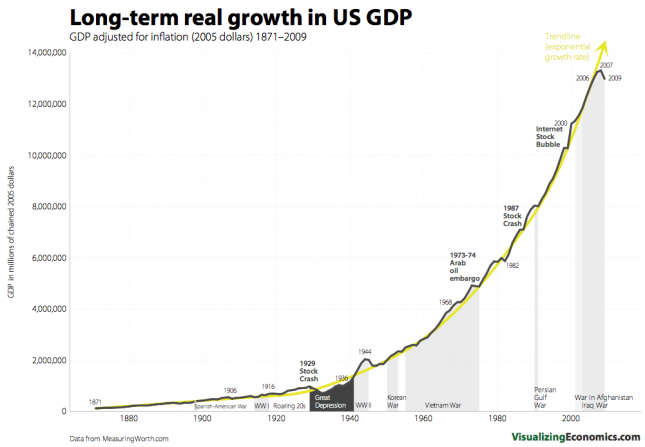


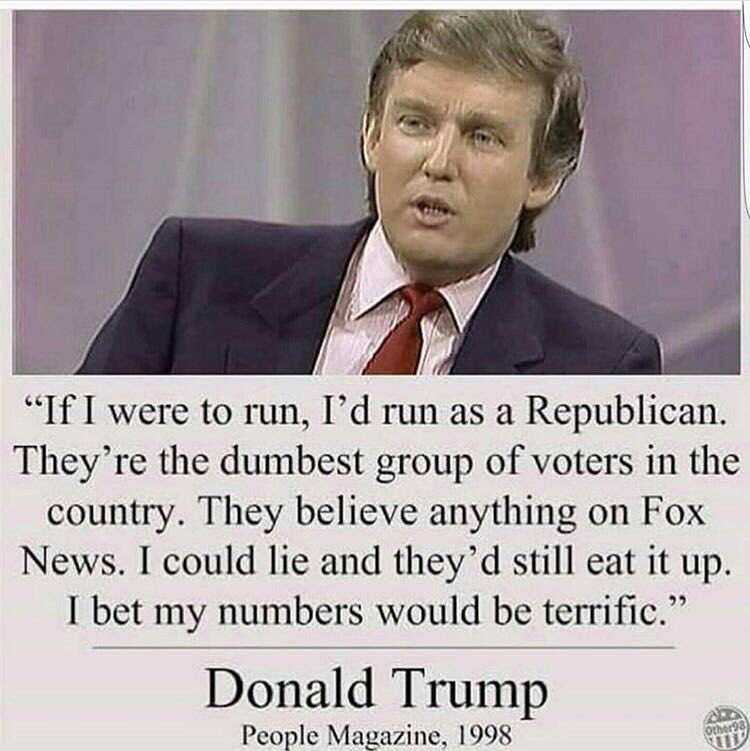
The attempts at building an interconnected globalised world are beginning to fail. A bunch of elites decided to create their own trans-national utopia unchecked by borders and dismissed all criticism as racist or bigoted. The globalisation project has been rejected by a majority of the population. Whether it is for economic reasons or just plain bigotry is something for the sociologists to study and not something I can pontificate on.
Also people seem to care a LOT about immigration and preserving their culture. Instead of patronising these people it's time we tried to understand their concerns and try to assuage them.
There is no genuine leftist alternative. It's a choice between center-right "left" that's sold out to the establishment and the far right.Economists need to stop acting like priests in the medieval ages who justified the existing order . The rural voter who lost his job doesn't care about the theory of comparitive advantage.
If this trend holds this will soon take hold in France and other European nations. This is a return to the world of the 1920s. Not gloom and doom but a much more unstable global order with every country for itself. Not what we need when we face planet scale threats like global warming. Get out of your bubble.
Hang out more on subreddits you don't agree with.
The divide is bridged one person at a time.
PS - Reposted my comment from another thread as it got flagged. Hope its OK with the mods.
EDIT: His concession speech seems to indicate that he's beginning to appreciate what he's been entrusted with.