It seems weird that anyone would bother with the 5M/3.6sec rule ... that's only 3.1 mph - I doubt many people walk much slower than that. Do they really think the morale hit is really worth the seconds someone would save walking 3.1 mph instead of a ultra-leisurely 2mph?
3.1 mph is not slow. Look at people walking in the streets, most walk slower than that. Have you been on a treadmill lately? 4 mph is about as fast as I can walk without starting to jog.
People have to walk faster than 3.1 to avoid the alarm, which means that the intent is to have them rushing down the hallways. If true, this is one of the most ridiculous and counterproductive corporate rules I've heard of.
For some reason this reminds me of elementary school. In the cafeteria, we had this big traffic light that supposedly turned from green to yellow then red if there was excessive noise. If it went red there was some sort of artificial consequence, most likely some teachers yelling at everyone to quiet down.
I think it's for the blue-collar employees, rather than the creative ones. It also is probably effective. My first job ever was as a janitor, and the preferred way of killing time (to avoid work) was walking slowly from where you were working to the storage closet (etc.). It really wasted a lot of time unnecessarily.
I am also a big fan of not using chairs at meetings -- everyone gets too comfortable, and people start reading blogs or whatever instead of focusing on the meeting. The end result is spending 8 hours on something that should have taken 20 minutes.
With that in mind, though, if I were Canon, I'd make sure that the employees subject to these rules got above-market pay and benefits -- otherwise, they'd just leave for less-strict competitors. (Maybe that's not an option with Japan's societal rules right now -- but I'm sure in a generation or so that won't be a problem at all.)
They could also meet the employees half-way and install a moving walkway that moves 5 meters in 3.6 seconds. Then the employees could just stand there and be equally productive.
I hardly think so. Walking at a normal pace ought to be forbidden in military bases, at least here in Turkish military bases. Thinking of Japan's militaristic culture I can't say I'm suprised much.
Also, it might be that the current president of Canon is an ex-soldier. To my experience, ex-soldiers at top positions like this are inclined to invent such weird rules and impose on others without hesitation.
In the U.S. military, soldiers are encouraged to "move with a purpose". However, this mostly just leads to the predominant situation referred to as "hurry up and wait"; everything must be done super quickly, even though completing it so quickly just means spending a few hours dicking around waiting for the next thing.
Despite our constant fervor to rush, nearly everything involving the military is ridiculously and irreparably inefficient in ways that outsiders probably wouldn't even believe. Although, I am mostly cognizant of the fact that it takes a hell of a bureaucracy to keep the wheels turning, even if it makes those wheels rusty in the process.
>Despite our constant fervor to rush, nearly everything involving the military is ridiculously and irreparably inefficient in ways that outsiders probably wouldn't even believe.
You're given a semi-trailer-sized shipment of heavy "product" (whatever it may be). You're directed, along with a half dozen other troops, to empty the truck (by hand; nothing is on pallets) and put the items in the "yard" at location X.
You get about half way through with the truck 2 hours later, and you're told actually the items would go better at location Y. You start moving them. An hour later, it looks like the contractor screwed up and sent you some of the wrong stuff; nobody bothered to check beforehand. You re-load half the truck.
Another hour or so goes by and the Commander decides that since the contractor screwed up one item, you're just sending it all back. You spend a few more hours re-packing the entire truck.
You just spent hours doing something you should have never done in the first place, but it was really important to finish it quickly, which actually, ironically, caused it to take far longer than it should have, due to constantly conflicting orders.
In general, there is a lot of "move stuff here, okay never mind, move it here." or "do this, okay new orders from the top, do this instead" or "do this because it was ordered, even though everyone here knows it will be reversed next week".
You can see this taken to its logical end when it comes to in-country Units replacing each other. Basically, anything and everything the previous Unit accomplished is completely negated and thrown out by the incoming Unit, as they Do Things Differently, Thank You. People wonder why we don't make any lasting progress and the answer is really simple: Ego. Ego and people covering their own asses constantly instead of doing what they know needs to be done.
I always thought this was deliberate. The problem is that in peacetime there is not enough for soldiers to do, so militaries run things deliberately very inefficiently in order to make sure people have things to do.
If you ran everything at full efficiency you would need far fewer people - but then in a war there would not be enough people. So you do everything inefficiently so the people (and resources) are there when you need them, and in a war you press the magic efficiency button.
Take your examples:
The loading/unloading was a form of exercise.
Sending the full truck back was a way to keep the truck drivers busy, and also of making sure the trucks are used.
Sending the entire shipment back was a way of keeping the supplier occupied, so that they need to keep people on payroll, who would be needed in a war.
The thing about the in-country units, was actually a form of training - you want each unit to know how to accomplish the entire task. Sure you could use the previous work, but then the incoming unit would not know how to do it. Plus it keeps the incoming unit busy, and everyone, and everything else associated with it, both busy, and in practice.
A unit commander has a big problem: how do I keep my soldiers both busy and trained. The simplest way to do that is to make them redo things someone else already did.
Try looking at all the inefficiency in this light, and it will all make sense.
PS. Were you ever a commander/officer (not sure of the right term)? Or did you ever keep children occupied in the summer?
Uh, no, this was a war-time example. So were my notes about "incoming Units". When we were relieved in Afghanistan, our work was pretty much thrown out, despite the fact that we'd had the most successful deployment (in terms of native opinion improvements, processes improved, etc.) of that theater in years (for our AOR anyway).
While I appreciate the logic of your argument in theory, I assure you, there is no such thing as a "magic efficiency button", which any actual soldier will tell you (or rant to you about) for hours ;)
But why not make them do productive things? If The People are investing in "a bunch of buff guys with guns that can take orders well and haul ass", then they should just be able to rent them out in peacetime to, well, take orders and haul ass (but not with guns, hopefully.) The military should be making money for the government during peace time to offset the resource usage during wars.
Soldiers are not machines which can be programmed once and then retain their skill set indefinitely. All that peace time is spent gaining additional training and maintaining readiness for a time of war. Not off helping unload water trucks or something.
It's interesting to read the thoughts from people on HN, RE the military, because they are almost universally preposterous.
I never said they shouldn't be "gaining additional training and maintaining readiness for a time of war." I just think there are more productive ways to do that. Have the engineers do civil projects; have the infantry work as policemen, or firefighters; have the officers work in management of various companies. Basically, keep them integrated into society.
I wouldn't trust my life to a general who hadn't also successfully run a company full of people who didn't care what he thought and quit when he did something stupid. You may be an experienced military X, but you'd probably be a better X if you also knew how to do X as a civilian. In fact, you'd better be ready to do X as a civilian when your service is terminated, however that may happen.
Not much related, but this reminded me of the French army; they have a motto, especially for a work that has to be done by multiple people consecutively and the first one is late on his task, the second has to wait, eventually the first guy hand out the work to the second one : "It was my problem, now it's yours".
To us it is; to the Japanese it isn't. They're still not recognizing how counterproductive their entire culture is. They had their heyday and it's been downhill from there. Deflation, shrinking of the economy, suicides.
What a sentence! Instead of arguing and pointing out obvious, I highly recommend you read something about Japan, other than "internet news".
Putting a label on someone's culture at least calls for a few years of actually living there. After 10 years in US I still wouldn't dare giving a grade to American culture, it would take a tome (and I'd still be wrong), let alone labeling it with a single word.
Disclaimer: I'm not Japanese
P.S. Canon&Nikon, despite their "counterproductive" cultures, pretty much destroyed American and German photo equipment industries. These days it feels awkward to say "Kodak moment", most kids will probably ask "who is Kodak?"
My girlfriend works at Proto, a company that produces a bunch of entertainment-related websites. Large company, 10k people. Between meetings and actual work, she spends approximately 15 hours a DAY at work. This is not abnormal. Another friend who works at a kindergarden works 6 days a week (sunday is spent preparing lessons) and about the same (15-16 hours a day).
Read that again, tell me how that is not "counterproductive". In my girlfriend's case, the meetings alone take up 3-4 hours in a day. She leaves at 7 AM and often gets back after midnight. And for what? So that the world can find out the latest gossip about Korean dramas with an easy-to-use GUI?
While working on my startup, I took a small contract at Fujitsu. I was responsible for cleaning up the translations on some of their cell phones (the Docomo F1100 being the main one - a story for another day). I had a chat with some people there and they told me how the game works; Fujitsu gives a small salary, and pays overtime. As a result, average workers sit around for half the day, then work like nuts during overtime to finish their work.
A lot of younger workers realize this is madness, but keep in mind that the people in charge generally came up during a worker shortage in the "bubble" era. These were less competent people who now have seniority in a seniority-based system. Can you imagine how depressing it is to work on a project that you know is going to fail? That's life.
I love Japan, I love the trains, I love the politeness and I love the people. However, given a level playing field (IE: No banks artificially propping up a company to avoid declaring losses on their own records), it wouldn't take much to break the back of a lot of local companies. (As much as I hate admitting it, but I can't work effectively after 8 or 9 hours - and the Japanese don't have superior body operating systems)
It wouldn't really make sense to call Hello Kitty (adding injury to insult ;)) counterproductive, now would it? I was referring to culture with respect to labour. I think the suicide rate is a serious clue, but stories like the one of jbm are more relevant.
I don't need to live somewhere to be able to point out cultural flaws, like I don't need to drink alcohol to point out the dangers of ethanol intoxication.
Uh, TV tuners? RFID emitters? Biometric readers? 2D bar code scanners are standard. They had 3G networks everywhere 3 years ago, while 3G in north america is still only in major urban centers (Not at my house, for instance). Also, the form-factors available in Japan are GREAT.
Don't know if you're trolling, but the iPhone doesn't even support background tasks or multimedia messaging. My Moto RAZR (from 5 years ago) has those features, and supports google maps, video recording, text messaging, full web browsing (via opera mini), and music/video playback.
Features like the biometric reader and the TV tuner exist because the "inmates are running the asylum." The general phone buying public doesn't care about any of those things. Japanese phones were 10 years ahead of the game 10 years ago. Like you even state, your crappy RAZR does most of the things people actually care about, and it is 5 years old. None of the recent "innovations" have sparked much interest amongst consumers. As everywhere, the thing people care about most is text messaging. Handset sales were a 20% decline last year in Japan.
Takeshi Natsuno, the inventor of Japan’s i-mode mobile web service and former Senior Vice President NTT DoCoMo, said in an interview, “I believe the iPhone is closer to the mobile phone of the future, compared with the latest Japanese mobile phones.” Natsuno also said uses the iPhone 3G himself.
Signed, a guy who used to work at a japanese telco research lab outside of Tokyo.
I remember time when City of London bankers and brokers used to have two hour lunch with a few pints of beer. Then their banks were bought up by soulless Americans and the enslavement began.
In a few years everybody was forced to eat their lunch at their desk.
That's why I don't see this Japanese example as excessively cruel.
You don't see the difference between not taking a two hour lunch and getting drunk, and not being allowed to sit down at your desk?
There is a happy medium somewhere between anarchy and militarism...I'm inclined to say it involves being allowed to sit down, and doesn't involve a few pints at lunch.
Too little info, but it could be an ok idea in some situations. Not for every department, obviously, and it sounds a lot less inhumane if you imagine it properly spaced with breaks.
Might be a bit healthy too. There are few things that eat your soul as much as being in front of a computer with nothing important to do for a few hours every day.
Of course it is management's job to keep staff productive but that is second to keeping them happy.
Uh, no. Keeping them happy is just a likely way to keep them productive, not a higher goal. Sending them home with pay would keep them happier on average. :)
I disagree fully. You acknowledge that happy employees are more productive. You should also realize that unhappy employees equals no employees at all. When you install machines to prove your distrust in your staff's work ethic, you will create a poor atmosphere never mind dehumanize your staff. I will treat my staff as human beings before I will ensure they perform as machines.
No. The management's 'job' is to maximize return on capital. Corporations keep staff happy only insofar as an employee's competitive worth dictates. If a survey were taken, what percentage do you think would agree their boss's job is to keep them happy?
So this President of Canon is using employees that he has some sort of supervision over to help prove a personal point of his that will net him a personal monetary gain?
That doesn't sound like conflict of interest at all...


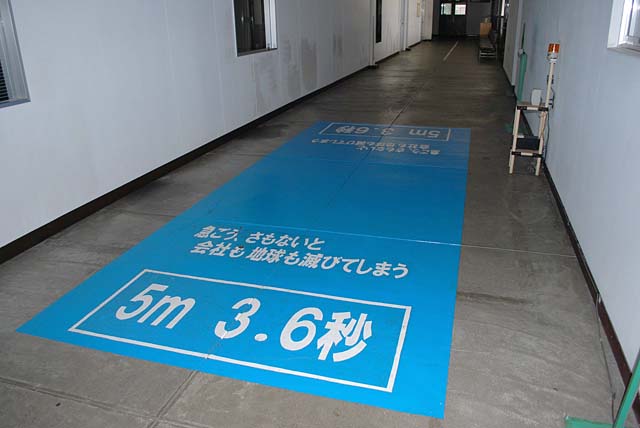
(Caveat: I don't read Japanese - I'd appreciate confirmation of that translation from someone. I read about it at http://www.dannychoo.com/detail/mac/eng/image/19639/Canon+El...)
It seems weird that anyone would bother with the 5M/3.6sec rule ... that's only 3.1 mph - I doubt many people walk much slower than that. Do they really think the morale hit is really worth the seconds someone would save walking 3.1 mph instead of a ultra-leisurely 2mph?