Yes, let's go back to the glory days of the deflationary late-19th century.
The reason the Keynesians like currency that slowly decreases in value is because it brought about the longest sustained period of economic growth in human history, without which we would not even have Bitcoin to celebrate right now (the widely adopted technology that makes it possible to implement being a result of aforementioned growth.)
If everyone hoards, and never spends, then the economy stalls and then recedes. What's good for us as individuals is terrible for us as a whole.
That said, I think BitCoin is very interesting, and if some sort of shorting is introduced to cause a downward pressure on prices then the price could very well stabilize. A stable, slightly deflationary currency is just about as good as a stable, slightly inflationary currency.
> it brought about the longest sustained period of economic growth in human history, without which we would not even have Bitcoin to celebrate right now
The industrial revolution happened while on the gold standard (with just a few short periods where it didn't apply, as I understand). Steam power, railroads, electrification, refrigeration, anaesthesia, early automobiles and so on.
I'm very fond of the computers that we have now (yay 20th century !), but it's a bit hard to brush aside the 19th century just like that. There's insane economic growth that happened in that period.
Meanwhile, today's 0.5% interest rate is unprecedented, a record low never seen before in the entire history of the Bank of England stretching back to 1694.
With the exception of computers, most of the economic growth of the 20th century was centered in wasteful areas: runaway suburbanization, military Keynesianism and useless wars, etc.
Funny that the kooks on the Austrian side of the debate predicted precisely that: that debt-based fiat currencies would encourage waste. I also find it very interesting that the Internet -- one of the few pieces of not-so-malinvestment that the 20th century produced -- really seems to "want" a currency like Bitcoin.
> What's wrong with people saving for their future and not spending beyond their means?
Because there's a difference between saving money by putting it in a savings account and 'saving' money by hoarding currency and storing it under your mattress.
The problem is that people are overloading the term "saving". In economics, savings == investment (this is an identity[0]). When you "save" by putting money in the bank, the identity self-adjusts in different ways from when you "save" by hoarding currency.
There are a lot of very smart people who believe very strongly that this "longest sustained period of economic growth in human history" is absolutely unsustainable in a very, very dangerous way. It is built upon the runaway exponential exploitation of fossil fuel energy, and on economic systems that require constant exponential growth to sustain themselves.
A crash of this system could be catastrophic-- as in millions or even billions of lives lost and a new dark age.
Without Keynesian economics, growth might have been much slower... perhaps slow enough for its underpinnings such as energy technology to keep pace. It's also possible that without Keynesian economics there would have been less waste-- less "empty calories." Keynes argued that even seemingly pointless economic activity could be good in that it employed people and permitted debts to be repaid, but the problem is that all this busy-work is powered by unsustainable fuels. So in reality it's drawing down on a massive ecological line of credit that took hundreds of millions of years to accumulate.
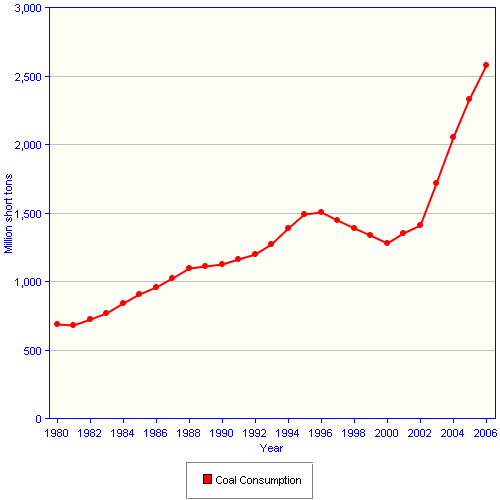
China is presently running the largest experiment in Keynesianism in human history. Here are some of its results so far:
An intelligent species would use its fossil fuel reserves wisely to construct renewable energy or develop sustainable ways of using nuclear power. The Keynesian orgy of "growth" has biased us toward spending these reserves foolishly.
"But these predictions have always been wrong!"
In any iterated debate between an economist and a physicist, the economist will win N-1 times and the physicist will win 1 time.
I have a strong suspicion that the Keynesian miracle is simply an unimaginably huge bubble founded -- like many financial bubbles -- on a novel "creative" accounting technique that temporarily hides underlying physical realities. If I'm right, its collapse could be ugly... like canned food and shotguns ugly.
Of course there's a lot of good news in renewable energy these days. My optimistic hope is that we'll avoid the full-blown energy trap "Olduvai theory" scenario. The collapse of the Keynesian exponential growth bubble will still occur since eternal exponential growth is physically impossible (and physics always wins), but the collapse of industrial civilization may not.
Edit:
One other point. Its true that the goldbugs and "pop Austrians" have been repeatedly wrong about hyperinflation. I think that's because many of them don't understand the present-day credit-based economy. The vast, vast majority of dollars in circulation are M2 and M3 (credit), not M1.
I personally think the bursting of the Keynesian bubble could result not in hyperinflation but in a chaotic series of inflations and deflations. Depending on policy responses, a hyper-deflationary collapse is one possible failure mode. Credit dries up and boom... the dollar hyper-deflates and wave after wave of mass defaults destroys the financial sector. Or you could have that followed by panicky money printing resulting in weird localized hyperinflations, short-lived explosive bubbles, etc. Various economic graphs such as stocks, bonds, exchange rates, etc. could start looking like random noise.
I also have other issues with Austrian economics, so I don't consider myself a follower of that camp. But I do-- as I wrote above-- have serious problems with the fantasy physics underlying Keynesian economic practices.
"I have a strong suspicion that the Keynesian miracle is simply an unimaginably huge bubble founded -- like many financial bubbles -- on a novel "creative" accounting technique that temporarily hides underlying physical realities."
It's possible. It's also possible that Keynesianism makes a substantial bet on the possibilities of human technological progress which can be stated as the following:
If our economy moves forward at a quick enough pace we can engineer our way out of the most serious problems that arise along the way (due to physical constraints such as resource limitations, environmental degradation, etc).
Whether or not this is true remains to be seen.
An example of this might be your example of carbon emissions. The economy might solve it thusly: As soon as clean energy sources such as solar and wind reach such a price that it does not make fiscal sense not to have them, they will proliferate as fast as we can build them. Worldwide carbon emissions will take a nose dive and the problem of global warming may reverse or at the very least stall.
We might get ourselves to this price point faster by employing Keynesian policies of government spending as China has - i.e., providing government funded subsidies to push the price artificially down.
If this happens, then we will have bought ourselves time to deal with the next set of potentially lethal problems that arise due to our economic growth.
(Your links touch on this but I do not agree that our economy will keep going full steam ahead until collapsing due to insufficient energy supplies. That would meant that our economy has no reflexivity and no built-in foresight, which it does.)
'An intelligent species would use its fossil fuel reserves wisely to construct renewable energy or develop sustainable ways of using nuclear power. The Keynesian orgy of "growth" has biased us toward spending these reserves foolishly.'
This is assuming a species is a single actor, and of course it is not. A species would, but an individual, a member of that species would not rationally make that choice. Why ? Very simple, Nash equilibrium.
Suppose everyone was trusted to act in the common interest. One bad apple can spread and destroy the system. This is the system you're advocating (note that "one bad apple" can mean a lot of things, from a criminal, to other species).
Given that we live on a planet and we're trying to spread our own life as far as it will possibly go, not as a species, but as individuals, and so we use up any available resource as fast as we possibly can, to maximize our own personal advantage relative to others, and just deal with the consequences later. Note that damaging others, from your own species, is as good (but harder) as increasing your own resources. Destroying 50% of the wealth of everybody else is as good as doubling what you own, but of course not really an option with 7 billion people on the planet.
As my biology teacher once remarked : if you believe that evolution theory is the truth, the fact that this leads to busts cannot be anything but good, as it improves your genes, you yourself, and your children (assuming, of course, you are lucky enough to have children, because in a serious bust cycle that is quite rare indeed). For everyone else, the boom bust cycle is simply the truth.
Really boom and bust cycles occur everywhere in nature. On such study we did was on local rabbit populations, and how they related to cat populations, and man, they boom, and man, they bust. There are regular busts in resources available to rabbits that are so severe that rabbits effectively go extinct in regions as large as 50 square kilometers, and this is not a strange or rare occurance (nor is it often the result of human interference, sometimes, sure, but 99.999%+ it is not). Certainly happens once per decade, often more.
It could be that boom and bust cycles do not really have anything to do with the financial system. We all were born into a long boom cycle, and that's cool, but at some point it will end. By Nash equilibrium logic, attempting to save resources is merely stupid.
Very good point, but I think there's some is-ought fallacy in the idea that humans should accept these things as inevitable because they are "natural."
To me it's almost the definition of intelligence to try to escape one's default circumstances and avoid the perils and pitfalls of nature. So it would be really cool -- really intelligent -- if we used our understanding of complex systems, ecology, evolution, and economics to avoid the worst of the busts. At the very least, damping down the extremes would be good for us since it would alleviate suffering and reduce the total overall waste. (Good things always get taken down by the bad in severe slumps... very wasteful!)
I find the Ron Paul/Austrian school camp's complaints that central banking causes bubbles hilarious because their most notable achievements so far have been the creation of two asset bubbles.
Since 2008 they have been claiming that monetary policy will usher in hyper inflation and they created a gold/silver asset price bubble. Now the same ideology is being used to create a bitcoin bubble.
Even more hilarious is their assertion that a crypto-currency like bitcoin is scarce and limited in supply.
Clone the bitcoin github repo, find and replace bitcoin with HollowayCoin, edit a couple lines of code to create a new genesis block and boom I just made my own crypto currency with all the benefits of bitcoin.
New crypto coins will become important because the block chain won't scale, and new block chains will need to be created. These alt coins are already being traded for btc on a couple exchanges.
These crypto-currencies serve a purpose, but there is no need for them to trade at $230 per coin.
Even funnier is claiming that the gold/silver standards resulted in more stable financial systems. Inflation, deflation, and starvation of capital were huge problems before we switched to debt-based currencies.
They also equate "no central banking" with commodity-based currency. The United State's 19th century experiments with disbanding central banking wasn't exactly an economic revolution.
The market value of a hunk of gold has done ok over the centuries, but it's value at any point in time as a currency goes all over that place. This makes it difficult to get capital -- who wants to lend money when you have no idea what money will be worth?
3. The time period you choose from already had world wide debt based currencies.
4. The UK already had a central bank.
5. The UK already had a reserve rate that was < 100%, and a practical reserve rate that was less than the prescribed one due to fraud by the banks.
I do afford you that gold is volatile, that is true, but it is especially volatile these days because of its role in the economy. People view gold as the "oh shit, the government is going to default" or the "oh shit, I need to smuggle my wealth out of this country before they confiscate it" currency. Both of those properties make it very volatile to political and economic news.
History is riddled with the collapse of currencies (and, hence, economies as there is a sudden shift of wealth away from those that saved it).
The point of currencies is not to have them be good for the economy. The point of currencies is to be a store of value and a divisible good for exchange. I agree that gold has flaws, I also agree that bitcoin has flaws, but they do have some advantages as well, and I would argue that in gold or silver's case stability is one of them.
"who wants to lend money when you have no idea what money will be worth?"
Easy. Don't lend in raw gold (or Bitcoin, or whatever). Create a mathematical construct that attempts to capture the value transacted and denominate your loan in that, and/or index your loan's value and payments to the in/deflation adjusted value of your currency.
Quantitative finance and math in general was less well developed back in the gold standard days, and they didn't have computers. So they didn't invent such instruments. Today they probably would.
Technically, Austrians don't equate "no central banking" with "commodity-based currency". They simply point to the fact that without a Socialist central bank dictating by fiat what currency to use, the free market would simply decide. Austrians point to the historical record that shows precious metals filling this role in the majority of cases where the market was left alone. However Bitcoin seems to be competing now as-well in certain ways which is very exciting.
Isn't it more accurate to say that the state mandates the currency by requiring it in payment of taxes? If I start paying people in old Deutschmark notes or silver bullion it's not the Fed that will come at me, it's the IRS.
Yeah you're right. I'm fairly certain also that it's legal for private businesses / individuals to accept and sell other forms of money. Only when it comes to tax payment must you use the State issued currency or suffer repercussions. However we're reminded by Gresham's law that money overvalued by government will tend to drive out money that is not.
These crypto-currencies serve a purpose, but there is no need for them to trade at $230 per coin.
Would you feel better about the price if we use mBTC instead? mBTC are only $0.23 right now. You should be looking at market capitalization, not price.
As for crytpcurrencies being scarce, there are network effects that come with one system having the majority of the market share. Good luck convincing people HollowayCoin is worth accepting.
Now, if some other decentralized payment system (that works with any currency and isn't a currency too) like Ripple gains adoption that could eliminate Bitcoin's network effect advantage. I believe this is one of the biggest threats to Bitcoin.
I find the argument that Gold and Silver are currently in "bubbles" to be unfounded. I think in the future as central banks across the planet continue their reckless expansionary monetary policies, the potential is certainly there. However I don't think we're at that point yet. If you contrast the current precious metals market with the tech and housing bubbles, you don't see the masses running out to buy gold and silver on credit. Nor do you have a Federal government subsidizing this behavior adding more air in the bubble.
The value of Bitcoin is in the blockchain, and the work it took to generate it. Your crypto currency would be light work for an attacker because it wouldn't have many miners.
Also, as another poster said, the issue is market capitalization, not individual unit price.
I'm just curious as how a relatively small group of people can be responsible for affecting the price of gold? By all accounts libertarians are a small section of the populace yet you suggest they are driving up the price and causing a bubble in the trillion gold dollar market.
It's hard to find solid data but this old article[1] states that $15,200bn worth of gold was traded in one quarter alone. I find it impossible that any one group of people can cause a bubble when that amount of gold is being moved around, much less the tiny slice of americans who consider themselves Austrians/libertarians.
My second issue is with the idea that gold is in a bubble at all. Despite a couple of spikes the price has been about $1600 an ounce for the past 2 years.
The trader/investor in me suggests that it was rising steadily for a decade until it reached a fair market price. Everyone from Goldman Sacs[2] to leftist George Soros[3] to libertarian Kyle Bass[3] suggest gold is getting boring and are bearish.
So I'm not sure where you are getting this info that gold is in bubble territory?
EDIT: I love the downvotes from people who can't answer how Austrians are causing non-existent gold bubbles. Not like central banks bought more gold in 2012 than any other year since 1964[1]... it has to be those pesky libertarians and their love of this barbaric relic.
Bitcoin has already taught us that even smart people are not immune to drinking the Kool-Aid. The tech community is quickly separating into two camps that are becoming unintelligible to each other. For some, this article is an amazing piece full of profound insights that justify their decision to buy Bitcoins. For others, it piles weak arguments on top of an assumption that the recent rise in Bitcoin value will continue forever.
1)Having insights and owning bitcoins can be mutually independent variables.
In other words, it's entirely possibly you have it completely backward, and that upon arriving at a lengthy deliberation, some rational actors, are therefore choosing to take a position.
2) >"that the recent rise in Bitcoin value will continue forever."
That's a pretty decent sized strawman you've rustled up. Most people in that camp are not arguing that bitcoin will rise forever.
The discussion is about the shape of the graph. I believe both an s-curve (slow adoption, exponential growth, maturity) and [perhaps multiple] sawtooth (crash scenario) are plausible.
It seems to me, with a finite supply and limited usage, it has to either keep increasing forever or crash, right?
Finite supply and an uptake in usage as an actual currency (aka something different than what 90% of the players seem to be doing) would mean an increase in demand causing prices to continue to rise with adoption (which could spell some problems with adoption, but not necessarily insurmountable ones).
Meanwhile, if adoption as an actual currency never takes off, then eventually the whole thing's gotta fall over, right? So it's either continual price rises or a big crash? What are the other scenarios?
All of this talk about the nature of currencies when it's clear that 90% of the activity is treating it as a speculative asset seems silly to me. Either it transitions to a currency (which is more about usage than price), or it doesn't and eventually crashes.
The author mistakenly attributes the deflating aspects of a controlled limited supply of Bitcoins (by design) as the cause of the recent surge in valuation while it's really just speculation at this point. Even worse, he's urging everyone to hoard their bitcoins and not spend them because he believes t1 will always be higher than t0. When you undermine the only true value of a currency (which is trading) you might as well place your bets in a Las Vegas casino and get some free drinks while you're at it because the thin line between speculating and gambling has been crossed at this point.
This is the only comment that matters here. FWIW, at my SW company which is filled with brilliant people I spend most of my day patiently explaining that monetary systems are always about power, not technological innovation, and Bitcoin will demonstrate that brutally, sooner or later.
I think debates like this mostly illustrate how shockingly poorly engineers are educated in subjects like history and basic economics.
Engineers have a tendency to view everything as an engineering problem, when most of the "really hard" problems are about people, interactions and relationships. When all you have is a hammer, everything looks like a nail - and we have an entire culture of hammer designers churning out the most effective hammers in history.
If bitcoin plays out like the enthusiasts envision, then some laws get passed and people get thrown in jail and there's your kibosh. This should be obvious but the enthusiasts will still be surprised.
"it does what currency should do, which is increase in value over time."
What utter rubbish. Bitcoin may or may not survive (as a volatile commodity, like gold), but you buy it now at your peril. It is backed by nothing, and generates no earnings. It started at $.10, and to $.10 it might well return.
What is Google public stock backed by? It buys no influence and yields no dividend, and Larry and Sergei have said it will stay that way, yet investors are happy to pay $800 for a symbolic piece (costing 25 times the share of earnings it represents, useless as that is without dividends).
Which is one reason that I'm not buying stock. Of course even Groupon stock might when the company fails still yield some Aeron chairs and cubicle dividers. There is a something behind any (non-scam) stock. The same cannot be said about Bitcoin. If I had a bitcoin I would sell it as quickly as I could.
The equity of Google -- if the company is liquidated, stockholders are entitled to the proceeds after bondholders have been paid. You can read the prospectus if you are curious about what a share of a company's stock actually means.
gold and silver are historical commodities that still have common uses even today.
"Fiat" currency is usually backed by the gold standard until such a point as the reputation of the state has matured to the point where borrowers can trust the state.
> "Fiat" currency is usually backed by the gold standard until such a point as the reputation of the state has matured to the point where borrowers can trust the state.
That's not really true; even immature states with poor reputations rarely have gold-backed currency these days. Some of them have currency backed by (convertible at a fixed exchange rate to) more mature fiat currencies, though.
12% of what? The gold has a limited supply as with bitcoins but it needed by industry. You may not be able sell your gold in 2040 for the same price in us dollars as you bought it today but it will be demand as industry hopefully will continue to exist.
Scarcity is not sufficient to make something valuable. Something must be both scarce and useful to have value.
I would argue that even when gold and silver were used as money, it was because of human laws -- taxes, debt laws, torts, etc. Even wampum's use as currency was connected to authority: tribal laws and religion. Even prison cigarette trade is government by a complex code that involves gangs, guards, etc.
Under an objectivist framework the two must sell at the exact same price because the are intrinsically identical save for the cosmetic difference.
The US Government could pass a law making bitcoin legal tender much the same as pieces of paper or the majority of circulating money that is nothing but electronic bits also.
See J. orlin grabbe's essays if you prefer to hear about it from someone else.
Bitcoin is, at most, a payment service similar to Paypal. It is not a true currency nor will it ever be one. All anyone cares about is how it relates to the USD.
All government backed currencies at least start on the gold standard. After sufficient time and economic development, some countries (like the US) can move off the gold standard and lend and borrow on reputation alone.
Bitcoin was started by people who do not appear to exist, the "money" was printed by a select group of early adopters who still control vast portions of its economy, and with nobody to regulate or monitor the exchanges, the recent inflation can all be some part of manipulative collusion.
WoW Gold and Team Fortress 2 Apple Earbuds seem to have a more stable and trustworthy currency than Bitcoin.
Yes, I wish I could predict the spike and have cashed out, but I'm not losing sleep over avoiding an investment that doesn't feel right in the least.
I wonder what Tucker will say Bitcoin is teaching us if it falls to $40.
Bitcoin is very interesting and agree with Ezra Klein's piece on it. However, the importance of Bitcoin is not in its exchange rate to other currencies, but in all its other unique properties.
Tucker puts far too much weight on what is quite likely a speculative bubble, which will be to the ultimate detriment of Bitcoin's long-term future.
Inflation is a tax on held currency. You may think a tax on wealth is good or bad, but from a policy position I don't see a compelling reason to argue about it in any other terms.
This means that inflation encourages people to hold their wealth in assets other than currency.
Considering that wealth aggregates at the top, the effect of inflation is greatest on the wealthiest.
This also means that if you have $100 worth of assets held in a currency that is expected to depreciate and $100 worth of assets in a currency that is expected to appreciate, then you will spend the former rather than the latter.
Hence the argument that deflationary currencies are worse than inflationary currencies as a unit of exchange.
This article is quite opinionated, but one thing I liked:
This brings us to another lesson that Bitcoin has taught us. Money is like any other good in society in that it can be produced and managed entirely by the free market. This is the reverse of what scholarly opinion has said for more than 100 years.
That's always been true. Scrip has existed forever. http://en.wikipedia.org/wiki/Scrip Any private party can issue a form of currency. Its value is limited by trust in that private party to keep the supply stable and uncounterfeitable (not double spendable), and the expectation that merchants will accept it for goods and services.
What Bitcoin introduces is a money supply with that question of trust removed, with enforcement by mathematical means. This only became possible recently of course, with the advent of enormous computational processing power and interconnectivity. The latter part of adoption by merchants seems to have very recently reached critical mass by way of networking effects. So Bitcoin could indeed be on the rise to become the world's monetary system.
At this point, Bitcoin's biggest danger is not obscurity and oblivion or a free market crash, it's regulation or illegalization from governments that may be hostile to the existence and usage of a currency system they don't and can't control. The US and EU governments are the entities with possible power to kill Bitcoin, because they possess legalized force outside of the Bitcoin protocol and ecosystem.
"What Bitcoin introduces is a money supply with that question of trust removed, with enforcement by mathematical means"
Except that there is no formal definition of the security for Bitcoin, so there is no meaningful "enforcement." Formal definitions of security for digital cash systems cannot be applied to Bitcoin because of the lack of a central authority. The security of Bitcoin is extremely vague, based on hand-waving arguments about computational power that are extremely difficult to analyze.
Even if somehow we overlook that lack of rigor, "enforcement" is not accurate. There is a known, polynomial time, practical attack that allows Bitcoin money to be double-spent. That does not sound like "enforcement by mathematical means" to me, at least not if the "mathematics" you are referring to are cryptography, game theory, or related fields (and I am not sure what other mathematics would even be used to enforce rules).
Double-spending bitcoins is hard, counterfeiting and general fraud are easy enough crooks can do them.
Also, this is a ridiculous argument because all fist currencies are being manipulated now to avoid a default-inspired crash. Your cash is rotting in your pocket, and your investments aren't making back inflation let alone a profit.
1. That is not well-defined. What does double-spending even mean for Bitcoin? Previous security definitions for digital cash define double spending in terms of a central bank that issues the money.
2. Even with the vague idea of what double-spending means for Bitcoin, your statement is false under the definition of "hard" that cryptographers typically use. There is a known polynomial-time algorithm for double spending Bitcoin that was described in the original Bitcoin whitepaper. That attack is practical and there are already concerns about one "mining pool" that has almost enough computational power to pull it off (and if they are willing to accept a small probability of failure, they already have that much power).
Yawn. Fraud is easy, no matter how you define it, stealing a few bitcoins on the other hand merely takes a finite amount of resources.
You're essentially a troll. What you say is true but double spending a few coins (your maximum return is 2x) would take hundreds of thousands of dollars and a lot of luck. Duplicating paper money requires an inkjet printer with good registration and the common sense to separate the eruion constellations into separate layers. It's not rocket surgery, and once the source file is made it can be replicated at any copy shop. Its vanishingly unlikely you haven't accepted a counterfeit bill, and its vanishingly unlikely a bitcoin could be double-spent beyond seven blocks.
Give it up. Bitcoins may not be a sound investment but they're far more secure than cash for both parties.
Bitcoin has not taught us that money can be produced and managed by "the free market." Bitcoin would be worthless if it could not be exchanged for fiat currencies, and there is no reason to think that will ever change.
Except that fiat currencies are useful for paying your taxes, which is how governments back them. Tax laws, debt laws, torts, fees, and all of the other ways governments collect money from their citizens are what give fiat currencies utility.
Even if a business only dealt in Bitcoin money it would still need to exchange at least some of its earnings for fiat currency if it had any intention of following the law. That is why Bitcoin exchanges matter: even if a business did transactions with both Bitcoin and fiat currency, there would be times when that business did not have enough fiat currency and would have to exchange its Bitcoin money to survive. There is a reason that everyone talks about the value of Bitcoin relative to other currencies, and it is that people must use other currencies to conduct some of their business.
On the other hand, fiat currencies do not require foreign exchange to be valuable. It was very difficult to convert the Soviet Ruble to foreign currencies, but in the USSR the Soviet Ruble was money and had value.
Is anyone else as annoyed at the moralizing tone of this article?
"With paper money, governments and central banks are in a position to punish holding money. Because it can be created without limit, discipline vanishes. Individuals, families, businesses, and government can ramp up spending without limit and avoid the consequences of their behavior."
Punishing the "sinners" for not keeping their currency and spending it in order to support the economy as a whole seems to be a primary goal of those that want commodity currency.
"You can try this experiment at home. Let’s say you have a problem teenager who lives like everyone else, throwing around cash and seeing no point whatsoever in saving money. Send that kid a Bitcoin and see what happens, even without hectoring instructions."
Yes, give them a Bitcoin and they'll be saved, praise our lord and savior Bitcoin! Unless that teenager wants a skateboard today, not two skateboards in 2 months. Maybe they want to buy a meal b/c they are hungry?
Finally don't reference the Gilded Age as a model of good monetary policy, two major depressions and a thin veneer of success for a wealthy minority shouldn't be the zenith of monetary policy.
It seems that the author thinks Bitcoin is going to steadily appreciate indefinitely, which is obviously not the case. Give a kid a BC at $140 and you'll have a furious kid when it crashes to $15.
Somewhat off-topic: isn't BC just digital gold? Is there any reason to think of it any differently?
I don't have an argument that bitcoin could not handle that sort of volume, but I don't think it is particularly controversial to say that it has not proven itself to be a stable store of value.
The difference is that gold is a tangible, immutable substance that doesn't decay much. It doesn't go anywhere.
I bought a bunch of bitcoin early, and sold it for a handy profit at $10. The ones I kept aside (about 20) were lost on a PC whose hard disk crashed. My understanding is that these coins are forever lost.
You may have lost bitcoins, but you did so before you knew they'd be worth hundreds of dollars. I'd expect that in the future, people will be much more careful to backup (or print out) their private keys.
In any case, the ones you lost just increased the value of all the other bitcoins still in use. Since each unit is theoretically divisible into infinitely smaller units at some point in the future, people will just trade smaller amounts for larger values. That's a feature, not a bug!
A lot of people are claiming that deflation is a death sentence for a currency like this. Something they overlook is that new coins will continue to be created for many years still, and that all it takes is a new version of the protocol to 'fix' any fatal flaws in the current system. If the majority of users have a financial interest in defending the value of their coins, it seems logical to me that they are likely to act rationally to achieve that if a threat were to emerge.
Ridiculous. Bitcoin - as cool as it is and as much as I admire the cleverness of the system - is a FAILED currency. What it MIGHT turn out to be is a store of value once the speculation cools - but that is still a few years away.
If a currency encourages saving and discourages spending, it brings the economy to a screeching halt. This is why Bitcoin fails as a currency. It is also the reason why it will never be accepted commonly as a currency.
However, because the supply will be (artificially) limited in time as all Bitcoins are mined, there is a case to be made that it might emerge like gold as a decentralized store of value. It's anonymous and infinitely portable.
Yes please Ignore the deflationary spiral that its currently undergoing. It amazes me that people are buying into a system which actively discourages people from using it as a way to exchange good and services.
A deflationary spiral is not a price increase, large or small. It is supposed to be when price increases, large or small, shrinks actual economic activity, causing more price increases, more shrinkage, etc.
Has this actually happened? This shouldn't be a hard question to answer if the Bitcoin economy is indeed "currently undergoing" a deflationary spiral.
It doesn't seem that it's happening or even can happen, because there really isn't much of a bitcoin economy. The speculation on the currency absolutely dwarfs any usage of it as a currency. Nobody on earth uses it for more than 1% of their purchases.
So anyone who wants to use it as a justification for some reactionary ron paul economics is really not observing what's going on. Is claiming you made money on gold as an investment really an argument for gold-backed currency?
Because of the nature of bit coin its impossible to determine how much of the current activity is actual commerce and how much of it is speculative trading.
The truth is the system is set up to encourage deflation and there is nothing to prevent it from happening on a large scale. The huge price increase seen over the last few weeks is not because there is an explosion in commerce using BitCoin. Its because people are viewing BitCoin as a investment vehicle and they are hording it.
As to your point about there not being an economy, thats exactly the point their currency is worthless not because people won't give you stuff for it, but because in terms of its ability to foster an exchang3e of goods and services it is actively discouraging you from using it ( why buy something today for 1 BTC when next week it will be 0.5 BTC ) The fixed nature of introducing new currency into the market only exasperates this problem as the hard limit on all bit coins that can ever be mined makes it so eventually even that small control over deflation will be non existent and increase the deflation.
I'm not really disagreeing with you on the facts as regard asset price, I'm saying that calling it 'deflation' is a misnomer because it's being treated much more like an asset than as a currency.
I do think it's basically a ponzi scheme.
I guess we need a separate term for 'rapidly appreciating value relative to other currencies which makes it prohibitive to create an economy based on this currency in the first place', where deflation occurs to an existing economy based on a currency.
> This shouldn't be a hard question to answer if the Bitcoin economy is indeed "currently undergoing" a deflationary spiral.
It's not happening, because there is no Bitcoin economy. Bitcoin is a trivial factor in the overall economy, not the dominant currency in any particular definable economy.
i don't think it discourages exchange. After all this bitcoin hoopla i saw bitcoinstore which has significant discounts on items over amazon. The next time I have to buy something, I may use them, but I will not keep any money in bitcoins. If there is a P2P economy that processes payments for 1% of a transaction, that could be a very useful thing assuming I trust the merchant.
What happens when we don't need to exchange BTC for another currency anymore? Or will BTC be forever inherently dependant on the existence of a government controlled currency? How would we price things in BTC like groceries or salaries? Would that be always changing because the value of BTC would be forever going up? I'm probably talking beyond our lifetime here..
i just wished i'd hit the buy button when they were $20. I didn't believe in them then, I don't believe in them now, but I sure as hell believe I would have cashed in some nice short term earnings from the bubble :)


The reason the Keynesians like currency that slowly decreases in value is because it brought about the longest sustained period of economic growth in human history, without which we would not even have Bitcoin to celebrate right now (the widely adopted technology that makes it possible to implement being a result of aforementioned growth.)
If everyone hoards, and never spends, then the economy stalls and then recedes. What's good for us as individuals is terrible for us as a whole.
That said, I think BitCoin is very interesting, and if some sort of shorting is introduced to cause a downward pressure on prices then the price could very well stabilize. A stable, slightly deflationary currency is just about as good as a stable, slightly inflationary currency.