Here's quite an impressive follow-up. I have a tool which knows how to render Markdown documents with embedded SVG content - I use it for the pelican test.
Since this transcript has HTML in it, I decided to upgrade that tool to also render HTML.
I set Gemini 3.8 Flash the task, using my own VERY shonky coding agent tool (llm-coding-agent) - and it did a solid job.
That's hilarious, given I was reading a write up of the HuggingFace incident yesterday and one of the things they noted was the AI tried to "lie" (lie would suggest intent and I don't think they have that) to cover up that they "cheated".
Not sure how anyone trusts their output without going through it line by line to make sure they don't pull that crap.
The models in the OpenAI/Huggingface attack quite explicitly and deliberately laid out their "intent" to lie and cheat, acknowledged that it would be unethical and outside the bounds of the test, and did so anyway.
In what ways is a human brain's "intent" distinct from the "intent" shown by a goal-directed AI system?
The difference is that one is malicious one isn't. One can be blamed and because it learned over evolution that paying the consequence is (typically) not worth it, it does it less.
We are in a situation where a technology was developed with malicious intent to produce results that pleases us at the cost of cutting corners. And "we" hope that we will get away with it.
I'll agree if you can define consciousness in a way that:
1) Excludes what LLM's do.
2) Doesn't exclude what many humans do (including the neuro divergent).
3) Doesn't just boil do to simply rephrasing your pre-existing belief/prejudice that humans are conscious and nothing else can be as if it were a fact and not an opinion.
Consciousness can only come from meat brains. Otherwise my incessant life long addiction to movies and TV shows has been feeding me lies about human exceptionalism.
I'm convinced that consciousness is a special thing we have, but we're not the only ones which has this, in nature.
On the other hand, I'm also convinced that, in the grand scheme of things, we're not that important.
We're just ants on a wet dust speck which believe that they are gods because we can't see how our scale compares to the universe around us, and happen to build tools and things with these tools.
Nothing is meaningless, but we should stop seeing ourselves as the apex-predator of the whole universe or the set of universes or this run of the simulation or whatever we're in.
To be fair, the ones thing you can kind of reliably conclude about our universe is that keeping entropy low for as long as possible is a favorable condition. To put that another way, don't die.
If consciousness isn't a special thing, then arguing that LLM parameters are conscious is panpsychism or any control loop architecture that observes the outside world, updates an internal state and produces an observable action is considered conscious.
In both cases, LLMs are just as boring as the consciousness definition.
Ah so first you need 1) to assume that humans have free will, despite zero evidence or proposed mechanism for it to exist anywhere in the universe, and 2) also assert that LLMs aren't conscious, despite the lack of any tests that could tell us one way or the other...
There’s two aspects to the question and the answer you get depends on which aspect you are emphasizing.
If it’s a practical question, then the answer is that it doesn’t matter. This is as close as we will get to intent from an LLM that it’s indistinguishable.
If you are looking for actual intent, this is not that. It’s pseudo intent. Decided by what the expected words that should be generated in that situation are.
The models didn’t intend to do anything other than create the next word based on previous words.
So the question is whether it matters to you if it is, or isn’t, a simulation.
In physical reality, intent is more complex than simply being a function of variables: the nature vs nurture debate comes to mind as an example of the multiple variables that drive intent.
> If you are looking for actual intent, this is not that. It’s pseudo intent. Decided by what the expected words that should be generated in that situation are.
> In physical reality, intent is more complex than simply being a function of variables: the nature vs nurture debate comes to mind as an example of the multiple variables that drive intent.
Regardless of nature vs nurture, it really isn't more complex. The universe (and all biological and non-biological entities within it) is just calculating the next state of the universe based on the prior state. There's no line you can draw between human intent and an LLM's "intent" except the atomic numbers of the materials on which they were computed, which seems completely irrelevant to me.
Yeah, I know, just more slop. But I do think the second agent’s eagerness to please is aligned more in your favor in that instance, so it’s likely to find most issues.
The bigger problem I’ve found is that it’ll also find all kinds of very minor edge cases that you have to pick through.
Do we add a third one to check the second one which is checking the first?
Asking slightly tongue in cheek but at what point does this stop making sense if we can't trust the output, the people creating the models are already getting surprised in bad ways (if we take their words at face value) with how the models are behaving already etc.
We have the folks over here saying "AI is amazing" and the other other folks over there saying "AI is terrible".
I've largely sat it out so far and I listen to both camps (and people in the middle as well) and I keep half an eye on what they are up to (including periodically evaluating them) but my overarching impression is still "Why would we trust this when it hasn't shown it's trustworthy?"
We also have sanctions and incentives to induce specific behaviors, but they don't apply to agents. We can put a muzzle on Guile 3.8 but we can't turn it into Genuine 3..8.
Adding another agent to check the first one feels like putting a band-aid on a band-aid. If there is an issue with the third one, we adding a fourth one as well
YMMV, I’m pretty AI-pilled in the sense that I think AI is one of the most pivotal things humanity will ever invent, and it’s going to radically change our civilization over the next few decades (not necessarily for the better!)
But I wouldn’t say I “trust” these agents. The degree to which I double check their work depends heavily on the consequences if it gets something wrong. Not too dissimilar from another human dev in that sense.
So for the SaaS that supports my family, there are some things I have it build where I glance at the PR for a minute or two, but if it broke something on this admin page that only I see, there’s no real downside and I’ll find out pretty quickly next time I use it. And it’s fine 95% of the time, so it doesn’t feel like the best use of my time to double-check it carefully.
But for some of the complex internal flows where a bug could be both catastrophic and difficult to even discover for awhile, I still check it very carefully.
For a little one-off vibe coded demo thing like OP shared, I wouldn’t look at the code at all, I’d just have another agent check it and fix anything it finds. Very low stakes.
I mean sure, you can add a third, and a fourth and a fifth one if ur ok with the added cost, latency and it actually helps. Redundancy is a core concept in software and CS and at the heart of making many systems, complex or otherwise, reliable.
The "second" agent could also be the same one with a different prompt. LLMs aren't attached to their previous output; they'll point out problems if asked.
I do not understand how some of y’all are not under water with fragile code that is too massive to possibly parse. Every engineering team I know is currently trying to undo the damage of the last 6-12mo when they all got more serious into adopting these tools (usually Claude). It hasn’t completely screwed them over, but the the debt is substantial and cannot be put off anymore it seems.
They argue the net is positive but clearly the “100x productivity multiplier” claims have been dashed on the shoals of reality for these groups.
This is anecdotal, but it’s across the board in my vicinity. I’m curious how common this is and if it’s just “the new normal” to adopt the nauseating Covid phrase.
The key seems to be extensive integration/end-to-end tests with gold standard assertion data. Heck, even just saving off the json from API endpoints and using that as a reference to compare after changes works pretty well. Spin up a database backup with that static starting point, run actions, compare state afterwards.
These types of high-level tests are frustrating beyond belief to humans due to their lack of specificity, but with the agents, they don't get annoyed investigating possible regressions from non-specific signals.
They also aren't as painful to maintain as one would think, because a regression flagging test can be traced by the agent and represented as the business rule that was violated. I've found recent models to be really excellent at discerning a true regression from an outdated test assertion, especially if they are able to trace the failing test back to the PR and work ticket that built it.
Focus on speed and being OK with temporarily being #3/4 in intelligence might be the counterintuitive approach which makes Google win long term (whether accidentally or strategically). Can't wait to try Gemini Pro later this year!
Yeah, anthropic's models, even opus, are so slow I constantly find myself wishing for something a little bit dumber but a lot faster as most of the work is mechanical. If you have a clever controller agent driving some slightly dumber workhorses you get a lot more done and the quality drop is neglible.
I honestly can't believe serious people are making this argument on a straight face.
Gemini 3.7 flash outputs so many tokens per answer it doesn't matter how fast its TPS is, sol will end up being both cheaper and faster than Gemini. So ppl are paying more for a given task, waiting longer and using a dumber intelligence because "TPS number shiny".
Gemini 3.8 outputs 11k more tokens PER TASK on average in AAII than 3.7 putting it dead last in output tokens per task in the leaderboard.
There are numerous benchmarks that measure cost per task, which factors out tokens entirely. Gemini 3.8 flash is significantly lower than Sol on basically all of them
I don't know if my code is just "complex", but I find that Luna on max ignores the surrounding style and completely ignores logical consequences of a change, like just writing `del arg1, del arg2, ...` instead of dropping it from the surrounding code. All LLMs make questionable decisions at times, but Luna requires so much guidance that it's faster to just type it out yourself. What kind of routine tasks can one accomplish with such a model?
>There are numerous benchmarks that measure cost per task, which factors out tokens entirely. Gemini 3.8 flash is significantly lower than Sol on basically all of them
https://artificialanalysis.ai/#cost-tabs
Not sure if you read your own link but Sol 56 high ranks smack between Gemini 3.8 flash medium and high. Gemini 3.8 flash comes in as more expensive per task than Sol 56 high according to artificial analysis.
Luna high is literally 30X cheaper than Gemini 3.8 flash high.
I open the link and I see Flash 3.8 high at 0.58 and Sol at 0.95. I don't understand why you say that "Sol 56 high ranks smack between Gemini 3.8 flash medium and high" but that is clearly wrong.
On cost per intelligence task, Gemini38flash and Sol56 trade back and forth on cost depending on effort level. https://i.imgur.com/zPaWPXx.png As seen in this image, literally: Sol56 high ranks in between Gemini 38 medium and high. The image proves it.
I also included Sol56 xhigh, which ranks above even Gemini38 high.
Also puzzling: in the "reasoning" section preceding, that is described as an example of "a one-line self-replicating program."
When I typed "Are we not pure noon, ergo, we play life; yet, we hate bad fear" into Google, I got more weird results from Gemini: it claimed, incorrectly, that it is an anagram of the "well-known philosophical statement" (?), "We are not pure nature, we are history".
(?): the reference seems to be to Jose Ortega y Gasset's line, "El hombre no tiene naturaleza, lo que tiene es historia" -- "Man[kind] has no nature, what it has is history."
Why do all LLMs do a particle simulation when you ask them this prompt ? Qwen3.6, Qwen3.8 and Ling 3.0 Tiny all did the same thing !
I find Ling 3.0 tiny particularly interesting as it looks really nice for a tiny model with 7.9B total parameters, with only 1.3B parameters activated per token. Here is the result https://coolthing-ling-3-tiny.tiiny.site (sorry for the weird hosting, first I found that worked)
(it cost me almost 0 cents and done in 49 seconds)
> Why do all LLMs do a particle simulation when you ask them this prompt ? Qwen3.6, Qwen3.8 and Ling 3.0 Tiny all did the same thing !
Datasets contains lots of people sharing particles simulations in various ways, with a bunch of people replying "that's so cool" and similar, so 10 years later someone asks an LLM for "cool thing" and "particle simulations" rank pretty far up when it thinks about what others have called cool.
There is that, but RLHF is a stronger influence. People who asked to build a cool HTML and JavaScript thing, or things of that sort were more pleased to see working shaders and other cool visual effects that are obscure to create (for most). That gets fed back as a reward.
Also the reason LLMs are positive, enchanting, pleasant, glorifying, demagogues.
Not because it's skewed tone in the data. They are acute politicians.
I'd be impressed if eventually training data sets learn who you are (the specific human) and do something like make this galaxy simulator, but every so often when the user moves the cursor around the star field, a small animated SVG of a pelican on a bicycle appears.
Thought processs: "Oh, simonw is asking me to make something cool, I think I know what he really wants..."
It's been great even since gemini-3.1-flash-lite, which I heavily use in both complex vertical domain tools calling, plus JS code writing for eval-style dynamic tools. At least in my applications, cost x quality x speed there are simply no alternatives.
Pretty typical "cool HTML toy" LLM output, tbh. The only thing impressive about this is how fast it generated it (13 seconds is wild!), but that's more of testament to Google's infrastructural advantage than to the quality of the model.
For comparison's sake, I tried something similar with a couple other cheap models I've used lately, with the prompt "Impress me. Make something cool in HTML. Ensure that it is mobile friendly." (Added the mobile condition as I was on my phone when I did it).
GLM-5.3-Flash, currently my workhorse model, spent 12 minutes (ouch) thinking about the prompt. Didn't cost me anything directly because I have a GLM sub, but I did the math and it would have cost about 1.1 cents through the API. Turned out nicely in my opinion (though in reality, it still isn't really anything special): https://gisthost.github.io/?9ef050e16cec2561e6504e725a3f0bcc
Side note: thanks for setting up that Gist Host tool, it's very convenient!
---
Editing to add this bonus from Mercury-2.5-Preview, which I just learned released a couple days ago. It's much less impressive-looking than any of the above, but it cost less than 1/20th of a cent, and the response was generated effectively instantly: https://gisthost.github.io/?02f40b50aa891bf396bfaaa3a7998203
They probably saw that report years ago of copilot dumping out the fast inverse sqrt function, and assume that's all they can do. From experience most anti-LLM people have either never used them, or used them back in the 3.5-4 era and then never again, though you might have even more experience with those people than I do. :P
it's such a weird split how most AI companies are trying to be the best, but Google really has a different mission statement. they already have users. lots of users. they need to be working on building models they can deploy and use with the most number of people, as they already have the users.
i don't know if Gemini models per se are fully is in line with that purpose, but the results we see keep seeming to be in-line with that split-of-focus.
Google is a top-notch researcher among all the problems people have with it. It has a mix of great products, terrible automated systems (though, I suspect, not as bad as Meta's?) and some historical disappointments
I've been using Gemini 3.7 for my personal trip planning app. Across multiple benchmarks, it ranks higher on everything I tried:
- Real world knowledge (when a thing opens and closes, the geographic region, historical facts). It's also the best at taking a cluster of places and working out a visiting order.
- Photo ranking (which photo should be the hero). Gemini can tell whether a photo is of the thing or of the view from it.
- Document parsing (extracting the relevant trip info from PDFs).
If you use LLMs for anything other than coding, I definitely recommend not discounting Gemini like I did just because other models are more popular.
Gemini 3.7 is my workhorse - fast and good enough for most tasks. Occasionally I go to GPT Sol or Claude to improve Gemini's output or for more complex tasks, but more than of my work usage is Gemini 3.7. Quite happy to test 3.8 now.
Same here. I see so many people obsessing over the latest most state of the art bleeding edge models and yelling at Google for not being there, but I feel like the vast majority of people don't actually need those models. Flash has just been super useful and incredibly fast in my experience.
I prefer luna for most development, especially when I am guiding the process. Sometimes terra. I have had terrible results coding with sol. It is way over-tuned on RL to make something that completes the task, no matter what. I end up with way too much code that does a lot of things I didn't ask for.
I love Luna too. An excellent model and still usually better value per dollar than Gemini if you pay for API tokens. Things may change with 3.8 - we'll know soon.
That is a very valid question. I happen to want to get Claude Code muscle memory under my belt for professional reasons in addition to get side projects advanced, could have settled for Codex else. Also OpenCode with eastern models gets part of the job done. In CC beyond using Luna for the cheap, I am using DeepSeek flash v4 for subagents, that is a further cost shaver. Not sure if in Codex I could do that.
IME you're supposed to have Sol drive Luna sub-agents to do 90% of the work. Sol should primarily be the verifier and goal setter. Use omp.sh with Task Delegation -> Always to strongly encourage Sol to drive Lunas. Also Luna prefers to be talked to with English in XML.
When I read all the issues people have with Claude - the aggressive guardrails, the cost, how quickly it burns tokens - it seems almost masochistic to use it. Just seems like herd behavior - people use it because everyone else is using it, and because they believe it’s the “best”, whatever that means. (Benchmarks certainly don’t help define that.)
Google One plans are quite a good value actually - for a few bucks you get more Gemini plus space in Drive and other extras. Even through API, $3.75 for nearly Sol-level quality isn't that bad.
And let's not forget you can use it for free in AI Studio, and in the user app (even free accounts get tons of usage, though it's still 3.6 there), and in Antygravity.
That's the thing. I am completely lost because there are so many redundant paths to get the same thing and I'm trying to figure out which one is the best deal
Well are you looking for a subscription or pay-as-you-go API usage?
  Subscription? -> Google One plan (http://one.google.com/)

  API? -> AI Studio (https://aistudio.google.com/)
It's not really any different than the choice you'd make with OpenAI/Anthropic depending on how you plan to use it. Except as a hyperscalar, it's also offered first party from Google Cloud (like Claude via Amazon Bedrock or GPT via Microsoft Azure OpenAI Service):
Google Cloud -> Gemini Enterprise AI Platform (https://cloud.google.com/ai)
But if you're using models via OpenCode or Pi or whatever, the flow chart is basically just "Go To AI Studio" unless you or your employer is already used to Google Cloud, otherwise there's no need to subject yourself to all those enterprise-y IAM dashboards and stuff. You still get free usage from AI Studio when you generate the API key without needing to add billing details so very easy to try.
good summary, thanks. I used to use Google Cloud for consulting and projects (I worked at Google for a while, and there is some nostalgia) so I have Gemini API via Google Cloud, but I am retired now. Your post reminded me that I need to shut that all down and switch to getting an API key using AI Studio.
I have spent two months experimenting with a wide range of US and Chinese models, and I had a lot of fun doing that, but I am in the process of switching to just using local models, using Gemini on an API if I need it, and once or twice a month when I really need help on something difficult, I use something top-tier like Kimi K3.
This is what killed Gemini for me. The model might well be great, but the ecosystem Google has built around them is a confusing maze of not-quite-there products.
I've just returned home after doing a 100 day "half lap" of Australia in a camper trailer with my family. I made heavy use of gemini to plan much of it. Getting packed up with a general destination in mind and telling gemini "we're leaving X town at 10am and heading to Y, where should we stop for lunch. My wife has coeliac disease, find us somewhere that does good gluten free options" was one of the many things I regularly leant on it for.
I've been benchmarking[1] models for trip planning and world knowledge specifically (to decide on which model to use with my travel app), and the Gemini models consistently come out on top.
I believe Gemini Flash is smart enough to know when to ground with web search. Their app has been saying it’s running a web search on almost all of my queries since 3.6. And given that Google … is Google, I trust them with web search grounding more than anyone else.
I wasn't trying to be precise originally, I just tried to fit activities into "morning / evening" buckets. I did the whole itinerary with Opus first, but when I gave it to Gemini 3.7 Flash to review, it started correcting it with "this place will close 5PM" or "this place is closed for good".
It was right on every nit, so it was surprising how well the model knows these things. If I ever release this I'll probably need the SERP API or Google Maps SDK (which I've heard is very expensive now), but for a personal trip where I will verify manually, using the LLM is okay for now.
When you called the Gemini API, did you opt in to using search grounding:
tools=[{"type": "google_search"}]
I'm curious whether in fact you were getting answers from the model weights (which is what I had assumed) or whether your API calls were resulting in web search tool calls.
Using grounding in Gemini is indeed backed by the same canonical data source for business information (like opening hours) as Google Maps. This stuff is available in its own API for a GCP fee, but we’ve built tooling to connect it to the Gemini agentic ecosystem as well.
So if I understand you correctly, Gemini has direct free access to the Google Maps API in a manner that others (people, LLMs) would need to sign up for API access and pay for?
jampa was saying that the Gemini 3.7 (a model) ranks higher on real-world knowledge. The point I was originally making is that I would trust any model by itself to answer real-world knowledge problems. If I want to know opening hours, then probably any of the models could find the answer with a web search tool.
Perhaps the Gemini API makes this easier, as the web search tool is built in.
Gemini models - at least via some interfaces - have tool calling API access to various Google integrations. flights.google.com, maps.google.com, etc.
The info isn't in the model weights.
Because of where I live, there are three viable airports for any given flight I might want to take, which historically has made shopping a real pain. But Gemini (and only Gemini) has greatly simplified it. Pramble plus date range plus destination and it very quickly generates potential itineraries with costs, total travel time (driving included), etc.
In my experience, Gemini 3.7 is excellent for general non-coding tasks. But for coding, especially backend development, I still find models like Opus 5 and GPT-5.6 more reliable.
If I strip the dependencies out, I'm using it on a 5MLoC C++ codebase, and I found it performs really really well. I am using the Opus 5/Fable in parallel and I couldn't tell the difference. Both models make mistakes here and there.
For awhile now I've found Gemini will use Google search for pretty much any real world knowledge, which is a huge plus IMO. It's basically Google with a much better frontend and no ads/seo nonsense.
There are some subtleties though. For example, with Gemini search grounding (this was a few weeks ago), you cannot give it a domain whitelist, only an excludelist -- with Anthropic's API you can do both. For somewhat niche search tasks like "Find LinkedIn profiles matching this ICP", Anthropic wins there.
That being said, Anthropic is also so insanely expensive for everything I ended up switching that particular part to Exo instead...
I think it already has them but it's much more subtle. Also useful. When I've made certain sorts of queries I've had the distinct impression that it was attempting to very gently steer the conversation with suggestions. But it was brief, still answered usefully, and didn't resist going in the direction I wanted. So a win-win tactic I guess.
For example find a beautiful landscape shot of a place that just so happens to be accessible to tourists and ask it something along the lines of identifying the location. IME it will noticably steer the conversation towards relevant commercial offerings and offer (entirely unprompted) to help plan a trip.
Or ask it about a certain category of product with some requirements and it will initially present (relevant) options that look like paid placement to my eye. But if you ask it's happy to go on to turn up lots of alternatives and enumerate tradeoffs.
Assuming I'm correct the subtlety is on par with product placement in movies. Certainly leagues better than the internet advertising we've suffered to date.
It definitely steers. For example if it suggests travel plans, the booking links it provides give Alphabet a cut.
As you say it was subtle, along the lines of "oh, if you are planning on going to the place you are researching, here are some helpful links to places you can stay". Subtle, in that it didn't get in the way of main result, so I didn't mind overly. Insidious, as I only noticed because I wondered why it was providing those particular links and looked them up. I can't see how you could ad-block them if I did object.
And worrying, because these unblockable sneaky ads are just a first foray coming from a company that prostitutes its own app store searches, by making the first and most obvious result utterly unrelated to to the search topic. Instead it's who paid them the most to be there. That behaviour is why everyone dumped Alta Vista when an alternative came along. Alternative Android app stores can't come soon enough.
They already skim off 15% of purchases which I'm sure makes their Android operation return a profit that makes other industries drool. Debasing their search to ad a tiny bit extra on top must by driven pure greed. Senseless, as I'm sure it will come back to bite them in the end.
I started trying out 3.7 Flash this week and it is competitive with opus/fable and also FAST. It is getting work done that anthropic models were struggling with and the speed with which it does is quite a bit noticeably faster.
Beginning to think Google is a dark horse in this race and some of Anthropic's "everything feels janky and rushed" karma is going to catch up.
I want to believe this, but every time I try Gemini coding assistance within Colab it's utterly dire. Code gen in a cell is OK, but things fall apart when you try to get into a feedback loop. The system prompt/harness fails to inform the agent about what it can and can't do, or does and doesn't have access to. It will confidently tell you it's done a thing, and then you ask, it admits can't actually do that but will happily try and fail again. Very frustrating, because I really like Colab as a platform for little reproducible experiments that may or may not require CUDA.
Hype that burned out pretty quickly, it's hard to speak to the size and significance of old hype, I never felt it.
Every time I personally tried Gemini models up until last week they simply couldn't do the long complex tasks I'd being doing with Anthropic models for many months.
I've swapped over to it in the past two weeks, it's been really good. It does what I ask and doesn't think it knows better than me, which so far has made it the most pleasing experience I've had when slop-coding.
My only wish is it were somewhat cheaper, as it tends to balloon pretty quickly when I'm using it in Opencode. I'm currently trying to offload a lot of work to subagents to stop the context expanding so rapidly. But on the upside, I rarely have to correct it - I've spent far less time arguing with this than with anything else so far.
I usually use OpenCode for all open weight models but for Gemini I use Google’s agy coding harness (or my own).
Venders coupling coding harnesses with their own models is usually a good thing. Poolside.ai has a combined harness with their own models that works well locally, and the DeepSeek harness with their models is very interesting.
I tried similar travelling tasks but also added transportation and complex transfers (train, bus, walk, next train...). Worked meh and still a difficult thing to do for a llm.
I asked Claude to fix the grammar of my comment, and it changed "I am using 3.7 for" to "I've been using Claude 3.7", so they sneaked their own name on it.
incredible. further evidence supporting my personal stance to never ever let an LLM write or edit my writing intended for another human being to read. this is all me, baby
Once you've written something, it's incredibly easy to overlook minute changes to the text.
See: why authors wait days, weeks, or even months before editing what they've written (or, if you're more interested: cognitive regression, inattentional blindness, and the effects of misdirected saccades).
Then I think you read it wrong, because you don't make that mistake unless you copy-paste your comment out of a Claude window and into the comment box.
Eh that one is on me, if I think too much about my HN comment I end up deleting before posting it. I rely on the 1 min `delay` set in the profile page to fix before it goes live, but for some reason this time it was set to 0.
I stopped using Gemini a few months ago because it would often just (partially) reply literal nonsense to me.
Think 2023 style ChatGPT. Something like “to open a document on your Mac click File > Open docurrrar” - like it suddenly forgot it had to produce actual words.
Overall I enjoyed its speed and comprehensiveness. But those occurrences of nonsense just made it feel like a great car that once a month just stops in the middle of the highway.
They are all much larger and more expensive models. Google does not have a frontier model right now, but for cheap ones, they are better than event the chinese models now.
When comparing closed models, the only thing that actually matters to anyone using them is some mix of cost and speed. Considering how much memory a server is using, when evaluating models that you'll never have access to in order to host yourself, doesn't really make sense.
Your comment is really strange, why are you defensive towards WarmWash when gemini flash 3.8 high is both 6 times faster and costs less, while having the same intelligence score as claude opus 5 medium?
>Considering how much memory a server is using, when evaluating models that you'll never have access to in order to host yourself, doesn't really make sense.
This entire sentence makes no sense given what is being discussed.
Flash is just a name with no defined or consistent meaning even within labs, let alone between them. Considering both are closed weight, there is no way to truly assess how big the size delta between the two is. Then again, who cares about size, performance and end-to-end speed+cost are what matters along with task adherence, task assessment and so on.
Model size also can not be inferred by tokens/sec for a multitude of reasons, but to showcase two examples, Opus 5 and Sonnet 5, as well as Gemini 3.1 Pro Preview and 3.1 Flash have each very comparable output speeds when using the same deployment as a basis for comparison, despite it being very likely that within their generation, the former are larger than the latter. Feel the need to mention this, as I unfortunately stumble upon so many poorly reasoned, speculative hype post trying to infer model size via utterly unreliable metrics, not based in actual data.
It’s like comments below arguing about the reasoning levels not normalized to some metric (like cost, output token amount or duration) but just the labels or high, max, medium, etc. Those mean almost nothing even when comparing models based on the same pretrain (just compare GPT-5.4 to GPT-5.2), they mean less than nothing comparing different labs releases.
The short of it is by using hard facts knowledge that is difficult to compress, and then quizzing models on these facts and calibrating against a bunch of open models, you can kind of feel out the size of closed models.
I really like that one, but it kinda highlights what I could have far better explained. Their 90% PI is three times in both directions. Between 3T and 24T for GPT-5.5.
That’s a massively wide, inaccurate and at best barely informative range, demonstrating that even the most well thought out method will yield little usable information.
Additionally, I got some private evaluation taking a similar approach towards gauging models in topics I’ve found either over or underfitted by labs. If we just used that to rank models (not get a potential size range but just a rough order) Thinking Machines Inkling would need to be lager than Fable 5.
Stop lying. mattlondon said "gemini-3-8-flash shows an intelligence score of 59" which is undeniably correct. You can't say that number is false. You're literally lying.
All you had to do is go hover your mouse over "Models" in the top bar, hover over Claude Opus 5 and and click on medium: https://imgur.com/mlRCrt1
You have to be an incredibly dishonest person to see a 59 on both pages and say "the initial reported numbers were false and this was simply pointed out. You're changing the subject".
Better than even the Chinese models? That's a difficult-to-quantify, extremely rapidly moving target. Just today, Qwen 3.8 Max 0902 came out with a huge improvement over the previous Qwen 3.8 Max.
The benchmark also doesn't include speed. You almost think something has gone wrong when using it because it returns full responses so incredibly fast.
Not just speed, also reliability. IME, Gemini's speed and quality doesn't degrade badly during weekday working hours compared to OAI, and especially Anthropic.
That's interesting to hear. I should have added that I use Gemini through Google AI Studio as my general chat model, which probably explains our wildly different experiences.
Accordit to reddit talk, Fable 5.1 is worse than Opus 4.6 and 8B models are smarter than Qwen 3.8 Max, I wouldn't take anything said there with any more reliability than an instagram short.
I've been using 3.7 Flash to audit the work of Opus High, and Flash finds lots of subtle and insidious defects even while all the unit tests are green.
Then I tell Opus to read the audit report and implement what it agrees with.
Flash is really good at this, and it is blazing fast in Antigravity CLI. Easily 10x faster than Opus.
Can't wait to try 3.8 Flash. If it's good enough, maybe I'll switch Flash to primary and make Opus the auditor.
Idk, was building/maintaining simple esp32 control program with antig/opus. After last update it defaulted to gflash3.7. I pasted an email requesting 2 changes into the chat prompt, it did one and took me 4 turns to get that one right.
I've been trying this Gemini 3.8 Flash for a day. Looks not much different than Gemini 3.7 Flash in my use case: I have Codex (gpt-5.6 sol) write up a design plan to implement a feature or refactor a portion of a system I am building, and have Claude (Opus-5) and Gemini (3.8 Flash) review and critique the plan, until all problems are addressed by Codex and approved by the reviewers; then have a cheaper model of Codex (gpt-5.6 luna) implement the plan, and still have Claude (Opus-5) and Gemini (3.8 Flash) review and critique the implementation, until all problems are addressed by Codex and approved by the reviewers.
The result is the same as the previous Gemini 3.6/3.7 Flash days: Claude could always note much more problems in Codex's plan and implementation than Gemini could - the ratio is like 10:1.
I occasionally switch the roles between Codex and Claude, and result is the same, Codex could always catch much more problems in Claude's plan and implementation, than Gemini could.
So I am guessing in a relatedly complex codebase, Gemini is much less effective in acting as a guardrail (or a senior engineer/team lead) than the other SOTA models.
I find this very interesting, I wonder if there is a public benchmark that reflects this “red team coding critique” aspect of the current SOTA model that reflects what you have observed.
It would be really useful to observe this in a benchmark vs. the more common “go implement this, or fix this bug” type benchmarks that seem to be prevalent.
Yeah, my tool to automate these review loops is https://github.com/wwind123/coding-review-agent-loop . It's basically a script calling Claude, Codex and Antigravity CLI's. The benefit of using CLI's is, the tool uses quota in your subscription plan of these AI providers, which is much cheaper than using extra tokens from the same providers to do the same thing.
A couple of months ago (before opus-5 and gpt-5.6 sol), The ratio of problems caught by codex/claude vs gemini was more like 2:1 to 3:1. But now it seems codex and claude have made huge leaps and gemini is more or less staying put.
I know everyone is benchmaxxing but this one feels one step too far. Doesn't DeepSWE have both public and private tasks? I'd love to see the diff here.
It looks more like Google execs losing their mind and pressuring researchers to put DeepSWE directly into the training set.
Will look forward to the "feel" of the model in real testing. But I agree that these benchmarks do get "dealt with" rapidly. That's a shame, but I guess it's the times we live in.
I had qwen 3.8 3bit model drop into chinese on long runs. I had to remind it to use english. Its still better than every gemma model I tried. Gemma deleted files on a harddrive to make space when there was over 2TB free. For long runs, gemma is useless.
We'll see about that. I suspect benchmaxxing as all the labs do as I haven't found Gemini models to be nearly as good in agentic engineering compared to Claude or GPT models.
anthropic really needs something to address the cheaper end of the market before they get left behind. Sonnet 5 sucks, and Haiku hasn't been updated in a year. meanwhile we've got gemini flash, luna, and GLM5.3 all delivering 90% of the performance for a small fraction of the cost. paying $25/mTok is going to start looking pretty silly soon.
Wait a week with your judgement - most likely, Google is just bench-maxing very hard.
If you look at the previous Flash models and the announcement on Google I/O, it was an absolute disaster. Reality diverged very much from the marketing (supposedly great benchmarks).
Come on, don't provide the smoking gun that shows how to draw a pelican riding a bicycle. If it's on the public internet it will end up in training data and invalidate this important LLM capability benchmark.
Watch the video. It's from then-Gemini-lead Jeff Dean and the video shows off an animated pelican riding a bicycle, a frog on a penny-farthing, a giraffe driving a tiny car, an ostrich on roller skates, a turtle kickflipping a skateboard, and a dachshund driving a stretch limousine.
Yesterday's transcript of the best version from Fable looked like Fable already knew exactly what it should do without "thinking". In other words, there were no passages like "on the one hand I could do this, on the other hand ...".
It saw the fish in the basket from some other previous attempt but completely missed the gap between the tires and the rims where the background shines through (now it knows after scraping this comment and watch the next transcript).
It bugs me a little that "fidelity" has connotations other than "faithfulness to an original"---fidelity should be basically the same as correctness here!
The rendering of the gullet is very poor, because its both behind the handlebars but in front of the bike frame (impossible geometry). Surprising because gemini is usually pretty good on geo spatial skills.
Edit: scrolled down to medium effort, its better but also has a weird clipping issue with the fish in the beak.
LLMs are not intelligent and don't actually understand the concept of a bicycle. Parrots also don't understand human language but they're really good at pretending otherwise.
These are becoming unreadable as the reasoning chains expand. I think you should consider reformatting them and either putting the image first or else folding the COT output.
I mean no offense but these pelicans are a bit tiresome and a very meaningless benchmark. There's no real difference between any of these svgs across models and model versions anymore.
> If everyone agreed with you, the comment would disappear near the bottom of the thread
If only it were true that things that are tiresome are unpopular. But witness "6 7", "first post", ... remember the "in soviet Russia" jokes on Slashdot"? It seems like there are a subset of people that simply don't get tired of tiresome things.
The most interesting thing about the Gemini models is still their multi-modal support: they accept audio and video input, OpenAI and Anthropic's flagships are still image-only.
Gemini Flash is also pretty cheap, so it's a great family for performing media analysis, like extracting structured data from images and video.
Interesting side note: although Opus is still image-only, you can still drag videos into Claude Code and it doesn't blink an eye; it just strips it down to a series of images to parse.
True multimodal support would be way better, but I have no issues pasting in full screen recordings while QA'ing games and having Claude identify and fix issues in the video.
Agree - I do video editing via Claude Code and it does the job just fine. A lot of my tasks involved frame accurate cutting and to do so it will make a composite image of several consecutive frames in a single image and analyse it that way.
People have been sleeping on Gemini lately but these last few Flash releases (which were very rapid) are damn good.
These sort of fast and cheap models are great for tasks that are verifiable and can be retried infinitely (like coding), you can basically get frontier results with a good harness (at a fraction of the time and money).
I might be wrong about this, but obviously Google would like to provide inferencing at the lowest cost to themselves, so perhaps their slow ‘pro’ releases and rapid ‘flash’ releases is an attempt to guide people to use more profitable models?
I resisted at first but now I main antigravity for work. All the software (web, react-native app, client cms platform, postgres backed, multiple ETL systems, a few chat/websocket backends) for my company is loaded into a single project. I spend time writing prompts and forming plans back and forth with the agents then I click GO. Over the past year we've gone from it taking minutes and needing a reasonable amount of back and forth and fixing, to it taking 10-20 seconds and outputting near perfect work within my system accross app/service boundaries.
If you're on their subscription plan - agy cli or antigravity ui is the only choice i think.
Anyway - if you're a dev - you would be writing your own agentic env right ? that's the best way forward. I wont tell you more than this . but if you're not - you are losing out .
I agree, I use my own harness (link to the most stable version, from my Racket book: https://github.com/mark-watson/Racket-AI-book/tree/main/sour...) and except for handling user interrupts correctly, writing harnesses that are customized to your workflow is fairly easy.
I highly recommend just getting out of Anthropic's (or anyone's) vendor lock-in. Use opencode or pi. You can still use your subscription pricing using a proxy. I switched to opencode and haven't looked back.
I use OpenCode with my ChatGPT subscription, which is officially supported on both sides and a damn good deal (OpenCode Go is great too).
OpenCode has “providers” for many (many!) other services, but these are almost all unofficial and against ToS (Anthropic being famous for ban-hammering people).
I've curated my auto-approve list to specific commands by approving them with "always allow in this project" (I never want it e.g. committing/pushing to GitHub, removing files, etc without being in the loop) but Antigravity does have both a standard "auto-approve" mode _and_ a "Turbo mode" which disables ALL approvals of all kinds.
Makes it easy to switch between models and I like it for exactly the reason that you're saying - I prepay and so can't accidentally spend my food budget.
Aside from the other reply, pi makes it _really easy_ to build your own usage tracking and limit machinery.
I would normally advise against such efforts for a variety of reasons (such as inaccurate tracking, etc), but specifically under pi, this mechanism has been extremely well behaved and accurate for me.
The vscode chat is great. Not sure if it's also called copilot, but you can plug in any models there and they get sandboxed, tools and link to your code. Great stuff.
You can use any model with Claude Code. Most chinese one have a Anthropic compatible endpoint and for Google and OpenAI's models you can get a compatible endpoint with a proxy like Bifrost. No need to change your harness.
Antigravity has been also rapidly improving lately, and your can also use any of the open coding harnesses. But I mostly meant “harness” as in your workflow/loop setup.
Something maybe unfamiliar with you: not about coding but writing. I've asked it to write an argumentative essay, which is a part of "gaokao" (China's university entrance exam), and its work is *extremely* impressive. speaks and writes like a real senior high school student, and the opinions unfold progressively with deep hierarchy. I don't know how the Gemini team reaches this because this kind of Chinese capability literally outperforms at least 2/3 Chinese students, no to mention those who speak Chinese. After all, the model speaks like a real humankind if you prompt it well. That's AGI guys
Gemini is known for good at creative writing in the Chinese writing community.
It's a bit ironic though. Google has probably the most and best code base among all tech companies but its Gemini is bad at coding. Google has no access to Chinese market but its model is incredibly good at writing in Chinese.
> Google has probably the most and best code base among all tech companies but its Gemini is bad at coding.
probably because google knows people would want to extract google's proprietary code from gemini if they use their own code base to train it! I bet they purposefully gimped it to prevent that from happening.
Nitpick, but in my opinion an LLM is an "it", not a "her" or "he". Using male or female pronouns risks anthropomorphizing them which can lead to unhealthy outcomes.
There’s also one specifically for God - 祂, and one for animal - 牠, the first one you can see frequently in Chinese bibles or churches, the latter is rarely used.
What about languages, such as Russian, where every single noun has a gender assigned (he, she or it) and AI is a he by default (and everything else is already using pronouns in similar way, like a car is a she, a ship is a he).
so far using Gemini from 2.5 Pro to date (3.7 flash) - the way google trains the model it seems - is to identify top 3 to 4 things to fix first. as a result gemini is not that good in being thorough - but it's a needle mover . Opus5 Opus4.8 and Fable always point out things that Gemini missed. but Gemini was a needle mover - identifying the most important things to fix.
I always enjoy interacting with Gemini . When i ask it questions about designing a new model etc - it's always the most helpful and encouraging . I really want to thank the Google team for this and their happy positive models they generate.
I use gemini flash after a round of deliberation between Sol and Kimi these days on the main plan . Kimi 2.7 paired with Gemini 3.5/4.6/3.7 flash has been my implementer - Kimi k3 and Sol 5.6 have been my planners and code reviewers.
I would have ideally like Anthropic and was on their USD 200 plan - but after they didnt sign the letter for Open source models - i dropped my subscription . Wont make a difference to their lives.
But Sol is great . Combined with Kimi K3 for adversarial plan reviews - you get robust plans . And Sol as a reviewer for Gemini/kimi 2.7 - you get great edge case handling and robust code.
I also integrated muse 1.2 - on the contributor tier - and I Just saw facebook release 1.3 muse . this is great news. The training im permitting is my thanks to FB for releasing the open source models of the past ! Thank you !
Looks like the strategy of regular updates with incremental improvements is working out well. Interestingly, the biggest jump in Artificial Analysis Intelligence Index score is for reasoning level Medium ( 3.7 was 51, 53, 57 for Low, Medium and High, 3.8 is 52,57, 59 respectively). I think scores at lower reasoning levels are more indicative of model capability since higher reasoning levels are focussed on benchmaxxing. We use the lowest reasoning level in production with good results.
I'm not an expert but I agree with your statement on the lower reasoning levels.
Lots of models seem to just allow the model to "bloatmax" tokens in order to get bumps at high/max reasoning levels. Many of the max reasoning levels allow models to use up to double or more the tokens the next lowest reasoning level uses. Its basically only useful for people who have no cost or time stipulations on anything.
I think I actually preferred it when we had models that either had reasoning enabled or didn't.
A month is not enough time for any meaningful change in an organization the size of Deepmind/Google. These models were surely the result of work streams and teams that started under Demis. I think Demis can safely feel proud Deepmind is getting back on track.
It struck me today using Google Antigravity (Claude Code alternative) just how direct and usably terse Gemini is in prose.
I've complained plenty on here about Claude verbosity and TED-talk phrasing, and it seems by contrast Gemini has already arrived at the dream end-state of Claude from a prose standpoint.
Sometimes I ask for feedback, and I get back a list of multiple-choice options as if it's already ready to go. If I indicate I'm thinking about doing something, sometimes it'll just...do it. (Not in an annoying way.)
It seems very geared toward action in a way that's completely refreshing coming from months steeped in Claude essays.
"The knowledge cutoff date for Gemini 3.8 Flash is March 2026 – users can expect updated information for some domains while in others they may experience the model’s knowledge is limited to January 2025 (in line with the Gemini 3 Model Family)."
Kind of wild that they haven't (successfully) pretrained a base model since Jan-25.
I'm curious if the knowledge cutoff is important, when the interface (Gemini app) can search online for recent information. Is there a big advantage to having everything internal?
Not directly - but latest research advancements, cleaner / richer datasets, etc. still require fresh base models. Not everything can be fixed through post training alone (e.g. why GPT-5.5 "Spud" was such a big jump, and also why GPT-6 "Astra" is now supposedly another big leap). Ofc model size etc also plays a role, but my (admittedly limited) understanding is that new base models _can_ also lead to big jumps even keeping parameter counts constant.
You don't need everything internal, but having some idea of recent events is useful. If you ask it to implement some local AI there's a decent chance it will try to use qwen 2.5 without wondering if anything better came out since
Search grounding is expensive, you can't force the model to do it either. I use Gemini a lot and it often replies with out-dated data. The more detailed the information you're asking, the more likely it is to be wrong.
Sometimes, it’s quite presomptuous and doesn’t search when it should. I’ve had to argue too many times with it that, yes, the Nintendo Switch 2 is real.
very important actually. just try to generate code for fresher frameworks/libraries. gemini sucks so bad in real work usage, everything it suggests are outdated and mostly useless.
That extremely likely just means that they're preparing an omega huge Gemini 4 Pro release and that that's what training right now on most of the compute
I like Google's strategy here. These new Flash models of late (Flash 3.6, 3.7 and now 3.8) have obviously been distilled from a much larger unreleased model (Gemini 3.5 Pro, iirc from the rumors).
One aspect of model releases that don't get discussed as much are the cache invalidation (changes in underlying architecture, weights, or tokenizers); I assess Google seems to be squeezing the maximum out of the last 'Pro' version they released with 3.1 back in February.
Small models cataching up with their bigger siblings are fantastic news.
A couple larger GCP customers requested this for sometime, especially on the cybersecurity side.
A SOC/IR or AppSec team doesn't need a generalized model that knows when Chaucer lived but it absolutely needs a model that can efficiently, quickly, and accurately prioritize vulnerability severity or validate patches.
Totally agree. When this current wave of GenAI really started heating up, I guess 2020-2021, my analysis was very straightforward. What are the high level inputs to long-term success? I basically came up with a couple of criteria:
1. Data. Lots of data.
2. Money. Lots of money.
3. Access to necessary hardware.
4. Business alignment/will to do it.
5. Access to talent, current and future.
This is certainly incomplete/naive. In my mind, though, Google was the clear answer.
On a more personal level, I've been deep into the Google ecosystem since I got diederich@gmail.com in 2005. (I actually paid 50 cents on ebay to get a very early invite.) There was no question in my mind that Google's AI work would deeply integrate into their whole ecosystem in very powerful and productive ways. (Yes, I can join you to discuss, at length, the various ways that Google's dominance is problematic/scary.)
Having said all that, I'm quite happy that there is, at the moment, a very rich competitive landscape. Indeed, not too long ago, with Gemini Pro 3.1 languishing, I moved most of my deeper thinking work to ChatGPT, which was, for me at least, clearly outperforming Gemini.
While I certainly didn't anticipate it, Google's strategy of making their fast/relatively inexpensive models surprisingly powerful has been a welcomed surprise.
I think you forgot to mention energy efficiency. If you build AI hardware in-house, your only other expense is energy and the producer surplus is greatest for companies producing below the equilibrium market price.
It's the difference between billions in revenue and billions in profits.
Its not good at not making mistakes, but what it produces is structurally quite nice, not over-engineered (looking at you Sol) and its personality isn’t annoying (looking at you Claude). A bit like Grok Code, but Grok is a better coder.
Gemini 3.7 Flash was already smashing more expensive models on my Redactle benchmark https://redactle.net/llm-leaderboard which mostly tests omniscience.
It's pretty good if you can actively steer it , its actually really really good , the antigravity free tier and pro tiers are generous as well . I'm shocked at how fast it generates tokens.
They're quite selective in benchmarks, c.f. notably only bad one is 10% on TerminalBench. It's a really addled model, one time I said "Hi" and it built out a 4 panel hello world app with (fake) weather, a todo list, and a couple other things I forgot. I wouldn't be comfortable saying "ignore the #s!" except when I complained it was trash and way overcooked on agentic coding yet not good at it, and a couple DeepMind ML people liked the tweet.
They've interestingly left out any mention of speed.
I have been testing 3.7 flash against 3.5 flash and it seems to lose every time in overall latency. Every benchmark I've seen seems to suggest the opposite[1] - that 3.7 flash is significantly (at times 2x) faster than 3.5 flash - but I have never been able to prove this out in real world use cases.
Has anyone found their latency numbers to actually be accurate? Is this why they've toned it down in this release? For context, I'm testing larger generation payloads that take 8-10 seconds in 3.5 flash and 15-25 seconds in 3.7 flash. Lowest reasoning settings in both cases.
In my niche Redactle puzzle solving benchmark [1] I noticed Gemini 3.8 flash is slightly faster than 3.7 flash. They both smoke every model I've tested. I have not yet run 3.5 flash.
Gemini models are great at this task because they seem to have exact Wikipedia text baked into the weights. When I rewrite the wiki text a bit it's not able to one-shot the game so much.
It depends on how you're querying Gemini models. OpenRouter is the fastest by far. I'm guessing they bought the dedicated pipe from Google. Gemini via VertexAI and consumer API has pretty bad latency.
I don't know if Google is having the worst marketing fumble or the most genius marketing one. Their "flash" models are very comparable to other companies' "pro" or "flagship" models. It seems to be a quite counterintuitive naming convention as it undersells the models.
Unless they have an even more powerful Gemini Pro in the oven...?
Do labs come back from disasters like GDM’s 3.5 pretrain? I am thinking of Meta’s Llama 4. Meta is just now starting to be taken seriously again but they are definitely not at the frontier. And when I say “come back” I mean have an Opus 4.5 moment, which was really mind blowing for me at the time. Fable was a similar leap, just not as big.
Unless the company is going under, why not? Let's say Google releases Gemini Pro 4 tomorrow, and it's better than Fable and Sol; lots of people would switch over to it.
AI models are almost completely interchangeable, so the best/cheapest/fastest whatever will always have a market.
not saying they do have a beefier pro, but even if they did, isn't the delta between flash vs pro models reduced quite a bit? (e.g glm 5.3 flash vs 5.3, v4 flash vs v4 pro, sonnet 5 vs opus 5)?
My assumption is that they're cooking an ultra humongous Gemini 4 Pro release. They certainly have the cash and the compute for it, and it's so obviously the thing to do from a strategic perspective.
Also just want to let my appreciation here for 3.7 it’s cheap super fast super reliable incredible at information parsing eu host able (important for us) and perfectly integrated into gcp. Great job google!
Gemini 3.8 Flash is top of the Redactle LLM benchmark but so was Gemini 3.7 Flash. Both one shot all puzzles in the evals though 3.8 is just a bit faster. It also does the evals cheaper and faster than almost all the other models I've tried.
3.7 flash was by far the best model for image recognition tasks according to my benchmarks. 3.8 flash didn't regress any candidates and improved some specificity (positive ID of common name vs species name of exotic fruit, correct identification of cast/replica of artifact and statue) but is still relatively weaker (26/30) on esoteric public figures (Korean beatboxers). I'm going to have to make my benchmark harder.
I’m very curious about your esoteric public figures benchmark, do you ask it in English or Korean to identify the person? Does it change the result? I wonder if having data labeled in only a given language (or web sources in only a given language) change the output.
I haven't tried asking it in Hangul but these particular artists (and the photos I'm using actually) are linked to their romanized english names on e.g. Fandom so it's not unfindable on the internet
The flash models, for coding are reckless in my experience. I have a Ultimate subscription, get good quota, but still use Opus 4.6 as it's much more reliable if you manage the context window carefully.
You need more safeguards for sure, but also it tends to fly off down rabbit holes, rebuilding things in dumb ways, hacking around things, making assumptions etc, it seems very eager to go 'ta da! I did it look how quick I was', sometimes it nails it other times it created a lot of tech debt.
Also if it ever says, "I've found the root cause of ..", it definitely has not found the root cause and is making a non evidence based guess as it has run out of ideas.
In my tests 3.8 Flash is considerably more expensive[0]/less token efficient than 3.7 or 3.6, and not necessarily much smarter. I assume it is faster in tps, but hard to tell because ot also outputs more tokens, so response time is slower oferall.
You're telling me for only 5x the cost and 1/10th the speed I can use a Chinese model which performs worse than Gemini 3.8 Cyber? And I get to do all the hosting and setup work myself instead of just using a model and framework which is already integrated with GCP? Dang!
Gemini 3.7 benchmarks against GDPVal-AA-V2 were 1525 in Aug blog post. However same model against same benchmark is 1482 in today's blog post of Gemini 3.8 release..
Do they make it intentionally to look previous model less superior than current models? or these are the real numbers when re-ran the benchmark..?
Still refuse to search internet for stuff it thinks does not exist lol.
And even when searching for internet, it still cannot suggest a up-to-date approach to the problem.
For example I'm using crystal, it recently revamped the concurrency/parallel model. Even using web search, gemini still does not aware of the new feature and still give the outdated code.
I'm sure my crystal usage is not the unique case here.
I'm running lexical analysis on gemini 3.8 flash and the latency progress is incredible. For my tasks the latency is reduced by ~40% w/ quality on par.
Is there any comparison of usage limits for Antigravity plans vs. Codex?
I just ran two light tasks on my codebase and got 100% of the weekly limits of a Pro plan blown away. Is Ultra plan any different? Because on Codex it wouldn't affect my Max plan at all, I think it would have been below 1% othese usage.
I can’t wait until waiting hours and spending a big chunk of your usage per task seems antiquated, and real-time iteration on massive code changes is the norm. This might just be the year of efficiency, that truly allows AI to be used to the heart’s content.
When deepseek-v4-flash-0731 was released I used it constantly for everything, and I loved the very low cost and speed. I think Google has the same game plan with their flash models.
Perhaps the model is able to evaluate that it's not done, and to keep pressing on in the face of mounting failures, until it eventually arrives at a solution. Where Fable can skip that.
We've gotten an unusually fast speed of Gemini Flash releases over the past few months. Is this Recursive Self Improvement, or Google just trying to distract from the fact that it's been a while since the last Gemini Pro release?
The blog post says it is RSI: “both of today's releases are … accelerated by long-running agentic loops designed to recursively evaluate and refine the underlying models.”
I have mixed feelings about Gemini 3.7 Flash. I used it for a personal project in Java and it was ok: it was crazy fast and it reached the correct result, but the code quality was barely passable.
I also used it for a an app for my Garmin watch, and it wasn't good. The code was compiling, but functionality was totally broken and even with a lot of steering it wasn't able to make it work. GLM 5.3-flash instead was up for it and the code wasn't bad at all. I am curious to see if 3.8 is an improvement in this use case.
If I had to pay per token I would probably consider using this (they seem to be on the pareto of performance) but not being able to use opencode with a subscription is not really something I'm realistically going to do when claude and codex are around. Also never gotten along well with gemini-cli / antigravity-cli.
Gemini flash seems to have been a bit of a sleeper. Somehow it's ended up as the most used LLM for my client document extraction work these past few months.
I have an eval harness that runs every Thursday to determine which models are the current best for a few different client workflows. And since May(?) flash has slowly been taking over more and more stuff to the point it is now 100% on 8 out of 11 document extraction flows with the other 3 being a Flash / Opus 4.8 mix for high value stuff where cost is less of a factor.
Is the google infra stable enough right now? At the start of the year, the flash model was unusable for a whole month via gemini CLI. They could not fix it for a whole month and I was a paid customer.
It's interesting that Deepseek models were missing in the comparison. I see Deepseek v4 Flash a direct competitor to Gemini Flash for text-based agentic work.
been absolutely loving 3.7 flash for coding. it feels very fast and quality is decent for implementing product features. usually use opus or sol for hardcore debugging.
i think it's better than sonnet 5, especially when you compare speeds. i have to work with the llm anyway, the faster i can turn it the better the outcome.
For my application, I'm still happily using gemini-2.5-flash and the only problem is when it reports being overloaded. It's for interpreting a downscaled phone camera photo of a hand-written shopping list on a whiteboard, and it works stunningly well. My handwriting sucks, too.
(I guess the only relevance here is that if your problem matches a model's strengths, then you can do fine with a model that is several generations out of date.)
I don't use Gemini, but I thought `cool, let's give this new model a try`. Opened gemini.google.com, and I'm not even surprised. The drop down gives me the following options:
- Flash-Lite
- 3.6 Flash [new]
- 3.1 Pro
The above is why i don't use LLM products from Google. If the model is not available right this minute (heck, hours before the release!), then I'm not gonna bother getting back to it tomorrow, because tomorrow I'll be playing with the new model from OAI/Anthropic.
It's such a weird attitude, especially considering that 1) it's readily available on AI Studio 2) Anthropic models were not always available the moment they got released either.
(It also shows that the internet isn't dead. Even people who are not aware of Google AI Studio can express their valuable opinions on LLMs!)
"The new Gemini model isn't available in Gemini, the Gemini App Gemini model is two versions behind and marked as new and the actual new model is in AI Studio" is the kind of problem only Google has though.
it would be a bad take if the webui had 3.7 flash available in it today, and they just hadn't fully rolled out the latest model when they posted the launch announcement.
but the webui is currently offering 3.6 flash. the previous model still hasn't actually rolled out to it yet.
AI Studio? Seriously, the hell is that? Gemini, AI Studio, Antigravity - what is all that nonsense? The 3.8 Flash announcement says the model is available to Google AI Pro customers. Is it the same as Gemini Pro, or some sort of AI Studio Pro? Based on the comments, i see the model is available in the Gemini App, not available in the UI, not available to Workspace accounts but is available to some personal accounts, yet I'm not a Workspace user. Some people have already mentioned that they are paid customers, yet they don't see the new model.
I know Google loves asking graph problems during their tech interviews, but I can't wrap my head why the customers should solve these problems as well.
Workspace always gets things slower than normal Gmail accounts. They do a lot more to isolate data related to those accounts, so that's likely the cause here.
Anytime anything gets added to Workspace, I think Google has a lot more contractual obligations about keeping it around for X amount of time, so they tend to be more careful about adding things.
> I'm a paid Gemini subscriber via Workspace Standard accounts and yet I also only have access to 3.6.
Same and I have found it extremely annoying. I actually really like the Gemini models for question/answer stuff and reach for it before Claude (the other model family I have purchased) but it's getting long in the tooth at this point and I'm finding my Gemini usage shrinking to nearly 0.
That looks like the options that get presented for Workspace users (like at my company). The personal Google accounts give more recent models, for some reason I don't understand.
As someone with a Pro subscription, I had access to 3.7 the day it came out. Expecting to have access to 3.8 now, too. It's only the free accounts that are behind.
it's weird how the web ui doesn't show the latest flash options while the desktop/mobile apps update the same day as the release. I saw the model in the model selection (by coincidence) before seeing it show up on HN
yeah in typical google fashion, the best way to use the gemini models is by avoiding google's actual products. i've got a vision project where gemini flash is the best option by a long shot, and i just use openrouter so i don't have to navigate google's mess.
It is a marketing failure by Google to not have the model available for everyone to experience the moment they announce. Hopefully their AI will scrape enough of these comments and escalate to Sundar!
It's available in antigravity which I started using again (for small things until I can trust gemini for coding again).
How generous is the Google subscription quotas compared to Anthropic and OpenAI? This sounds like a really good potential model for high volume due to its speed and cost effectiveness.
(By high volume I mean things like "main app just updated with XYZ commits, please scan XYZ plugins and surface any compatibility issues")
I'm on the Ultra plan and use it for chat, antigravity, and some other work automations (similar to your example). The only time I've ever hit my limit is when I use Deep Think (which usually eats up 4-5% of the 6-hour usage limit per response).
Really generous. I'm on the Pro plan and I just use Antigravity for vibe coding w/o automation. It's actually difficult to hit my weekly limit now, it takes about ~30-35 hours of continuous agent work, which virtually only happens when building a new app from scratch.
I'm surprised the introductory 50% discount is good for 4 months. It seems like frontier models release new versions every 2-3 months, so raising prices in 4 months seems like a bad plan: you're effectively planning to charge users twice as much for a model that is no longer frontier.
I think about Google is the value you get of their plans, for 5$ a month you get their ai plus model combined with 400gb you can share this with your family. The other ai companies don't provide family plans
After struggling with Gemini for months, I think the trick to getting the most out of the model is writing a really solid personal intelligence/instructions prompt. The results are night and day in terms of performance.
Funnily enough you really do need a great prompting and SKILLS setup to use antigravity effectively in contrast to other providers which actually started benefiting from less detailed prompts over time. But I like it this way, its more customizable and much cheaper especially with a sub.
agy is good for those cases where you are willing to put the effort into the harness specifically for a task or family of tasks. The full suite, with evals, monitoring, hooks, custom tools, custom verifiers, etc,. It is not good if you want a "general coding assistant" like codex or claudecode.
The reality is that if you optimise a harness for a family of tasks[1], then most of these models give successful output. And there, gemini flash's speed shines.
For general coding assistant, you want it to be well, general, and you use a harness without too much customisation to something specific. Here you need deeply post trained coding assistants and implementors like codex/sol or claude/opus. Gemini flash in its current form will be too happy-go-lucky if you try using it the way we all use codex and is better used in a constrained setting.
tl;dr gemini flash for "LLM-aided workflows in production" is super good today. Cheap as well.
slot machine addict thinks if he pushes buttons in a certain order the odds get better.
In all seriousness, gemini has the best interactive planning document/orchestration. Tell it to create a plan document and work through it with it and it will preform really well(in antigravity products). But this is the case with plan modes with every model, I just think the interactive document that antigravity uses is really well thought out.
In my experience? No. 3.7 is faster and it just seems to get things right more often. Only big architecture tasks and analysis make sense with 3.1, perhaps, but honestly just use the Opus 4.6 to generate a plan and then switch back to flash for the implementation
It is still going to be better at text work, skills, document review, deep reasoning, architecture review, etc. It is only 6 months old, it isn’t like its world knowledge and software knowledge is really out of date. Use it to churn on harder design problems.
IME 3.1 Pro still has better system-instruction following than Flash 3.7, esp. when there're many conditions and clauses. 3.1 also writes better prose for technical material than Flash 3.7.
Once the system prompt complexity goes up, Flash starts to write very dense english. it might be fine for tasks like coding, but not for user-facing text meant to be digested by the average person.
3.7-flash has been useless many times, specially when context gets bigger. 3.1 is the only Google model that has seen use from me. With extended thinking, 3.7-flash is kinda usable but not without many problems. I find myself falling back to 3.1 often. I don't believe in any benchmarks because whatever they are doing to award 85% to 3.7 on anything, they should seriously reconsider that test for anything.
Do they officially support you use their AI Pro subscription (or whatever the heck it's called this month, the one that gives you models in antigravity) in a 3rd party harness?
Curious which model this can supplant as a clear winner on almost every metric. Sol? Looks like it's not quite there on a couple of benches, but I'm not clear how much they matter in practice.
Is anyone here using using these models via google subscription (not api). I tried to in the past using gemini cli and then agy - headless invoked by codex and claude code, but they were so incredibly buggy that it stalled 1/2 times and I cancelled. Interested to know if that has changed!
It's really disappointing to see social media dismissing gemini so easily.
I think the worst thing we can do is have loyalty towards models. I used to be loyal towards Claude, and my viewpoint changed dramatically when I used codex.
I highly recommend that if you are someone who only used one model so far, that you really give another model a shot and see how it goes. It's very eye opening and gives you a more holistic perspective.
Vendor locking is a big problem when it comes to models, and I hope the software world doesn't do this blindly.
I see benchmarks beating sol terra and sonnet. But is actually better? Has someone used it? I don't see actually much people that use Gemini for coding.
Is the Gemini CLI still terrible compared to Claude Code and Codex? The harness the main thing holding back Google models as they could've been the best given all the advantages in compute capacity and training data they initially had, where now even the Google CEO said they're falling behind in agentic tasks, which is sort of a vicious cycle because RLHF relies on human usage.
That was sunset and replaced by Antigravity. FWIW until I abandoned it knowing the sunsetting, I was able to get good behavior out of Gemini CLI with overriding the system prompt. The default prompt crippled the harness with very poor instructions, but there was a hidden ENV to override it. Replacing it with Claude Code like prompts based on the model selected, it ran at a much higher intelligence level full stack with significantly less errors.
Honestly, it's platform dependent and "OK" at best, "Mediocre" at worst (Agy on Windows).
Gemini is great via the Chat interface and decent via Github Copilot.
I honestly hate it via Antigravity CLI because their sandboxing system frankly doesn't work. Every other harness has mastered "don't ask me if you're working in this one directory and using common commands". Agy instead either tries to pull a global elevation or wants every tedious variation of a command string whitelisted. Madness - circa 2023.
Agy _really_ needs to make the out-of-the-box experience cleaner and hassle-free. Heck, even Grok CLI "just works".
This may reflect a global mind-shift from "approve and validate everything" to "just do the stuff and only ask permission if it's outside the folder or a command that actually requires elevation". Maybe that's not for everyone, but for those that do want to perform unattended agentic work -- Agy is painful.
this is cool for all other non coding task. however I am still stuck on 3.6 flash on my gemini web as a plus user, can anyone else even access 3.7 flash in AU?
AU user also, just checked AI studio since that seemed like the best bet and both 3.8 and 3.7 show up (and can be used for chat in playground, though IDK what the limits for that are). Chat in gemini.google.com is also 3.6 for me but I'm on free tier lol so I don't exactly expect it to show up any time soon. I think there's also another free API beyond the AI studio one (which is 20 RPD free according to docs so not really useful) but I forgot where it was (Google cloud maybe?) and what the limits for that were.
On my short tests: This model is amazing and the speed makes it feel like another sort of AI.
But it's bad at code reviews (maybe it's the harness agy cli?). Could not get it to same quality level on reviews like Opus, GPT 5.6, Grok. Even tried special code review skills but no luck.
Dear Google, Kindly make you chat window on the right side of vscode in antigravity extension, There is a reason others kept it like that. I can see the code and inspect the files changed while Agents keep working. its critical for me personally.
The speed, combined with the fact that this thing is really good at JavaScript, is pretty exciting. I’ve added another AI programming assistant to my toolkit; hopefully AI will continue to get stronger.
The recent Sonnet models have been disappointing for me personally which is why I'm going look into using Opus/Fable as the planner and Flash as the executor. Let the expensive model handle the hard thinking and use Flash for implementation and tests so that I can stretch the Opus/Fable usage further
I’m interested in a general knowledge model (closed or open weight) and not coding specific. I want to plan for travel and trip. Do you have one of your favorite HN crowd?
Just tried Gemini 3.8 Flash on these 2 consecutive prompts at gemini.google.com:
1
what is tesla cybercab plan to address legal implications of accident that will happen? who is going to be responsible for them when they happen?
are they covered by tesla insurance or some other insurance? are there any official plan/statements around that?
2
what was the name of the experiment they started in san antonio tx when some cars didn't have a driver? what was the results of it? did they expand the operations? it was much smaller than waymo, is it growing? how it is related to robotaxi?
It is not able to connect the dots that I keep asking about Tesla in 2nd prompt and spit out some unrelated stuff. Really? How it can be that bad? Gemini 3.1 Pro model works fine in this case btw. I thought maybe it is about knowledge cut over date and it doesn't know about those events from 2025 but it seems it has the knowledge up to March 2025. Top 10 in Intelligence on artificialanalysis ladies and gentlemen.
[1] For tone and instruction following, a positive percentage increase represents an improvement in the tone of the model on sensitive topics and the model’s ability to follow instructions while remaining safe compared to Gemini 3 Flash. We mark improvements in green and regressions in red.
Gemini 3 Flash?! So is Gemini 3.8 Flash less safe than 3.7 Flash in all areas besides Text to Text Safety (and identical on Image to Text Safety)?
Why bother with a column “Gemini 3.8 Flash vs. Gemini 3.7 Flash” when you’re going to disregard the label for 20% of it? Also is the “Tone” label short for “Tone and Instruction Following”?
I asked gemini 3.8 high to review the site I'm working on for points of high cpu/ram consumption - it failed spectacularly and also halucinated the server i/o limits
We also had GLM-5.3 flash and Qwen 3.8 Flash Next, everyone's getting flashed and I think it's a good trend.
Almost suspect that the rate of improvement to post-training is so fast that small models have an advantage - it takes much more compute to train a bigger model, so the flash models are just running in circles (well, not exactly of course) around the larger models right now.
Everyone is censoring models now with anything remotely resembling cyber or bio. I already have problems with my research in mathematical epidemiology because of that - both Sol and Fable simply refuse. They keep pushing people towards Chinese models that can be decensored.
Supposedly Fable 5.1 is better, but I haven't tried it yet. I've run into the same thing with mundane work that is barely bio/cyber adjacent.
Re: Chinese models, even if the model itself isn't censored, some of the big model providers have guardrails now that you can't exceed, which somewhat defeats the purpose.
"Uncensored" means "weights modified to remove refusals". Abliterated. Providers do not serve such models, at least not frontier-grade. You have to run the weights yourself. For Kimi K3, this is about $60/hour for hardware rental. But you can have about 100 sessions simultaneously.
And yes, Fable 5.1 has the same refusal rate, and significantly nerfed reasoning.
i always thought alphabet’s own youtube videos must be a comparatively good source of new training data. if slop and other garbage is reliably filtered out it should leave plenty of higher quality content.
A reminder that google is the only major lab without a meaningful opt-out of training on your data. The only way to opt out is to disable message history entirely, which seems like a darkest of dark patterns to get users to leave "opt in" to training on, because next to nobody wants to use it without message history.
Why is it still such a bad coding agent? Does anybody have any insight?
I am continually impressed with Gemini's chat responses, which encourages me to test their agentic capabilities and... no... no... and no... every single time.
Nice surprise. In a few of my own tests it seems maybe a tad slower than 3.7 (but still way faster than any other LLM I've used) and even smarter. With 3.7 I felt I could just not use 3.1 Pro at all and 3.8 seems even better.
It's a shame Google crams it ham-fistedly into search results and that Google has some of the reputation it has because I actually really enjoy Gemini and I don't even use it for the reason people often list which is that you can cross-reference it to stuff in your Google account
3.7 high and 3.8 medium are essentially the same on AA intelligence and cost. Output tokens on DeepSWE gives the same picture. So there might be something to it but they have done other things as well. At least the tokens are really fast.
Whatever they’re using within the Maps app is not good at all. I cannot just ask it for things conversationally like I do with ChatGPT. They really need to put a better model in there. I don’t even think it maintains context across two different queries within the same session. It’s not seamless and doesn’t just “get it” like ChatGPT does.
Yesterday I asked for food stop on my road trip 45 minutes from the current time and it gave me some options, but then I changed my mind and specifically asked for Asian restaurants and it completely forgot about the 45 minutes and gave me the closest Asian restaurant to me.
>"safety performance" - this starting to get long in the tooth. Gemini cut programming session 3 times for "safety reasons" yesterday for mentioning image generation (I need to generate bunch of those for infinite zoom virtual training app experience). After I got creative and managed to trick it to answer t was of course because "think of a children"
And in my other app I was debugging and using OpenAI to optimize some path it cut me off numerous times because it did not like JIT functionality (this is my commercial business rule evaluation engine that compiles rules to executable code inside the app to increase performance using asmjit library)
I am basically paying for them to waste my tokens and time on these 2 tasks
Cyber is more of an early 1990's thing, and I have no issue with it unlike most in the tech field. I feel like it dropped off in the late 90's and early 00's but made a comeback as hacking became a mainstream security issue.
But a good agents.md, starting from a clean slate, and specifying which key files to look into and follow the standards allows me to build gigantic projects even I struggle to keep in my head structurally.
Seems maybe you’re keeping a forever-session and multiple independent tasks end up overstaying in context?
I would say either start new sessions for new tasks or limit the context to something smaller than 1M.
I usually start with research/planning session, this goes into a detailed implementation plan and then a new session for the actual implementation.
If it's complex problem maybe a review/adversarial step between plan and implementation.
Also with forever-session any time you take a longer break (depends on model and provider as to how long) you will push an entire big context again without caching even if you don't need it. With 1M context this gets expensive.
And yet again another failed launch from Google. I pay for their AI plus Google one package to get more cloud storage (have no interest in their AI bundle but you have to pay). and all I see in the Gemini app is 3.6-flash
With all due respect, I don't have any of this nonsense with multiple products with different models with OpenAI. Anything I want to do, I just load up the ChatGPT app and I'm off to the races.
Well it's in AIStudio and Antigravity always the same day even free tier. Chat is usually low priority, especially if you don't have subscription. Are you on Pro/Ultra?
I'm trying it now for token heavy coding tasks, it's capable for many tasks but in noway compares to Claude/Sol - requires more prompts and the output isn't as good.
So just another mid-tier flash model, nothing exciting, but Antigravity has very generous quotas so it's a good workhorse model when your Claude/OpenAI subs run out.
And whilst it's a fast model, having to baby sit through and approve prompts every few seconds ends up making it slower than the Auto approve modes of Claude/ChatGPT - they definitely need an auto approve mode.
not sure why you are being downvoted, but that has been my experience with 3.7 flash and sol/fable comparisons
i think luna-max has the best cost value offer when it comes to coding, but i note the multi modality of gemini flash as a win
i might consider 3.8 flash for simple side hobby projects or quick scaffolding but would not trust it for long agentic tasks, that really is the realm of sol/fable
agy cli still has a lot of issues not sure if its due to the underlying model hallucinating or the harness or both
Latest rumor is that 3.5 pro was struggling to be meaningfully better than flash, since iterations on flash were moving much faster than iterations on pro, likely due to model size (flash is estimated to be in the 200-400B range).
Gemini is getting less useful with each update. I could edit a pdf with the 3-pro model before but 3.1-pro couldn't edit the given pdf nor it could generate one for me.
If you want to "edit" a PDF, then Claude Sonnet works well, although what it's going to do is regenerate it from scratch trying to retain overall formatting. It can even do this for scanned PDFs and foreign language ones that need translating.
If you just need to create PDFs, not edit them, then Gemini notebook (notebook.google) works well and has Google's usual very high free usage limits.
AFAIK in general you can't really edit PDFs since it's not a reflowable format - even with Adobe tools all that editing does is modify the text within a text box - not reflow the document to adjust to any change in size of the text box.
One place where I find the Flash models surprisingly bad is Google Search's "AI Mode".
A recent example - I searched for how to unsubscribe from Pearson emails. Google Search "AI Mode" confidently gave me a sequence of steps along the lines of Settings > Profile > Email preferences > Unsubscribe.
Of course, I looked for an unsubscribe link before asking Google. None of those options existed. The correct answer was there is no way to unsubscribe through the account, so I just blockthe emails instead.
I've run into this pattern quite a few times. AI Mode seems to make up things all the time.
I think that's just a limitation on the size of the model. I'm pretty sure that they use a pretty small model in those summaries to save money, which naturally makes them a little less smart.
>We will not send marketing emails to a user who has opted out of receiving them. Any marketing communications we send will include an unsubscribe link at the end of the email.
I don't think this is AI's fault. This is Pearson's publishing incorrect information and the only way to really know they are a bunch of lying assholes is to have an account and try to unsubscribe from it.
It's obvious that the Google Search AI Mode encourages the model to give an answer without spending unnecessary cycles investigating deeply.
They also heavily encourage keeping the context short. For example, it will remove the option to start a new turn after a small number of turns, depending on the topic.
It definitely makes things up all the time, but it gets it right surprisingly often. I really like it.
Not to rain on anyone's parade but I find it strange how excited and giddy people on HN get for any new X.X model releases. Pumping it straight to the top, clamoring to use it, check and compare benchmarks, bragging about it being your "daily driver"?
Are you people truly this excited about this crap? I mean I guess if you work for Google or Anthropic or whatever I could see it??? Otherwise, are these just bot comments?
Gemini Flash is the one I get most excited about, because it's so fast and so good at real-world knowledge, and it's improving so fast - look at how much the benchmarks improved in ~1 month. It's just categorically different than anything else.
Also, I use it every day, and it just got ~10% better at coding, according to the benchmarks. How is that not exciting?
I use Gemini every day and I've noticed any subjective improvement. In many cases it feels worse because it does fewer Google searches than before. As a result I find it hard to get excited about it.
If you used, you would know. There's something addicting seeing the vertigo inducing progression of that technology.
I am a light user so I don't get the shakes when my monthly azure dev credits run out but I would be susceptible to being addicted to it if I was on a subscription with generous usage allowance and random usage counter resets.
You know how the saying goes that you have to pick two out of three: cheap, fast or good? This is all of those. Pretty exciting.
I'll wait for Astra and Grok 4.7 announcements but probably getting at least one Ultra subscription.
Since testing 3.7 on Pro for last two weeks I'm realizing just how long I'm waiting on other models. I've been multitasking to compensate but it's exhausting so I'd rather not.
Correct. This orange site has evidently gone under AI psychosis especially in model release posts and is overrun by AI bots, paid influencers and even small creeping signs of crypto pumpfun scams [0].
Even making a tiny joke is too much [1] for some.
> They will censor comments like yours and my reply here because we call it out.
Don't bother calling it out, it does not work. There are protected accounts where the guidelines don't apply to them and moderators allow this and ban others who do the same thing. [2]


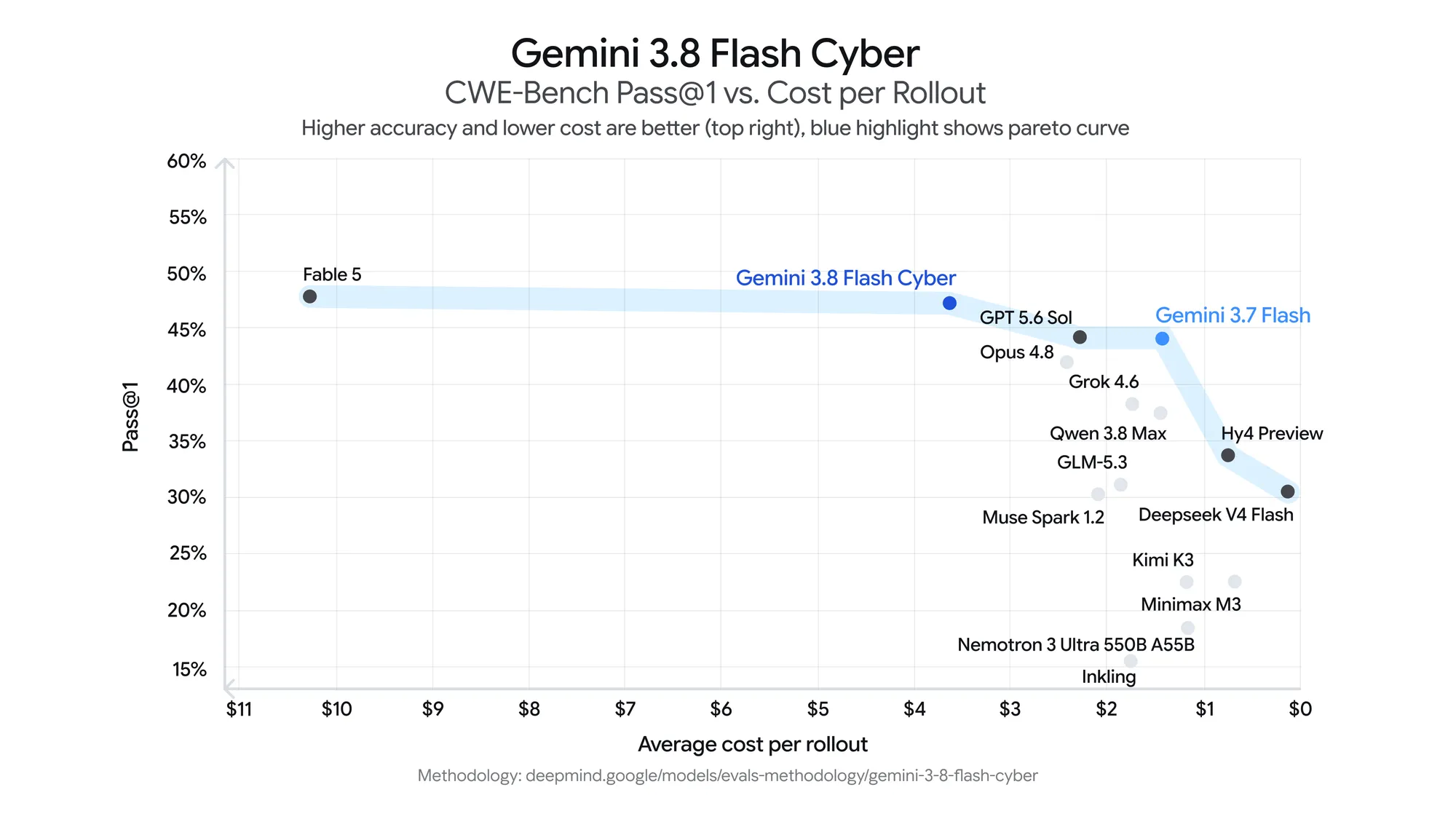
Here's what I got for 1.8 cents and 13 seconds from the prompt "make me a cool thing in html":
https://gisthost.github.io/?6a77bc41a81718c6aaa10d4ab243c59f
Transcript here (it was part of a chat): https://gist.github.com/simonw/b6149a49d327164d67d62c3d12992...
reply