Coming from Norway, this article is horrendous. I can never understand the mentality that lies behind all of the arguments most you guys are presenting here - defending the employers shit salary and rights.
You guys know that McDonalds manages to run in countries with decent wages as well, right? And that maybe a company with a yearly global profit of over 10 billion dollars might be able to afford giving their employees a livable wage. Hell, just the fact that it`s possible to have a full time job in the US, and still need food stamps should be a massive, red flag about your situation. But for some reason you prefer to (by extension) defend the extremely rich owners of these companies.
I'm not from Norway but the Netherlands. If you have a fulltime job at McDonalds, the only way to live on that wage is with heavy subsidies from the government. You will need healthcare subsidy, rent subsidy, social housing, various municipal arrangements and perhaps even go to the "voedselbank" (food bank, free food charity).
So while you can live on a McDonalds income, it's only because your fellow citizens are chipping in. Effectively we are subsidising McDonalds as they can now give you a lower income and get away with it.
> So while you can live on a McDonalds income, it's only because your fellow citizens are chipping in. Effectively we are subsidising McDonalds as they can now give you a lower income and get away with it.
No, before social support networks of the modern mixed economy companies paid worse for basically unskilled jobs. The surplus of people desperate for work meant that if the pay was better than no job but inadequate for survival in the long term, people would still take it, and if the inadequate pay meant they died or became unable to work, well, there were always more people in the surplus labor pool to replace them.
Decreasing the desperate need for employment puts more power in the hands of labor, not capital.
Dutch here, too. While everyone below a certain income gets benefits like healthcare subsidy you can still live okay on a McDonalds salary. If you make €10 an hour you get €1600 a month. And at that level you pay almost no income tax. While not a lot, you don't necessarily need the foodbank or other subsidies than the regular ones to make ends meet.
The parallels to the Roman Grain Dole[0] cannot be missed. The Cura Annonae warped Rome from top to bottom, from calories, to shipping, to politics, to military; nearly every aspect of Rome was touched by it. Heck, it likely outlasted Rome herself.
Just 5 years ago, I would've considered 1600 Euros or the pound equivalent a month to be plenty of money. At the time, I was a student living in the UK. Some years earlier still, whilst back in my native baltic state, that kind of a monthly income would seem super comfortable.
The biggest difference is that housing is a lot more expensive in western cities - it is likely that even a modest 2-room (1-bedroom) apartment in a major city like Amsterdam would cost the majority of that wage to rent (and we're not talking about just students, but older people who can't get better jobs).
You say it like you just grabbed a random example, but Amsterdam is one of the most expensive places to rent in NL. It's also generally not at all representative for the Netherlands as a whole.
Ok, you may replace it with London, Paris, Zürich, Munich, Copenhagen, Stockholm and probably a dozen other western european cities (not to mention major American cities, which are sometimes even more extreme).
Rent is the main problem. We are not subsidising McDonalds, we are subsidising landlords. If rent price would stay the same, the minimum wage job wouldn't need subsidies from the state.
The problem is that all powerful people own properties and they want to keep prices high. Main voters base also owns properties. It's an unsolvable problem.
London. The problem is the same in all large cities/capitals. I was listening on a BBC podcast a couple of years back discussing how the "not living where they work" is the main thing holding them back in progressing with their lives as much/fast as they could.
Especially in London, where near the center you can't get a decent studio for less than 1000-1300 pounds per month (just the rent now add council tax, utilities, etc.). The only way to make it is live on a flat with 3-5-7 more people.
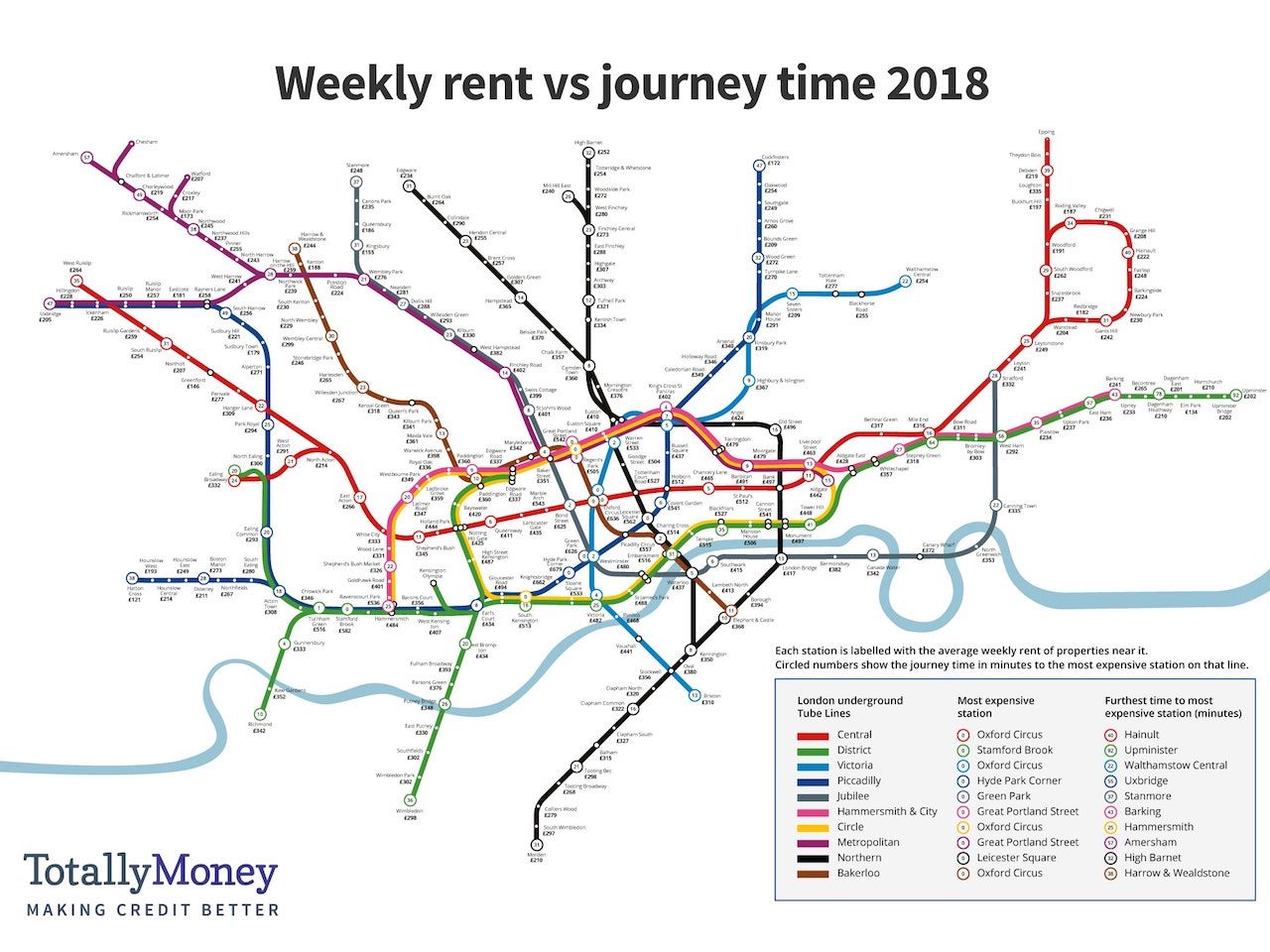
There are some "maps vs rent" for London. I assume you can find some for other cities as well.
Dutchie in NYC here. Dude(ette), I hear you, things aren't perfect back home. But frankly, you have no idea how much better things are for the low age earners in the Netherlands compared to the US. Working at a FAANG company here in NYC, you get 200-400k/year, and you use that money to pay thousands of dollars to live in a nice area in a building without rats and cockroaches and with proper sound proofing, which qualifies as luxury here.
And then you go to stand in line at the local wholefoods to buy $2.5 local chocolate croissants and $2 kombuchas from a teller who earns $15/hour.
I checked and in Sweden a low level employee in McDonalds would earn 21930 sek (2300 dollars), or 17593 sek after taxes, which might be just enough to live from if you live outside of big cities.
This is the same problem in America. The corporations already get tax breaks and subsidies, but then they underpay their employees to make the taxpayers subsidize an effectively living wage by providing welfare. It's not the employee's fault, but communities and employees could organize and press for living wages in order for the corporation to pay a living wage.
It's the same in the U.S. except you have to qualify and jump through a bunch of hoops to get assistance. And the pay is shit that you can't live off of.
Second that for Germany (though we are well known for our low-wage-sector allowing us to export a lot for a developed country). In addition a good lot of people working there are kids, which (like in most services) is quite an unfair competition for people having to earn their living wage with those jobs...
Americans are generally reluctant to allow rich social benefits that aren't "earned". People who don't earn are called "lazy". In reality they're unable. They're unable because they lack access to good education starting very early in life. They lack access because their parents also lacked access, and nobody with access is willing to give these "lazy" people a "handout". This sharp (and sharpening) class divide is the modern American tragedy and it has pretty much nothing to do with political affiliation. It's core culture.
Stockholm syndrome meets conditions tantamount to slavery. Americans don't know how bad they have it. And what's worse, the pervasive American fallacy of "suffering equals merit equals reward." Too many suffering slaves accuse the slaves in the house of being lazy, and vice-versa. A divided-and-conquered people who will also buy into partisan right/left nonsense rather than see their true, common enemy who has systematically cheated them: the very rich - the ones who own the same corporations they work for.
In my view the divide is more subtle, something like the enlightened vs. the unenlightened. The general fallacy is that all poor people can rise to riches. But in reality only the "enlightened poor" are capable of doing this. The enlightened poor come from lineages that don't focus on money but maintain high standards for knowledge and ethics. The potential to rise is there. The unenlightened poor have fallen into vicious generational cycles where incapable parents breed incapable parents, simply because it's beyond their ability to see outside their box. To me, if there's any meaning to "social welfare", it's to break these cycles that breed incapable adults but there's little being done. Even Bernie, who makes a big fuss about education, is focusing on putting more kids in college. But by that time, for many people, it's way too late.
Some (most) are unable because they just prefer to spend life on other things than chasing “success” or compete to be better than others. Why exclude and punish these people too?
That's true but the real problem is for people who had no access to education and are truly unable. It's a privilege to have the choice to not chase success.
I'm from the UK and I'm shocked at the discussion going on here. Most people commenting here are in vastly different situations to the person written about - probably both in terms of natural ability as well as education, not to mention actual salary or opportunity. Do we agree as a society we need people to work these jobs? Because if we do, it is not an argument to point out ways an intelligent person can manuveure themselves out of it. How can people be so callous and selfish?
America, a nation of temporarily embarrased millionaires. If you are currently poor, you just aren't working hard enough / smart enough and need to pull yourself up by your boot straps!
Anyone can get ahead, get the American dream! If you're poor, well, you must be lazy or stupid.
“America is the wealthiest nation on Earth, but its people are mainly poor, and poor Americans are urged to hate themselves. To quote the American humorist Kin Hubbard, 'It ain’t no disgrace to be poor, but it might as well be.' It is in fact a crime for an American to be poor, even though America is a nation of poor. Every other nation has folk traditions of men who were poor but extremely wise and virtuous, and therefore more estimable than anyone with power and gold. No such tales are told by the American poor. They mock themselves and glorify their betters. The meanest eating or drinking establishment, owned by a man who is himself poor, is very likely to have a sign on its wall asking this cruel question: 'if you’re so smart, why ain’t you rich?' There will also be an American flag no larger than a child’s hand – glued to a lollipop stick and flying from the cash register.
Americans, like human beings everywhere, believe many things that are obviously untrue. Their most destructive untruth is that it is very easy for any American to make money. They will not acknowledge how in fact hard money is to come by, and, therefore, those who have no money blame and blame and blame themselves. This inward blame has been a treasure for the rich and powerful, who have had to do less for their poor, publicly and privately, than any other ruling class since, say Napoleonic times. Many novelties have come from America. The most startling of these, a thing without precedent, is a mass of undignified poor. They do not love one another because they do not love themselves.” -- Vonnegut.
Yes. The bootstraps metaphor was originally intended to indicate a completely impossible feat, like going from homeless to successful unaided.[0] It's impossible.
For example, I've been vehicle dwelling and very poor in Silicon Valley for about 10 years as I've been unable to hold a job (ADD/Aspergers/speech impediment). I get called names and dirty looks all the time. I'd like to make some money, but only in a worker-owned co-op because slaving away while others reap the rewards seems like prostitution for nothing.
Quite easily when they've spent their entire lives being told poor people are evil. That's American's for you. There's too much of "I've got mine, so fuck anyone else" going on.
I've been a Libertarian since long before I started programming, back when I used to earn next to nothing at the Army and realized the shortcomings of regulation. In fact, I started from the lower class, never had robots, computers, consoles or cellphones like my friends growing up. So no silver spoon here. You can keep telling yourself I'm a "temporarily embarrassed billionaire" but I have my opinions on economics.
I am now convinced that a free market is the best way for everyone, particularly the poorest. There are many who think likewise and we are not callous or selfish. To me, you're the selfish person by keeping us from having better lives. Money does not grow on trees and everything the State does is another opportunity to slow us down and make our poor poorer.
I am always ready to be convinced otherwise, but so far every bit of data I have seen points that way, with ease of doing business, deregulation and a low tax burden being major factors towards a more prosperous society.
The obvious answer is that the facts prove you wrong. The market reigns supreme in the USA compared to Northern Europe, and yet it is USA that looks like a third world country. Collapsing infrastructure, untold poverty and homelessness for huge chunks of the population, shrinking middle class, world leader in putting people behind bars and antidepressant prescriptions...
How would a minimum wage slow Ms. Brown down and make her poorer? To be serious, I would really like an anecdotal example on how medicare for all, minimum wage and a better social support system would be negative.
devcpp is probably conflating circumstantial luck with personal skill, assuming they are implying they bootstrapped themselves. The evidence for luck is ubiquitous: most people stay poor, regardless of ability.
In America, people in charge of policy love to talk about "personal responsibility" as if that by itself can overcome structural issues in our economic system, Texas is pretty proud of itself for low taxes and making people fend for themselves, including pregnant women
https://www.texastribune.org/2019/12/06/extraordinary-danger...
It's also postulated in a recent book that a primary belief held by supreme court justice Clarence Thomas that the best way to improve the lot of African Americans is to make life as difficult as possible politically for them so they work harder(!) - this aligns his views on a lot of subjects with the conservative side of interpreting the Constitution but he's not really consistent on the latter as much as his belief.
https://www.nytimes.com/2019/09/23/books/review-enigma-clare...
You have to realize that Norway is swimming in oil, so quite easy to subsidize all that you want. Then McDonald's net income is about USD 6bn not USD10bn. Which divided by its 1.7 million employees would make an extra USD 294 per month, which as someone already pointed out would go straight into the landlord's pockets. By comparison McDonald's is also quite profitable (net income margins close to 30%), unlike most competitors with margins closer to 2-3% and that also pay low salaries. Just pointing out economics.
Unless McDonalds has done an incredible job of increasing their margins threefold since I worked there (left in 1995), there's no way their net margins are so high. Our best store made 10% net, and that paid for a lot of the crappier stores.
That's the parent company's financial figures, which include profits from franchisee's. This inflates their earnings. A typical store (franchisee or McOpCo) clears about 10% net of their sales. For a McOpCo store (one owned directly by McDonalds), this is not bad at all, since they don't have to pay a franchise fee. This means they're clearing 5-8% more. But for a franchisee, they pay a franchise fee of around that amount. So take home is not as extravagant. 90% of McDonalds are franchised, so the parent company's earnings are largely composed of franchise fees, not sales margins.
Yeah, we have a comfortable cushion in our pension fund, but other scandinavian and european countries have a similar solution.
But what do you mean "would go straight into the landlords pockets". Are you saying that rent would immediately rise to eat the difference if McD increased their salaries?
In the case of cities like NY, London, Amsterdam, San Francisco and the like yes, but not necessary overnight, maybe take a year or so. My point is not that if Mcdonalds only where to raise its wages, but all Mcdonalds like companies. Also,it is not the case either that McDonald is a monopolist in fast food. If it were I could understand that they could have room to maneuver and pay lower salaries. But is not the case for them and neither for the overwhelming share of companies.
With regards to the rent: yes, the rent might rise somewhat over time, but not to completely fill that wage gap. There are so many other things influencing rent and economics, so I don't see that as a probable consequence. Also, giving the poor better wages might increase some of their costs (like fast food), but it will move their personal economy closer to more expensive things they might need occasionally, like new appliances etc, which are currently a huge source of headache.
As for the maneuverability on raising wages, that's what a minimum wage would be for. No need for companies to let the competition ahead of them because they increase the wages - everybody else would have to do the same.
I guess that we disagree on the relative merits of minimum wage laws. I tend to see them as a very blunt tool. In the short term might work, but long run no impact (nothing changes) or negative side effects.
In the case of your example, if all companies increase wages all at the same time, then you end up pretty much in the same spot you started. Goods and services' prices adjust, companies make less profits, rents increase -- i.e. no actual increase in production (or housing) in the economy that might help the poorest the most. Some industries might be able to pass on the wage bill entirely to customers, others will get squeezed and stop investment and entry of new companies. It all depends on elasticities and the studies that we usually see trying to measure that show that shareholders are not the ones that get hit the most.
If we want the poor to be able to afford more appliances, we need to make those appliances cheaper to produce. And to get there we might need many industries paying people very little, so that we can get off the ground somehow. This example is easy to visualize when looking at China or Bangladesh. But even looking at Europe as a whole it is very clear in my mind that countries like Greece or Portugal still need to cover at lot of ground in this manner. Former communist Eastern Europe countries are already surpassing GE and PT by following broadly that scrip. And even UK and Germany would only be bottom five if they were considered US states (in GDP per capita adjusted by purchasing power). And inside the US there is a massive gap between NY and Alabama. And NY itself is plagued by super high rents because we don't build anymore.
It sounds cruel to imply that a $15/h wage for the lady in the article is not going to help her. It will, but in the short run only. It also sounds impolite to mention that many people in her situation managed to turn their lives around out of that kind of precarity. Many will on account of their smarts, resilience or luck, but many will not. For these the only true hope is that we manage to increase the number of companies and productivity of all companies in the economy. So that we end up with very high productivity industries (read, than produce a lot for low prices) such as oil and gas, car industry, food production, appliances industry, hopefully home-building, “subsidizing” the rest through low cost products and competition of all those low wage, and unskilled jobs. Mandating minimum salaries is like chasing a unicorn.
Side note. In the article she mentions that she is trying to save for a car. Cars in the US are much cheaper than in Europe, and if you go to e.g. Argentina you would be surprised by how much a pile to junk is worth in the second hand car market.
I haven't read the article and have no opinion either way, but I want to make it clear McDonalds are franchises (at least in the US). I'm not positive but the local owner can pay what they want. McDonalds making 10 billion a year has nothing to do with it. You'd have to see how much the franchise owner makes. You of course can argue McDonald's charges the franchises too much leaving little room for higher wages.



You guys know that McDonalds manages to run in countries with decent wages as well, right? And that maybe a company with a yearly global profit of over 10 billion dollars might be able to afford giving their employees a livable wage. Hell, just the fact that it`s possible to have a full time job in the US, and still need food stamps should be a massive, red flag about your situation. But for some reason you prefer to (by extension) defend the extremely rich owners of these companies.