In fact, they've pointed out the 500 million figure is a conservative estimate, and is likely to be much higher: "... The true loss of animal life is likely to be much higher than 480 million. ..."
> The authors deliberately employed highly conservative estimates in making their calculations. The true mortality is likely to be substantially higher than those estimated.
It's a shame the University of Sydney doesn't have access to this study such that they could have included a link so skeptical people could see for themselves the specifics of this alleged conservatism. Not doing that causes my intuition to question the truthiness of these claims, so I will file this item under "Unknown-Suspicious".
The report[1] (which is trivial to find) has a section on their estimation methodology and includes reasons why it is conservative (section 2.3):
Many species were excluded from estimates because there
is insufficient information on their abundance. The largest omission is the entire NSW bat fauna (37 species), for which no information on density could be found.
Many small mammals in semi-arid and arid regions exhibit large fluctuations
in density depending on
the prevailing weather. For example, historical accounts of the long-haired or plague rat (Rattus villosissimus) suggest that densities well in excess of 1000 animals per hectare can be attained after years of good rain31, with the species virtually disappearing again during drought. For such eruptive species, only the low-density population estimates were used.
The densities of several common species, such as the brown antechinus (Antechinus stuartii), agile antechinus
(A. agilis), yellow-footed antechinus (A. flavipes) and brushtail possum (Trichosurus vulpecula) have been measured in several studies, with most yielding low to moderate densities but small numbers
of studies yielding very high estimates. To reduce bias arising from these rare high values, means for each species were first calculated as log- transformed densities and then back-transformed to produce normal values. This method was used also by Cogger et al.
As noted, the usually lower densities obtained from studies carried out in the tablelands, western slopes and plains were used in preference to the higher estimates obtained in surveys further east. my note: these bushfires are in the East, so the higher estimates would be more appropriate here
Several species were omitted from consideration due
to uncertainty about how vegetation clearing would affect them.
>> Given Australia’s megadiversity of species and our comparatively small human population and research base, the density (ie number of individuals in a given area) of relatively few species has been determined with precision. In addition, the number of different species, or species richness, occurring in a given area is not known in great detail for many habitats. Estimates of these values must necessarily be extrapolated from a relatively small number of detailed studies. Therefore the authors have deliberately employed highly conservative estimates in making their calculations. The true mortality is likely to be substantially higher than those estimated in this report.
The authors seem fairly straightforward in admitting that these numbers should be considered unreliable, so no criticism from me on that. However: does this (un)certainty attribute accompany (with appropriate emphasis) the data into subsequent news articles and social media conversations, and ultimately millions of human minds?
>> 2.3 HOW HAVE THESE NUMBERS BEEN ESTIMATED?
(No excerpt because I have nothing particular to highlight.)
Again, from a science perspective, I have no complaints about the study itself, but I do have complaints about how it is being used as the basis of broadcasting a manufactured version of reality into the public psyche, dressed up as reality itself.
Take the University of Sydney article itself...
Headline: "A statement about the 480 million animals killed in NSW bushfires since September"
Article content: "Professor Chris Dickman estimates that 480 million animals have been affected since bushfires in NSW started in September 2019. This statement explains how that figure was calculated. "
See the differences?
a) "killed" --> "affected"
b) "480 million animals [have been] [killed]" --> "it is [estimated that] 480 million animals have been [affected]"
And this is the University of Sydney article, an "authoritative" (able to be trusted as being accurate or true; reliable) institution. Now imagine the hyperbolic distortions of content and certainty that the MSM, Twitterverse, and Reddit hivemind layer on top of this, which is then consumed repeatedly by hundreds of millions of people who consider it to be factual reality. [0] [1]
So, is this a big problem? I have no idea. How would one even estimate the magnitude of risk involved in the general public walking around with (unnecessarily) inaccurate internal representations of reality in their heads? Again, I have no idea. But with human behavior getting stranger by the day, I have a feeling that widespread adamant opposition to even considering this very real aspect of reality may turn out to be not a wise approach. Time will tell I suppose, although it's completely possible no one ever sees this perspective even if it does ultimately result in negative outcomes.
They use "killed" and "affected" interchangeably. The exact quote is:
Professor Chris Dickman has revised his estimate of the number of animals killed in bushfires in NSW to more than 800 million animals, with a national impact of more than one billion animals.
I'm not an expert in this area, but from my reading over the past few hours it appears the distinction between "killed" and "impacted" is not something ecologists think about a lot. It appears that they expect most of those "impacted" which do not immediately die, to die soon after (from predators or from habitat loss), or if they don't die they expect them not to be able to reproduce successfully (the young are too vulnerable in destroyed habitats).
I'd note this from the report (part you quoted):
The true mortality is likely to be substantially higher than those estimated in this report.
Edit 2: But it is true I'd like to see some more rigour around the estimates. I'd note that estimates for the 2009 Black Friday bushfires were for 1M animals killed with 400K hectares burnt. These fires have already burnt 8.5M hectares, but taking the 2009 death rate produces a number roughly an order of magnitude less.
> It's not clear why you keep picking it over looking for reasons not to believe it.
Because that's what lots of people do - at best, and I believe a solid argument can be made that this seemingly simple fact of human nature actually brings with it significant and unrealized risk.
Maybe it's worth pointing out explicitly: I'm not accusing the University or the professor of significant wrongdoing, intentional or not. Rather, my concern is with the effects our various styles of reporting the news (aka describing reality) has on the beliefs that individuals hold in their heads, and in turn the cascading/recursive unintended consequences that result from that.
HN is a relatively sane place, but look around at some of the other conversations taking place on planet earth - is it terribly innacurate to say that signs of fairly severe delusional thinking and insanity are becoming increasingly widespread?
An alien from another planet might reasonably predict that an increasing occurrence of (plausibly) climate-related calamities would result in massive widespread/unanimous concern among humanity for the health of the planet....and yet, what do we actually observe?
The same alien might reasonably predict, considering what's at stake, that the response to this unexpected outcome would be widespread concern among officials and intelligent people about what the hell is going on with people's thinking, and perhaps even a few initiatives to figure it out and rectify it while there's still time. But instead, we seem passionately satisfied with "groups x,y,z are stupid, and if they'd just stop we'd be all sorted....end of discussion!".
If our alien had a sense of humor, he might find this situation rather humorous.
Fun anecdote. I was living/working in San Francisco a couple of years ago. It was 10am on a work day. I was walking towards my office, along Folsom coming from the 101 towards 8th. Out of nowhere a guy just walks up to one of the cars parked on the street, smashes the rear window, and starts taking whatever was inside. There was several homeless people nearby just casually observing it, along with myself. The perpetrator clearly gave zero fucks and undertook the whole thing as casually as one might stop to tie their shoe on the street. It was a little surreal, and I was already desensitized to the ... interesting characteristics of SoMa streets by that point.
I saw a similar surreal thing in San Fransisco. I was in the back left seat of a Lyft when I saw a man who appeared to be homeless walk up to a parked car on the side of the road. The traffic light was red so we were stopped with several cars in front of and behind us. The man peered into the windows, picked up his skateboard and bashed the back left side window of the car. He started pull out a non-descript black suitcase. The hole wasn’t big enough, so he had to bash the window more. I’m stunned as he’s doing this and I said aloud “Is he breaking into that car?”. “...Yeah he is.” - The Lyft driver cautiously replied. He got on his skateboard and casually skated away with the black suitcase. What can you do when that happens? The cops don’t accept picture text messages yet. Can you just shoot these burglars on sight or do they have to be on your private property for that?
There's a lot of PHP positivity in the comments. I just want to inject some sobering pessimism in here, as someone who has spent the last 6 months using PHP for the $dayjob, and used to do commercial PHP work back in the PHP5 days.
PHP ....
... Doesn't ship with a production ready webserver. Yes, Python and Ruby also don't, but they have easy tools you can reach for (gunicorn, Puma) if you need to run them in a modern deployment stack where a whole nginx isn't really necessary.
... Doesn't have basic collection types in the core language. It's 2019 and PHP still thinks it's logical for the standard language to throw all Map, Set, List semantics into a single PHP array type. You can install the "phpds" native extension (and polyfill it from Composer) to get some passably usable implementations. But coming from Golang / Rust (or hell, even ES2015) I find them frustratingly limited.
... Doesn't have any sort of threading / async support. Even in a modest-scale webapp, this is going to hurt you when you want to do things like deploy PHP as a job queue handler. Or fan out even a trivial number of HTTP-client API calls from a PHP controller in a microservice-y world. The latter can be sort-of achieved with naive hacks like the cURL client concurrency support (Symfony HTTP-client supports it: https://symfony.com/doc/current/components/http_client.html#...) but that's a hack at best.
... Doesn't ship with a debugger out of the box. Even with great tooling like phpstorm IDE, you have to actually rub braincells together to be able to get xdebug installed / configured and ready to use.
... Has a somewhat decent package manager (Composer). But it doesn't ship with the language. Also, it's kinda crappy. It's painfully slow to do a composer install/update on anything larger than a toy project. It has all sorts of weird non-determinism issues (the composer.lock file flails around wildly between runs, changing case of metadata fields, etc).
... Has semi-decent static analysis tools (Psalm, phpstan), but they're pretty garbage compared to a proper compiler, or the quality of static analysis tools in other dynamic languages like Ruby / Javascript.
I could keep going. Profiling, code formatter, library ecosystem quality, and so on.
Where am I going with this? Honestly, I wish PHP would just die. It has some pros, but overall it's a terrible language that has no hope of modernizing enough to be relevant in 2019 and beyond. There's plenty of other excellent languages that do a better job in any category that PHP attempts to be good at. The effort being spent to maintain PHP as a language/runtime could be better spent on other languages that have made better choices in language design.
The developers who have become proficient in PHP, should continue to use their employable skills to maintain existing PHP codebases, but take a bit of time on the side to get proficient with another popular language if not already. And for the love of god, stop starting greenfields projects in PHP! Let it fade away peacefully.
Of course you're entitled to your point of view, but dismissing any other perspective on the matter as "crazy" is, well, itself a little bit crazy ;)
Putting aside the contract law side of this, philosophically what you're saying doesn't make sense to me. If Google were to direct some of its employees tomorrow to restrict the flow of information relating to a hot-button political issue, right in the middle of an election cycle, would it be crazy for some of the employees to attempt to "subvert" the company to prevent that from happening?
> If Google were to direct some of its employees tomorrow to restrict the flow of information relating to a hot-button political issue, right in the middle of an election cycle, would it be crazy for some of the employees to attempt to "subvert" the company to prevent that from happening?
Yes, it would be. What they should do in that case is resign. Google isn't the military — you can leave any time you want to.
And while it may not be easy for a black janitor to leave Billy Bob's House of Cars if Billy Bob starts airing racist commercials, given Google salaries and Google's technical reputation, I think it's probably incredibly easy for a Googler to leave at any time.
If you cannot support your employer's decisions, you leave. Think what an impact that would make!
Conundrums like this make my head spin when I try to consider my position on Internet freedoms.
On the one hand I believe the Internet should be a truly personalized, private interface for humans all over the world to be able to communicate freely and privately - safe from censorship, mass-surveillance, profiling, and so on.
On the other hand I also believe if the Internet was that way, then it would mean that these elements of society, the ones that seek to horrifically and tragically exploit the most vulnerable of us, would be able to do so relatively unimpeded.
Then I realized that nothing about moving humans online made humans magically more virtuous than they are in meatspace, and the tools we've used to audit and intercept bad-behaving humans in the real world have merit online too.
There's a reason so much motion online in the past two decades has been in the direction of "de-wild-Westing" it.
It does make direct coercive power online (ie. violence) difficult. I agree with you, but I do think that the internet reduces the harm inflicted by human vices
A helping thought is that those that commit assault of children don't generally consider the possibility of getting caught and will use their personal phone and tools rather than technology that are safe from censorship and mass-surveillance. Sexual assault is not part of rational thinking.
The major problem is when someone want to earn money by becoming a distributor that sits between producer and consumer, like the one in the article, and those people usually do consider the risk of getting caught. There is however a silver lining in that those are quite few and tend to become major target for law enforcement and sooner or later the opsec will have a flaw. It is questionable if Internet can ever become so safe that a person can be one of a handful few that earn millions for years without giving out any clues to whom they are.
So to me this resolve conundrum. Neither criminal is likely to operate unimpeded even when the Internet become safer from censorship and mass-surveillance.
I'm just wrapping up the work to migrate my company away from Gitlab to Github and this happens. I did it because I figured Github has to have better reliability / uptime than Gitlab. Someone joked that as soon as the migration is done Github will have some major downtime.
I highly recommend running at least a local, self-hosted git mirror at any tech company, just in these cases. Gitolite + cgit are extremely low maintenance, especially if you host them next to your other production services.
Not to mention, if you get the self-hosted route you can use Gerrit, which is still miles better for code review than GitHub, Gitlab, bitbucket and co.
You don't even need gitolite, if you're going the self-hosted route:
apt install git-all
is enough to host your own git server. Put it behind a firewall to limit access and use standard linux users with ssh keys for access control if you don't need anything fancy. For small companies I'm not sure you need anything else. Of course if you need different levels of access etc then you'll need more sophisticated tools, but many people won't.
Code review I do using local tools (the editor) face to face, again not sure you need an online service for that unless you're a larger company with lots of developers coordinating (in which case it becomes pretty essential).
> Code review I do using local tools (the editor) face to face, again not sure you need an online service for that unless you're a larger company with lots of developers coordinating (in which case it becomes pretty essential).
I mostly like online code review services because they offer an audit trail and semantic history that's easier to navigate than email. And of course, to let CI automation check tests, coverage and lint. Not because I don't trust my coworkers, but because otherwise I would forget to run tests and lint myself.
Lots of different ways to do it, and of course github and online code review is tremendously useful to people, particularly on large projects with lots of collaborators, and where a history of reviews is required.
For lots of small projects though, it's perhaps not as necessary as people think. I run tests and linting locally on save and don't really use the code review/CI features of online hosts much. That won't suit everyone of course, but it is one possible path.
Could you explain why Gerrit is better than the rest for code reviews? I have not used Gerrit in years (before I ever used github PRs) and I guess I don’t miss it, but also don’t know what I am missing :)
1) dependent reviews/change requests. I will work on some feature, submit it for review as one CR, and then I can immediately start working on a feature that depends on that. When I submit this one for review, it will be always shown as dependent on the first, and show a diff against master after the first is merged. This also means you can split large changes into multiple CRs, have them reviewed (possibly independently), then submit them all at once. It makes changes across large repos fantastically easy.
2) very powerful rule engine for approvals. It's based on Prolog, and basically allows you to define arbitrary, turing complete rules on what labels added by whom must be present on a CR for it to be submittable. Using the 'owners' plugin, you can also make it depend on OWNER files that define ownership in subtrees of the repository. This can lend to rules like 'product A must be approved by an owner of A but cannot be self-approved; in addition, someone who is fluent in the languages used must approve it, but that can be self-approval'.
Without those two working in Git monorepos is painful. And since I like monorepos for other reasons (like ease of deployment and testing), I like Gerrit, too :).
It also offers, in my opinion, a much better UI for actually reading and commenting on code. High contrast, fast keyboard navigation, marking of files as reviewed and a very readable history of patchsets, comments, approvals, etc.
The learning curve is much steeper than a GitHub PR, as it's a somewhat weird abstraction (CR/patchset vs git commit/branch), but in my opinion it's worth it. I guess it's my general tendency to use less beginner friendly but more powerful tools. ^^
Github's PRs are pretty bad at letting you comment on code near the diff lines (you can do it if it's within 5 lines, but if you have to click to expand the entire file, you can't comment on the expanded parts). I also like how Gerrit lets you comment on specific parts of the line, rather than the entire line.
Finally, I'm a big fan of the various labels that are common. +2 Code Review means I reviewed the code, +1 Verified means that I ran it and it worked. Those are different things and having to have both makes the responsibility clear, even if the author is adding +1 Verified.
HN is not typically receptive to snide corrections/remarks. There are several more productive ways to address a minor capitalization error - the best of which is to not correct it at all because it's so trivial and unimportant.
Besides, why would I care if how I capitalize a company's name isn't perfectly in line with their marketing style guide? Github is lucky if I even feel like capitalizing the first letter.
Kurzgesagt[1] convinced me that space debris will become a real problem if we're not careful. A "Swarm" of fist-sized cubesats whizzing around our planet at a few thousand km/h sounds like a nightmare.
FWIW, these satellites and others like them don’t really pose the threat you are referring to. They are designed to operate in a very low orbit that will decay in a couple of years, causing them to naturally burn up over time rather than remain as space junk.
Probably not, ICBMs don't need to attain a full useful LEO, they only need to stay in an orbital path for 1-2 orbits as current warhead delivery vehicles are configured. That would allow them to use an orbital path lower than any orbit that could be sustainable for debris.
Even if the current crop of ICBMs can't be configured to use such an orbit, development of such wouldn't take more than a few months.
You're curious why they're not retiring a film franchise that consistently pulls in hundreds of millions of dollars of profit with every installment? :)
Yeah, is a female 007 going to retain the same borderline “me too” hyper-sexuality of the traditional James Bond character? It would be a strangely empowering move, I think: portraying a male 007 as ‘slutty’ has been accepted, would audiences accept a female version of it? What’s the opposite of “womanizer?”
Thats an interesting point. I suppose the female variant of womanizer is a "maneater". It will be cool to see what directon they go with her. But it wouldve been even cooler if she made a name for herself with a name or code that hasnt been used before or isnt as ubiquitous. The way it is presented it seems like a low effort way to raise up minorities for social justice.
The whole story seems so bizarre. As far as I understand it, some kind of fraudster got caught up in a bunch of his own lies, of which being the inventor of Bitcoin happened to be one. We're only reading about it because "Bitcoin" happens to be a frothy buzzword that gets the clicks. Otherwise this would just be some local news case about a wacky person saying the darndest things.
He's not a wacky person who says the darndest things, he's suing other people over their saying he's not Satoshi. As the article states, this case might affect a number of cases he's raised.
He's also made a new cryptocurrency (Bitcoin SV), and may be profiting off of a consultancy he helps run (https://nchain.com/en/).
i bet it's nothing but CSW's marketing trick. he's driving his diplomas in a cartwheel and bragging about publishing a thousand papers a year, but what is any of it worth? were they granted any of the patents they filed for? if i recall some filings were for things with obvious prior art like threshold signatures.
If you trust the patent system to not grant any bogus patents, then you are far more optimistic than I am. And a bogus patent is just as useful a weapon.
There is a multi-billion dollar asset known as Bitcoin SV that is valued highly on the belief Craig Wright invented bitcoin. He is not just a local crank.
Then it’s valued highly by a lot of extremely gullible people. The first time I heard about Craig Wright was that debacle where he was desperate to prove he was Satoshi, hand-waved his way through a very staged proof and then when called on it he subsequently refused to do an extremely simple proof that would’ve beyond doubt proven what he claimed (lamenting that no one would be happy with it). Everything I’ve read since then has confirmed he’s just a grifter, this article is no different.
You’re underestimating the story here. CSW is the creator of Bitcoin SV, which today has a market cap of $3.5 billion. A lot of people stand to lose or gain a lot of money depending on his claims.
How does that change anything? The point is CSW is relevant in the sense that if the #9 token by market cap collapsed it should be “news” in the crypto world. He isn’t just some crazy bystander whose supporters have nothing to lose.
The Craig Wright story is interesting because Gavin Andresen, who probably interacted more with Satoshi than anybody else, was dead set on Wright being Satoshi. He referred to evidence shown in private that he was unable to share the details of.
Later after Wright couldn't (or didn't want to) prove the Satoshi connection in public Andresen later expressed regrets going public with these statements, but never really took them back. It's hard to know, really. Andresen was release manager of the reference implementation for several years and widely regarded as trustworthy.
Other people made business investments based on these statements. Well known investor Roger Ver now seems to regard Wright a fraud, but not before headlining conferences with him and releasing a cryptocurrency together. So Wright has been quite influential, at least with some select people, and is absolutely newsworthy.
Seems newsworthy enough to me. First, the sum in question is north of $10B and even if nobody involved probably has access to it, it is still entertaining to watch. And though the guy is most likely a conman, nobody has put the final nail in the coffin yet so the scam lives on, fueled by large sums of money from his "business partner". It is interesting to watch how long will they be able to carry it on.
no matter how skeptical you are of cryptocurrencies, they are no small thing and bitcoin is by far the largest. CSW is being sued for billions of dollars^, so that's also not a small thing. i don't understand, why be dismissive of things in a way that completely rejects the objective reality?
^ of course CSW is a fraud and doesn't actually have access to satoshi's stash. it's quite comical how if he proves he isn't a fraud he will owe somebody billions of dollars, assuming klein wins the case.
There is also a pretty substantial amount of money wrapped up in this case. Billions of dollars. I would say that's somewhat newsworthy for a lawsuit involving individual people.
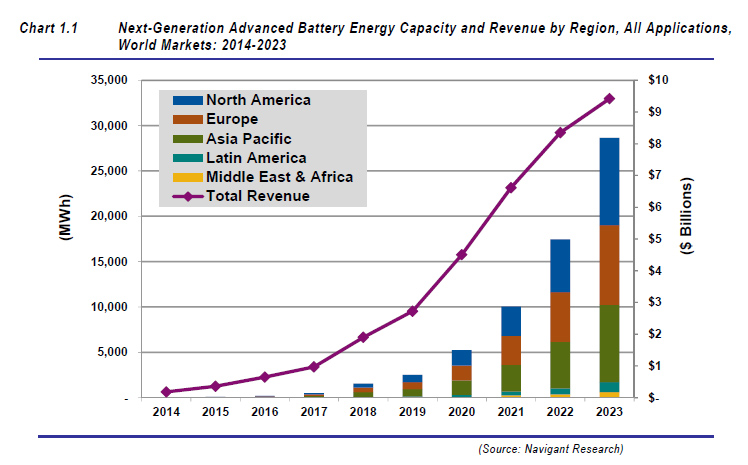
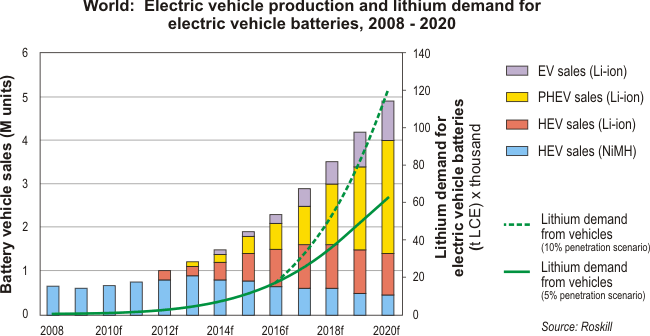
I only have a shallow understanding of the economic forces at play in the energy market. But it seems to be that we're just not going to be able to disrupt the fossil fuel industries before it's too late.
Is there someone who's knowledgeable on this subject that can cheer me up with some good data suggesting maybe we can turn this ship around in time? Or should I just start hoping that we miraculously nail fusion in the next 5 years and suddenly find we have absolutely no need for oil / coal / gas?
That’s why government intervention is needed. We can disrupt these industries with the stroke of a pen. No matter how much it hurts, it’ll hurt more to let them continue to spew greenhouse gasses and other pollutants into the air.
We can turn this ship out by educating our peers. I have convinced countless people about reconsider their view on energy. Keep doing it and we will succeed.


In fact, they've pointed out the 500 million figure is a conservative estimate, and is likely to be much higher: "... The true loss of animal life is likely to be much higher than 480 million. ..."