I use Orgmode. A lot. It's my primary organisation method, as the General Manager for a small 3 person sub-company, as well as my household organisation.
I've always, unwittingly, organised myself via two systems:
  1. Lists
  2. Matrices
I love the tables in Orgmode [0]. They are intuitive, simple, and just beautifully done.
That said, the spreadsheet functionality is a different beast altogether. Even though it's the same interface as the tables, it adds an exponential layer of complexity, and separation from how most people view a spreadsheet. It's powerful, but a bit daunting, and I don't see many journalists being able to grok it.
Not the parent, but Firefox Quantum while an advancement in some ways, also killed XUL Extensions and Mozilla moved Firefox entirely to WebExtensions without the APIs to fully support existing popular add-ons. NoScript for example is a shell of what it once was, every vim keybinding extension was pretty much cutoff, TabMix Plus discontinued development since many of its popular features weren't possible with the WebExtensions API and there still isn't a great tree-style tab extension.
Most likely the parent used one or more of these, as they were some of the extensions you could point to that Firefox had but Chrome never really did, and without them Firefox arguably doesn't have the same appeal.
There's still plenty of reasons to use Firefox over Chrome, but there are also plenty of users bitter about the loss of their previously working extensions.
> killed XUL Extensions and Mozilla moved Firefox entirely to WebExtensions without the APIs to fully support existing popular add-ons
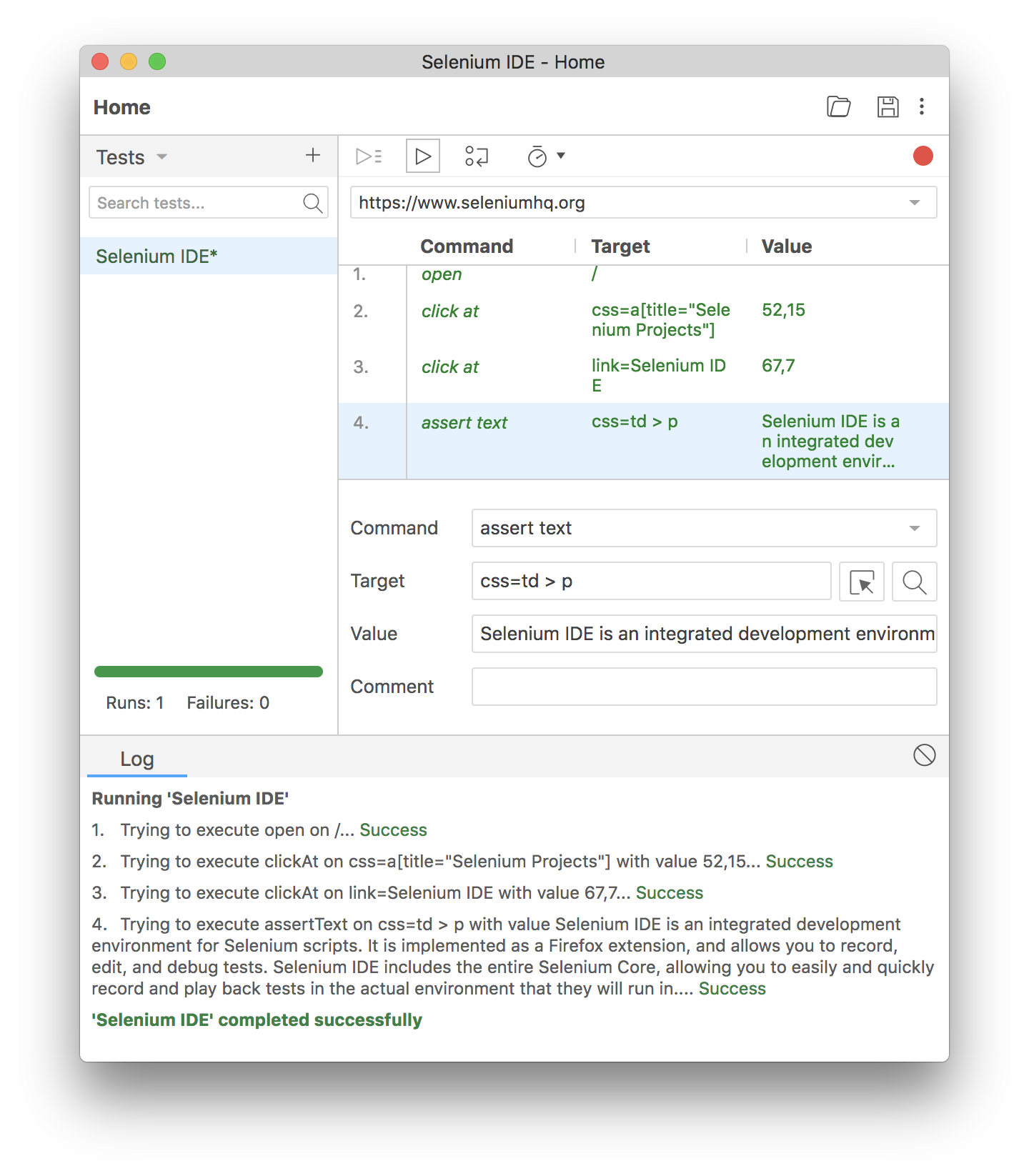
this. I was never a tree view tab convert, but definitely miss noscript and vim bindings, plus things like the selenium UI.
XUL sucked in many ways, I tried writing extensions with it and I have no illusions there. But coming up with a reasonable upgrade strategy for a huge swath of popular extensions was something that should have been done before deprecating it. Rather mozilla basically told people that if webextensions didn't do what they need now, then just hope for the best sometime in the future, and in the meantime too bad, your extensions are gone.
But honestly this wasn't the only thing, just the most recent. It's the general attitude of willingness to ignore the actual use cases of their actual users for some theoretical appeal to a mass market of "average users" that they've yet to convert. I felt much the same way after the Aurelius release broke a bunch of ui, and any number of other breaking changes over the last few years.
This being HN, I'm operating under the assumption that most readers are developers.
I'd suggest that you read my colleague's comment at https://news.ycombinator.com/item?id=15696184 to understand just how much friction the legacy addon ecosystem was creating. It just wasn't sustainable.
You won't find me arguing against Mozilla's decision to drop XUL extensions, I'm just stating a fact, that it was one of the primary differentiating factors between Firefox and its competition, for better because of the varied high quality extensions that you simply would not find anywhere else and obviously for worse.
It's not just NAT traversal. Having a flat naming scheme and every entity directly addressable is one hell of a feature.
When I describe Tor to interested techies, I explain that a .onion address is more akin to a phone number. You don't have to know what IP4/6 the endpoint is. You don't have to know the route path. You just need the "dialing address" - the .onion . I find that this description gets away from the whole "Tor is just for drugs and child porn".
And no matter what's in between, if you send data to ###.onion , it either completes successfully or doesnt. And with the system modification I recommend elsewhere on this article, you can even set up Puppet, Ansible, MQTT, and more all over Tor.
Gitlab also took VC money and have an exit as their only option. Doubt they'll get as far as GitHub did though, and the option to just grow slowly into a solid independent business is off the table. Probably an acquihire with small return to investors.
Gitlab is really open about building to a 2020 IPO
"We want to IPO in 2020, specifically on Wednesday November 18. 2020 is five years after the first people got stock options with 4 years of vesting. To IPO we need more than $100m in revenue. To achieve that we want to double Incremental Annual Contract Value (IACV) every year. We focus on an incremental number instead of growth of our Annual Recurring Revenue (ARR) because ARR growth is misleading. So far we achieved the goal of doubling IACV in 2013, 2014, 2015, 2016, and 2017."
A big difference being Gitlab is open source and can be self-hosted, so you can still run Gitlab on your own terms even after (insert faceless corporate entity here) buys it.
One point that is often lost on the discussions of fake video/"deepfake" is that this development won't only make it easier to fool people into believing something that's made up, but it might also make people more distrustful of things which are actually true.
When it's been spread out enough that anything can be doctored to an indistinguishable extent, everything becomes deniable by those being caught, and the skepticism explosion is going to raise the bar for investigative journalism / actual evidence to standards high enough that few will have the resources to produce them.
The optimist in me wants to say that this in turn might lead to people actually researching stuff and forming their own opinion instead of just going along with whatever headline they see first, but the pessimist in me says that's probably a pipe dream
This is arguably what Putin's trolls are really after. If western societies stop trusting themselves, both internally and externally, it's an easy target for his men to pick up what's left of them.
Note that non-democratic government's are much more resilient to this type of attack on trust, because there's much less of it to begin with.
Ranges from either a Steve Jobs booted out of Apple to Travis Kalanick from Uber.
Based on those, if a board really wanted to boot you out, they will work hard to cut off any control as Steve Jobs had to wait quite a while and then get his company Next bought to come back.
I think the Brave Browser and associated Basic Attention Token (BAT) are a step in the right direction. It's hard to escape ad revenue if you want to avoid paywalls, but Brave at least gives users privacy, control, and revenue share.