There's an angle that hasn't been explored that ought to be: a lot of news and political commentary websites used to run their own comment systems for articles or use pseudonymous services like Disqus, but these were overrun by "trolls" and spammers.
Many then switched to Facebook, presumably hoping that the "Real Name" policy would improve things.
The interesting thing is that clicking on many of the Facebook profiles on these comments leads to curiously sterile profiles, with a few friends. Some of the most vehemently pro-Trump comments seem to have originated from these accounts, especially on certain Conservative sites during the Republican Primary season.
Facebook seems to have no interest (or ability) to clean this up.
I don't doubt that many of the commenters praising Trump, or any other politician for that matter, may in fact be sockpuppet accounts, but I wonder if this might be a similar situation to what we saw with polling prior to the election in which Trump voters were less willing to admit to voting for him. I'm not actually sure if this was the case but I've heard it theorized that this is one of the reasons polling might have been so off.
Perhaps there are commenters unwilling to link their real FB identity to supporting Trump? On the other hand, I see plenty of people make outrageous statements online clearly linked to their real FB profile so maybe this isn't a widespread concern.
I mentioned that this happened on Conservative sites, and it was during the Primaries. It seems unlikely that, under those circumstances, people would be so shy about expressing their preferences.
Also these are not just stand-alone fake accounts with no friends created for making comments....these are curated to have enough details that make them look plausible to an unsophisticated automated detector (or overworked FB abuse department employee), but they have few friends, all with similar sorts of profiles, and no signs of activity except for posting comments.
I do agree that there was an element of "shyness" and self-censorship, but I expect it was from supporters of other candidates, who would not want their Real Names and identities to get embroiled in fights with fake profiles.
Good points, although I didn't mean to dispute that these were mostly fake accounts meant to push an agenda.
As a side note, I don't have a FB account so I don't know how this works but do your friends have the ability to see what comments you've made on sites using FB login for commenting?
I've seen enough people doxxed in various capacities that there are good reasons for this in general. You won't find anything on mine... if I even have one. I've been avoiding Facebook since the days it required a .edu email to sign up, for example.
That said, I'm sure that all the politicians have people who can drum up social media followers or spread whatever message they want. I don't think there's any conspiracy to it. It's not like we've gotten rid of email spam, either. This is just an extension of that.
While I wouldn't dismiss the chance that some of these people are fakes I would like to point out that despite being a techie (if not because of it?) I barely use Facebook anymore and if I hadn't been registered for a long time my Facebook profile would also be pretty barren. I also always had a policy of only "friending" people I know personally and privately. The only purpose of Facebook for me is keeping up with those friends and I rarely post anything and rarely do it publicly. I doubt I'm the only one using Facebook this way.
My Facebook account is so barren that it has never existed, but if I'm ever forced to create an account to deal with websites that assume everyone has a FB acct and can't deal with you otherwise, it will be as sterile as I can make it.
And my Twitter account is so sterile that no one I know follows me. And yet, it's a real account.
The thing is, do you have only 5-10 FB Friends with eerily similar sterile accounts in a little-self contained social graph? Have you added a college to your profile, but have no Friends from that college?
I've got a fake FB account for the same reason you describe, and I don't bother go to the efffort of puttiing in the sorts of fake details that these accounts have.
There's also privacy settings - unless Facebook have wiped all my settings since I last checked (they used to do this lots but don't seem to any more) you're not going to see basically anything without adding me. That's probably distinguishable from a fake if you look closely, but similar enough that those accounts might look the same if you're just taking a quick look at each account.
All that machine learning stuff is pretty much useless against human generated fake profiles, just like captcha is useless against human captcha solvers.
Another useful tactic is to archive news and commentary (left and right) about current political events, both for accountability and perhaps, to prevent the rewriting of history in the era of "alternative facts".
It is not sufficient to have a record of facts when others have alternative facts. To your signed record of facts they would just introduce alternate facts with alternative signatures and claim you had made it up. Normal people don't have the tools or experience to differentiate, and the alternative facts support a story they want to believe, rather than hard truths.
News media won't even mention your so-called 'real facts', facebook and twitter might not let others see them. Before you know it you'll be denounced by your neighbours, work colleagues and friends as a traitor, a madman. You'll lose your job, or your partner will. There may be a show trial and public denunciation. This has all happened before: the USSR, McCarthy.
If you don't want that you need an alternate means of distributing real facts, and countering fake ones. It has to be hosted so deeply in our tech infrastructure that it can't be firewalled or jammed. It needs to be accessible covertly. And it needs to record all the alternative facts too, because they like to change their facts.
The US government can't make all of the real scientists out there just disappear. Climate models have an impact on many different fields of research and unless there's a total shutdown of science (which seems absurd) those people and facts will still be there.
There's a portion of the population who's wanted to deny climate change for a long time and I believe they'll accept the alt-facts to justify their position. But I'm skeptical about the efficacy of successfully silencing existing news groups and the majority of scientists.
Has anything like that ever been successful in the connected world? That being said, we do absolutely need to make protect our internet from censorship.
The previous Prime Minister of Canada Stephen Harper did just this, muzzling or shutting down essentially any form of scientific research that was politically inconvenient.
The chilling effect can be very real, and I think you'd be surprised how quickly it can take hold. And Harper was an absolute pussycat compared to Trump.
Go look at any list of recently-cancelled television shows. You will be shocked at the number of them that you liked, but have now slipped from your mind. Public memory is fickle and it is very possible to remove even widespread facts.
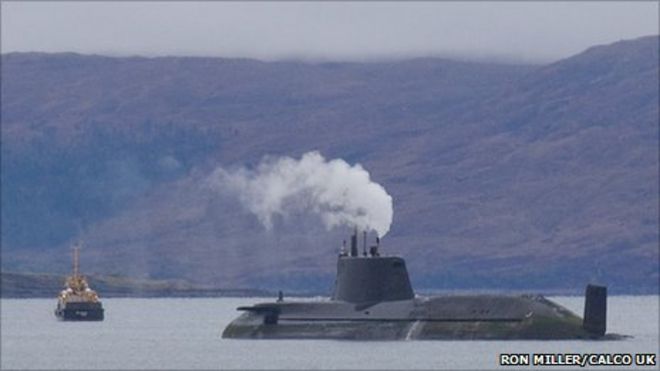
Example: a few years back a uk submarine was stuck high aground. As the tide went out the prop was exposed. I and a billion other people saw it live on bbc news. (Blue poly fins, at least 10 inside a housing). Good luck trying to find that image now. It has been sucessfully removed. The internet isnt the great memory well we all want it to be. With effort, facts can be changed, events scrubbed.
> Go look at any list of recently-cancelled television shows. You will be shocked at the number of them that you liked, but have now slipped from your mind. Public memory is fickle and it is very possible to remove even widespread facts.
Change and censorship aren't synonymous and I have no expectation that anything will last forever. But it's easier to ignore and forget about something like a television show than something like global climate change.
My post was in relation to the mass censorship required to create a world like the parent post described.
As for your submarine, that's interesting. Was it this one? http://www.bbc.com/news/uk-scotland-highlands-islands-116053... I'm not doubting the ability to censor things, especially before they become widespread, but climate change will be much harder because it's already a part of our vocabulary.
Id say that mass-censorship isnt the goal. You only have to keep a small mumber of influential americans distracted. That group (the perhaps 25% who have both a vote and money/time to donate), they dictate national policy. Everyone else can scream all they want to no end. The internet allows for such focused censorship.
Even fewer if you have a gerrymandered election system. Steve Bannon, now senior advisor to Trump, is on the board of Cambridge Analytica, a company that built (and presumably enabled the exploitation of) psychological profiles to maximize shares/distribution of content on social media, targeting specific geographic clusters:
According to Wikipedia Astute-class submarines use a hydrojet [1] instead of a classical propeller. That explains the unusual encased look. Here is an image [2] with the propulsion system hidden behind some fabric covers but still giving away the general shape. And this thread [3] has a few images of a hydrojet of a Sowjet Kilo-class submarine.
The new tech seems to be many more but thinner blades made out of composite material. It is so secret because if you know the surface area of the blades you can work out the availible horsepower, speeds, and likely frequencies emitted. So they are covered to hide then even from crew. Many people working inside subs dont know what props actually look like.
Propulsion tech was part of the accident because, i believe, these subs do not have rudders. They vector thrust like a jetski and therefore have issues when moving slowly.
I didn't even know that submarines no longer use classical propellers. I was surprised when I read it on Wikipedia and then again when I noticed that this is not unique to the Astate-class while trying to find images of hydrojet submarines. You can see this in the way I worded my comment, I guess it was pretty obvious to you.
But find the image of the prop half out of the water. Thats the super-secret thing they were so embarrased about. Those images have been surgically removed from the internet.
The full story involves a dilema between forcing the boat off the ground, and risk stripping its super-secret rubber coatings that might then be collected by russian agents, or letting the tide go out and expose the prop to the media.
The Canadian government bought some used subs from the UK 10 or 15 years ago. One of the subs had a huge dent and I mean Oldsmobile sized. The Brits seem to have a tough time navigating their subs.
You talk about facts like you don't live in a post-positivist world! You have no idea what you are talking about. "Facts" and "truth" are part of philosophy, but bear very little value in the real world. Just get used to it.
> There was once "broad consensus" that the world was flat. I am not at all comfortable when there is so much consensus. There needs to be debate, disagreement, and healthy skepticism at all times.
The key point is that the flat earthers kept believing (and angrily counter-attacking) despite the solid evidence to the contrary. Post-positivism is not claiming that everything is subjective and bias is insurmountable. You're not being sceptical, just delusional.
And not just archive it, but sign it, time stamp it, verify it, etc.. I see little to prevent someone using ML to auto-generate archives worth of fake history. Imagine a purported DB dump of Reddit with billions of subtlely fraudulent comments scattered throughout.
Wow, the "Stamper" by Matthew Richardson is still running!
http://www.itconsult.co.uk/stamper/stampinf.htm
This is pretty close to what you need. Getting an email with SHA256's of an archive of scrapes signed would do the trick.
Specifically using OriginStamp[1], which aggregates multiple hashes before creating a transaction. This makes it possible for the service to scale without increasing costs or transaction volume.
I don't have write access to a major newspaper. Sure, big organisations, when the political climate is right, can do things like that. What is there available for the little person?
I created a script that allows for periodic archiving of the text of the top articles on several large news sites. There's a configuration file that allows for selecting any RSS feed to pull from.


Many then switched to Facebook, presumably hoping that the "Real Name" policy would improve things.
The interesting thing is that clicking on many of the Facebook profiles on these comments leads to curiously sterile profiles, with a few friends. Some of the most vehemently pro-Trump comments seem to have originated from these accounts, especially on certain Conservative sites during the Republican Primary season.
Facebook seems to have no interest (or ability) to clean this up.