> At this point (read more like a year ago) I am burnt out from this project and now I figured to open it up and hopefully more people can be involved.
This is not moving forward, it looks like the author is just lofting it up as a resource for others to use as a starting point for similar projects.
One of my favorite sequences in any movie. I will never forget the visuals of workmen sweltering in front of flaming portholes in the bell's cast. Enduring a little inferno, to create the sound of heaven! Thank you for reminding me of it. :)
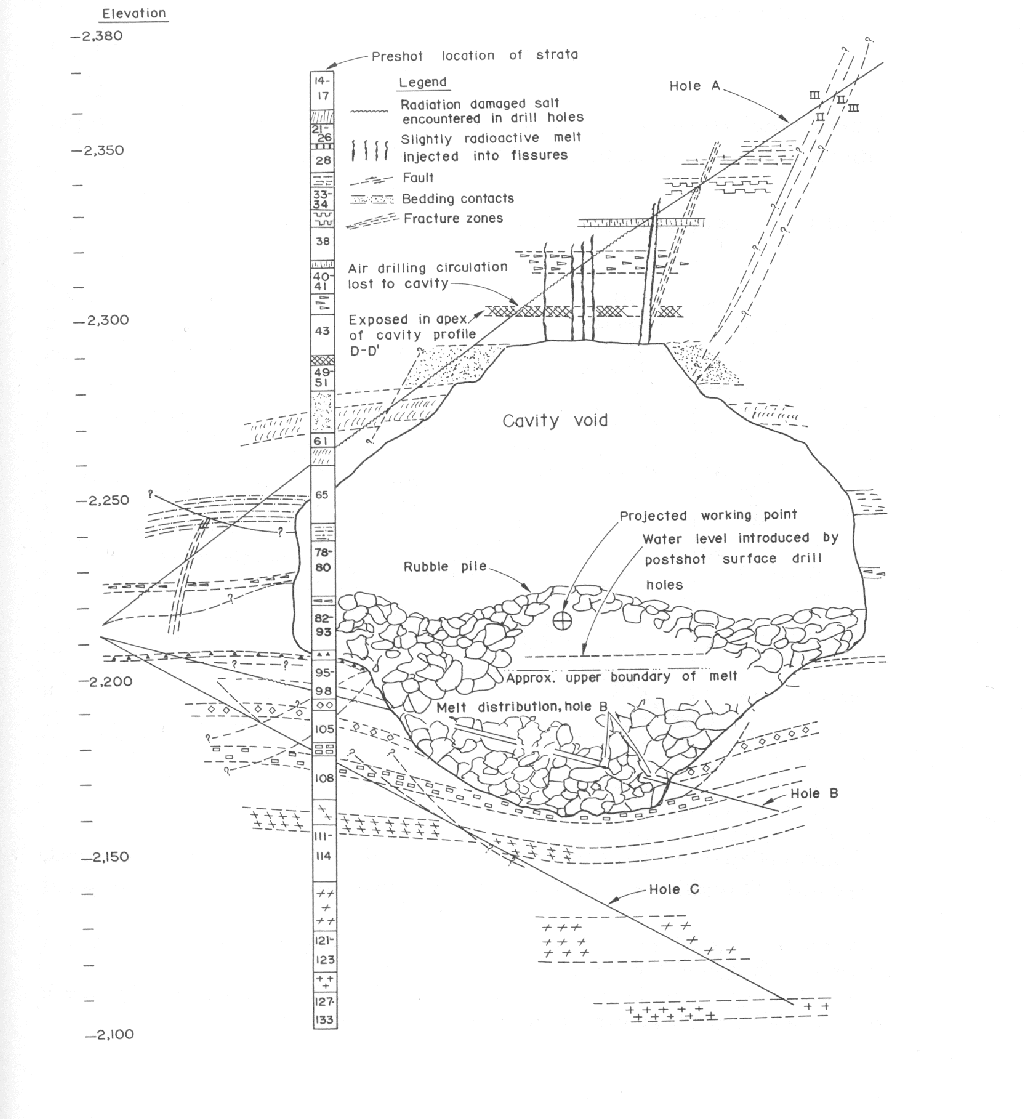
Wow, I am now extremely curious about what the inside of that cave looked like! But I suppose taking pictures of it wouldn't have really served enough practical purpose to deal with hauling something back out of the hole, not the mention the lingering radiation from the previous test would probably instantly expose any film sent down there.
Still! What does the container for a nuclear explosion look like on the inside? Is it smooth and glassy? Does molten material drip down and form stalactites and stalagmites? Does the surface crack as it cools? What color is everything?
This may have contributed to the immiseration and decline of the Jamestown colony, some thirty-five million years later:
"Chesapeake Bay is the remains of a giant meteor crater. The impact shattered rock for miles, letting seawater infiltrate. Few Indian groups lived in the saltwater wedge, presumably for just that reason. Jamestown was bordered and undergirded by bad water. That bad water, the geographer Carville V. Earle argued, led to 'typhoid, dysentery, and perhaps salt poisoning.' By January 1608, eight months after landfall, only thirty-eight [of the original 144] English were left alive."
From Charles Mann's "1493", which is a fantastic read; it's full of satisfying connections between environmental and historical forces like the above.
Haven't read 1493 yet, but looking forward to it. Read 1491 about a decade ago and it blew my mind. You just pushed 1493 back up towards the top of my "to read" list :)
I think it was 1491 where I first encountered the idea that red earthworms are invasive and the real reason "great forests" are in decline.
> They also just don't seem to want to make enough of them or ship them to markets where people want them. Canada was starved for inventory all last last year. None went to Europe. Asia, where they'd make a lot of sense, got only a smattering. And they don't seem to be improving on this.
They lose several thousand dollars on each car, so the reluctance to expand production is perhaps unsurprising:
Demand exceeds supply and they lose several thousand dollars on each of them? If only there was some sort of market driven mechanism to solve this issue.
They are willing to take the loss because they have fleet wide emissions targets. So they will sell just enough to allow them to sell the SUVs they actually want to make - but no more.
I've heard others (including GM) dispute those numbers. They were very back of the napkin.
Yes, there's no way it's as profitable as a Silverado or Equinox. But the only really expensive part in them is the battery pack, and volume production of that could bring it down.
GM _did_ sign a deal with LG Chem to open a big new battery plant in Michigan. Not sure what the status of that is. I believe battery supply is the fundamental constraint on Bolt production, not demand.