Also Canada, and I disagree pretty strongly with your post. Those two statistics have little bearing on happiness. Housing costs and healthcare access are much bigger concerns.
They are concerns, but not all that closely tied to happiness. Research shows time and time again that deep social connection is the key, if you will, to happiness.
> Research shows time and time again that deep social connection is the key, if you will, to happiness.
Research suggests it, but it does not show it. Psychological research is notoriously unscientific, with most studies not even being replicable because humans are extremely complex and it's basically impossible to design any kind of methodology that concretely controls for all variables, all the more so when we have things like 'ethics' that make it even harder to do controlled resaerch.
It is absolutely possible to be happy without deep social connection. I am an absolute misanthrope, I seriously hate every one of you bastards, but I'm pretty damn happy. The key to my happiness is that I live a comfortable life and have the freedom to spend it creating (and consuming) things I love - art, music, games, software. If I had to instead spend my days labouring on a farm, if I didn't have indoor plumbing and air conditioning, didn't have access to healthcare and stability and security, etc. I would be absolutely miserable. My happiness is only possible due to the great economic conditions and sensible policies of my country.
> It is absolutely possible to be happy without deep social connection.
Well, of course it is. No matter what you think it is that brings happiness to the general population, there will be at least someone who doesn't find happiness in it. There are always outliers.
> If I had to instead spend my days labouring on a farm
Farms are where you find the intersection of all cool tech. I have to wonder how someone who enjoys creating and consuming software would dislike working on a farm. But to each their own.
> No matter what you think it is that brings happiness to the general population, there will be at least someone who doesn't find happiness in it. There are always outliers.
I'm not convinced I'm that much of an psychological outlier, though; I think only my prosperous conditions are themselves a global outlier. I believe that if you gave most people the privilege I have, of having just enough money to pursue the things they love without doing work they don't enjoy, without worrying about being able to afford food, shelter, or medical bills, they would be happy too, with or without social connections.
> Farms are where you find the intersection of all cool tech. I have to wonder how someone who enjoys creating and consuming software would dislike working on a farm.
I need to do intellectually stimulating work to be happy. Repetitive manual labour would drive me insane. My mental image of "labouring on a farm" there was also "poor economic conditions subsistence farming", not "industrial farm with a million dollars worth of cool machinery".
I’m in tech and laboring on my farm are my happiest moments. I love to work hard with my hands. I absolutely hate working with what seems like pointless minutia on a computer but I’m good at it and can’t make a comfortable living farming so I do what I have to do. People are very different so I’m interested to see what their n is in each country. If it’s in the hundreds, this study means nothing.
> I am an absolute misanthrope, I seriously hate every one of you bastards, but I'm pretty damn happy.
Hey, it didn't say deep positive social connection.
Perhaps your hatred is what fuels you and keeps you happy :)
And another question from a ratbastard; have you ever spend a significant time labouring on a farm, or without indoor plumbing and/or air conditioning?
I have, yes. Although born in a wealthy country, I grew up in abject poverty. I wasn't entirely unhappy then, and I do understand how social connection can help make it bearable. But I'm a lot happier now than then, and my happiness no longer depends upon the whims of other people, one of whom in particular betrayed my trust and left me deeply depressed for years. I greatly prefer my happiness being in my own hands, and I really couldn't go back to manual labour now, because there is so much I want to create and already not enough time to do it all; having more time to idly think about all the things I want to create and less time to create them would be torturous.
If it brings you moral discomfort, why do you shop at whole foods? Shopping at Walmart (or whole foods!) would also bring me moral discomfort, so I just ...don't do it.
Today I shopped at the local food co-op, Sprouts (regional/semi-national chain), Whole Foods and Trader Joes. Word on the street is that the co-op has a worse labor relations history than Whole Foods. Trader Joes is good but doesn't sell more than a 1/3rd of the food we eat. Sprouts I don't know much about, it would be a fallback if Whole Foods disappeared.
Whole Foods has the food products (produce, dairy, eggs, grains, nuts) that we eat, is cheaper than the competition for this stuff, and unbelievably beats the co-op on labor relations. However, it also ships profit out of the area. For now, it's sort of the best of a bunch of not particularly good choices.
> Something like 50% of marine fuel usage is shipping fossil fuels around the world
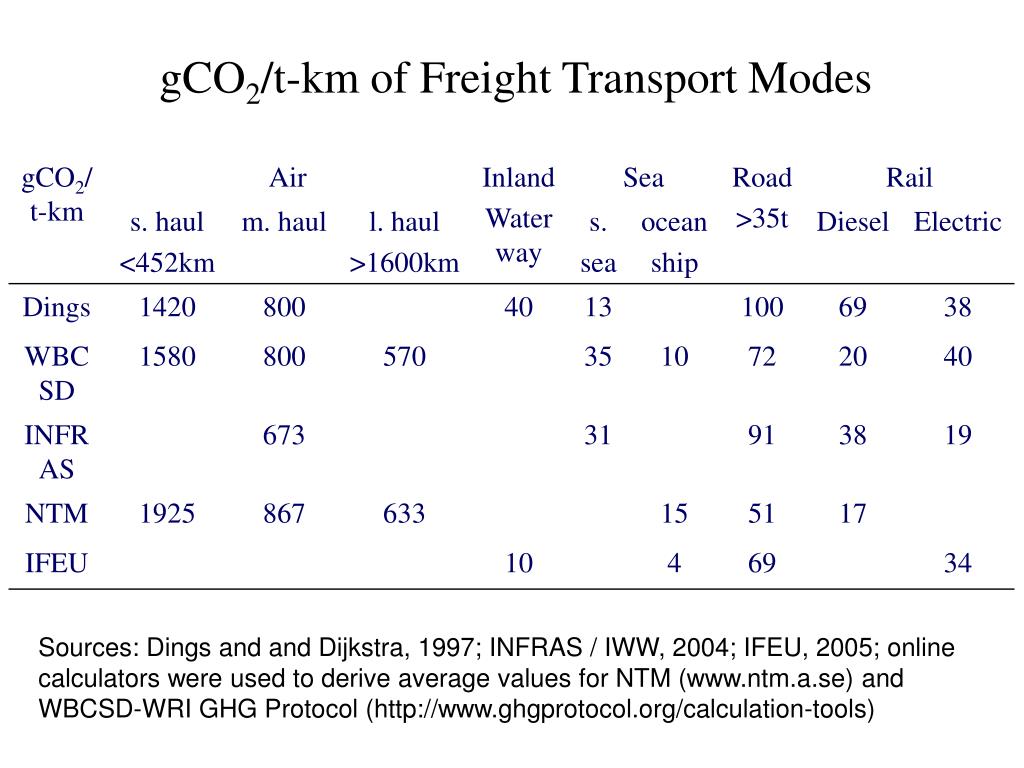
Note that marine shipping is extraordinarily fuel efficient (from a gCO2/(t*km) basis), so I doubt that it adds a lot on a per ton of fuel basis. We just ship a lot of fossil fuels.
This [1] graph looks to be in the right ballpark from what i remember in school 15 years ago, i didn't verify it in depth but +- an order of magnitude better than the next best method is roughly right
Even though petroleum product shipping accounts for almost 40% of shipping, the surprising efficiency of ocean transport still means that it's not that big an energy cost; a single-digit percentage of the energy content of the shipped oil/gasoline.
But even that is still worth saving - it's a few percent more benefit for electrification.
I personally find the math just as easy to do accurately. For example, 87F -32/1.8 = 55/1.8 =~30.5C. Compare that to your approximate method, which would give 28.5C, which is just wrong
(Maybe I just got really good at this when working a public facing job with a lot of American tourists - they would ask what our celsius temperatures were "in real units", so I got quite comfortable converting the air and water temps. Fahrenheit never once became intuitive to me, though.)
For C to F you can often simplify the mental math by doing the multiply by doubling then taking off 10%.
E.g., to convert 31℃ to ℉: 31 x 2 = 62. Subtract 6.2 = 55.8. Add 32 = 87.8℉.
If you want to round the result to the nearest integer the subtract 10% step is a convenient place: 31 x 2 = 62. Subtract 6 (rounded 6.2) = 56. Add 32 = 88℉.
> It's for just 50k vehicles, which means that the first 50k that get sent will be all Luxury high margin electric vehicles. [...] Why would anyone use there quota for cheap stuff?
If you find a better primary source, you'll see that the lower price vehicles are the only thing allowed at the low tariff rate:
The deal covers vehicles priced at $33,000 or less, and other cars sold at that price are already manufactured offshore
No, trucks are useful, but a massive modern pickup truck is much less useful in the urban context than a standard pickup truck from 30 years ago. The bed size has remained the same, the outside envelope of the vehicle has ballooned massively.
> You should get better transit so less people have cars.
Toronto has a very high (for north america) transit mode share