... and of course making the problem systematically worse.
They explicitly state that they're after people who were filmed - just filmed - at the London riots a few years ago. They're looking to arrest them, and to extract damages from them.
At those riots, absolute worst case 10-20% of people will have stolen or smashed things, with most just rallying for justice. But that doesn't even matter. The vast majority of those people aren't criminals, and even of the ones that did commit criminal acts during those riots 99% aren't "regular criminals" (meaning any more disrespectful of laws than a bad landlord is, day-to-day).
But arresting these people will seriously impact their situation, their job, their prospects, and bring them a LOT closer to becoming criminals. And even the ones where it doesn't make them criminals, it will make them much more likely to riot again, for obvious reasons.
This is stupid, dangerous, and merely meant to make a few people in power feel good about themselves.
Can you give examples of people who were arrested for no -criminal behaviour? I'd thought they were just arresting people who'd been pictures commuting crimes?
Also: why is being arrested such a big deal? You'll get mugshotted, swabbed, but unless CPS charge you (for which they need to believe they have a reasonable chance of a conviction), it's not going to show up in a background check.
I don't think you read either of the links you posted. For starters, you have to admit guilt to get a caution. Secondly, can you give ANY examples of people from the London riot's who were arrested for attendance only? Like even a single example?
Firstly this is bigger than just the riots. There are people doing long sentences for being present at crimes committed by other people. (Some of them may be fully deserving as they planned it together but others rather less so.)
Secondly do you know anyone who's ever been questioned by the police? The situation when they offer you the caution is rather intimidating.
>Can you give examples of people who were arrested for no -criminal behaviour? I'd thought they were just arresting people who'd been pictures commuting crimes?
In my country? Tons. And more people who have been arrested while being non-criminal in a demonstration, and then falsely accused of criminal behavior (and with stuff planted on them).
Sometimes that gets dispelled in court, othertimes there is even third-party footage showing police planting stuff on them.
And then there are police units in disguise coming out of police vans, merging with peaceful protesters, and inciting violence and damages to break a demonstration.
>why is being arrested such a big deal?
Depends on the country. In the UK, but several others too (including mine) you can be held without trial for months (up to a year or so actually), you can get beaten up in the police department, etc.
The net effect, however, is to make sure ~4000 people will have less choices in the future, and a more miserable life.
Looting and burning a city on a large scale, of course, will always be one of the remaining choices. Furthermore, the more miserable life part will provide extra incentive to do so.
They are admitting to using two year old footage to identify people in a crowd, who are associated with people who turn violent.
It implies that they can and will dedicate that much time and power to put you on lists and possibly harass you for exercising your freedom of speech and assembly.
Given the relationship between the police and protesters, I wouldn't want to suffer the repercussions of being in their systems as one.
The result is that I'm less likely to become politically active out of fear of being identified and associated with subversives in the eyes of my government.
I may have missed it, but I didn't see where the article states that they were after people who were merely present. It implies that they were looking for people like Stephen Prince who were actually filmed looting, burning, and assaulting.
I would argue that it doesn't even matter, but I'll try to clarify my reading of the article. The example name they give is "an obvious case" (nevertheless giving a name like this of someone who isn't convicted is an egregious violation of due process).
But here's the paragraph I'm talking about:
> Soft-spoken and gentle-mannered, Constable Collins carries a baton and pepper spray, but no gun. His weapon is his memory: Facial recognition software managed to identify one suspect of the 4,000 captured by security cameras during the London riots. Constable Collins identified 180.
Note the nice, round number. I wonder how that was established. Note that the sentence strongly implies that the only thing that makes these people suspect is being "captured by security cameras during the London riots". Those security cameras are pointed at streets, not shops, not office buildings, not private property, they couldn't have gotten a good look at the people who looted and burned.
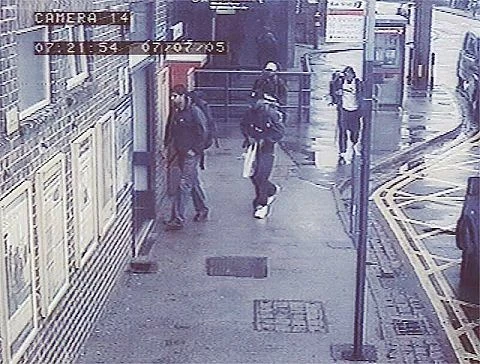
This footage is very low quality: grainy 640x400 or less (cheap image sensors from around 2008, also the common resolution of the example images) black-and-white filmed in very bad lighting conditions at a distance of at least 6-7 meters (they hang those cameras up high), with most people on those cameras at at an average distance of 30 meters (my guess at half the distance between two of those security cameras from walking around in London). At that distance, a face is between 5x5 and 20x20 pixels.
You can't tell me they have less than 10% error rate. And of course, the subject given is black, and all the police officers mentioned are white. I'm not even implying racism here, people are notoriously bad at identifying members of other ethnic groups correctly. Example of footage here[1]) And aside from the people who were right next to the police, I doubt there were many assaults at all, though I'd expect a few.
But even if they do find the looters. They're not catching any reasonable percentage of them, they're just randomly punishing 4000 people : let's say they actually "catch" 2000 of them, and let's assume a 30% error rate (seems like the absolute minimum reasonable to me). So in effect, they're slapping jail on 660 innocents, and 1340 people who damaged property during a riot. Of the people who burned and looted, that 1340 is going to be, comparing with the numbers reported looting, somewhere between 2% and 5% of them.
The point is that this is going to be very bad for the social situation in London, and not going to change the fact that there's a very high chance that you can loot and get away with it during riots. It's all the bad, with none of the good.



They explicitly state that they're after people who were filmed - just filmed - at the London riots a few years ago. They're looking to arrest them, and to extract damages from them.
At those riots, absolute worst case 10-20% of people will have stolen or smashed things, with most just rallying for justice. But that doesn't even matter. The vast majority of those people aren't criminals, and even of the ones that did commit criminal acts during those riots 99% aren't "regular criminals" (meaning any more disrespectful of laws than a bad landlord is, day-to-day).
But arresting these people will seriously impact their situation, their job, their prospects, and bring them a LOT closer to becoming criminals. And even the ones where it doesn't make them criminals, it will make them much more likely to riot again, for obvious reasons.
This is stupid, dangerous, and merely meant to make a few people in power feel good about themselves.